
Ramen Jiro Kawagoe ten is a 12-seat counter in Kawagoe’s Asahicho area, selected for Tabelog 100 Ramen EAST 2025 with a Tabelog score of 3.73. The draw is not polished dining-room theatre but the disciplined, high-volume ramen-counter culture associated with Jiro-style eating: solo-friendly, queue-aware, cash-only, and built for diners who understand the rhythm of the bowl.
Pearl is the En Primeur Club membership app — saves, bookings, and concierge access live there. Same editors, same standards.
- Address
- 埼玉県川越市旭町1-4-15
- Website
- kwge26.tumblr.com
 Saves & bookings on Pearl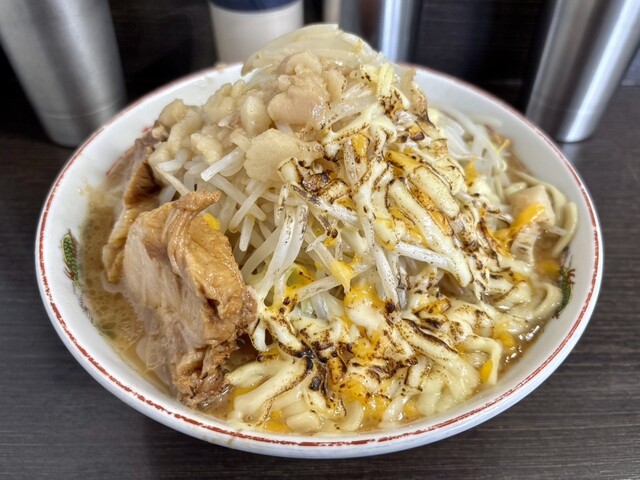
Approaching a Jiro-style ramen counter in suburban Saitama is less about ceremony than choreography. The line matters, the counter matters, and the meal moves at the pace of a kitchen built around one direct transaction: bowl, seat, eat, clear the space for the next diner. In Kawagoe, where the restaurant map spans old-storefront snacks, udon shops, curry rooms, burger counters and destination ramen, Ramen Jiro Kawagoe ten belongs to the city’s stricter end of casual dining: small, counter-led, and governed by house rules rather than hospitality gloss.
Kawagoe is often read through its warehouse streets and day-trip heritage, but its everyday eating culture is more useful for understanding this address. The city rewards formats that do one thing with conviction. Fujidana Udon Kawagoe ten anchors the noodle conversation from a different tradition, while Ganja Honten signals Kawagoe’s pull for ramen and dipping-noodle pilgrims. Hasenuma, Burger Cafe Honohono and amrit show how broad the local low-to-mid-price field has become, but this counter sits in a narrower lane: ramen as system, not leisure.
Jiro-style ramen as counter discipline, not comfort dining
Jiro-style ramen has its own grammar within Japan’s noodle culture. It is associated with large-format bowls, assertive ordering codes, counter turnover and a clientele that often eats alone. The cultural significance lies in that structure. It is not the quiet refinement of regional shoyu ramen or the elongated pace of a tasting-menu noodle bar; it is an urban working-counter tradition built around appetite, repetition and speed.
Ramen Jiro Kawagoe ten fits that grammar through objective format signals rather than decorative storytelling. The room is counter seating only, with 12 seats, and the restaurant is marked as solo-dining friendly. Reservations are not part of the format. Payment is cash-only, with credit cards, electronic money and QR payments not accepted. Those details place the experience closer to old-school ramen infrastructure than to the newer generation of design-conscious noodle shops aimed at multilingual tourism.
The recognition matters because ramen in eastern Japan is a crowded category. Selection for Tabelog 100 Ramen EAST 2025, alongside a 3.73 Tabelog score, puts the Kawagoe shop inside a curated field where specialists compete on consistency, identity and repeat demand rather than breadth. The award does not turn the meal into fine dining, and it should not be read that way. It signals that a low-price counter can carry serious cultural weight when the format is coherent and the audience is exacting.
Where Kawagoe's casual dining scene gets serious
The useful comparison in Kawagoe is not between luxury and budget, but between kinds of commitment. Udon, tsukemen, ramen, burgers and international casual rooms can all sit in the same spending bracket, yet they ask different things of the diner. A ramen counter of this type asks for fluency: knowing how to queue, when to order, how quickly to settle in, and how to leave the counter ready for the next person. That etiquette is part of the food culture, not a side note.
House rules underline that point. Diners are asked to line up quietly, avoid touching the wall, and keep the entrance clear. Finished dishes go to the upper shelf of the counter. Photography inside is restricted, with ramen as the permitted subject. There are no tissues available. These are not quirks to romanticize; they are operating instructions for a small shop in a residential-commercial environment where queue behavior affects neighbors and service rhythm.
For travelers building a wider Kawagoe day, that distinction helps. The city can support a casual grazing route, but this is not the stop for lingering conversation or a group meal with uncertain appetites. It is better understood as a focused noodle session within a broader itinerary. The wider directory is useful for that contrast: Our full Kawagoe restaurants guide maps the dining field, while Our full Kawagoe hotels guide, Our full Kawagoe bars guide, Our full Kawagoe wineries guide and Our full Kawagoe experiences guide help separate a noodle detour from a full city plan.
The right diner for this bowl
This is a strong choice for ramen-literate visitors who value local systems as much as flavor alone. The appeal is not broad comfort; it is precision of format. A 12-seat, no-reservation counter with queue etiquette and limited payment flexibility rewards diners who arrive prepared and eat with purpose. In return, the experience gives a direct view into one of Japan’s most distinctive ramen subcultures, where scale, stamina and ritual matter as much as broth style.
It also shows how Kawagoe’s food identity extends beyond its historic streets. The city’s serious casual dining does not depend on luxury cues. It can be a sub-¥1,000 listing, a counter seat, a line managed quietly, and a bowl that draws enough repeat attention to enter a recognized eastern Japan ramen selection. For a visitor comparing Japanese everyday formats across cities, that is the point: cultural depth often lives in places with little interest in explaining themselves.
For broader Japan comparisons outside Kawagoe, the useful thread is format specificity. A sukiyaki specialist such as -Grilled beef Sukiyaki- KAMAKURA TANUKIAN 鎌倉 たぬき庵 in Kamakura, a Tokyo grill counter like. 鮪と炭火焼き うお炭 秋葉原店 in Tokyo, and compact specialist addresses such as.cafe in Osaka.know in Kumamoto, (Shoku) Vietnam in Kawasaki and [Curry Senmon Ten] Maruyama Kyoju. in Sapporo all show how Japanese dining often sharpens around narrow categories. Even overseas Japanese-adjacent formats, from Jōdo Saké Bar in Los Angeles to Onigiri Time in Pasadena, are easier to read when the format is treated as culture rather than theme.
Budget and Context
Comparable venues by cuisine and price in the same metro.
| Venue | Cuisine | Price | Notes |
|---|---|---|---|
| Ramen Jiro Kawagoe tenThis venue — the venue you are viewing | Asahicho, Ramen Jiro-style pork ramen | $ | Not listed |
| Kotobuki Seimen Yoshikawa Kawagoe ten | Minami Otsuka, Japanese Ramen | $$ | Not listed |
| VANITOY BAGEL Kawagoe ten | Kawagoe, Bagel shop & café | $ | Not listed |
| Kawagoe Bakery Rakuraku | Not listed | $ | Kashiya Yokocho / Motomachi, Japanese-style Bakery & Bread Shop |
| Hasenuma | Hon-Kawagoe, Handmade Udon & Tempura | $ | Not listed |
| Ganja Honten | Not listed | $ | Shintomi-cho, Tsukemen / Ramen |
Recognition history
Dated appearances from independent guides and award organizations, with the underlying list record or original source where available.
Tabelog 100 #61 · No. 61
Tabelog · Tabelog 100 - Ramen - EAST - 2025
Continue exploring
More in Kawagoe
Restaurants in Kawagoe
Browse all →


Bars in Kawagoe
Browse all →



Hotels in Kawagoe
Browse all →




Wineries in Kawagoe
Browse all →
At a Glance
- Lively
- Energetic
- Solo
- Casual Hangout
- Late Night
- Standalone
Simple, no-frills counter-only ramen shop with bright functional lighting, a constantly moving queue, and a bustling, almost canteen-like atmosphere focused purely on eating and leaving quickly.