
Ramen Hoshijirushi is a compact Tanmachi counter in Yokohama’s Kanagawa ward, operating in the city’s serious ramen tier rather than the tourist dining circuit. Its Tabelog 100 Ramen Kanagawa 2025 selection, 3.76 score, and long run of Hyakumeiten recognition place it among Kanagawa ramen shops that reward planning, patience, and a cash-ready solo lunch mindset.
Pearl is the En Primeur Club membership app — saves, bookings, and concierge access live there. Same editors, same standards.
- Address
- 神奈川県横浜市神奈川区反町1-3-4 ルミノ反町 1F
- Phone
- +81453230337
- Website
- tabelog.com
 Saves & bookings on Pearl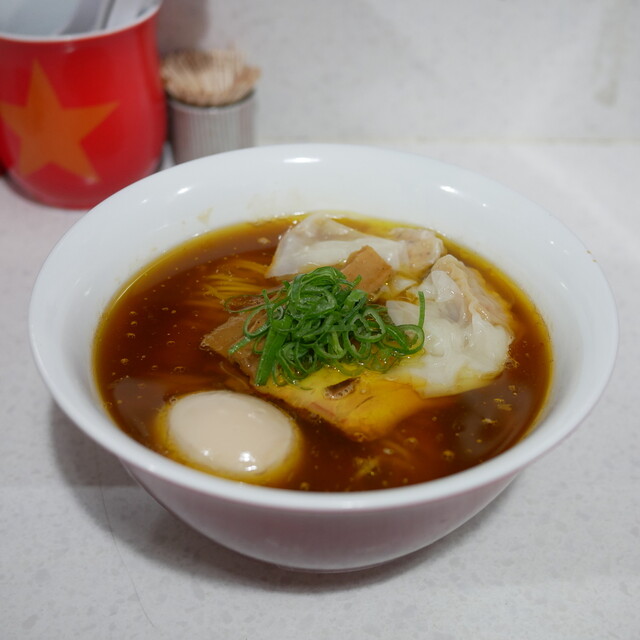
Approaching the Tanmachi side of Yokohama, the ramen map changes character. The city’s port-facing dining image can make visitors think first of Chinatown banquets, hotel restaurants, or waterfront meals, but the sharper local ramen conversation often happens in smaller wards, on ordinary commercial streets, behind counters built for single bowls rather than ceremony. Ramen Hoshijirushi belongs to that Yokohama: compact, low-friction, and serious enough that the room’s scale matters as much as the bowl.
Kanagawa ramen is not a single style. Yokohama is inseparable from iekei, the pork-and-soy lineage born in the city, but the prefecture’s stronger ramen addresses now range across lighter broths, tsukemen, chicken-based bowls, and tightly edited counter formats. That variety is why Tabelog’s Hyakumeiten lists matter here. A place selected for Tabelog 100 Ramen Kanagawa 2025 is being read against a dense regional field, not just against casual noodle shops near a station. Ramen Hoshijirushi has also appeared in the ramen Hyakumeiten selections from 2019 through 2025, a continuity signal that counts in a category where attention moves quickly.
A Yokohama ramen counter built for the single-bowl decision
The format is part of the argument. Eight counter seats put this in the intimate ramen-shop bracket, where turnover, timing, and the rhythm of the queue shape the meal before the first sip of broth. Counter-only ramen in Japan has its own code: arrive ready to choose, eat with focus, and free the seat once the bowl is finished. That is not austerity; it is how small ramen rooms protect consistency.
The price band, JPY 1,000 to JPY 1,999, keeps the experience in the everyday ramen economy even as the recognition places it in a more selective group. That tension is one reason serious ramen remains one of Japan’s rare luxury-adjacent categories without luxury pricing. A seat at a praised counter can cost less than a hotel breakfast, yet demand is governed by capacity rather than price. For travelers used to tasting menus and deposits, the discipline here is different: read the room, carry cash, and treat lunch as a timed opportunity rather than a flexible reservation.
Within Yokohama, that puts the shop closer in spending terms to Shinachiku Tei than to high-ticket restaurants such as INACASA, while below the ceremony and cost structure of destination dining. Raamen Mu and Pain de U sit in lower listed budget bands, showing how narrow the city’s casual-price differences can look on paper. The distinction is less about expense than about purpose: ramen specialists ask for attention to one format, one seat, one bowl, and the queue outside it.
Recognition matters in Kanagawa because the field is crowded
Tabelog’s 3.76 score is a useful reading point, not a trophy in isolation. Japanese user-rating culture tends to be conservative, and ramen shops with sustained scores in this range usually have moved beyond neighborhood convenience into destination consideration. The Tabelog 100 Ramen Kanagawa 2025 listing reinforces that position. The more persuasive detail is the run of selections across multiple years, because ramen reputations can spike after social-media attention and fade just as quickly.
That continuity also helps explain why a small Tanmachi counter can compete with better-known Yokohama dining patterns. Visitors often concentrate around Minato Mirai, Kannai, Chinatown, and the station districts; Tanmachi is a quieter choice. For a ramen-focused itinerary, that is not a drawback. It shifts the meal away from sightseeing traffic and toward a local rail-stop rhythm, where weekday lunch windows and counter availability matter more than scenery.
The shop’s opening date in 2014 gives it more than a decade in a category defined by constant openings, limited specials, and style migration. Longevity does not prove quality by itself, but in ramen it is a meaningful filter. A counter that keeps regional recognition over that span is not merely benefiting from novelty. It has entered the group of Yokohama addresses that ramen-focused diners weigh alongside other specialist stops rather than as a convenience meal.
How to place it in a Yokohama eating day
Ramen Hoshijirushi works better as a planned anchor than as an afterthought between larger meals. The room is small, the format is counter-driven, and the category rewards arriving with appetite. Travelers building a broader Yokohama day can treat it as the focused lunch stop, then move toward lighter drinking or walking later rather than stacking it against another heavy meal.
For broader city planning, use Our full Yokohama restaurants guide to separate counter specialists from longer-format dining, and pair it with Our full Yokohama hotels guide, Our full Yokohama bars guide, Our full Yokohama wineries guide, and Our full Yokohama experiences guide if the day extends beyond lunch. Yokohama’s dining range is broad: 1000 (Yakitori (Grilled chicken skewers)), Aichun, Ajowan, and Alpenjiro Honten show how quickly the city moves from noodles to grill, curry, and neighborhood dining. Regional add-ons widen the frame: Anzen Shokudo, (Shoku) Vietnam in Kawasaki, and -Grilled beef Sukiyaki- KAMAKURA TANUKIAN 鎌倉 たぬき庵 in Kamakura point to nearby eating that is not trying to imitate central Tokyo.
For readers tracking Japanese food culture outside Kanagawa, the comparison becomes useful rather than decorative.. 鮪と炭火焼き うお炭 秋葉原店 in Tokyo.cafe in Osaka.know in Kumamoto, [Curry Senmon Ten] Maruyama Kyoju. in Sapporo, Jōdo Saké Bar in Los Angeles, and Onigiri Time in Pasadena all speak to a wider point: Japanese dining formats travel, mutate, and scale differently. A small Yokohama ramen counter is the opposite of export polish. Its value is local concentration, not spectacle.
The editorial read is clear: this is a specialist stop for diners who care about Yokohama ramen beyond the obvious iekei headline. The combination of Hyakumeiten continuity, a compact counter, and an accessible price band makes the planning burden worthwhile for ramen-focused travelers. It is not a lingering meal, and it is not designed to solve dinner for a large group. It is a precise Yokohama lunch decision.
Cuisine and Awards Snapshot
Comparable venues for orientation by cuisine and category.
| Venue | Cuisine | Price | Notes |
|---|---|---|---|
| Ramen HoshijirushiThis venue — the venue you are viewing | Classic shoyu ramen shop | $ | Not listed |
| Menba Hamatora | Ramen | $ | Kanagawa |
| Gumyoji Hekan | Ramen & Soba Izakaya | $ | Minami |
| Ramen Matsushin | Classic Japanese Ramen Shop | $ | Tsurumi |
| Kawa no Saki no Ue | Japanese Ramen | $ | Kōnan |
| Susurimase nka | Ramen & Tsukemen Shop | $ | Kōnan |
Recognition history
Dated appearances from independent guides and award organizations, with the underlying list record or original source where available.
Tabelog 100 #35 · No. 35
Tabelog · Tabelog 100 - Ramen - KANAGAWA - 2025










At a Glance
- Cozy
- Lively
- Classic
- Intimate
- Solo
- Casual Hangout
- After Work
- Chefs Counter
- Standalone
- Street Scene
A snug eight-seat, non-smoking counter-only shop with a simple, classic ramen-ya feel and an energetic but orderly atmosphere focused on the craft of the bowl.