
Tabelog 100 #82
Our verdict
An eight-seat counter in Koenji places Raamen Yama to Ki in Tokyo’s serious ramen conversation without the ceremony of fine dining. Tabelog selected it for the Ramen TOKYO 100 from 2020 through 2025, and the value equation remains unusually sharp for travelers comparing a midday bowl with an evening meal in the same price band.

Pearl is the En Primeur Club membership app, where members save venues, book tables and use the concierge.
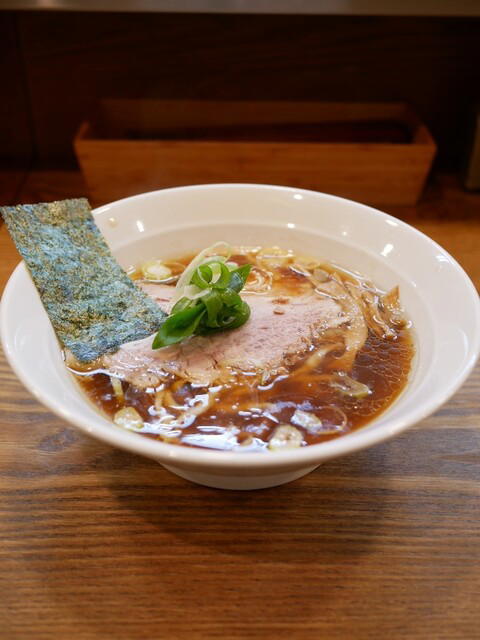
The menu
What to order
- Shoyu ramen with house‑made curly noodles
- Smoked pork chashu ramen
- Shrimp wonton ramen
Tokyo changes register quickly: record shops, second-floor bars, old shopping streets, then the compact focus of a ramen meal built for concentration, not lingering. Tokyo ramen at this level is not a dressed-down long meal; it is short-format craft with rules of timing, turnover, and queue psychology. Raamen Yama to Ki fits that category: a focused ramen stop with a format that puts the bowl, not the room, at the centre.
The useful comparison is not tasting-menu Tokyo, but the city’s competitive sub-¥2,000 ramen tier. Casual from outside, that band contains some of Tokyo’s most scrutinised cooking. Tabelog’s Ramen recognition for 2025 gives this venue a clear trust signal, especially where local repeat traffic matters more than international spectacle. Its 3.79 Tabelog score also places it in a serious ramen bracket, where regulars debate small differences in broth clarity, noodle texture, and service rhythm.
Tokyo ramen, read through the lunch-and-evening split
Tokyo’s formal restaurants make the lunch-versus-dinner divide obvious: different menus, prices, expectations. Ramen compresses it. At Raamen Yama to Ki, the published budget is the same JPY 1,000 to JPY 1,999 range for lunch and dinner, so the choice is mood, not cost. Daytime ramen in Tokyo is a precise interruption: quick, solo-friendly, practical before the city’s late culture wakes up. Evening ramen turns the same format into a post-work or pre-bar meal, with a different social temperature but without becoming a drawn-out dinner.
That matters because Tokyo rewards more than grand dining rooms. It also rewards a looser route: shops, music rooms, curry counters, casual dining, and small specialist formats. Ramen sits naturally in that ecology. Nearby and across the city, ERICK SOUTH KOENJI CURRY&BIRYANI CENTRE Kouenji karē&biriyani sentā, negombo33 Kouenji, Dashi to Men Yuei, Tokoi, and kouenji yakiniku kokochi Honten show how casual Tokyo dining can be read through price, format, and purpose. Against that spread, Raamen Yama to Ki’s 2025 Ramen recognition marks it as a specialist choice, not a default convenience stop.
The compact format sharpens the decision. A ramen meal is paced by turnover and attention, not table-service ceremony. Solo dining often suits this kind of stop, and compact parties will understand the rhythm best. Think in sequence: arrive, eat, move on through Tokyo. The pleasure is not stretching the sitting; it is seeing how much technique Tokyo can pack into a modestly priced bowl.
A serious bowl without the ceremony of a reservation restaurant
Tokyo ramen’s international image often flattens into steam and queueing. The better reading is granular. Some shops chase volume, some regional nostalgia, and some operate as technical specialists where the bowl is the whole argument. By category and recognition, Raamen Yama to Ki belongs in a serious ramen conversation, while avoiding the luxury signalling of sushi counters or kaiseki rooms. There is no need to build the story around a chef biography. In ramen, the public evidence is recognition, discipline, and customers willing to plan around a focused meal.
The rhythm is different from a long reservation-led meal. A formal restaurant asks for commitment before the meal; a ramen stop asks for flexibility around the moment. Lunch suits travellers wanting a clean, efficient meal before moving across Tokyo, while dinner suits those treating the city as the evening itself. Practically, this is not a restaurant to approach as a long hosted progression; it is better understood as a precise stop with a narrow purpose.
The category also shapes expectations. Small ramen specialists in Tokyo often feel closer to craft workshops than to the card-ready hospitality layer aimed at tourists, though visitors should confirm current payment and service details before going. The point is not luxury infrastructure; it is the concentration of the meal itself. Fold it into a Tokyo day built around wandering, casual food, and short-format stops rather than a single destination dinner.
How to place it inside a Tokyo itinerary
For EP Club readers, the reason to care is value density. Tokyo luxury dining can demand months of planning and a large deposit of time; serious ramen asks for narrower but no less exacting attention. Raamen Yama to Ki is a strong fit when the day calls for precision without ceremony: a ramen meal in Tokyo that leaves room for bars, shops, and small cultural stops afterward. It is less suited to diners seeking a long hosted progression, private room, or wine-led evening.
Readers building a broader Tokyo food route can use this as the compact ramen anchor, then widen the map by category. For restaurants, start with Our full Tokyo restaurants guide, where casual stops sit alongside formal rooms. Nearby and across the city, EP Club also tracks other Tokyo dining rooms, cafés, counters, and casual restaurants rather than treating ramen as an isolated stop. For the rest of the trip architecture, pair that with Tokyo hotels, Tokyo bars, Tokyo wineries, and Tokyo experiences research.
For Japan-wide context, compare how casual formats shift by region without assuming that every compact room works the same way. Across Japan, price, format, and city purpose can carry as much meaning as cuisine label. Outside Japan, casual Japanese formats travel well, but Tokyo’s focused ramen culture retains a particular intensity of scale. Raamen Yama to Ki belongs in that reading: modest in spend, serious in signal, and best understood as a compact Tokyo ramen stop rather than a substitute for a long formal meal.
Frequently asked questions
How much does it cost to eat at Raamen Yama to Ki?
Pricing at Raamen Yama to Ki is listed as JPY 1,000 - JPY 1,999 JPY 1,000 - JPY 1,999.
How do I find Raamen Yama to Ki?
Raamen Yama to Ki is located in Tokyo.
Do I need a reservation for Raamen Yama to Ki?
Raamen Yama to Ki is a ramen shop in Tokyo. Confirm current service details before going, because the format is best approached as a compact ramen stop rather than a long hosted meal.
What's the defining dish or idea at Raamen Yama to Ki?
The defining idea is ramen served as a focused Tokyo meal, not a long tasting-menu setup. Its strongest credential is formal recognition: Tabelog Ramen recognition for 2025, alongside a 3.79 Tabelog score.
What if I have allergies at Raamen Yama to Ki?
With a ramen shop in Tokyo, the practical move is to state any allergies before ordering. Direct clarification on ingredients would be needed on site.
A Credentials Check
Comparable venues at a similar level for quick context.
| Venue | Cuisine | Price | Awards | Notes |
|---|---|---|---|---|
| Raamen Yama to KiThis venue (the venue you are viewing) | Classic Tokyo Ramen Counter | $10–20 | Tabelog 100 #82 | Not listed |
| Hekkelun | Classic Japanese kissaten & pudding café | $1–10 | Tabelog 100 | Toranomon/Shinbashi |
| MENSHO | Modern Japanese ramen | Not listed | Tabelog 100 #80 | Bunkyō |
| Menya Suzuharu | Ramen / Tsukemen | $10–20 | Tabelog 100 #40 | Bunkyō |
| Maihama | Japanese Izakaya | Not listed | Tabelog 100 #77 | Minato |
| BROWNIE | Japanese Curry / Yoshoku | Not listed | Tabelog 100 #31 | Chiyoda |
Recognition history
Dated appearances from independent guides and award organizations, with the underlying list record or original source where available.
Tabelog 100 #82 · No. 82
Tabelog · Tabelog 100 - Ramen - TOKYO - 2025
Continue exploring
More in Tokyo
Restaurants in Tokyo
All restaurants in Tokyo →


Bars in Tokyo
All bars in Tokyo →



Details
- Cozy
- Lively
- Modern
- Intimate
- Solo
- Family
- Casual Hangout
- After Work
- Chefs Counter
- Standalone
- Street Scene
- A La Carte
- Counter Dining
A small, bright, clean counter‑only space on a main road in a residential part of Koenji, non‑smoking and considered especially welcoming and comfortable for solo diners and women, with the casual buzz of a busy neighborhood ramen shop.