
Tabelog 100 #40
Our verdict
Menya Suzuharu belongs to Tokyo’s serious ramen tier, where compact rooms, limited daily output, and narrow menu architecture matter more than ceremony. In Hongo, its ramen and tsukemen format, Tabelog Ramen TOKYO 100 selections in 2021, 2022, 2024, and 2025, and small 11-seat setup place it firmly in the city’s queue-driven noodle culture.

Pearl is the En Primeur Club membership app, where members save venues, book tables and use the concierge.
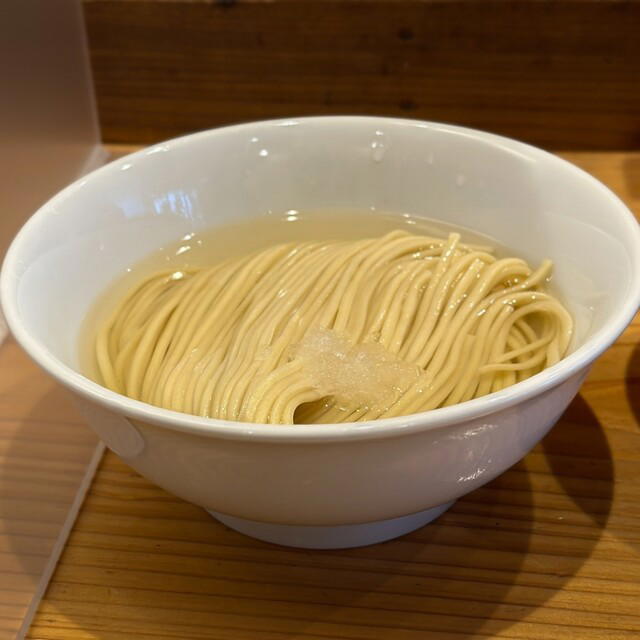
Tokyo does not always perform for the camera the way its busiest nightlife and luxury districts can. Around its more practical dining scene, the rhythm can be direct and everyday: station exits, small shopfronts, short meal windows, people reading the menu before deciding whether to commit. In that setting, ramen works as Tokyo often intends it to work, with speed, discipline, and a menu that asks for a decision rather than a long conversation.
Menya Suzuharu sits inside that culture of compact, high-output noodle shops. The categories are focused: ramen and tsukemen. That narrowness matters. Tokyo ramen at this level is not a general Japanese dining experience; it is a study in broth, noodle texture, seasoning balance, and format. The tighter the menu, the more the shop’s argument depends on execution rather than range.
A ramen-and-tsukemen structure built for decision, not browsing
Tokyo’s ramen scene rewards specialization. The city has many possible formats, from old-school neighborhood bowls to focused noodle shops with carefully defined variations, but the serious end often reduces choice in order to concentrate attention. Ramen and tsukemen create two different readings of the same kitchen: one served as an integrated bowl, the other separating noodles from dipping broth so texture and concentration become more pronounced.
That menu architecture is the useful way to understand Menya Suzuharu. The point is not a sprawling list or chef-story mythology; it is a shop built around two noodle formats and a clear ramen identity. Those constraints explain the experience better than any adjective. This is ramen as focus: the decision is less about browsing and more about choosing between formats.
The pricing also keeps it in a distinctly Tokyo ramen lane. With lunch and dinner both listed at JPY 1,000 to JPY 1,999, the shop sits far below the city’s premium tasting-menu economy while still carrying a serious recognition signal. That contrast is part of ramen’s appeal in Tokyo: the financial threshold remains accessible, but the competition for attention is intense. A shop can be inexpensive and still be judged by noodle obsessives with unusual severity.
Recognition sharpens the point. Menya Suzuharu has been selected for Tabelog Ramen TOKYO 100 in 2025, with a Tabelog score listed at 3.81. Tabelog’s ramen lists are not decorative badges in this category; they function as sorting mechanisms in a city where the number of serious noodle shops can overwhelm even frequent visitors. The selection indicates meaningful attention in a deep specialist field.
Tokyo's quieter dining map makes the meal feel local
Tokyo is a useful corrective to the idea that dining is concentrated only in nightlife districts and luxury hotel zones. The appeal here is working-day normality. Across the city, options can run from soba and casual dining to other compact specialist formats, and the competitive set can feel more practical than theatrical. Soba Kiri Morino, Katsuzen, TOKYO LIGHT BLUE HONGO-3, Sake to Misonikomi Misonikomin, and hide mode point to a city where price, format, and frequency matter. A ramen shop in this context has to serve regulars as much as destination diners.
That local quality changes how to read the experience. The meal is best approached with the efficiency that ramen often rewards: decide quickly, respect the room, and understand the focused format on its own terms. This is not the kind of place to approach as a long, meandering meal. The compact ramen-and-tsukemen structure makes it better suited to diners who understand that ramen in Tokyo often works on a compressed clock.
For travelers building a wider Tokyo eating itinerary, the contrast is useful. A day might move from ramen to unnamed Tokyo dining rooms, casual counter meals, café stops, or curry shops elsewhere in the city. The value of Menya Suzuharu in that sequence is focus: it gives the day a ramen anchor without turning lunch into a long production.
Tokyo rewards this kind of category switching. The same itinerary can hold a counter noodle shop, a casual drink, a lounge pause, and a later evening plan without contradiction. For broader planning, Our full Tokyo restaurants guide, Our full Tokyo hotels guide, Our full Tokyo bars guide, Our full Tokyo wineries guide, and Our full Tokyo experiences guide help separate everyday meals from destination-led evenings.
Where it fits in a Japan-first food itinerary
The broader lesson is that serious Japanese dining is not always expensive, formal, or reservation-led. Ramen compresses craft into a low-price, high-frequency format, and Menya Suzuharu’s Tabelog Ramen TOKYO 100 selection places it inside that demanding middle ground: accessible on price, focused in category, and judged within a deep specialist field.
Travelers comparing it with other Japanese stops should think by format rather than by prestige alone. Formal meals, café culture, contemporary dining, casual cooking, curry, and regional dining all answer different questions. Even Japanese food abroad shows how formats travel and change.
The editorial case for Menya Suzuharu is therefore clean: choose it when the ramen format itself is the point. The shop’s value lies in a compact Tokyo setting, a ramen-and-tsukemen menu, specialist recognition, and a service model where focus and timing shape the meal as much as appetite.
Frequently asked questions
What are the operating hours at Menya Suzuharu?
Operating hours for Menya Suzuharu are not specified here; check directly with the shop before visiting.
Is Menya Suzuharu expensive?
Pricing at Menya Suzuharu is listed as JPY 1,000 - JPY 1,999 for lunch and JPY 1,000 - JPY 1,999 for dinner.
How do I find Menya Suzuharu?
Menya Suzuharu is located in Tokyo.
What makes Menya Suzuharu worth seeking out?
Its strongest credential is the Tabelog 100 Ramen Tokyo selection for 2025, which places it in a scrutinized group rather than the generic ramen field. The format is focused on ramen and tsukemen in Tokyo, with prices from JPY 1,000 to JPY 1,999.
Cuisine Lens
Comparable venues to place this listing in its category.
| Venue | Cuisine | Price | Awards | Notes |
|---|---|---|---|---|
| Menya SuzuharuThis venue (the venue you are viewing) | Ramen / Tsukemen | $10–20 | Tabelog 100 #40 | Not listed |
| 御料理 心馬 | Kaiseki with Oyakodon | $150–200 | Michelin Plate | Chūō |
| Teuchi Ren | Handmade ramen shop | $10–20 | Tabelog 100 #91 | Sumida |
| Paris Ogawa Ken Shimbashi ten | Japanese Bakery Café | $10–20 | Tabelog 100 #21 | Minato |
| 青山浅田 | japanese | Not listed | Not listed | Minato |
| Taishu Sakaba Souya | Traditional Japanese standing bar (taishu sakaba) | $30–50 | Tabelog 100 #48 | Minato |
Recognition history
Dated appearances from independent guides and award organizations, with the underlying list record or original source where available.
Tabelog 100 #40 · No. 40
Tabelog · Tabelog 100 - Ramen - TOKYO - 2025
Continue exploring
More in Tokyo
Restaurants in Tokyo
All restaurants in Tokyo →


Bars in Tokyo
All bars in Tokyo →


Details
- Lively
- Cozy
- Modern
- Solo
- Casual Hangout
- Standalone
- Counter Dining
- A La Carte
Current opening hours
- Monday
- 11 AM–3 PM, 6–8:30 PM
- Tuesday
- 11 AM–3 PM, 6–8:30 PM
- Wednesday
- 11 AM–3 PM, 6–8:30 PM
- Thursday
- 11 AM–3 PM
- Friday
- 11 AM–3 PM
- Saturday
- 11 AM–4 PM
- Sunday
- Closed
Hours can change for holidays and private events. Hours as of .
Compact, high-demand ramen counter atmosphere with long lines and a focused, no-frills dining experience.