
Tabelog 100 #77
Our verdict
Maihama is a Shinbashi izakaya built around the Tokyo after-work divide: practical lunch by day, fish-led drinking table by night. Its Tabelog 100 Izakaya EAST 2025 selection, 40-seat room, sake and shochu focus, and weekday-only schedule put it squarely in the salaryman district’s serious but unshowy dining culture.

Pearl is the En Primeur Club membership app, where members save venues, book tables and use the concierge.
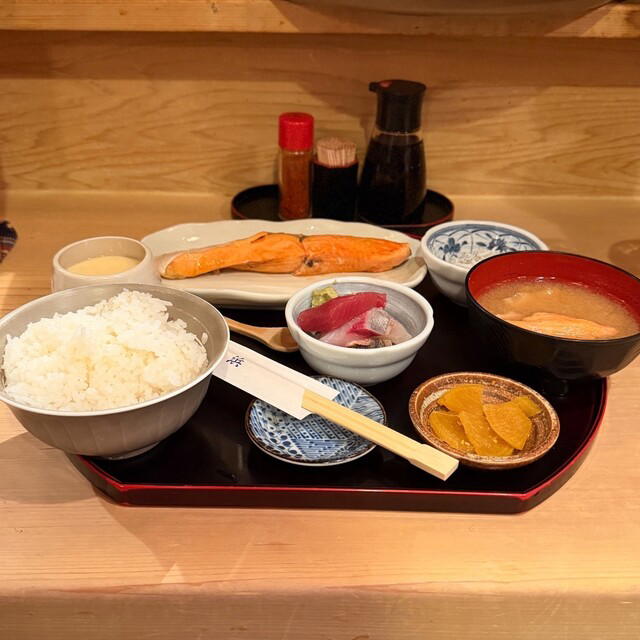
Tokyo changes register after office hours. The daytime traffic of quick lunches gives way to small groups moving toward casual dining rooms, shared tables, seafood, drinks, and the kind of izakaya cooking that treats drinking food as a discipline rather than an afterthought. Maihama belongs to that older Tokyo pattern: a weekday-minded place with a room built for regular use rather than ceremony.
The setting matters because Tokyo is not a neutral backdrop. This is a city of durable after-work routines, where practical restaurants are tightly linked to office schedules and repeat custom. In that setting, the lunch-versus-dinner split is not a gimmick. It is part of the rhythm: value and speed at midday, a fuller table and slower pacing in the evening.
Seafood-led izakaya cooking in a weekday Tokyo rhythm
Tokyo izakaya culture covers a broad range, from quick casual counters to more polished rooms with careful food. Maihama sits in the more food-serious part of that spectrum. Its categories are izakaya, cafeteria, and seafood. That combination says more than a generic cuisine label would: the meal is built around seafood and drinking-room usefulness, while keeping a practical canteen-like role at lunch.
The Tabelog Hyakumeiten recognition for 2025 gives the place a visible trust signal in a category where Michelin-style recognition is not the usual measure. Izakaya ranking culture in Japan tends to reward consistency, category fluency, and local loyalty rather than only luxury technique. A 3.68 Tabelog score places it in a competitive tier for a casual-format restaurant, especially in a city where scores above the mid-threes can already indicate strong local demand.
Compared with quick-service options such as Oniyanma Shimbashi ten, the appeal here is not speed alone. Compared with a more specialised counter such as Tachiguisushi Akira, the format is broader and less single-subject. The useful comparison is with Tokyo’s wider drinking-dining tradition: seafood, rice, drinks, and a room that can handle everyday use without pretending to be a destination dining room.
That distinction is useful for travellers. Tokyo visitors often overcorrect toward formal tasting menus or single-dish pilgrimages, then miss the daily restaurant forms that keep the city fed. Izakaya dining is where ordering breadth, drinking pace, and group appetite matter. Maihama’s listed identity points to a flexible, everyday format rather than a tasting-menu format, so the experience belongs to the shared-room side of Tokyo dining.
Lunch is the value play; dinner is the fuller izakaya reading
The editorial case for Maihama is strongest when lunch and dinner are read separately. Lunch pricing sits at JPY 1,000 to JPY 1,999, which keeps it in the practical weekday bracket for Tokyo. Dinner moves to JPY 6,000 to JPY 7,999, where the izakaya format has more room for seafood, drinks, and a slower table. That gap is the point: the same restaurant serves two different versions of the city.
At lunch, the restaurant belongs to Tokyo’s office-economy logic. The midday appeal is practical rather than ceremonial, and the budget makes the case plainly. In a city built on repetition and quick decisions, showing up with a clear plan matters more than overplanning the meal as a special occasion.
Dinner shifts the calculation. The higher listed budget allows for a fuller izakaya reading, with seafood and the broader pacing of an evening meal doing more of the work. This is the service to choose for a more complete sense of the place as a casual dining room rather than simply a lunch stop.
The practical distinction should be treated plainly. Lunch is the value-led version; dinner is the deeper version. For some travellers, that will make lunch the obvious choice. For others, the evening budget is the point, because it gives the restaurant more space to show why it is recognised within its category.
How to place it in a Tokyo itinerary
Maihama is a better fit for travellers who want Tokyo in its everyday language, not only as a sequence of formal reservations. The access works best as part of a Tokyo day or evening, and the restaurant’s price structure makes it easy to decide whether it belongs at lunch or dinner. Treat it as a practical, category-specific stop rather than a grand occasion.
Planning should be simple. Dinner deserves more care than lunch, because recognised casual restaurants in Tokyo can draw steady demand. The room is best understood as part of the city’s regular dining fabric: useful, direct, and more about category fluency than ceremony.
The broader itinerary question is category. If the evening is meant to be more formal, Hirosaku points in a different direction. If the craving is for another focused Tokyo speciality, Kurobuta Tonkatsu Hori Ichi is a different lane. For seafood and izakaya dining in a Tokyo register, Maihama gives a clearer read on the city’s working-week dining culture. For wider planning, use Our full Tokyo restaurants guide, then cross-check city context through Our full Tokyo hotels guide, Our full Tokyo bars guide, Our full Tokyo wineries guide, and Our full Tokyo experiences guide.
Related Tokyo and Japan dining notes: for a stronger shortlist, compare Maihama only with other Tokyo dining rooms that match the same purpose, budget, and occasion. The useful filter is not novelty; it is whether the meal needs to be quick, category-specific, seafood-led, or part of a longer evening.
At-a-Glance Comparison
Comparable venues at a glance for context.
| Venue | Cuisine | Price | Awards | Notes |
|---|---|---|---|---|
| MaihamaThis venue (the venue you are viewing) | Japanese Izakaya | Not listed | Tabelog 100 #77 | Not listed |
| Paris Ogawa Ken Shimbashi ten | Japanese Bakery Café | $10–20 | Tabelog 100 #21 | Minato |
| DOMINICA Ginza ten | Soup curry specialty (Sapporo-style Japanese curry) | $10–20 | Tabelog 100 #74 | Chūō |
| Naniwaya cafe | Traditional Japanese taiyaki & sweets café | $1–10 | Tabelog 100 #21 | Minato |
| Momotaro | Traditional Japanese wagashi (confectionery) shop | Not listed | Tabelog 100 #86 | Taitō |
| Kikumi Senbei Sohonten | Japanese senbei shop | $1–10 | Tabelog 100 #91 | Bunkyō |
Recognition history
Dated appearances from independent guides and award organizations, with the underlying list record or original source where available.
Tabelog 100 #77 · No. 77
Tabelog · Tabelog 100 - Izakaya - EAST - 2025
Continue exploring
More in Tokyo
Restaurants in Tokyo
All restaurants in Tokyo →
Bars in Tokyo
All bars in Tokyo →
Details
- Classic
- Cozy
- Energetic
- Casual Hangout
- After Work
- Group Dining
- Solo
- Standalone
- Sake Program
- Beer Program
- Local Sourcing
- Set Menu
- A La Carte
- Sake
- Shochu
- Beer
Current opening hours
- Monday
- 11:30 AM–2 PM, 5–10:30 PM
- Tuesday
- 11:30 AM–2 PM, 5–10:30 PM
- Wednesday
- 11:30 AM–2 PM, 5–10:30 PM
- Thursday
- 11:30 AM–2 PM, 5–10:30 PM
- Friday
- 11:30 AM–2 PM, 5–10:30 PM
- Saturday
- Closed
- Sunday
- Closed
Hours can change for holidays and private events. Hours as of .