Qiao'Er Lubusong Food Store occupies the third floor of 18 Zhongshan Road East in Shanghai's Huangpu district, placing it within a neighbourhood defined by the tension between old Bund grandeur and contemporary dining ambition. The name signals regional specificity rather than metropolitan polish, which in Shanghai's current dining scene carries its own weight.
Pearl is the En Primeur Club membership app — saves, bookings, and concierge access live there. Same editors, same standards.
- Address
- China, Shanghai, Huangpu, 18, Zhongshan Rd (E-1), 18å·3å± é®æ¿ç¼ç
- Phone
- +862160718888
- Directions
- Get directions
 Saves & bookings on Pearl
Where the Bund's Edge Meets Regional Chinese Specificity
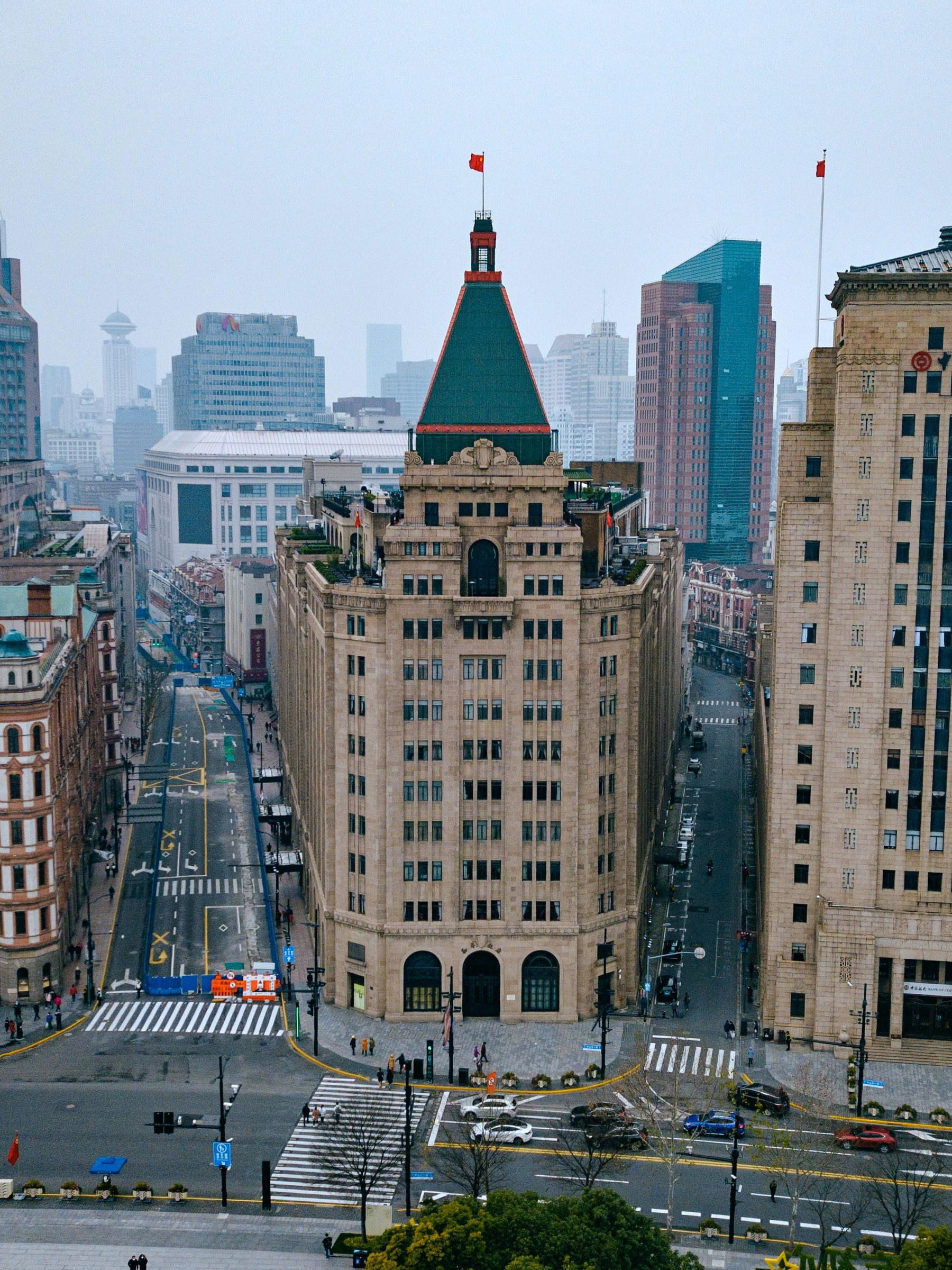
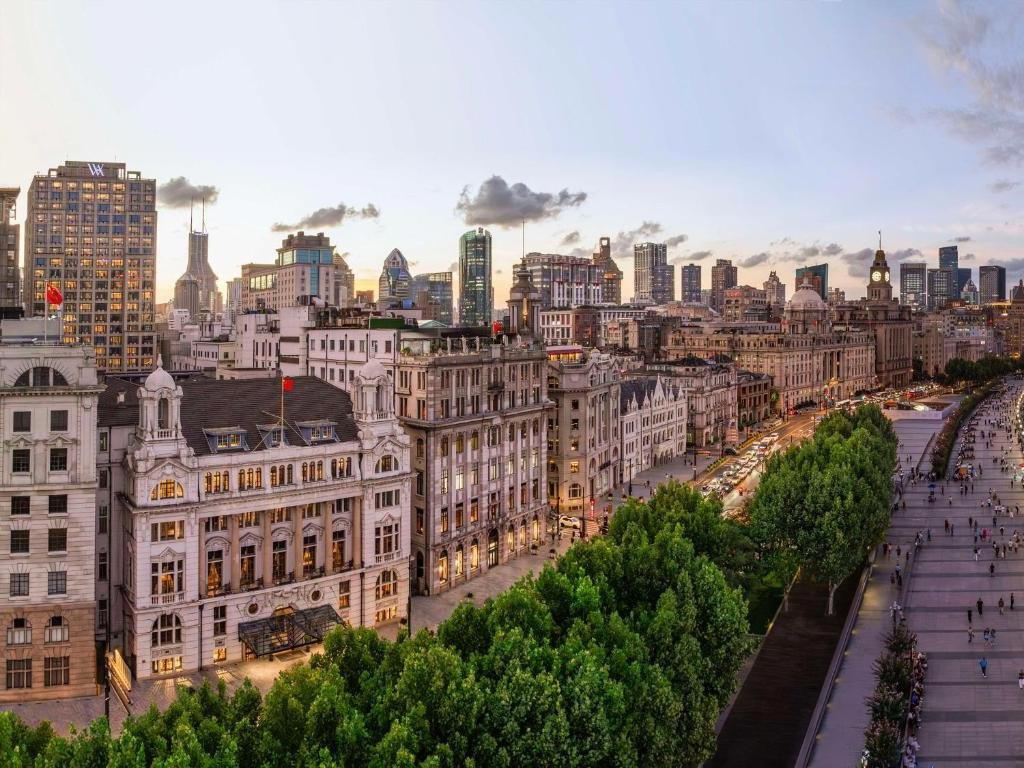
Zhongshan Road East, the Bund-facing artery that runs along Shanghai's most photographed waterfront, has long operated as a corridor between international aspiration and local identity. Hotels, trading houses, and colonial-era banking halls give the stretch its architectural backbone, but the dining picture at street level and above is more complicated. The third floor of number 18 sits above the tourist circuit without fully escaping it, a position that many of Shanghai's more regionally focused food operations have learned to use rather than resist. Qiao'Er Lubusong Food Store is a Shanghai restaurant serving Shanghai Noodles and Dumplings in Huangpu.
Reading the Name, Reading the Cuisine
In the broader context of Chinese regional dining, the word "store" (食店 or similar) in a restaurant name is a deliberate signal. It aligns the venue with a tradition of unpretentious, ingredient-forward regional cooking rather than the banquet-hall formality that dominated Chinese restaurant culture for decades. Shanghai has seen a wave of this naming convention as operators position themselves against the city's growing tier of formal fine dining, places like Taian Table at the modern European end, or Fu He Hui in the premium vegetarian register, by leaning into specificity and apparent simplicity.
The "Lubusong" element points toward a place or tradition rather than a chef's name or a generic descriptor, which in China's regional dining vocabulary typically anchors a restaurant to a specific culinary geography. Whether that geography is a county, a historical trade route, or a family origin matters less than the claim itself: this food comes from somewhere, not everywhere. That particularity is increasingly valued in a city where fusion and internationalism are available on nearly every block.
Shanghai's Huangpu District as a Dining Reference Point
Huangpu sits at the centre of Shanghai's densest restaurant concentration. The district contains everything from the city's highest-profile Michelin addresses to street-level soup counters that have operated for decades without reviewing or press attention. For regionally focused Chinese operations, Huangpu offers foot traffic and visibility, but it also means competing for attention against venues with significantly larger marketing infrastructure. The dining public here is varied: tourists following lists, expats working the international circuit, and a local clientele that is increasingly knowledgeable about regional Chinese distinctions and resistant to homogenised "Chinese food" as a category.
That last cohort, local diners who can distinguish between, say, the braise traditions of Zhejiang and those of Sichuan, represents the more demanding audience in this district. It is also the audience that venues like Qiao'Er Lubusong Food Store are most directly addressing. The contrast with Shanghai's Cantonese-focused houses (see 102 House for that tier) or the Taizhou specialists (as represented by Xin Rong Ji on West Nanjing Road) illustrates how granular Shanghai's regional Chinese dining has become.
The Broader Pattern of Regional Specificity in Chinese Dining
Across China's major cities, the past decade has seen a structural shift in how regional cuisines are presented to urban audiences. Chengdu, Hangzhou, Nanjing, and Suzhou have all developed venues that treat local ingredients and techniques as the primary credential rather than a supporting element. In Shanghai, that pattern plays out against a backdrop of international competition that does not exist in the same way in second-tier cities. A diner who can choose between 8 1/2 Otto e Mezzo Bombana and a regional Chinese specialist is making a different kind of decision than one who simply wants the leading available version of a local dish.
This dynamic has pushed some of the more interesting regional Chinese operations in Shanghai toward a clearer editorial identity. Rather than trying to appeal to everyone, venues in this positioning tier commit to a specific culinary argument. The risk is a narrower audience; the reward, in a city with Shanghai's dining density, is loyalty from a cohort that will return specifically for what you do. Similar pressures shape how regional specialists operate in other cities: Ru Yuan in Hangzhou, Dingshan·Jiangyan in Suzhou, and Dai Yuet Heen in Nanjing each represent different approaches to the same structural question about how regional identity translates into contemporary dining format.
Planning a Visit
Qiao'Er Lubusong Food Store is located on the third floor of 18 Zhongshan Road East (Zhongshan Dong Yi Lu 18 hao, 3 ceng), in Shanghai's Huangpu district. The Bund-area location means the surrounding streets are walkable from the Nanjing Road Pedestrian precinct and the major riverfront hotels, though the third-floor position requires navigating the building's interior rather than simply walking off the street into a ground-level room. The restaurant is walk-in friendly.
In the Wider Regional Chinese Context
Understanding what the restaurant represents is easier with a regional map in mind. The Chinese dining circuit across the Yangtze Delta and beyond includes a range of venues that share the same commitment to provenance-driven specificity. Xin Rong Ji in Beijing and Xin Rong Ji in Chengdu show how a Taizhou-rooted concept scales across cities while retaining its regional argument. Imperial Treasure in Guangzhou and Shang Palace in Yangzhou represent how hotel-backed Chinese dining handles regional identity at a different price tier. At the other end of the formality scale, operations in Fujian and Guangdong, such as Jiangnan Wok·Rong in Fuzhou and Fleurs Et Festin in Xiamen, and Chef Tam's Seasons in Macau illustrate the full spectrum from casual-regional to fine-dining-regional. Against that range, the restaurant's positioning appears to sit closer to the specific-and-unfussy end, which in Shanghai's current market is a meaningful editorial stance rather than a default.
Side-by-Side Snapshot
Comparable venues nearby, for context on price, style, and recognition.
| Venue | Cuisine | Price | Notes |
|---|---|---|---|
| Qiao'Er Lubusong Food StoreThis venue — the venue you are viewing | Shanghai Noodles and Dumplings | $ | Not listed |
| èæ£å ´èé¦ | Old Zheng Market Vegetable Hall | Not listed | Huangpu |
| Gongdelin | Shanghainese Vegetarian Mock Meat | $$ | Huangpu |
| Xing Guo Lu | Shanghainese | $$ | Xujiahui |
| Canton 8 | Cantonese | $$ | Huangpu |
| Shanghai Film Art Center Popcorn | Popcorn | $ | Xujiahui |

At a Glance
- Casual Hangout