Piotto
Our verdict
Piotto occupies the second floor of a building on Dalmaji-gil in Haeundae-gu, one of Busan's most architecturally considered coastal corridors. The address places it within a dining district that has steadily drawn independent operators away from Seomyeon's commercial density, toward a more residential, view-facing stretch of the city. For visitors already tracking Busan's evolving restaurant scene, it warrants attention alongside contemporaries like Palate and Mori.

Pearl is the En Primeur Club membership app, where members save venues, book tables and use the concierge.

Dalmaji-gil and the Shift in Busan's Fine-Dining Geography
Busan's serious restaurant conversation used to begin and end in Seomyeon. Over the past several years, that gravity has shifted, with a cluster of independent operators choosing the Haeundae coastal corridor instead. Dalmaji-gil, the winding road that traces the hillside above Cheongsapo and toward Songjeong, has become one of the more interesting addresses in that migration. The road is known primarily for its cherry blossom season draw, but the restaurants that have taken up positions along it are banking on something more sustained: a clientele that arrives for the setting and stays for the food.
Piotto sits on this corridor, on the second floor of a building at 219 ECKE, Dalmaji-gil 117beonga-gil in Haeundae-gu. The elevation matters. Second-floor dining on Dalmaji-gil typically means a view that earns its keep, framing the East Sea at the kind of angle that ground-floor operators on the strip cannot offer. The physical approach, climbing to a room that opens above the treeline, sets a particular register before any food arrives. This is a pattern across the better addresses in coastal Busan: the room is part of the argument.
How the Hours Shape the Experience
In Busan's mid-to-upper dining tier, the lunch and dinner divide is more pronounced than it is in Seoul. Restaurants on scenic corridors like Dalmaji-gil attract a daytime crowd that is often tourist-adjacent, visiting for the view and the road's well-documented seasonal appeal. Evening service, by contrast, tends to draw a more local, destination-minded diner who has made a specific choice rather than a convenient one. This split in clientele shapes the atmosphere as much as the menu does.
At a venue positioned the way Piotto is, with a fixed address on a road that peaks in visibility during cherry blossom season and quiets significantly outside of it, the lunch hour carries a different energy than dinner. Afternoon light through a second-floor window on the Haeundae hillside is a concrete asset; it defines the room in a way that evening candlelight at a comparable address cannot replicate. Readers planning around this should consider that the daytime version of a room like this often delivers the fuller visual return, while the evening version tends toward the more controlled, concentrated dining experience. Neither is a lesser choice, but they are genuinely different propositions. The practical implication: if you are making the trip specifically for the location's scenic payoff, a lunch reservation, where bookings allow, makes geographic sense.
This lunch-dinner dynamic is not specific to Piotto. It characterises the better part of Busan's coastal dining circuit. Palate in the contemporary tier and Mori at the Japanese end of the market both operate within a city where the daytime and evening service draw on meaningfully different audiences. The gap is less visible in Seoul, where Mingles and comparable addresses run consistent evening-focused programs year-round. In Busan, the view and the hour are part of the product in a way that Seoul's urban rooms are not.
Placing Piotto in Busan's Current Restaurant Field
Busan's dining field now spans a wider range of formats and price points than it did even five years ago. At the lower end, long-running specialists like 100.1. Pyeongnaeng and 1969 Buwondong Kalguksu continue to anchor the city's traditional eating culture with the kind of institutional consistency that no amount of new openings can displace. At the upper end, Born and Bred positions itself firmly in the premium steakhouse category at ₩₩₩₩. What is confirmed is its address on a corridor that self-selects for a certain kind of diner: one who has crossed the city with a specific destination in mind, rather than stumbling in from a hotel lobby.
That self-selection matters editorially. Restaurants on Dalmaji-gil are not passing-trade venues. Getting there requires intention. This filters the room in ways that central Busan addresses, close to the BIFF Square or Nampo-dong, do not. The peer comparison, therefore, is less about price tier and more about format: Piotto belongs to a set of independent, location-led Busan restaurants where the physical context is a deliberate part of the case being made. For a broader map of how these venues fit together across the city, the EP Club Busan restaurants guide provides the fuller picture.
What to Expect and How to Plan
Readers should treat them as a framework and verify specifics directly before visiting.
Dalmaji-gil is most accessible by taxi from Haeundae Beach, a journey of around ten to fifteen minutes depending on traffic, or by local bus along the coastal route. The road's popularity during cherry blossom season, typically late March to early April, means that approach traffic and parking pressure can be considerable during that window. Outside of spring, the corridor is quieter, and a visit in autumn, when the hillside light shifts and the East Sea takes on a deeper colour, is a different and arguably calmer experience.
Given the second-floor position and the room's likely orientation toward the view, reservations are advisable for any meal where the table placement matters. Walk-in availability will depend on service period and season; during the spring peak, that window narrows considerably across all Dalmaji-gil venues. For comparable reservation dynamics at the higher end of the Busan market, the patterns at Mori are instructive. Elsewhere in South Korea, the reservation culture at Jeju addresses like Badang Lounge and at precision-focused venues like Atomix in New York illustrates how location-led rooms at any tier tend to fill around specific seasonal or experiential draws.
Frequently asked questions
What's Piotto's location?
Piotto is located at South Korea, Busan, Haeundae-gu, Jung-dong, Dalmaji-gil 117beonga-gil, 219 ECKE 2층 201í¸, Busan.
Is Piotto suitable for a special occasion dinner in Busan?
Piotto's location on Dalmaji-gil in Haeundae-gu places it within the corridor that has absorbed much of Busan's shift toward destination dining outside Seomyeon. The second-floor setting at ECKE, Jung-dong, suggests a degree of separation from street-level noise, which tends to suit occasion dining.
What should I order at Piotto?
Given the venue's position on Dalmaji-gil in Haeundae-gu, one of Busan's more scenically positioned dining corridors, the format likely skews toward considered, course-driven service rather than à la carte selection. Contacting the venue directly before visiting is the most reliable way to understand current offerings.
Do they take walk-ins at Piotto?
Restaurants operating in Busan's mid-to-upper dining tier on corridors like Dalmaji-gil tend to run tighter seatings, particularly on weekends when the hillside road draws significant foot traffic from Haeundae. Reaching out in advance is strongly advisable rather than arriving without a reservation.
What's the defining dish or idea at Piotto?
What the address does signal is context: Dalmaji-gil 117beonga-gil in Jung-dong sits within the stretch that has drawn a more deliberate, destination-minded restaurant crowd to Haeundae-gu. The format and philosophy are best verified directly with the venue.
Where It Fits
Comparable venues nearby, for context on price, style, and recognition.
| Venue | Cuisine | Price | Awards | Notes |
|---|---|---|---|---|
| PiottoThis venue (the venue you are viewing) | Contemporary Italian | Not listed | Not listed | Not listed |
| Osteria Aboo | Authentic Southern Italian with Busan Seafood | $50–100 | Michelin Plate | Jeonpo 1(il)-dong |
| í ë¼íì¿ ê° | Traditional Korean Steakhouse | $50–100 | Not listed | Jung 1(il)-dong |
| Laemji | Modern Korean Seafood | Not listed | Not listed | Millak-dong |
| Vigneto | Authentic Italian with Natural Wines | Not listed | Michelin Plate | Gwangan 2(i)-dong |
| Scents | Fermentation-Focused Asian Bistro | Not listed | Star Wine List | Namcheon 1(il)-dong |
Continue exploring
More in Busan
Restaurants in Busan
All restaurants in Busan →
Bars in Busan
All bars in Busan →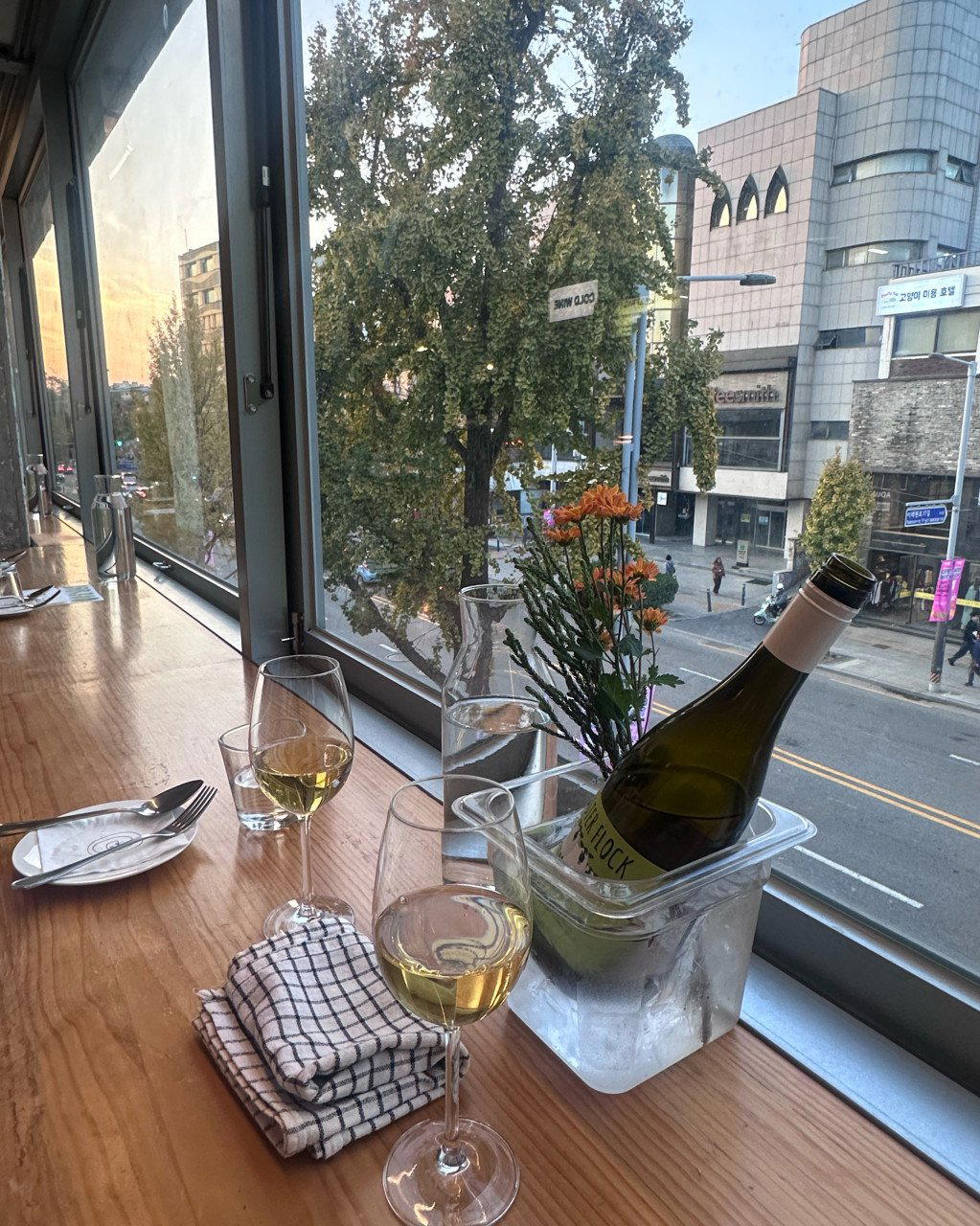
Details
- Intimate
- Cozy
- Modern
- Date Night
- Special Occasion
- Standalone
- Farm To Table
- Local Sourcing
- Tasting Menu
Current opening hours
- Monday
- Closed
- Tuesday
- Closed
- Wednesday
- 6–10 PM
- Thursday
- 6–10 PM
- Friday
- 6–10 PM
- Saturday
- 6–10 PM
- Sunday
- 6–10 PM
Hours can change for holidays and private events. Hours as of .
Intimate and charming space perched on Dalmaji Hill with natural, understated style and meticulous attention to detail.