Pilar Cuban Eatery
This listing is retired after a June 2026 status audit found the place inactive at its stored address.
- Address
- 397 Greene Ave, Brooklyn, NY 11216
- Phone
- +1 551 210 2294
- Website
- pilarny.com
- Directions
- Get directions
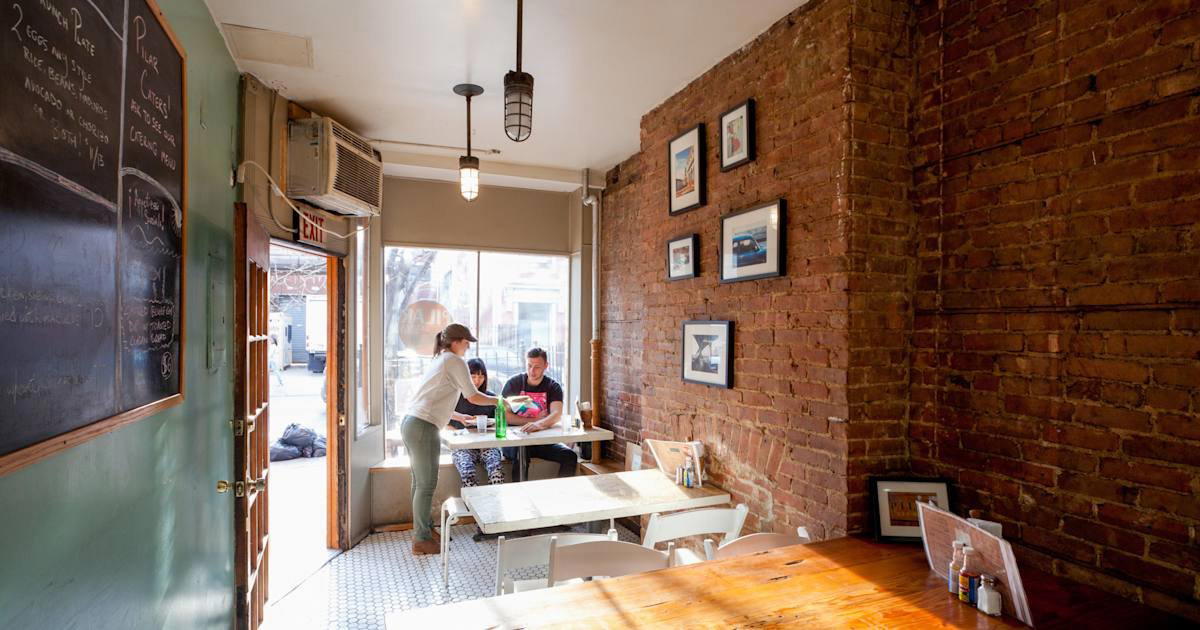
Brooklyn's Diaspora Kitchen Circuit and Where Pilar Sits
New York's most interesting Cuban cooking has never been concentrated in Manhattan. The borough-level geography matters here: Brooklyn's Bedford-Stuyvesant and Crown Heights corridors have absorbed successive waves of Caribbean and Latin American diaspora restaurants over the past two decades, and the result is a street-level dining register that operates on entirely different terms from the $$$$ tasting-menu rooms that dominate the city's critical conversation. Places like Le Bernardin, Atomix, and Eleven Madison Park define one axis of New York dining; Pilar Cuban Eatery is an Authentic Cuban restaurant in Brooklyn, priced at about $20 per person, and the distinction is worth sitting with before you book.
Greene Avenue in Bed-Stuy runs through a neighbourhood that has changed considerably since the early 2000s. The block-by-block character has shifted from predominantly residential to a mixed strip where independent food operators compete with renovated brownstone foot traffic. Cuban eateries in this context face a specific competitive pressure: they sit between fast-casual Caribbean counters on one side and the kind of chef-driven Latin American restaurants that have drawn editorial attention in Brooklyn over the past five years on the other. Pilar occupies a position in that middle register, where the promise is recognisable Cuban cooking at a neighbourhood price point rather than reinvention or spectacle.
The Evolution of Cuban Cooking in New York's Outer Boroughs
Cuban restaurant culture in New York has gone through at least two distinct phases since the 1990s. The first was the Lechonera model: large-format, family-style rooms in Jackson Heights and the South Bronx, built around roast pork, rice and beans, and a clientele that prioritised volume and familiarity. The second phase, arriving more gradually through the 2010s, saw smaller operators in Brooklyn and upper Manhattan begin producing Cuban food with tighter sourcing and more deliberate presentation, without abandoning the cooking's essential character. That shift mirrors what happened to other diaspora cuisines across the same period: the Vietnamese pho shops that became broth-focused independents, the Sichuan canteens that grew into reservation-required rooms.
Pilar belongs to this second phase, at least in its stated register. The Greene Avenue address places it in a neighbourhood where the customer base has diversified considerably, and where the expectations brought to a Cuban eatery now include some of the quality signals that the first-phase Lechonera model never needed to address. This does not mean the cooking has been hybridised or pulled toward fusion; it means the frame around it has changed. In cities like San Francisco, where Lazy Bear has made the case for highly evolved American tasting formats, or in New Orleans, where Emeril's helped define what a regional cuisine could become in a fine-dining register, the trajectory from neighbourhood staple to serious independent is well-documented. Brooklyn's Cuban scene is at an earlier point on that curve.
What the Bed-Stuy Location Signals About the Format
Arriving at 397 Greene Avenue, the neighbourhood context does most of the framing work. Bed-Stuy is not a destination dining district in the way that, say, the blocks around Per Se in Columbus Circle or Masa in the Time Warner Center are destination dining districts. It is a residential neighbourhood with a food scene that rewards local knowledge. That positioning shapes the experience before you sit down: the expectation is a functioning neighbourhood restaurant, not a performance space.
Cuban eateries that thrive in this kind of location tend to do so through consistency rather than novelty. The cooking that sustains a block-level repeat-customer base in Bed-Stuy is different from the cooking that drives destination traffic to, say, Blue Hill at Stone Barns in Tarrytown or Single Thread Farm in Healdsburg. The ambition is lateral rather than vertical: depth within a defined idiom rather than expansion beyond it. That is not a criticism. Particularly durable restaurants in any city hold exactly this position, and the outer-borough Cuban category in New York has produced genuinely authoritative cooking within these constraints.
For visitors approaching Pilar from outside the neighbourhood, the practical calculus is different from what applies at the city's ceremony-forward tables. The dress code is casual, and reservations are recommended.
Cuban Cooking as a Category: What to Understand Before You Eat
Cuban cuisine in the United States carries a specific interpretive tension. The cooking that developed in Miami's Cuban-American community over sixty years diverged substantially from what remained accessible inside Cuba itself, and both have diverged again from the romanticised version that appears in fusion menus across American cities. Particularly honest Cuban eateries in New York work within one of these traditions explicitly rather than blending them for a perceived mainstream palate.
The canonical reference points are not obscure: ropa vieja, picadillo, lechón asado, black beans cooked low and long, plantains in multiple preparations. These dishes are not simple to execute well at volume; the margins for error in slow-cooked proteins and bean cookery are narrower than they appear. Restaurants from The French Laundry in Napa to Providence in Los Angeles have made the case that regional American cooking at the highest level requires deep fidelity to source ingredients and technique. The same principle applies, less visibly, in a Brooklyn Cuban eatery: the quality of the bean, the patience of the braise, and the fat management in the plantain tell you everything about the kitchen's standards.
For a full map of where Pilar sits within New York's broader restaurant geography, our New York City restaurants guide covers the full range from neighbourhood independents to the city's most formally recognised tables. Comparable editorial depth on producer-driven American cooking is available through our coverage of Frasca Food and Wine in Boulder, The Inn at Little Washington, and European reference points including Atelier Moessmer Norbert Niederkofler in Brunico and Dal Pescatore in Runate.
Planning Your Visit
Pilar Cuban Eatery is located at 397 Greene Avenue, Brooklyn, NY 11216, in the Bedford-Stuyvesant neighbourhood. The venue sits in a residential-commercial mixed block accessible via the C and G subway lines. As a neighbourhood eatery rather than a destination-category restaurant, the booking approach, dress code, and price structure are direct.
Quick reference: 397 Greene Ave, Brooklyn, Authentic Cuban restaurant, price tier 2, reservations recommended.
A Tight Comparison
Comparable venues nearby, for context on price, style, and recognition.
| Venue | Cuisine | Price | Notes |
|---|---|---|---|
| Pilar Cuban EateryThis venue — the venue you are viewing | Not listed | $$ | Not listed |
| Pat'e Palo Bar & Grill | Inwood, Dominican Caribbean Grill | $$ | Not listed |
| Ajo y Orégano | Bronx, Traditional Dominican & Caribbean | $$ | Not listed |
| Brisas del Mar Queens | Woodhaven, Authentic Dominican Caribbean | $$ | Not listed |
| Good Taste | Not listed | $$ | Crown Heights (North), Authentic Haitian |
| Cafe Con Leche | Not listed | $$ | Upper West Side (Central), Authentic Puerto Rican Criolla |
Continue exploring
More in New York City
Restaurants in New York City
Browse all →
Bars in New York City
Browse all →
Hotels in New York City
Browse all →






At a Glance
- Cozy
- Intimate
- Rustic
- Casual Hangout
- Brunch
- Standalone