Pat'e Palo Bar & Grill
Our verdict
Pat'e Palo Bar & Grill occupies the northern edge of Manhattan at 251-3 Dyckman Street in Inwood, a neighbourhood where Dominican and Caribbean cooking traditions have shaped the local dining character for decades. The bar and grill format places it within a category that prizes informality and directness over ceremony. Visitors to this corner of upper Manhattan will find a scene defined by neighbourhood loyalty and a distinct distance from the Midtown dining circuit.

Pearl is the En Primeur Club membership app — saves, bookings, and concierge access live there. Same editors, same standards.
- Address
- 251-3 Dyckman St, New York, NY 10034
- Phone
- (646) 918-6242
- Hours
- Mon ClosedTue–Thu 2 PM–2 AMFri 2 PM–4 AMSat 12 PM–4 AMSun 12 PM–2 AM
- Website
- patepalony.com
- Directions
- Get directions
Inwood's Dining Identity and Where Pat'e Palo Bar & Grill Sits Within It
Dyckman Street is one of the few strips in Manhattan that has largely resisted the southward pull of the city's restaurant press. The blocks between Nagle Avenue and the river have cultivated a dining culture rooted in Caribbean and Dominican cooking, with the bar and grill format functioning as a community anchor rather than a destination play. In this context, Pat'e Palo Bar & Grill at 251-3 Dyckman Street operates within a neighbourhood framework where regulars and returning visitors tend to outweigh first-time tourists looking for a new pin on a map. That structural reality shapes everything about the experience: the rhythm of service, the physical arrangement of the space, and the relationship between the room and the street outside it.
For reference, the downtown Manhattan dining conversation currently runs through a set of heavily documented tasting-menu counters. Operations like Le Bernardin, Atomix, Eleven Madison Park, Masa, and Per Se represent one end of the city's spectrum, where prix fixe pricing at the $$$$ tier and advance booking windows of weeks to months are the norm. Pat'e Palo Bar & Grill occupies a fundamentally different position in the city's structure: a neighbourhood bar and grill format that answers to a different set of expectations entirely. Understanding that gap is the most useful orientation for anyone approaching Dyckman Street from outside the neighbourhood.
The Physical Container: Space, Design, and the Logic of a Bar and Grill
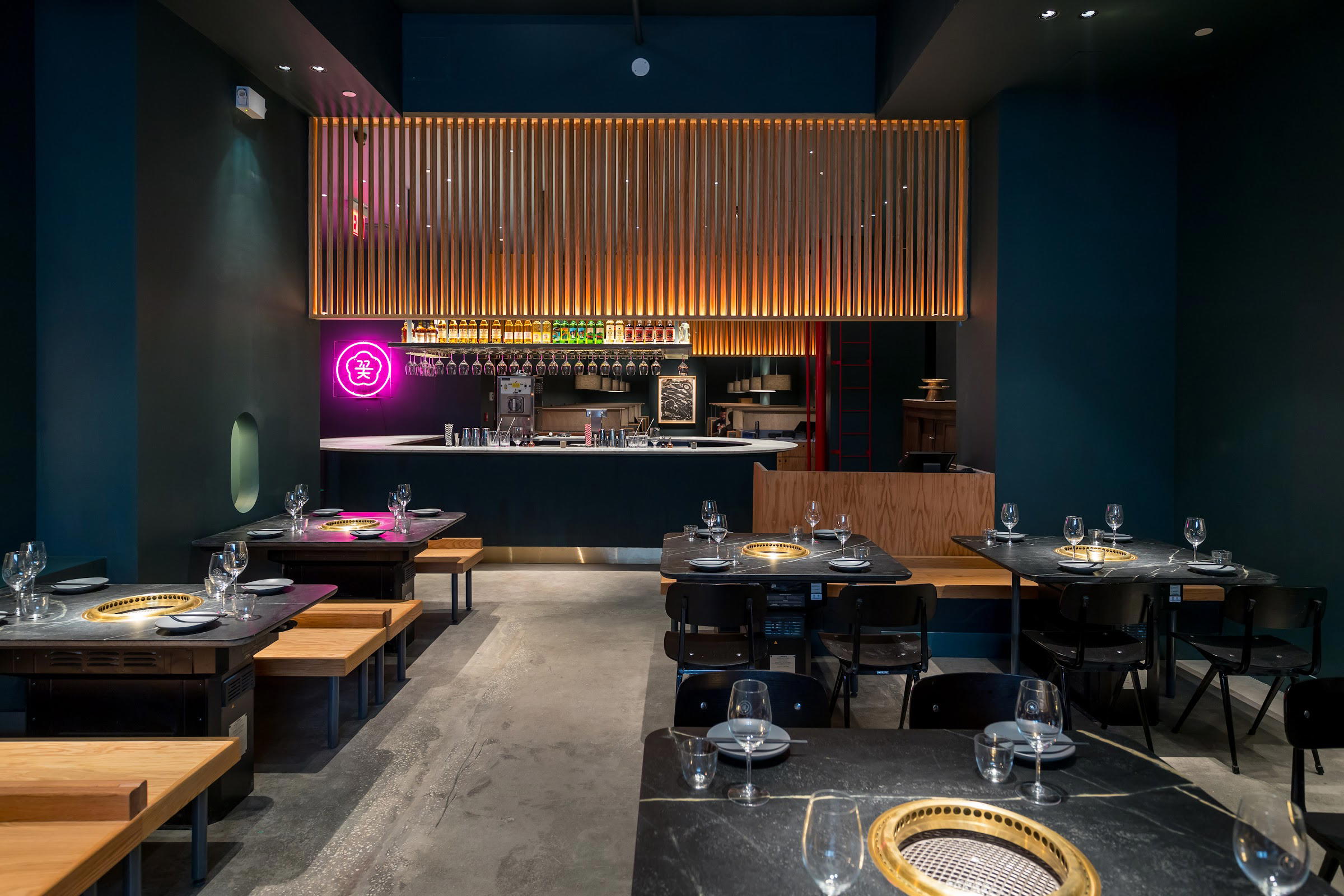
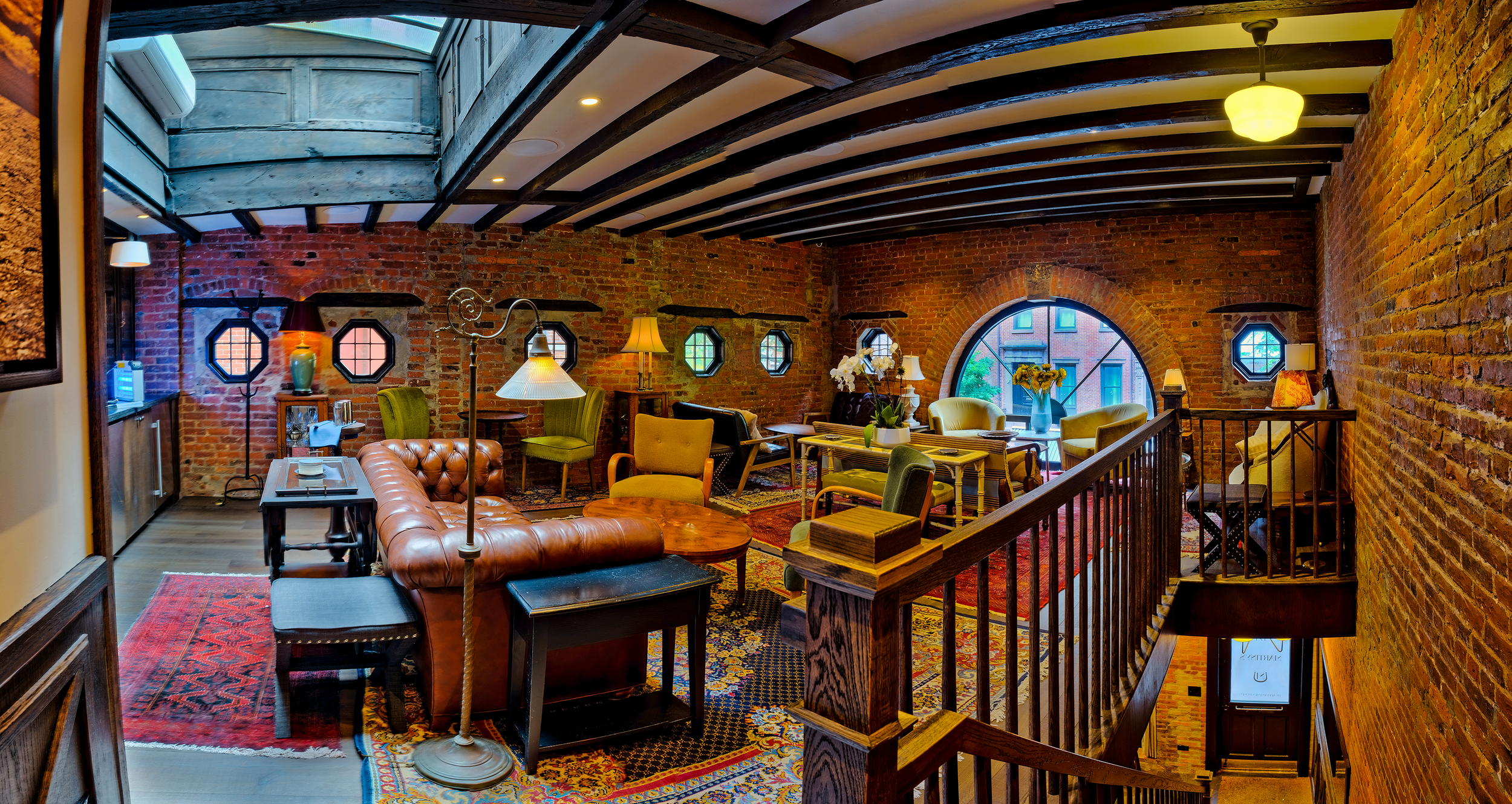
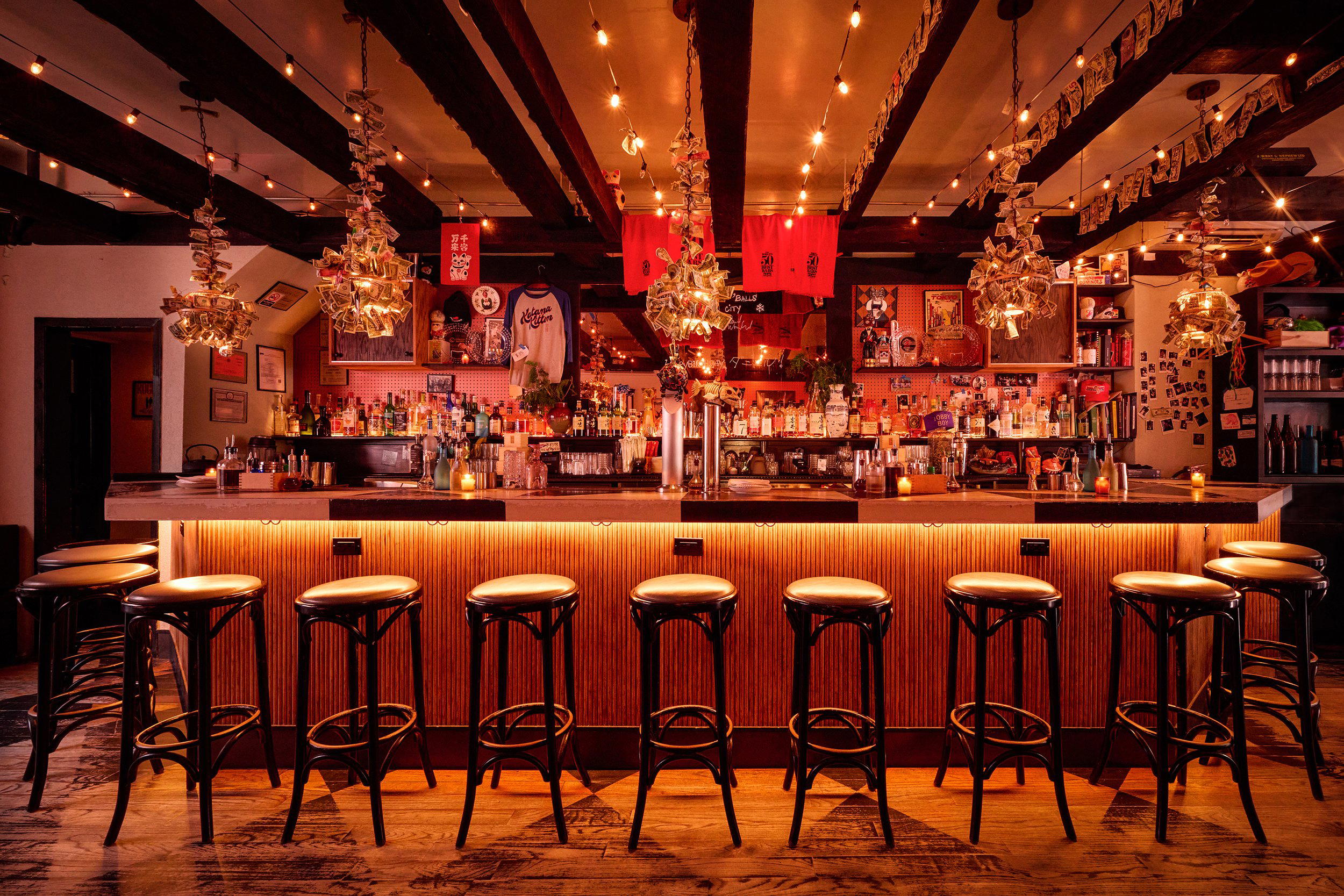
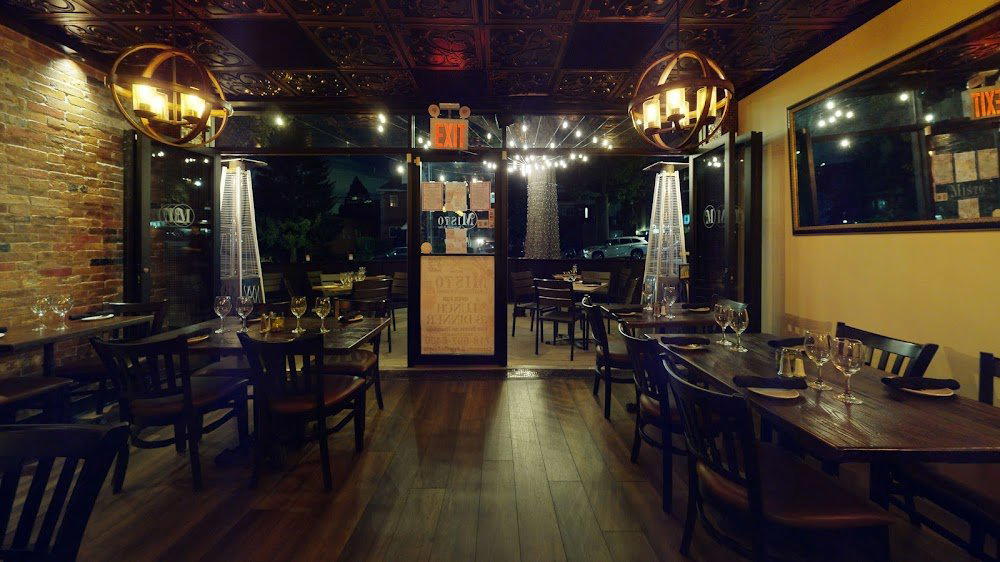
The bar and grill typology carries specific spatial expectations that inform how any venue in this category is read by its audience. A bar runs along one axis, functioning as both a service point and a social gathering surface. The grill implies heat, directness, and speed — a kitchen approach oriented toward executed plates rather than constructed courses. Together, these two elements create a physical and operational logic that is legible the moment a guest enters: where to stand, where to sit, how long a visit might run, and what kind of conversation the space accommodates.
On Dyckman Street, the bar and grill format exists inside a streetscape that rewards foot traffic and walk-in culture. The exterior of a venue along this corridor is typically read at eye level from the pavement, not from a photograph on a booking platform. That street-level relationship between the space and the neighbourhood around it is a defining feature of how venues in this category accumulate their regulars. The physical container, in other words, is as much about its address as its interior.
Across American cities, bar and grill formats that survive across years tend to do so because the space itself functions reliably as a third place: not home, not office, but a room with a consistent temperature, a consistent cast, and a consistent offer. Venues like Emeril's in New Orleans or Smyth in Chicago each occupy their own distinct tier and format, but the principle holds across categories: the durability of a dining space is tied to whether the room itself communicates something specific to the person walking through the door. The bar and grill communicates informality, access, and directness — three qualities that map well onto Dyckman Street's existing social character.
Inwood as a Dining Neighbourhood: What the Address Signals
Inwood sits at the northern tip of Manhattan, above Washington Heights, separated from the Bronx by the Harlem River. The neighbourhood has not developed the kind of restaurant press density found in the East Village, the West Village, or even Harlem. Awards circuits and Michelin coverage have historically skewed toward lower Manhattan and the central boroughs, leaving a tier of functional, neighbourhood-anchored venues operating entirely outside the documented dining establishment.
This matters practically. When consulting our full New York City restaurants guide, the weight of coverage naturally clusters downtown. A venue at 251-3 Dyckman Street occupies a part of the city where word-of-mouth and repeat custom are the primary drivers of reputation. That is neither a strength nor a weakness in isolation; it is a structural fact that shapes what a first-time visitor should expect and how they should prepare.
The contrast is worth holding against venues where critical documentation is thick. Properties like Blue Hill at Stone Barns in Tarrytown or The French Laundry in Napa operate in environments where external validation reinforces and amplifies the dining experience before the guest arrives. At the Dyckman Street end of the spectrum, the absence of that external scaffolding places the full weight of the experience on the room itself and the people in it, which is, for many diners, a more honest arrangement.
For those travelling specifically to eat in the upper Manhattan corridor, venues in the Inwood and Washington Heights area represent a meaningful counterweight to the experiences available at destination-tier operations like Providence in Los Angeles, Addison in San Diego, or Single Thread Farm in Healdsburg. Those venues require planning, spend, and advance logistics. Dyckman Street does not, and that accessibility is part of its specific value to a visitor with some flexibility in their itinerary.
Internationally, the comparison to neighbourhood-anchored formats holds across traditions. The kind of directness found in a bar and grill on Dyckman Street has parallels in how Dal Pescatore in Runate functions within its own rural Italian context, or how Frasca Food & Wine in Boulder positioned itself as a community-scaled operation before accruing external recognition. The spatial logic is different in each case, but the underlying orientation toward local audience over destination audience is consistent.
Planning Your Visit
Pat'e Palo Bar & Grill is located at 251-3 Dyckman Street in Inwood, Manhattan, New York, NY 10034. The A train stops at Dyckman Street (207th Street station), placing the venue within walking distance of the subway. Given the neighbourhood walk-in culture, arriving without a reservation is likely the standard approach, though verifying current hours and any booking arrangements directly with the venue before travel is advisable.
For visitors also exploring tasting-menu formats during a New York trip, operations like The Inn at Little Washington, Lazy Bear in San Francisco, or Atelier Moessmer Norbert Niederkofler in Brunico represent the opposite end of the format and logistical spectrum. Pat'e Palo Bar & Grill, by contrast, is a Dyckman Street address first, accessible, neighbourhood-facing, and leading approached on those terms.
Quick reference: 251-3 Dyckman Street, Inwood, New York, NY 10034. Nearest subway: A train to Dyckman St/207th St. Confirm hours and booking directly before visiting.
Frequently asked questions
Where is Pat'e Palo Bar & Grill located?
Pat'e Palo Bar & Grill is located at 251-3 Dyckman St, New York, NY 10034, New York City.
What kind of neighbourhood is Inwood, and does it affect the experience at Pat'e Palo Bar & Grill?
Inwood sits at the northernmost tip of Manhattan, above Washington Heights, and its dining corridor on Dyckman Street has a distinctly local character shaped by a large Dominican community. Pat'e Palo Bar & Grill at 251-3 Dyckman Street sits within that context, meaning the surrounding block offers a density of bars and casual restaurants that make the area a destination in its own right rather than a detour. Visitors arriving by subway use the A train at Dyckman Street (207th Street station), placing the venue within easy reach of the rest of Manhattan.
What do people recommend at Pat'e Palo Bar & Grill?
Specific dish recommendations are best gathered from recent visitor reviews, as menus at bar and grill venues on Dyckman Street tend to reflect the neighbourhood's Dominican and Caribbean influences alongside American grill staples. The bar programme is typically central to the experience at venues in this format.
What's the best way to book Pat'e Palo Bar & Grill?
Walk-in is a reasonable approach for a Dyckman Street bar and grill, where counter and bar seating often accommodates drop-in guests without advance reservation.
How does Pat'e Palo Bar & Grill handle allergies?
No allergy policy is documented in our venue records for Pat'e Palo Bar & Grill. Standard practice at bar and grill operations is to accommodate common dietary requests when flagged to staff at the time of ordering. Guests with serious allergies should check the venue's official channels before visiting to confirm current kitchen protocols.
Where It Fits
Comparable venues nearby, for context on price, style, and recognition.
| Venue | Cuisine | Price | Notes |
|---|---|---|---|
| Pat'e Palo Bar & GrillThis venue — the venue you are viewing | Dominican Caribbean Grill | $20–30 | Not listed |
| Cas West Indian & American Restaurant | Jamaican / West Indian | $20–30 | Crown Heights |
| The Door | Authentic Jamaican | $20–30 | Baisley Park |
| Madera | Cuban Steakhouse & Grill | $30–50 | Long Island City-Hunters Point |
| Paladar | Authentic Hispanic Latin Cuisine | Not listed | Lower East Side |
| Bird Pepper | Caribbean | Not listed | Prospect Heights |