Ajo y Orégano

Our verdict
Ajo y Orégano belongs to New York City’s Dominican-Caribbean dining grammar: generous stews, plantain, pork, garlic, and dining rooms that treat color and volume as part of the meal. Its recognition has centered on abundance and texture rather than tasting-menu polish, which makes it a useful counterpoint to the city’s formal luxury circuit.

Pearl is the En Primeur Club membership app, where members save venues, book tables and use the concierge.
The menu
What to order
- Gandules con coco
- Pernil
- Mofonguitos
- Pollo guisado
- Chimi sliders
- Mofongo
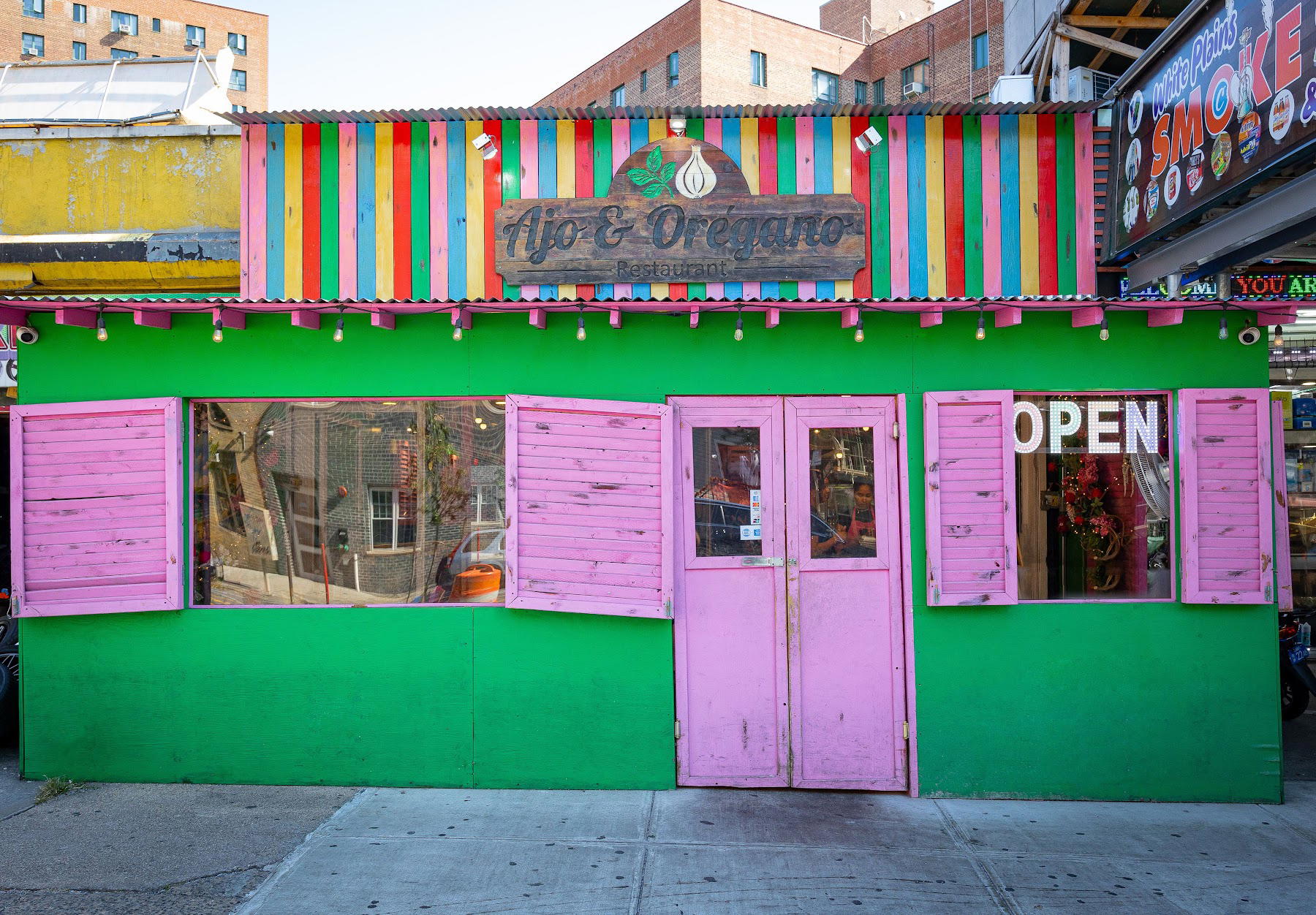
Pink shutters against palm-green walls set the tone before the food does. New York’s Dominican restaurants often work in a register that is physical rather than hushed: metal pots, painted lids, heavy stews, plantain built for sauce, pork judged by crackle as much as tenderness. Ajo y Orégano fits that Bronx-to-city tradition without sanding off its appetite. The room’s color matters because Dominican-Caribbean cooking in New York is not only about recipes; it is about migration, family-scale portions, and ingredients that travel from home kitchens into commercial dining rooms with little interest in behaving like Midtown formality.
The ingredient story is direct. Garlic is not a garnish here; it is a governing force. Oregano, pork skin, shrimp, mashed plantain, and long-cooked stews point to a Dominican pantry shaped by preservation, heat, starch, and thrift turned celebratory. In a city where luxury dining often signals itself through scarcity, this cooking argues from the opposite direction: weight, sauce, volume, and the pleasure of a pot placed on the table. That difference is why the restaurant reads as part of New York’s food culture rather than as a novelty within it.
Ajo y Orégano awards and recognition
Critical attention has focused on the dining room’s exuberance and the kitchen’s command of texture: slow-moving stews, pernil skin with audible crunch, and mofongo built around mashed plantain and garlic-heavy sauce. Those details matter because they frame Dominican food through technique, not nostalgia. Crackling pork skin is a test of timing and moisture control; mofongo depends on plantain texture and the balance between starch, fat, and sauce. Recognition of that craft helps place Caribbean cooking inside New York’s serious dining conversation, not outside it as comfort food alone.
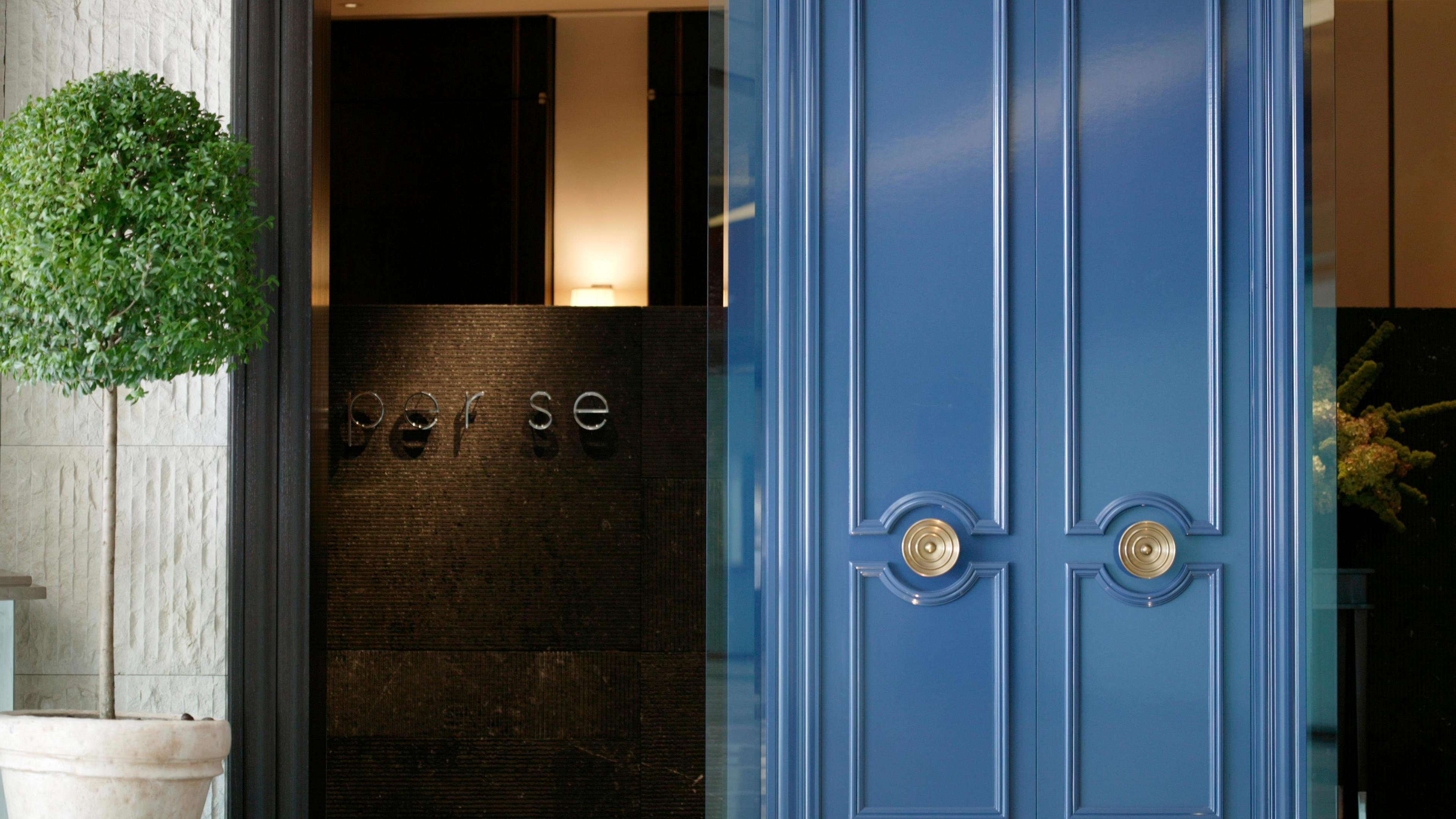
That conversation usually tilts toward tasting menus, imported luxury ingredients, and reservation scarcity. Readers comparing the city’s range can see the contrast in formal rooms such as Le Bernardin, Atomix, Masa, Per Se, and Jungsik New York. The point is not that these restaurants compete for the same night out. It is that New York’s dining identity depends on both poles: the choreographed counter or dining room, and the neighborhood table where garlic, pork, plantain, and stew carry equal cultural authority.
Getting to Ajo y Orégano
The restaurant sits on White Plains Road, with another location in the city, which places it closer to New York’s Dominican daily life than to the hotel-and-theater circuit. That geography is part of the appeal for travelers who understand that the city’s food map is not centered only below 59th Street. The Bronx has long been one of New York’s essential Caribbean and Latin American dining boroughs, and Dominican cooking is among the cuisines that make that case clearly.
For planning across the city, treat this as a different kind of meal from the high-ceremony bookings that dominate many visitor itineraries. It is better read alongside a broader New York City food plan than as a substitute for fine dining. Use Our full New York City restaurants guide for the wider restaurant map, then pair the trip with neighborhood-aware planning from Our full New York City hotels guide, Our full New York City bars guide, Our full New York City wineries guide, and Our full New York City experiences guide.
New York also sits inside a national dining network where regional identity has become as important as luxury technique. For that wider American context, compare how Korean fine dining, French seafood, and sushi shape New York with destination restaurants elsewhere: Benu in San Francisco, Emeril’s in New Orleans, Alinea in Chicago, Single Thread Farm in Healdsburg, The French Laundry in Napa, Providence in Los Angeles, Lazy Bear in San Francisco, and Saison in San Francisco. Against that circuit, Dominican-Caribbean cooking in the Bronx offers another kind of authority: ingredients with memory, portions with purpose, and a room that refuses to whisper.
Frequently asked questions
Can I bring kids to Ajo y Orégano?
Yes. The $$ price point and Dominican, Caribbean menu in New York City make Ajo y Orégano feel family-oriented rather than formal.
How would you describe the vibe at Ajo y Orégano?
The room is lively and tactile, with pink shutters on palm-green walls and food arriving in metal pots under painted lids. The energy fits the White Plains Road address, where the dining room feels built for noise, sauce, and shared plates.
Does Ajo y Orégano have a Michelin star or similar recognition?
Ajo y Orégano has received recognition including: This may be the city’s most ebullient dining room, with pink shutters on palm-green walls and food served in metal pots under painted lids. The stews are thick, slow-moving and heavy, and soon you are, too. Cuerito, the crackly skin of pern….
What should I expect cuisine-wise at Ajo y Orégano?
Ajo y Orégano serves Dominican, Caribbean cuisine.
How much does it cost to eat at Ajo y Orégano?
Pricing at Ajo y Orégano is listed as $$.
What part of town is Ajo y Orégano in?
Ajo y Orégano is located at 1556 White Plains Road (and one other), New York City.
How far ahead should I plan for Ajo y Orégano?
Plan ahead for dinner and weekend service, especially if you want a smoother table experience at the White Plains Road location. The second city location suggests demand can spread across sites, so a little advance planning helps.
In Context
Comparable venues nearby, for context on price, style, and recognition.
| Venue | Cuisine | Price | Notes |
|---|---|---|---|
| Ajo y OréganoThis venue (the venue you are viewing) | Traditional Dominican & Caribbean | $20–30 | Not listed |
| The International Brunch Series | Afro-Caribbean Brunch | Not listed | Hell's Kitchen, Afro-Caribbean Brunch |
| Kokomo | Modern Caribbean | $50–100 | Williamsburg, Modern Caribbean |
| Kingston Tropical | Jamaican bakery and patty shop | $10–20 | Wakefield, Jamaican bakery and patty shop |
| Cabana | Nuevo Latino Caribbean & Cuban | $30–50 | Forest Hills, Nuevo Latino Caribbean & Cuban |
| Palo Santo | Pan-Latin Caribbean | $50–100 | Park Slope, Pan-Latin Caribbean |
Recognition history
Dated appearances from independent guides and award organizations, with the underlying list record or original source where available.
New York Times Best Restaurants in New York City #42
New York Times
Continue exploring
More in New York City
Restaurants in New York City
All restaurants in New York City →
Bars in New York City
All bars in New York City →






Details
- Cozy
- Lively
- Rustic
- Energetic
- Casual Hangout
- Family
- Group Dining
- Celebration
- Solo
- After Work
- Terrace
- Design Destination
- Standalone
- Beer Program
- Street Scene
- A La Carte
- Family Style
- Small Plates
- Beer
- Cocktails
- Soft Drinks
Current opening hours
- Monday
- 11:30 AM–9:45 PM
- Tuesday
- 11:30 AM–9:45 PM
- Wednesday
- 11:30 AM–9:45 PM
- Thursday
- 11:30 AM–9:45 PM
- Friday
- 11:30 AM–11 PM
- Saturday
- 11:30 AM–11 PM
- Sunday
- 11:30 AM–10 PM
Hours can change for holidays and private events. Hours as of .
A small, lively, and highly Instagrammable space decorated like a traditional Dominican casa, with colorful rustic details and an energetic, family‑run feel that evokes eating in someone’s home in the Dominican Republic.