Cafe Con Leche
Our verdict
On Amsterdam Avenue in the Upper West Side, Cafe Con Leche represents a strand of New York dining that predates the city's current tasting-menu era: the neighbourhood Dominican restaurant where the food is the point and the room is incidental. The address at 424 Amsterdam Ave has served the local community for years, holding its place as the Upper West Side's most durable reference point for Caribbean home cooking.

Pearl is the En Primeur Club membership app — saves, bookings, and concierge access live there. Same editors, same standards.
Amsterdam Avenue and the Dominican Table
The Upper West Side has always maintained a dual dining identity. On one axis sit the white-tablecloth institutions and tasting-menu rooms whose prices and ambitions place them in conversation with destinations like Le Bernardin, Eleven Madison Park, and Per Se. On the other sit the neighbourhood anchors that have outlasted trends, rent cycles, and demographic shifts by doing one thing with consistency: feeding the community that showed up first. Cafe Con Leche at 424 Amsterdam Avenue belongs firmly to the second category, and its longevity on that stretch of the Upper West Side is itself a form of editorial endorsement that no award body has yet invented a trophy for.
Dominican cooking in New York has a specific geography. It concentrated historically in Washington Heights and Inwood, running north along Broadway and Amsterdam Avenue from roughly 145th Street, but outposts pushed south into the Upper West Side as the community's footprint grew. That southward reach left behind a handful of restaurants that served as cultural anchors for Dominican New Yorkers while simultaneously introducing the cuisine to a broader neighbourhood audience. Cafe Con Leche became one of the most durable of those anchors, its name alone a statement of cultural positioning: café con leche, the sweetened, milk-heavy coffee that functions as a daily ritual across the Dominican Republic and its diaspora, is shorthand for a particular kind of home.
What Dominican Home Cooking Actually Means
Dominican cuisine sits within the broader Caribbean creole tradition but diverges from Cuban and Puerto Rican cooking in specific ways that matter at the table. The flavour base relies heavily on sofrito, a blended aromatics paste, combined with sazón and oregano-forward seasoning that produces a rounder, less acidic profile than Cuban variants. Rice is central, cooked with pigeon peas or red beans into moro, and the ratio of starch to protein on the plate reflects a working-meal logic rather than a composed-plate aesthetic. Slow-braised meats, particularly pork and goat, carry the cooking's reputation. Sancocho, the seven-meat stew that functions as a national dish, requires hours of reduction to achieve the depth that distinguishes a careful version from a hasty one.
This is not the kind of cooking that photographs well for algorithm-driven restaurant discovery. It rewards return visits and accumulated familiarity more than single-occasion novelty. That makes it structurally different from the destination dining tier represented by venues like Atomix or Masa, where each visit is engineered as a complete event. Dominican neighbourhood cooking assumes you already know what you want, and it tries to meet that expectation reliably rather than surprise you.
The Upper West Side Context
Amsterdam Avenue between the 70s and 90s runs through a neighbourhood that has gentrified significantly since the 1990s, which makes the continued presence of a Dominican restaurant at this address something worth noting rather than taking for granted. The dining corridor here now includes higher-priced wine bars, farm-to-table concepts, and delivery-optimised kitchens aimed at the neighbourhood's professional demographic. Within that mix, a restaurant serving roast pork, rice and beans, and tostones occupies a different economic and cultural register from its immediate neighbours, and operates with a customer base that is more loyal and less browsing than the audiences drawn to newer openings.
For readers accustomed to planning around reservation windows at rooms like Blue Hill at Stone Barns or The Inn at Little Washington, Cafe Con Leche operates on entirely different terms. Walk-in is the standard mode of access. The rhythm is counter-service adjacent, built around speed and regularity rather than occasion dining. That accessibility is precisely the point: it serves people who eat here on Tuesdays, not just on anniversaries.
Where It Sits in New York's Broader Dining Picture
New York's restaurant media tends to cycle through two modes: tracking the newest tasting-menu opening and rediscovering neighbourhood institutions that were never lost to the people who use them. Cafe Con Leche has been in the latter category for years, surfacing periodically in coverage of Upper West Side dining or New York's Dominican food corridor without ever requiring the kind of critical apparatus that surrounds the city's formal fine dining tier.
That tier, represented in New York by venues including Per Se and Le Bernardin, and nationally by destinations like The French Laundry in Napa, Lazy Bear in San Francisco, Providence in Los Angeles, Smyth in Chicago, Single Thread Farm in Healdsburg, Addison in San Diego, Frasca Food and Wine in Boulder, and Emeril's in New Orleans, competes on credentials, sourcing transparency, and chef reputation. Cafe Con Leche competes on none of those terms. It competes on consistency, price accessibility, and the particular comfort of a room that knows its regulars. These are not lesser virtues.
For international context, the logic is similar to what sustains long-running trattorie in Italy, the kind of rooms that Dal Pescatore in Runate represents at one end of the formality spectrum and countless unnamed village tables represent at the other. The cuisine is not a vehicle for innovation; it is the point itself, carried forward through repetition and care.
Planning a Visit
Cafe Con Leche sits at 424 Amsterdam Avenue, accessible from the 72nd Street or 79th Street subway stops on the 1, 2, and 3 lines. No reservation infrastructure applies here; the visit requires only showing up. For travellers building a broader New York itinerary, it pairs naturally with the Upper West Side's other neighbourhood resources and sits at a price point that makes it a practical lunch or early dinner stop without advance planning. A full overview of the city's dining range, from this kind of neighbourhood anchor to the formal tasting-menu tier, is available in our full New York City restaurants guide. For those whose New York trip includes both the Michelin tier and the neighbourhood table, Cafe Con Leche occupies the latter category with more history behind it than most of its Amsterdam Avenue neighbours.
Frequently asked questions
Where exactly is Cafe Con Leche?
Cafe Con Leche is located at 424 Amsterdam Ave, New York, NY 10024, New York City.
Is Cafe Con Leche on the Upper West Side easy to reach by subway?
424 Amsterdam Avenue sits within walking distance of both the 72nd Street and 79th Street stations on the 1, 2, and 3 lines, making it one of the more accessible neighbourhood restaurants in this part of Manhattan. The address puts it in the mid-section of Amsterdam Avenue, a corridor that runs through the heart of the Upper West Side's everyday dining scene. No car or taxi is needed for visitors coming from Midtown or downtown New York City.
What dish is Cafe Con Leche famous for?
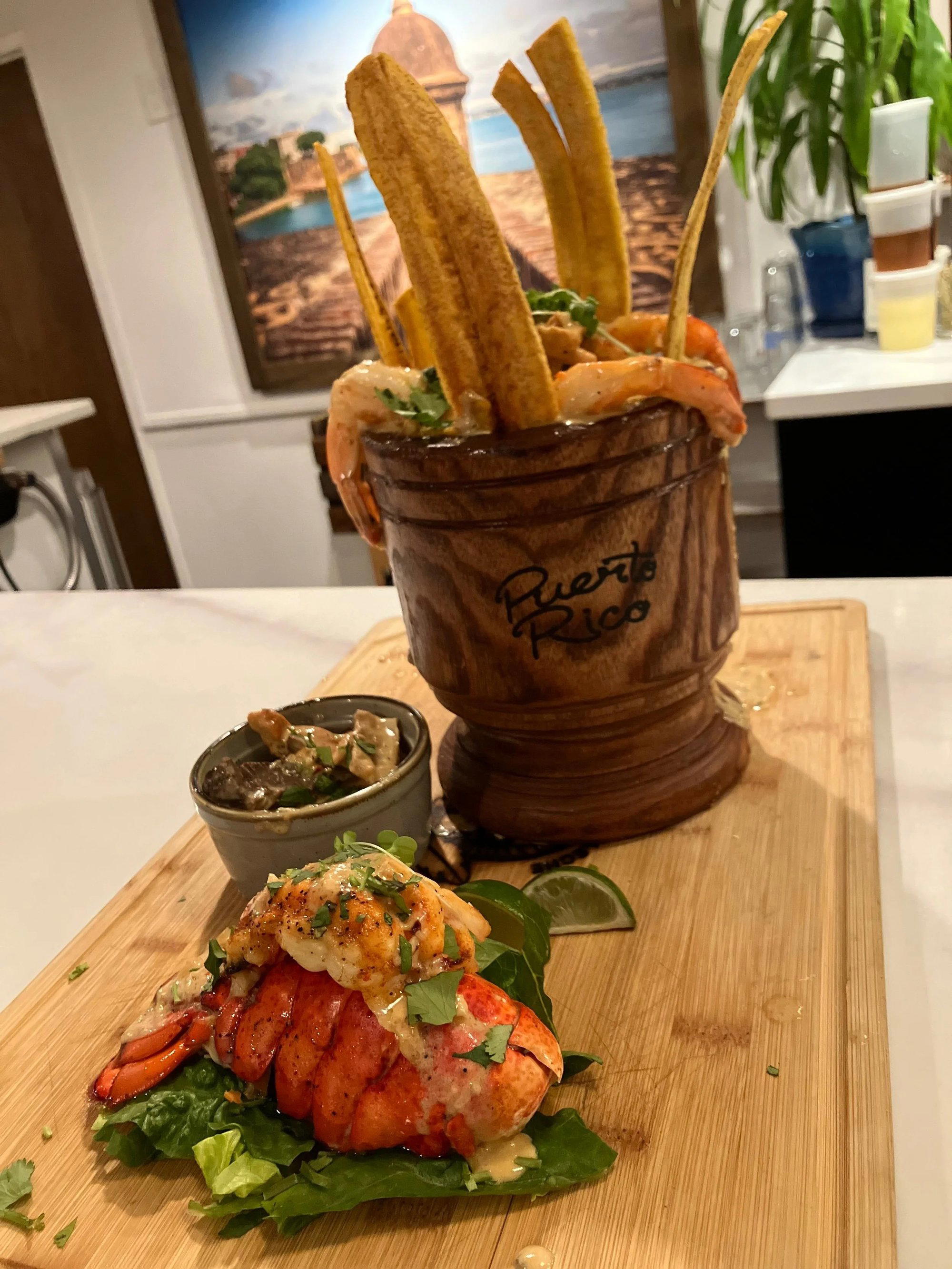
The kitchen at 424 Amsterdam Avenue is grounded in Dominican home cooking, where dishes like stewed meats, rice and beans, and slow-braised proteins form the core of the menu. Dominican cuisine within the broader Caribbean creole tradition places particular emphasis on sofrito-based braises and fried staples that differ meaningfully from Cuban or Puerto Rican preparations.
How far ahead should I plan for Cafe Con Leche?
Cafe Con Leche at 424 Amsterdam Avenue operates as a neighbourhood walk-in institution rather than a reservation-driven room. No advance booking infrastructure is publicly documented, which places it firmly in the category of Upper West Side spots where timing your arrival matters more than planning weeks ahead. Coming outside peak lunch hours or early dinner windows is generally the practical approach for busy Amsterdam Avenue spots of this format.
What's the defining dish or idea at Cafe Con Leche?
The defining idea is Dominican home cooking served without translation for a non-Dominican audience, on an Amsterdam Avenue stretch that has absorbed significant gentrification pressure since the 1990s. The restaurant sits at the intersection of a neighbourhood institution and a community anchor, where the food follows the logic of the family table rather than the tasting menu. That consistency of purpose, maintained at 424 Amsterdam Ave in New York City, is what separates it from the trendier dining rooms that cycle through the Upper West Side.
Comparable Spots, Quickly
A quick snapshot of similar venues for side-by-side context.
| Venue | Cuisine | Price | Awards | Notes |
|---|---|---|---|---|
| Cafe Con LecheThis venue — the venue you are viewing | Authentic Puerto Rican Criolla | $20–30 | Not listed | Not listed |
| Le Bernardin | French Seafood Fine Dining | $300–500 | 3 Michelin Stars · World's 50 Best #13 | French, Seafood |
| Atomix | Modern Korean Tasting Menu | $300–500 | 2 Michelin Stars · World's 50 Best #7 | Modern Korean, Korean |
| Per Se | French Fine Dining Tasting Menu | $300–500 | 3 Michelin Stars · World's 50 Best #40 | French, Contemporary |
| Masa | Traditional Japanese Omakase | $500+ | 2 Michelin Stars · World's 50 Best #27 | Sushi, Japanese |
| Eleven Madison Park | Contemporary Plant-Based Fine Dining | $300–500 | 3 Michelin Stars · World's 50 Best #4 | French, Vegan |