
Piatti Castellina sits in Kagurazaka’s quieter Italian lane, where Tokyo’s appetite for pasta, wine, and seasonal Japanese produce meets a compact room rather than a grand dining stage. Its Tabelog Italian TOKYO 100 selections in 2021, 2023, and 2025 place it among the city’s more closely watched Italian addresses, with a 16-seat scale that keeps the experience intimate.
Pearl is the En Primeur Club membership app — saves, bookings, and concierge access live there. Same editors, same standards.
- Address
- Japan, 〒162-0808 Tokyo, Shinjuku City, Tenjincho, 68-3 橋本ビル1F
- Phone
- +81 3-6265-0876
- Website
- castellina.co.jp
 Saves & bookings on Pearl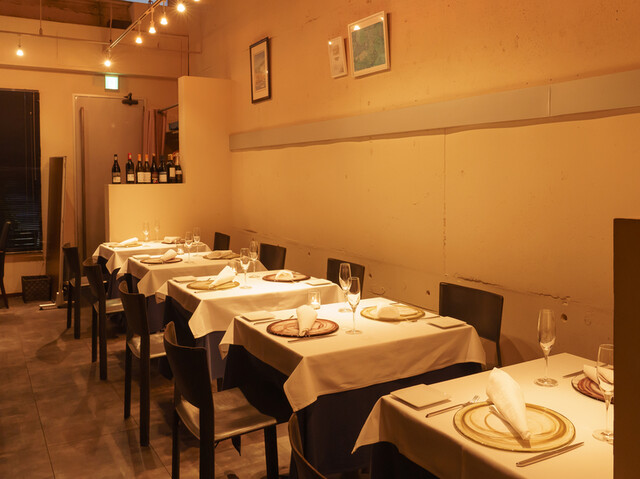
Kagurazaka rewards restraint. The streets around Tenjincho do not ask for spectacle; they suit small rooms, low voices, wine glasses, and kitchens that treat Italian cooking as a framework rather than a costume. Piatti Castellina belongs to that Tokyo mode: Italian, pasta, and innovative on paper, but better read as part of the city’s long conversation between imported technique and Japanese seasonality.
Tokyo Italian dining is not one category. One end has trattoria-style rooms built around comfort and regulars; another has tasting-menu restaurants where pasta is one movement in a larger composition. Kagurazaka’s version is quieter and more neighborhood-literate, shaped by backstreets, small footprints, and diners who know how much precision fits into a compact room. Selection for Tabelog Italian TOKYO 100 in 2021, 2023, and 2025 gives Piatti Castellina a public marker in that crowded field without turning it into a trophy room.
Kagurazaka Italian, scaled for a small room
The 16-seat format matters. In Tokyo, room size changes the meal before the first plate lands: service pacing tightens, wine advice becomes less ceremonial, and the cooking has less space to hide behind decoration. A restaurant of this scale sits closer to Tokyo’s counter-culture dining mentality than to the hotel-dining model, even when the cuisine is European. The result is Italian cooking read through proximity: pasta, wine, courses, conversation, and a kitchen whose decisions show in the room’s rhythm.
That intimacy explains the appeal for diners who know the city’s sharper edges. Kagurazaka has long balanced old Tokyo textures with polished contemporary dining, and Italian restaurants here often succeed by not imitating Italy wholesale. The stronger approach is translation: Italian structure, Japanese produce cycles, and a Tokyo sense of portion, sequence, and silence. Piatti Castellina’s Italian, pasta, and innovative listing points to that hybrid register without needing a manifesto.
Within Tokyo’s dining map, comparison helps. Tori Takuchu works in a similarly serious spending bracket but belongs to another tradition, where chicken, charcoal, and sequence define the night. CRAZY BRAVO sits nearer the Italian orbit, with a lower dinner band and comparable lunch band, making it a more direct reference for diners weighing contemporary Italian options. Naniwaya Edogawabashi sits at the opposite end of the price spectrum, showing the neighborhood’s range. Yakitori SANKA and マティーニバーガー underline the point: Kagurazaka and nearby pockets do not move in one culinary lane.
Wine, pasta, and the Tokyo habit of quiet precision
The wine signal is not incidental. Tokyo Italian rooms at this level often build identity through bottle handling as much as pasta technique, because diners expect precise beverage programs in French, Japanese, sushi, and yakitori settings. The restaurant lists wine as an emphasis and has sommelier service, placing it among restaurants where the glass is part of the meal’s architecture, not an afterthought. A separate fee applies for bringing wine, another sign that cellar and service are taken seriously.
The cooking category gives useful boundaries without overpromising specifics. Pasta is the clearest Italian anchor, while the innovative tag suggests a kitchen comfortable with Tokyo’s habit of adaptation. That matters because many overseas diners expect either rustic Italian abundance or luxury tasting-menu theatre. Kagurazaka’s stronger small restaurants often offer neither. They prize measured pacing, controlled portions, and a room that lets dinner feel private without needing a private room.
Restaurant’s Tabelog score of 3.72 is worth reading locally. On Japanese restaurant platforms, high scores move slowly and often reflect repeat local attention, category competition, and reservation friction. Tabelog 100 inclusion is the cleaner trust signal: it places the restaurant in a curated Tokyo Italian selection in a city where Italian cooking is deep, competitive, and technically ambitious.
A practical social code is embedded too. The restaurant notes celebrations and surprises as part of its service profile, but the setting does not read as a large-group party room. Private use is available for up to 20 people, while private rooms are not part of the format. Children are welcomed only when they can enjoy the course meal, less severity than a clue about pacing. This is a restaurant for diners who want the table to hold attention.
How to place it within a Tokyo dining itinerary
For visitors building a Tokyo dining week, the restaurant fits a night when the goal is not sushi counter intensity or Ginza formality, but a quieter expression of the city’s European dining fluency. It pairs naturally with a Kagurazaka walk before dinner and with an itinerary that separates Tokyo’s genres instead of chasing one headline meal after another. Put Italian here, yakitori on another night, and a more casual daytime stop nearby, letting the city’s range do the work.
Readers mapping the area can compare nearby and citywide options through 124. KAGURAZAKA (Yakitori), 12/10 Shinjuku ten, 2D Cafe, 3 Chome no Curry Ya San, and . 鮪と炭火焼き うお炭 秋葉原店. For the wider city edit, use Our full Tokyo restaurants guide, then round out the trip with Our full Tokyo hotels guide, Our full Tokyo bars guide, Our full Tokyo wineries guide, and Our full Tokyo experiences guide.
For travelers extending the same appetite beyond Tokyo, the broader Japan and trans-Pacific dining map includes -Grilled beef Sukiyaki- KAMAKURA TANUKIAN 鎌倉 たぬき庵 in Kamakura.cafe in Osaka.know in Kumamoto, (Shoku) Vietnam in Kawasaki, [Curry Senmon Ten] Maruyama Kyoju. in Sapporo, [ki:] in Kyoto, Jōdo Saké Bar in Los Angeles, and Onigiri Time in Pasadena.
Keep the restaurant on the list not because Tokyo lacks Italian restaurants, but because the city’s smaller Italian rooms reveal a particular dining intelligence: European technique made compact, seasonal, and attentive to silence. In Kagurazaka, that intelligence feels at home.
Style and Standing
Comparable venues by cuisine and category.
| Venue | Cuisine | Price | Notes |
|---|---|---|---|
| Piatti CastellinaThis venue — the venue you are viewing | Italian Course Dining | $$$ | Not listed |
| neo | Italian Standing Bar | $$$ | Shibuya |
| エリオ・ロカンダ・イタリアーナ | Authentic Southern Italian Trattoria | $$$ | Chiyoda |
| caffe Michelangelo | Italian café with house-made desserts and pinsa pizza | $$$ | Shibuya |
| La Barrique Tokyo | Italian Fine Dining | $$$ | Bunkyō |
| TRATTORIA GRAN BOCCA | Italian steakhouse trattoria with A5 Wagyu | $$$ | Chiyoda |
Recognition history
Dated appearances from independent guides and award organizations, with the underlying list record or original source where available.
Tabelog 100 #33 · No. 33
Tabelog · Tabelog 100 - Italian - TOKYO - 2025





At a Glance
- Sophisticated
- Elegant
- Intimate
- Classic
- Date Night
- Business Dinner
- Special Occasion
- Group Dining
- Standalone
- Extensive Wine List
- Local Sourcing
Current opening hours
- Monday
- 11:30 AM–1:30 PM, 6–8 PM
- Tuesday
- 11:30 AM–1:30 PM, 6–8 PM
- Wednesday
- 11:30 AM–1:30 PM, 6–8 PM
- Thursday
- 11:30 AM–1:30 PM, 6–8 PM
- Friday
- 11:30 AM–1:30 PM, 6–8 PM
- Saturday
- 11:30 AM–1:30 PM, 6–8 PM
- Sunday
- 11:30 AM–1:30 PM, 6–8 PM
Hours can change for holidays and private events. Last verified .
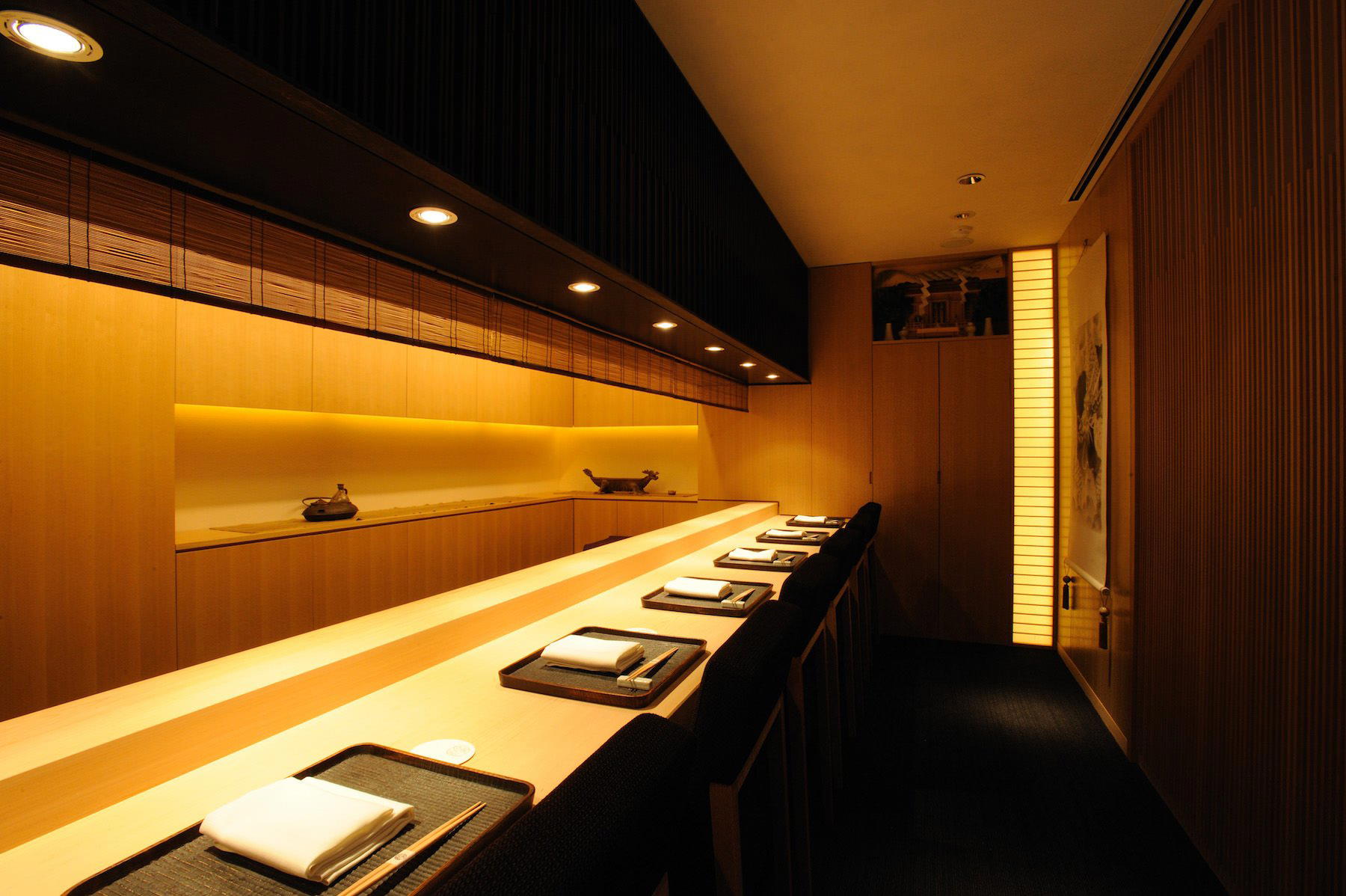
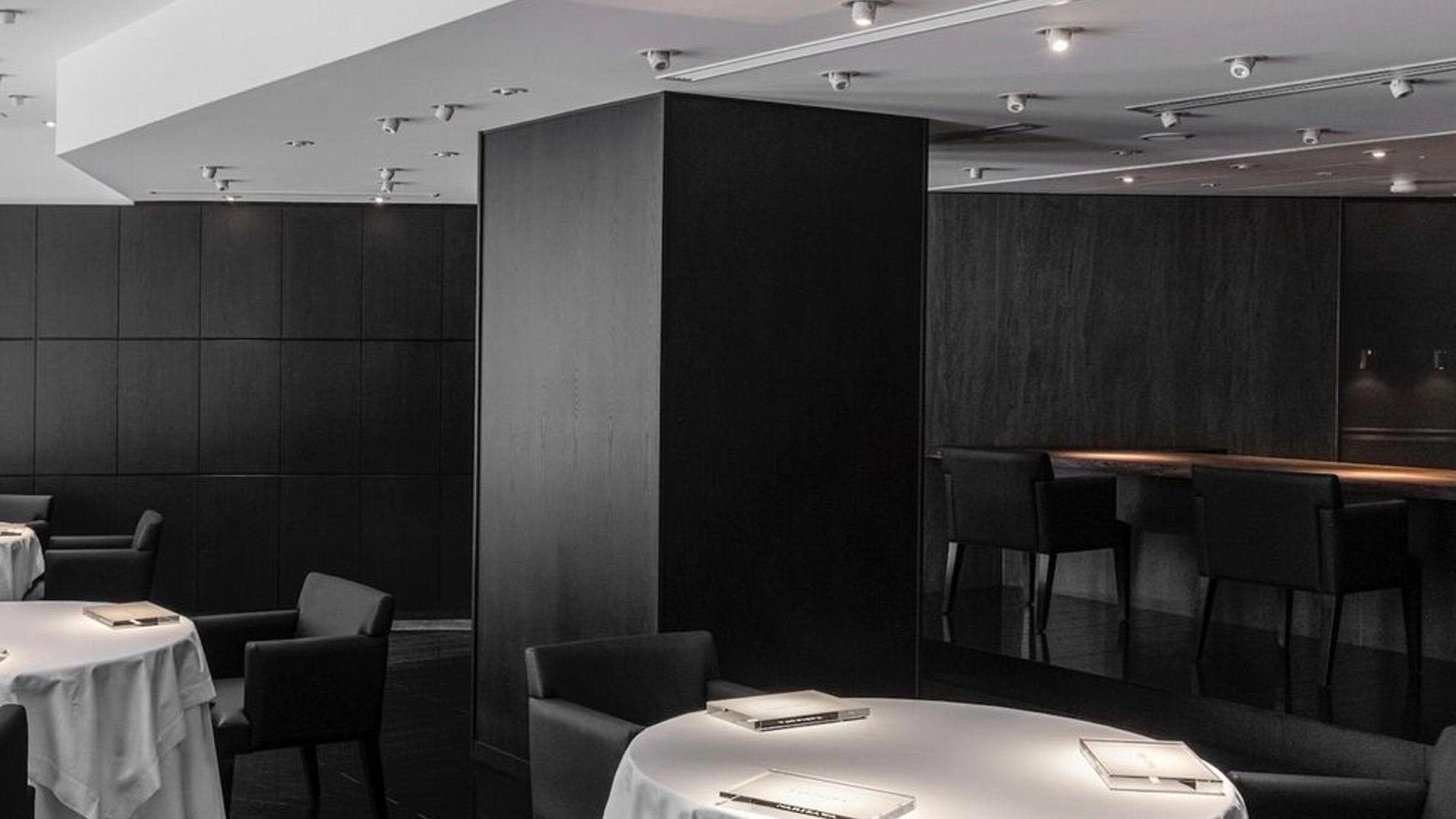
A refined, intimate dining room with a calm, polished atmosphere suited to a leisurely course meal.