Pendergast
Our verdict
On a quiet residential street in Amsterdam West, Pendergast occupies a niche that the city's dining scene rarely fills: a wine-forward address where the cellar drives the conversation as much as the kitchen. The address at Groen van Prinstererstraat 14 places it well outside the tourist circuit, drawing guests who arrive with intention rather than proximity.

Pearl is the En Primeur Club membership app, where members save venues, book tables and use the concierge.

A Street in Amsterdam West, and What It Signals
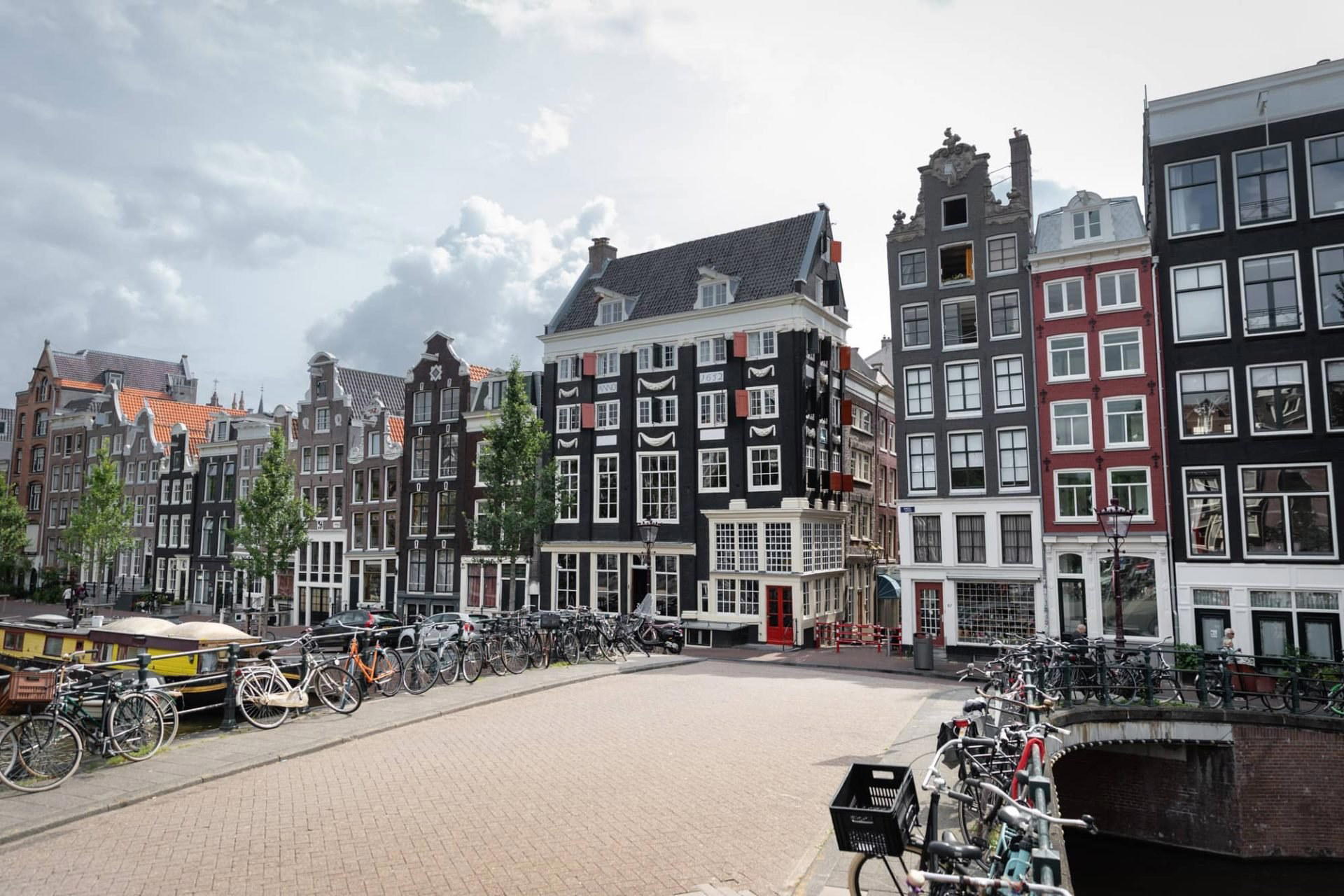
Amsterdam's most interesting dining addresses have been migrating west for years. The canal-side institutions remain, but the restaurants generating the sharper conversations tend to surface in residential neighbourhoods where rents allow smaller, more deliberate operations to exist. Groen van Prinstererstraat, in the Oud-West district, is precisely that kind of street: narrow, tree-lined, built for people who live there rather than people passing through. Pendergast sits at number 14, and the address alone tells you something about the register it is pitching at. This is not a room designed to catch foot traffic. Guests come because they looked it up.
Oud-West has accumulated a cluster of independent restaurants and wine bars over the past decade, operating at some distance from both the tourist corridors of the Leidseplein and the higher-profile fine dining of the Museum Quarter. The neighbourhood character leans toward the considered and the unhurried, which makes it a logical home for a venue where the wine programme is as central as the food. In Amsterdam, that combination still occupies a distinct niche: the city has strong fine dining at the top tier, with addresses like Ciel Bleu, Flore, Spectrum, and Vinkeles operating at the €€€€ level with Michelin recognition, and it has good bistro cooking at the mid-range, including Bistro de la Mer. The wine-forward neighbourhood restaurant occupying the space between those tiers is a less populated category.
The Cellar as Editorial Statement
Wine-forward restaurants operate on a different logic than food-first establishments. The kitchen produces a menu; the cellar produces a point of view. When a wine programme is built with genuine depth, it imposes a kind of curatorial discipline on the whole experience: pairings are not afterthoughts, and the list is not assembled to cover categories but to argue a position. The leading examples of this format in Europe tend to share certain qualities: regional specificity rather than global comprehensiveness, a willingness to include producers who are not immediately legible to a casual diner, and a pricing structure that reflects actual acquisition cost rather than a standard markup formula applied across the board.
Dutch fine dining has historically been more food-led than wine-led, partly because the Netherlands lacks a domestic wine tradition of any scale and partly because the country's greatest restaurant reputations, from De Librije in Zwolle to 't Nonnetje in Harderwijk, have been built primarily on kitchen ambition. Addresses like Aan de Poel in Amstelveen, De Bokkedoorns in Overveen, and De Lindehof in Nuenen reinforce the same pattern. A venue that positions the wine list as equal in weight to the food is working against a structural tendency in the local market, which also means it is serving a guest who has made a specific choice.
Internationally, the wine-led restaurant has found its clearest expression in formats where the sommelier team holds equivalent status to the head chef. In New York, Le Bernardin has long demonstrated how a beverage programme can be built to match kitchen precision, while Atomix represents a newer model in which the beverage narrative is woven directly into the tasting progression. Pendergast's location and format suggest an ambition that runs closer to the latter: a room where wine is not poured alongside the meal but thought about in the same terms as the food itself.
Understanding where Pendergast sits within Amsterdam's dining geography requires mapping it against both the city's fine dining addresses and its more casual wine bar culture. The two rarely overlap. At the upper end, the city's creative restaurants tend toward formal service environments and significant prix-fixe investment. At the lower end, Amsterdam's natural wine bars have proliferated, particularly in Jordaan and De Pijp, but the format there is typically high pour volume, low food ambition. The mid-range wine restaurant, where the cellar has depth and the kitchen has authority, is the gap that venues like Pendergast occupy.
Comparison venues operating in adjacent Amsterdam territory include Bolenius, which works in the modern Dutch and creative register at the €€€€ tier, De Kas, which runs an organic, garden-to-table programme at €€€, and BAK, a farm-to-table address with strong local sourcing credentials also at the €€€ level. None of these are primarily wine-led, which underscores the degree to which Pendergast's editorial angle sets it apart from its geographic peers. The broader Dutch restaurant scene provides useful reference points further afield: Brut172 in Reijmerstok, De Groene Lantaarn in Staphorst, De Lindenhof in Giethoorn, De Nieuwe Winkel in Nijmegen, and De Treeswijkhoeve in Waalre each operate with distinct regional identities, but the wine-as-editorial-statement format remains uncommon across all of them.
For a complete orientation to what Amsterdam's dining scene offers across price tiers and styles, the EP Club Amsterdam restaurants guide provides the broader frame.
Planning a Visit
Pendergast is on Groen van Prinstererstraat 14, in the Oud-West district. The address is residential, so arrival by tram or bicycle is the practical default for most guests; the neighbourhood is well-served by public transport from the city centre. Because no booking details, hours, or contact information are currently available in EP Club's verified database, the clearest path to reservation is a direct search for the venue online, where current availability and format details will be more reliable than any third-party record. Wine-forward restaurants in this format often have limited covers, which means lead time on bookings matters; treating it like a destination with a specific night in mind is the right approach rather than a walk-in assumption.
Frequently asked questions
What should I order at Pendergast?
EP Club does not carry verified menu data for Pendergast at this time, so specific dish recommendations would be speculation rather than editorial guidance. What the venue's format and address suggest is a kitchen built to support wine pairings rather than to operate independently of them; the strongest approach is to follow the sommelier's lead when ordering, treating the food and wine selections as a single conversation rather than two separate decisions.
Do they take walk-ins at Pendergast?
Walk-in availability at wine-forward restaurants in Amsterdam's residential neighbourhoods tends to be limited, particularly because these formats often run small covers by design. In the €€€ to €€€€ bracket across the city, same-night seats are occasionally available at the bar or by cancellation, but the assumption should be that a reservation is required. Pendergast's Oud-West location, away from the tourist corridors where spontaneous dining is common, reinforces the case for booking in advance.
What has Pendergast built its reputation on?
Based on its positioning within Amsterdam's dining scene, Pendergast has built its identity on the intersection of a serious wine programme and a kitchen that functions as an equal partner rather than a support act. In a city where fine dining reputation is more often anchored in chef-led kitchen ambition, a venue that foregrounds the cellar as its primary editorial statement occupies a distinct and deliberate position. That specificity of focus, rather than breadth of offering, is what draws the guests who seek it out.
Can Pendergast adjust for dietary needs?
For wine-forward restaurants operating with tasting menus or set formats, dietary adjustments are most reliably communicated at the time of booking rather than on arrival; the kitchen needs advance notice to maintain the integrity of the pairing structure.
Is Pendergast suitable for a dedicated wine evening rather than a full dinner?
Wine-forward venues in Amsterdam's mid-range tier increasingly support guests who arrive for the list rather than a full tasting progression, particularly earlier in the evening when the pacing allows more flexibility. Pendergast's address and format suggest it sits in that tradition, where a flight of bottles with lighter kitchen support is a plausible format alongside a full dinner.
Recognition, Side-by-Side
Comparable venues nearby, for context on price, style, and recognition.
| Venue | Cuisine | Price | Notes |
|---|---|---|---|
| PendergastThis venue (the venue you are viewing) | American BBQ Smokehouse | $30–50 | Not listed |
| Wyers | American Comfort Food with Dutch Twist | Not listed | Nieuwendijk Noord |
| La Maschera | Authentic Italian | $30–50 | Anjeliersbuurt Noord |
| Branie | Asian Fusion Small Plates | Not listed | Bellamybuurt Zuid |
| Rain | American Grill | $20–30 | Waterloopleinbuurt |
| Bouchon du Centre | Authentic Lyonnaise Bouchon | $20–30 | Utrechtsebuurt Zuid |
Continue exploring
More in Amsterdam
Restaurants in Amsterdam
All restaurants in Amsterdam →
Bars in Amsterdam
All bars in Amsterdam →
Hotels in Amsterdam
All hotels in Amsterdam →
Wineries in Amsterdam
All wineries in Amsterdam →
Details
- Cozy
- Modern
- Casual Hangout
- Group Dining
- Open Kitchen
- Craft Cocktails
- Beer Program
- Local Sourcing
- A La Carte
- Craft Beers
- Cocktails
- Gluten Free Options
Current opening hours
- Monday
- Closed
- Tuesday
- Closed
- Wednesday
- 5–10 PM
- Thursday
- 5–10 PM
- Friday
- 5–10 PM
- Saturday
- 5–10 PM
- Sunday
- 5–10 PM
Hours can change for holidays and private events. Hours as of .
Small, cosy, laid-back atmosphere with friendly service.