Pelusa
Pelusa sits on the quieter north bank of Amsterdam's IJ waterfront at Leen Jongewaardkade 41, positioned outside the dense restaurant corridors that cluster around the canal belt. Where much of Amsterdam's fine-dining scene gravitates toward historic premises in the city centre, Pelusa occupies a different spatial logic, one that places it alongside the emerging Noord dining conversation rather than against the established four-star tier on the southern waterfront.
Pearl is the En Primeur Club membership app — saves, bookings, and concierge access live there. Same editors, same standards.
- Address
- Leen Jongewaardkade 41, 1031 HS Amsterdam, Netherlands
- Phone
- +31203031468
- Website
- pelusa.amsterdam
- Directions
- Get directions
 Saves & bookings on Pearl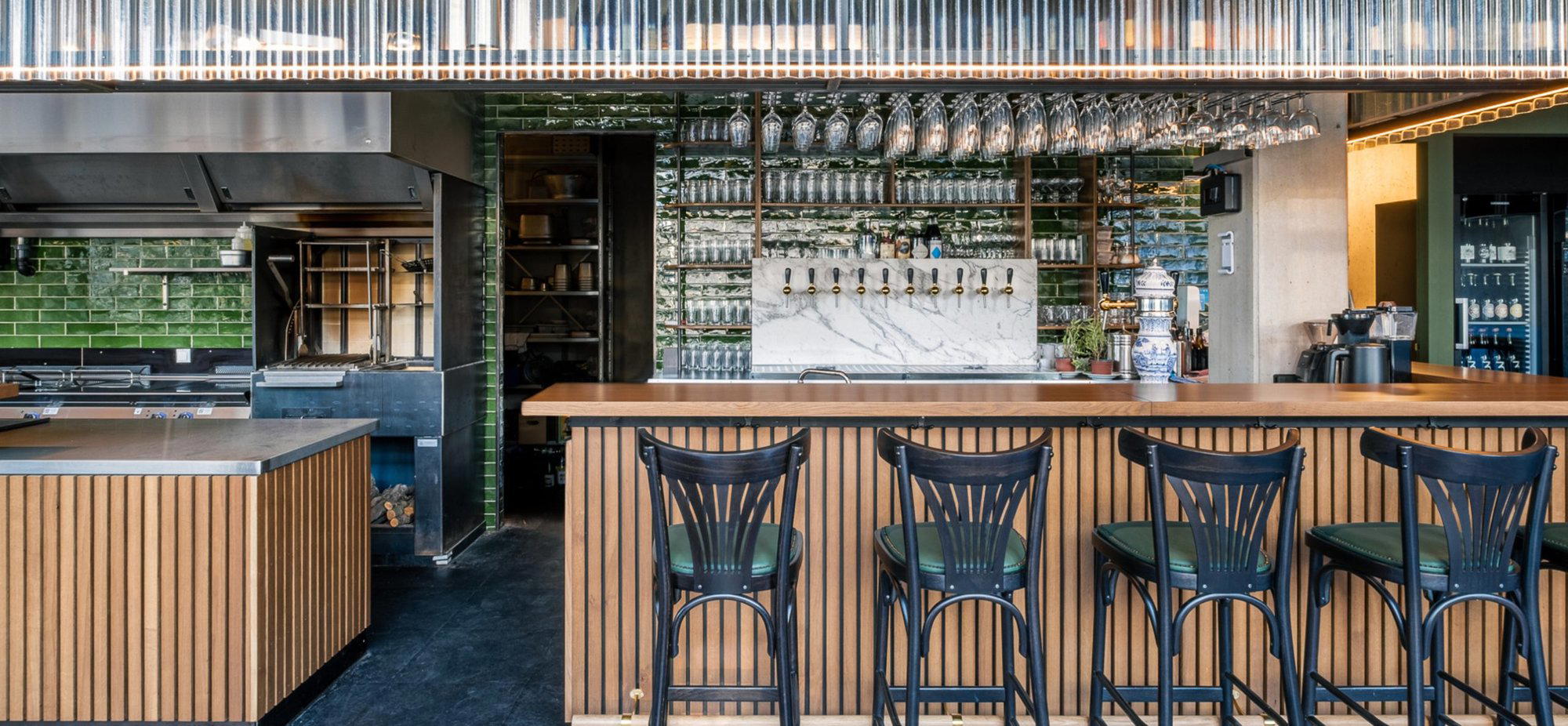
The Noord Address and What It Signals
Amsterdam's restaurant geography has been redrawn over the past decade. The canal belt still anchors the city's recognised fine-dining tier, Ciel Bleu, Flore, Spectrum, and Vinkeles operate within a few kilometres of each other in historic premises that reinforce their positioning, but the IJ waterfront north has attracted a different kind of operator: one less dependent on the accumulated symbolism of an old-city address and more focused on building an identity from the ground up. Pelusa, at Leen Jongewaardkade 41 in the 1031 HS postcode, sits firmly in that northern register.
The Noord district carries a particular character. Formerly industrial, now gradually filling with cultural institutions, creative studios, and restaurants that operate without the overhead and expectation that comes with a Grachtengordel postcode, it offers physical and conceptual distance from the established fine-dining circuit. A venue choosing to open here makes a specific statement about the kind of experience it intends to deliver: one where the surroundings do some of the editorial work, where the absence of heritage grandeur pushes the food and atmosphere into sharper focus.
Local Product, Imported Method, How the Leading Dutch Tables Are Thinking Now
The tension between deeply local sourcing and globally borrowed technique is the defining argument in contemporary Dutch fine dining. It runs through almost every kitchen that has attracted serious attention in the Netherlands in the past five years. De Nieuwe Winkel in Nijmegen has applied this framework to plant-based cooking with rigorous precision. De Librije in Zwolle has long used Dutch coastal and agricultural product as the raw material for technique-heavy, internationally referenced cuisine. Even outside the Netherlands, the model has proven transferable: Le Bernardin in New York City built its identity on applying French classical rigour to the leading available seafood, and Atomix in New York City uses Korean product logic inside a tasting-menu format shaped by fine-dining convention. The pattern is consistent across geographies, local product, global grammar.
In Amsterdam specifically, the question is which ingredients define a kitchen's Dutch identity. The North Sea shelf delivers some of the leading flatfish in Europe. Dutch dairy, particularly aged cheeses and high-fat butter, has international standing. Spring and summer produce from the polders, white asparagus, young beetroot, field herbs, arrives in kitchens that know precisely what to do with it. The operators who have built credible positions, from Aan de Poel in Amstelveen to De Bokkedoorns in Overveen, tend to treat this product base as non-negotiable, then vary the degree of technical intervention and international reference according to their own editorial position.
Pelusa's Noord address places it adjacent to this conversation without immediately defining which side of it the kitchen occupies. For a diner coming from Bistro de la Mer's classic-cuisine register or from the more restrained framework of Brut172 in Reijmerstok, Pelusa represents a different spatial and conceptual bet, a table that has chosen its neighbourhood as part of its identity.
The Broader Dutch Fine-Dining Map
Understanding where Amsterdam restaurants sit requires looking beyond the city limits. The Netherlands punches significantly above its geographic weight in Michelin terms, with recognised tables distributed across smaller cities and towns in a way that has no direct parallel among comparably sized European nations. 't Nonnetje in Harderwijk, De Groene Lantaarn in Staphorst, De Lindehof in Nuenen, De Lindenhof in Giethoorn, and De Treeswijkhoeve in Waalre all operate at recognised levels outside the capital, which means Amsterdam venues are not competing against each other in a vacuum. They are competing against a national comparable set that extends to some genuinely strong provincial tables.
This dispersal matters because it shapes what Amsterdam diners expect when they stay in the city. The comparison set includes not just the capital's canal-belt four-star addresses but also tables that have earned recognition in smaller markets with lower operational costs and tighter, more defined communities. A Noord restaurant that gets the product-technique balance right, communicates a clear point of view, and prices appropriately for its positioning can occupy a credible place in that wider map without needing the same overhead structure as a hotel-based Michelin contender in the Grachtengordel.
Planning a Visit
Pelusa sits at Leen Jongewaardkade 41 in Amsterdam Noord, a part of the city most conveniently reached by taking the free ferry from Amsterdam Centraal across the IJ, a crossing that takes under five minutes and deposits you within walking distance of the address. Noord's restaurant scene runs on a different rhythm than the canal belt: fewer tourists, more deliberate diners, and a slightly quieter booking environment than particularly recognised addresses in the centre. For visitors staying in central Amsterdam, the ferry crossing itself resets the register of the evening in a useful way. Our full Amsterdam restaurants guide maps the city's dining geography in detail, including the growing number of serious tables that have chosen the north bank as their base.
For a comparative sense of how Noord addresses price against the canal-belt tier, the city's established €€€€ operators, Ciel Bleu, Flore, Spectrum, tend to run multi-course menus in the upper range of the Dutch fine-dining bracket, while the neighbourhood restaurants of Noord typically operate one or two price points below that ceiling.
The Essentials
Comparable venues nearby, for context on price, style, and recognition.
| Venue | Cuisine | Price | Notes |
|---|---|---|---|
| PelusaThis venue — the venue you are viewing | Buiksloterham, Dutch Gastropub | $$$ | Not listed |
| Vuurtoreneiland | Durgerdam, Dutch Seasonal Fire-Cooked | $$$ | Not listed |
| Super Lyan | Hemelrijk, Modern Fusion Cocktail Bar | $$$ | Not listed |
| Lotti's Restaurant & Bar | Not listed | $$$ | Felix Meritisbuurt, Modern European Brasserie with Latin Influences |
| The Joan Amsterdam | Spuistraat Zuid, Modern Mediterranean | $$$ | Not listed |
| MOYŌ | Not listed | $$$ | Bellamybuurt Zuid, Modern Japanese Omakase |
Continue exploring
More in Amsterdam
Restaurants in Amsterdam
Browse all →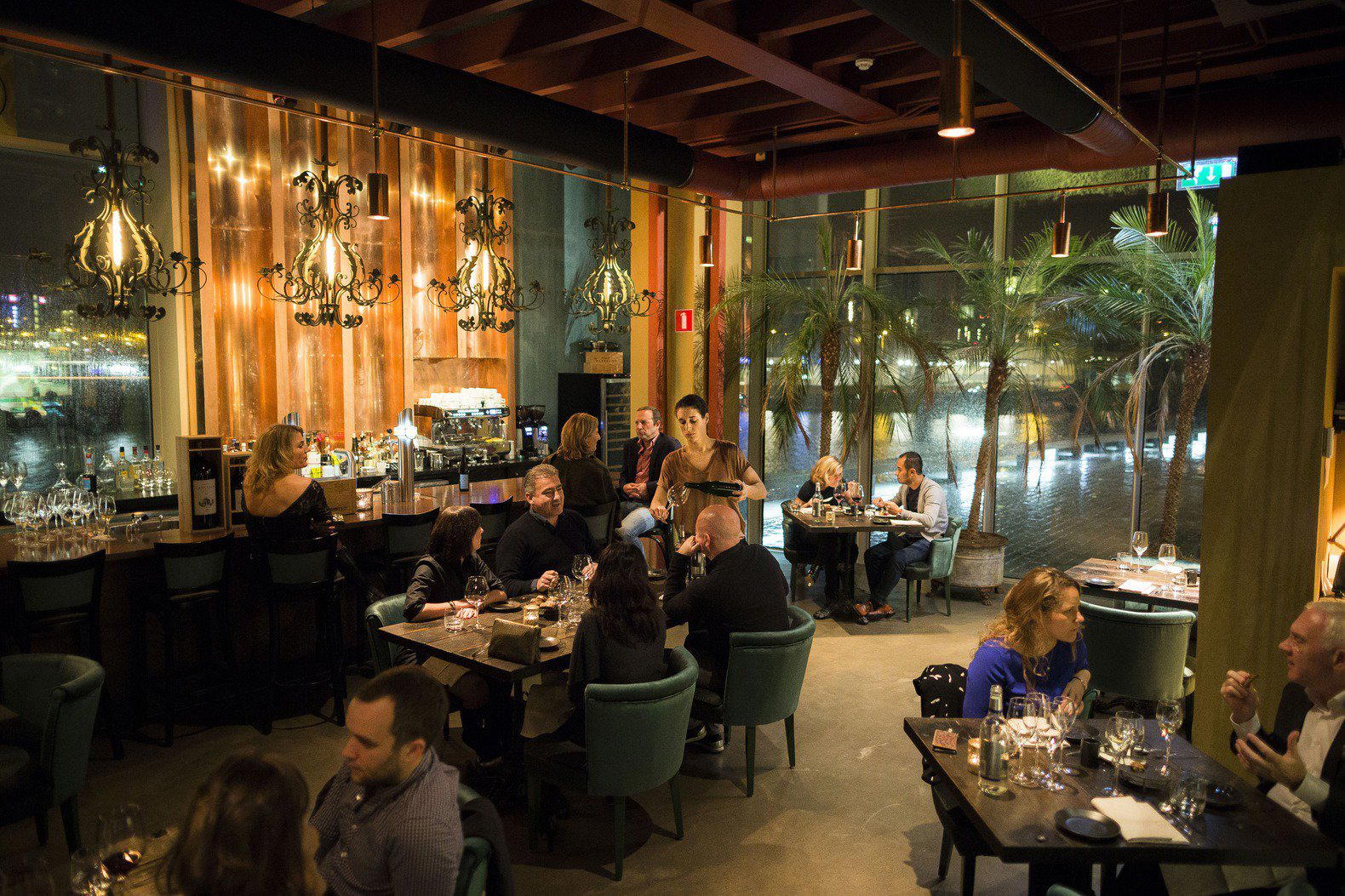
Bars in Amsterdam
Browse all →
Hotels in Amsterdam
Browse all →
Wineries in Amsterdam
Browse all →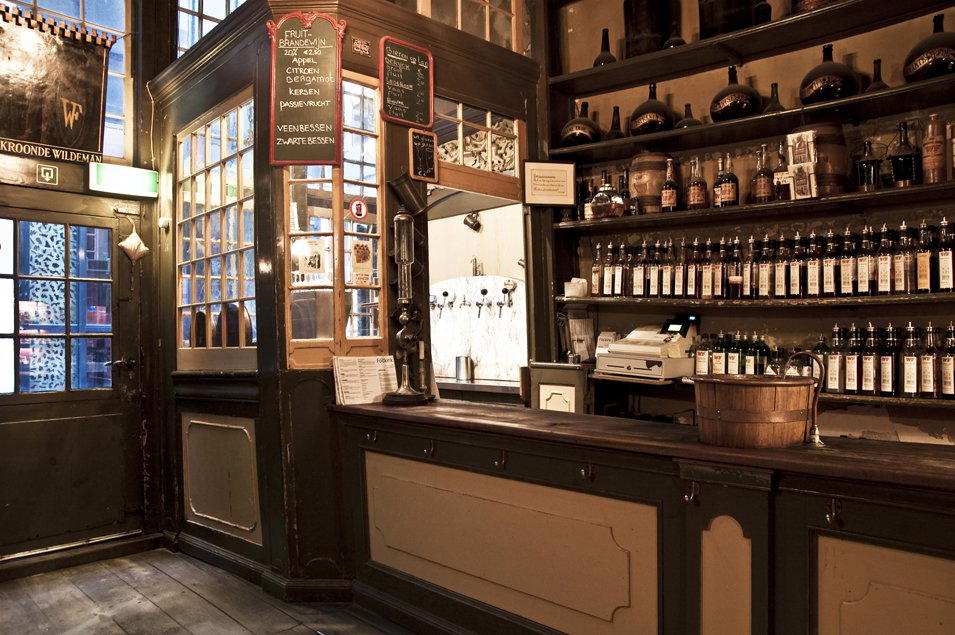
At a Glance
- Cozy
- Trendy
- Industrial
- Casual Hangout
- Group Dining
- Date Night
- Open Kitchen
- Beer Program
- Craft Cocktails
- Local Sourcing
- Waterfront
Current opening hours
- Monday
- Closed
- Tuesday
- Closed
- Wednesday
- 4 PM–12 AM
- Thursday
- 4 PM–12 AM
- Friday
- 4 PM–1 AM
- Saturday
- 2 PM–1 AM
- Sunday
- 2–9 PM
Hours can change for holidays and private events. Last verified .
Stylish, friendly industrial pub atmosphere with warm hospitality and a no-nonsense vibe.