Paul & Jimmy's Ristorante
Paul & Jimmy's Ristorante has occupied its East 18th Street address in the Gramercy Park neighbourhood for decades, making it one of the longer-standing Italian dining rooms in a city that turns over restaurant real estate at pace. The room itself does much of the editorial work, anchoring a tradition of neighbourhood Italian dining that Manhattan's newer openings are still in conversation with.
Pearl is the En Primeur Club membership app — saves, bookings, and concierge access live there. Same editors, same standards.
- Address
- 123 E 18th St, New York, NY 10003
- Phone
- +12124759540
- Website
- paulandjimmys.com
- Directions
- Get directions
 Saves & bookings on Pearl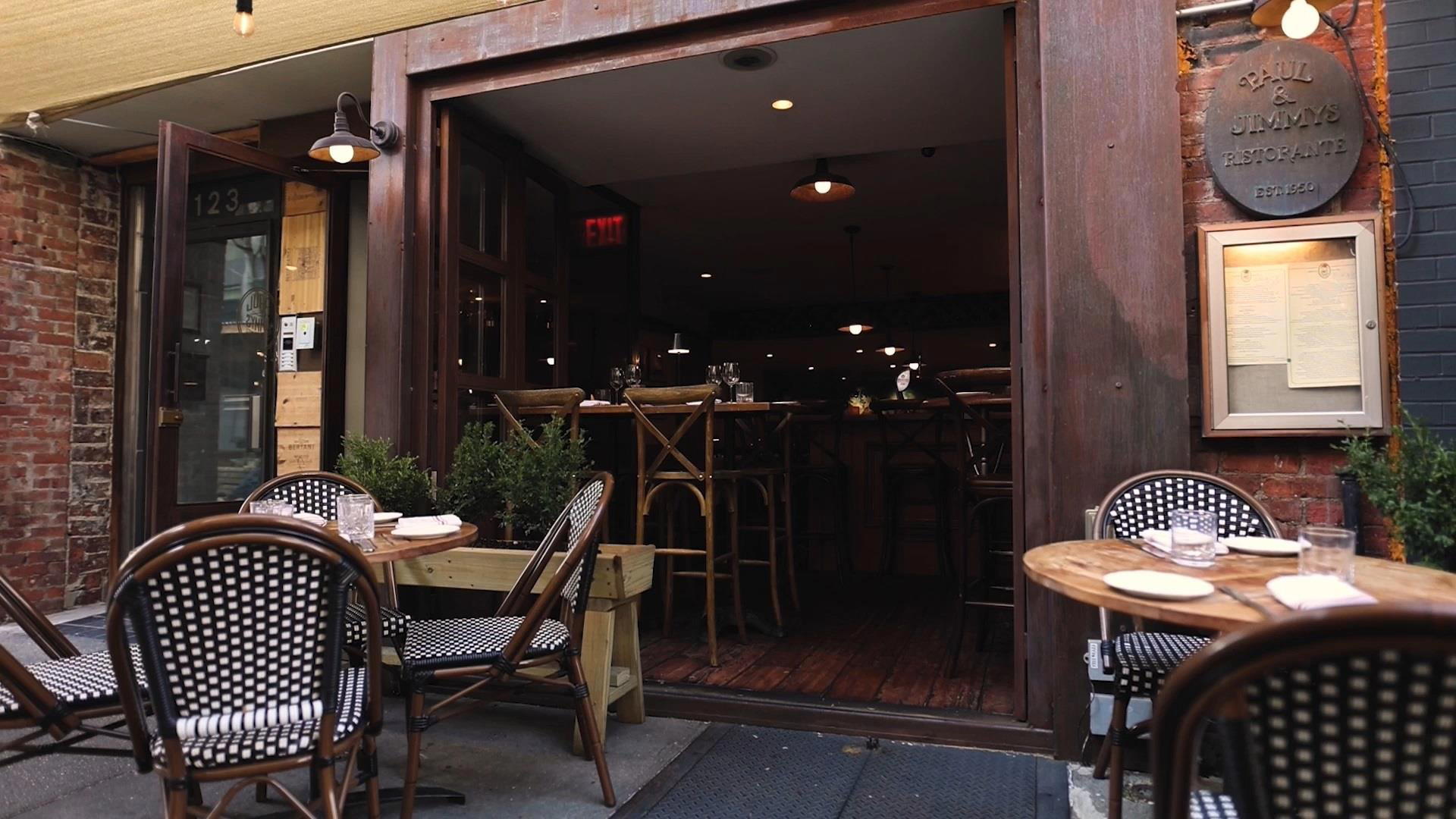
A Room That Predates the Conversation
Italian-American dining in Manhattan has cycled through several identities since the mid-twentieth century: the red-sauce institution, the northern Italian refinement wave of the 1980s, the farm-to-table recalibration, and now a generation of small-format osterie competing on natural wine lists and regional specificity. Paul & Jimmy's Ristorante, at 123 East 18th Street in the Gramercy Park district, sits outside most of those cycles. Its longevity is itself a data point: in a city where restaurant leases and concepts churn with regularity, a dining room that has held its address across multiple decades occupies a different kind of position than a newcomer trying to claim neighbourhood identity.
The OS-2 framing matters here because the founding era shapes everything about how the room functions. Mid-century Italian-American restaurants in New York were designed around a set of spatial assumptions that contemporary openings have largely abandoned: generous table spacing, upholstered seating, lighting calibrated for extended dinner conversation rather than social-media photography, and a floor plan that allows for the kind of unhurried service pacing that has become a minor rarity. Those design decisions, made long before open kitchens and counter seating became default formats, produce a dining experience that registers as deliberately different from what the city's current Italian openings are doing.
Gramercy's Dining Position
The Gramercy Park neighbourhood occupies an interesting tier in New York's restaurant geography. It lacks the destination-dining density of Midtown, where Le Bernardin and Per Se anchor a world of tasting-menu formality, and it sits at a remove from the high-rotation casual formats of the Lower East Side and the East Village. What it has instead is a residential character that rewards restaurants oriented toward repeat local use rather than destination tourism. A dining room that has lasted here did so by functioning as a genuine neighbourhood anchor, the kind of place where regulars book their usual table rather than a spot they discovered through a recommendation algorithm.
That context shapes expectations in a useful way. East 18th Street is not where you go to find the current conversation in Korean fine dining, as represented by Atomix or Jungsik New York, or to sit at the kind of counter that defines the upper tier of the city's Japanese dining, as at Masa. The comparison is instructive rather than unfair: those venues compete on the proposition that maximum technical ambition and a specific price-to-credentials ratio justify the booking. Paul & Jimmy's competes on different terms entirely, terms shaped by the room and its history rather than by a current tasting-menu format.
The Physical Container
The design of older Italian-American dining rooms in New York followed a logic that was about hospitality as occupation rather than as spectacle. Tables were set to accommodate a full evening's worth of eating across multiple courses, not to maximise covers per square metre. The result, in rooms that have survived with their original formats intact, is a spatial generosity that now reads as almost counter-cultural. Contemporary high-volume formats, even at the upper end of the market, tend toward compression: tighter spacing, open kitchens that redirect attention toward the chef's work rather than the dining room's character, and lighting schemes that create mood through contrast and dimness.
An older room at this address, by contrast, would have been designed for visibility and legibility: a space where you could see who else was dining, where a captain could read a table from across the room, and where the physical experience of sitting down communicated something about the durability of the operation. These are not neutral design choices. They encode a theory of what a restaurant is for, and that theory is meaningfully different from what most of the city's new openings are proposing. For readers comparing options in the neighbourhood, this spatial character is as relevant as any question of cuisine or price point.
Across the broader American fine-dining circuit, the question of how a room's physical design encodes its values has produced some notable results. Blue Hill at Stone Barns in Tarrytown makes the converted farm building central to its proposal. The Inn at Little Washington in Washington, Virginia, treats its rooms as a theatrical proposition. Alinea in Chicago reconfigures the dining room itself across its different format tiers. In each case, the physical container is doing argumentative work. Paul & Jimmy's argument is a quieter one: that continuity and neighbourhood-scale ambition can be as coherent a position as any of those more dramatic propositions.
Italian Dining in a City of Comparisons
New York's Italian dining category is wide and internally stratified. At the leading, there are tasting-menu formats that use Italian culinary heritage as a point of departure for extended technical sequences. At the other end, there are pizza and pasta operations that run on volume and accessibility. The middle territory, occupied by full-service trattorie and ristoranti with traditional menu formats, is where the city's longest-standing Italian rooms tend to operate. This is the tier where longevity data becomes meaningful: a room that has persisted in this format for decades has done so against the pressure of rent increases, demographic shifts, and changing dining preferences, which is a different kind of credential than a recent award or a critical debut.
For international readers looking for context, the American city most instructive as a comparison point for this kind of Italian-American tradition is probably New Orleans, where Emeril's and its comparable set operate within a similar logic of enduring local identity. In Europe, the reference points would be the long-established rooms in Rome or Milan where the physical space and its accumulated history are the primary proposition. The Monte Carlo parallel is not direct, but Alain Ducasse at Louis XV is a useful index of how physical setting and institutional longevity can operate as arguments independent of current fashion.
Planning a Visit
The practical reality for anyone considering Paul & Jimmy's is that specific booking logistics, current hours, and menu pricing are best confirmed directly with the restaurant at its East 18th Street address. Current hours are Mon: 12-9 PM; Tue: 12-10 PM; Wed: 12-10 PM; Thu: 12-10 PM; Fri: 12-11 PM; Sat: 12-11 PM; Sun: 12-9 PM. Reservations are recommended, and the price point is around $50 per person.
Side-by-Side Snapshot
Comparable venues nearby, for context on price, style, and recognition.
| Venue | Cuisine | Price | Notes |
|---|---|---|---|
| Paul & Jimmy's RistoranteThis venue — the venue you are viewing | Traditional Italian | $$ | Not listed |
| La Pecora Bianca | Modern Italian | $$ | Midtown South-Flatiron-Union Square |
| La Bella Vita | Authentic Italian | $$ | SoHo-Little Italy-Hudson Square |
| Aunt Jake's | Modern Italian Handmade Pasta | $$ | Upper East Side-Yorkville |
| Gennaro | Authentic Southern Italian Trattoria | $$ | Upper West Side (Central) |
| Sotto Le Stelle | Neapolitan Pizza | $$ | Sunnyside |
Continue exploring
More in New York City
Restaurants in New York City
Browse all →
Bars in New York City
Browse all →
Hotels in New York City
Browse all →






At a Glance
- Romantic
- Cozy
- Classic
- Intimate
- Date Night
- Special Occasion
- Historic Building
- Extensive Wine List
- Local Sourcing
Current opening hours
- Monday
- 12–9 PM
- Tuesday
- 12–10 PM
- Wednesday
- 12–10 PM
- Thursday
- 12–10 PM
- Friday
- 12–11 PM
- Saturday
- 12–11 PM
- Sunday
- 12–9 PM
Hours can change for holidays and private events. Last verified .
Home-style atmosphere with romantic and cozy Italian hospitality.