Sotto Le Stelle
Sotto Le Stelle occupies a Queens Boulevard address in Long Island City that places it outside Manhattan's densely reviewed dining corridor, yet firmly within reach of the borough crossing crowd. The restaurant's Italian name, 'under the stars', signals an atmospheric intent that the Queens dining scene increasingly supports. For readers tracking where serious restaurant culture is migrating, this address is worth attention.
Pearl is the En Primeur Club membership app — saves, bookings, and concierge access live there. Same editors, same standards.
- Address
- 44-07 Queens Blvd, Long Island City, NY 11104
- Phone
- +17186852086
- Website
- sottolestelleny.com
- Directions
- Get directions
 Saves & bookings on Pearl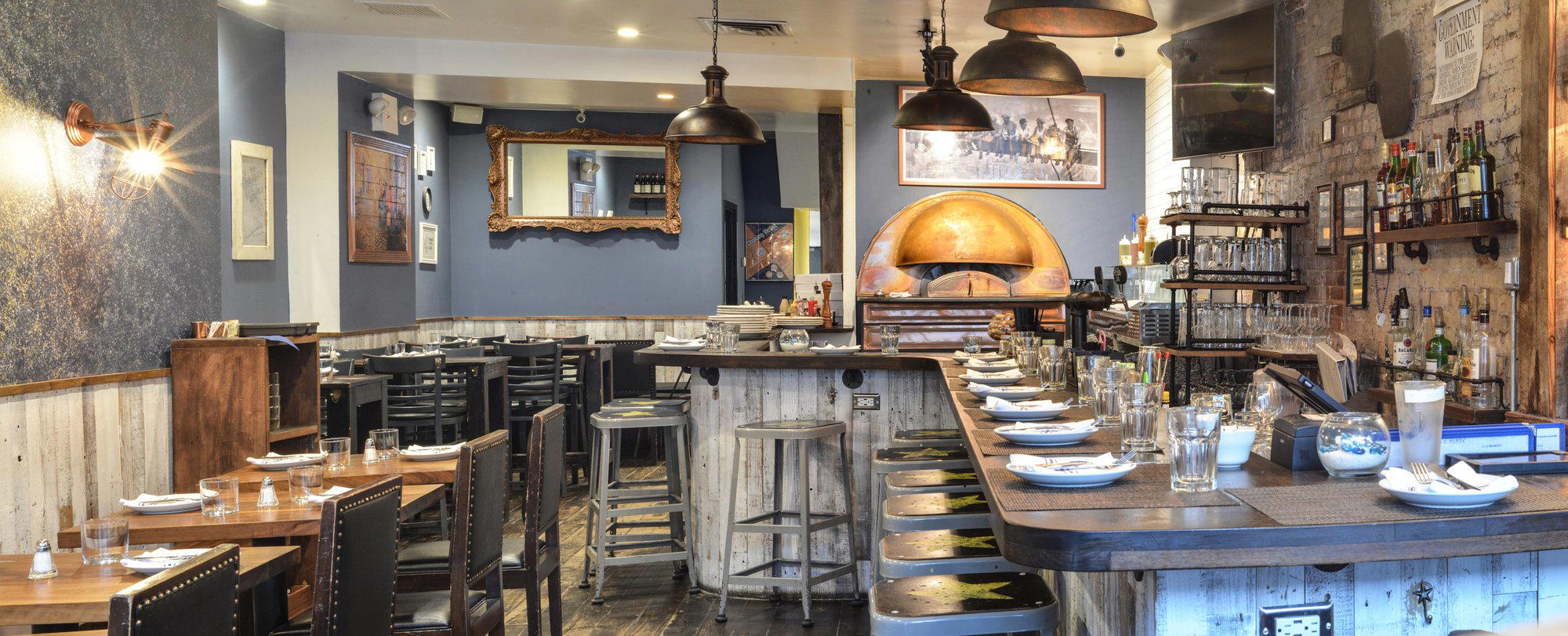
Queens Boulevard and the Shift in New York's Serious Dining Geography
Sotto Le Stelle is a restaurant in Long Island City, Queens, serving Neapolitan Pizza at a casual price tier around $25 per person. For much of the past two decades, New York's most scrutinized restaurant addresses clustered in a narrow Manhattan band: midtown French institutions like Le Bernardin, tasting-menu formats like Per Se, and the new-wave Korean counters of Atomix and Jungsik New York. That geography has been loosening. Long Island City, a ten-minute subway ride from Midtown with a Queens Boulevard that has absorbed a generation of new residents, has become a test case for whether a destination-grade dining room can anchor itself outside the Manhattan review circuit and still build a real audience. Sotto Le Stelle sits on that boulevard, at 44-07, and the name itself, Italian for 'under the stars', carries an atmospheric claim that goes beyond neighborhood-restaurant positioning.
In San Francisco, Lazy Bear built its reputation in a Mission address that critics initially underestimated. Alinea in Chicago demonstrated that a Lincoln Park zip code could carry the same weight as a Loop address. The argument, repeated often enough now to be a trend rather than an exception, is that the physical container and the food program matter more than proximity to the established review corridor.
The Physical Container: What the Space Signals Before a Plate Arrives
In Italian dining tradition, the room is never incidental. The name Sotto Le Stelle encodes a specific spatial aspiration: dining beneath something open, something celestial, a connection between the table and the sky above it. That aspiration shows up architecturally in Italian restaurants as skylights, open courtyards, retractable ceilings, or simply as a deliberate lightness in ceiling height and material palette that evokes the outdoor dining rooms of Rome's Trastevere or the terraced trattorias of the Amalfi coast.
In Long Island City's built environment, achieving that register requires intention. The neighborhood's stock runs toward converted industrial buildings and new residential towers, not the low-slung stone structures that make the Italian original feel effortless. What that context demands from a restaurant space is a clearer editorial hand: the design has to argue for the atmosphere it wants rather than inherit it. Particularly successful American takes on the Italian dining room formula, think Bacchanalia in Atlanta's Westside or The Inn at Little Washington's layered dining rooms, tend to work by committing fully to a spatial logic rather than hedging between styles.
A room that earns its name has to do more than hang a sign. The seating arrangement, the ceiling treatment, the light sources, and the acoustics all contribute to whether a guest feels they are dining under something generous and open or simply inside another closed box with Italian food on the menu. Long Island City diners, who skew younger and more design-literate than outer-borough stereotypes suggest, will notice the difference.
Italian Dining in New York: Where Sotto Le Stelle Sits in the Category
New York's Italian dining tier has always been more stratified than it appears from the outside. At the leading, a small number of white-tablecloth addresses treat the canon with formal rigor. Below them, a larger middle tier runs on neighborhood loyalty, generous pours, and menus that cover the peninsula's regional breadth without committing to any single tradition too deeply. Further down, the red-sauce institutions that defined the city's Italian-American identity for a century operate on nostalgia and volume.
Long Island City has historically sat in that middle tier. The question the restaurant raises is whether a Queens Boulevard address can push upward into more committed territory, the kind of dining room where the wine list has actual depth, where pasta is made on site, and where the room's design signals that the operator has thought seriously about what the space should feel like at 9 PM on a Saturday. That upward push is exactly what has worked elsewhere: Providence in Los Angeles proved that a non-Hollywood address could carry serious credential; Addison in San Diego's Del Mar demonstrated that distance from a city center does not preclude formal recognition.
Internationally, the Italian dining template has been transplanted with discipline in rooms like 8½ Otto e Mezzo Bombana in Hong Kong, where Umberto Bombana built a three-Michelin-star Italian program in a market with no obvious cultural precedent for it. The lesson from those cases is consistent: room quality and program commitment travel further than geography.
The Long Island City Dining Moment
Long Island City's restaurant scene has been building quietly for several years, accelerated by the residential density that followed a wave of high-rise development along the East River waterfront and Queens Boulevard corridor. The demographics that moved in, largely professionals displaced by Manhattan pricing, brought dining expectations formed in Manhattan and Brooklyn. That created demand for restaurants that could hold up to serious scrutiny, not just serve as convenient local options.
The timing matters for the restaurant. A restaurant opening into that kind of neighborhood demand, with a name that signals atmospheric ambition, enters a moment where the audience is primed and the competition from within the neighborhood is still thin enough to allow differentiation. Comparable outer-borough positioning has worked for restaurants in Astoria, Jackson Heights, and Flushing, each of which built audiences by being one serious option in their immediate geography. Blue Hill at Stone Barns in Tarrytown built a destination argument from a location that required deliberate travel, a more extreme version of the same logic.
Emeril's in New Orleans offers a different case study in building a destination restaurant outside the dominant review geography of its era.
The Italian dining tradition at its most considered has always treated the room as part of the meal. Whether the restaurant makes good on its name's promise is the question that will define its place in Long Island City's developing dining story. The address puts it in an interesting position: close enough to Manhattan's audience to draw crossover traffic, distinct enough from it to build a neighborhood identity of its own. That dual positioning is where particularly durable outer-borough restaurant reputations have been built in New York.
Cuisine Context
Comparable venues nearby, for context on price, style, and recognition.
| Venue | Cuisine | Price | Notes |
|---|---|---|---|
| Sotto Le StelleThis venue — the venue you are viewing | Neapolitan Pizza | $$ | Not listed |
| Italianissimo Ristorante | Classic Italian Trattoria | $$ | Upper East Side-Yorkville |
| Lazzara's Pizza Cafe | Italian Pizza Cafe | $$ | Midtown-Times Square |
| BarDough | Brick Oven Pizza & Craft Cocktails | $$ | Hell's Kitchen |
| Casa Louie | Contemporary Italian Pizza & Pasta | $$ | Chelsea-Hudson Yards |
| Fumo Chelsea | Authentic Italian Trattoria | $$ | Chelsea-Hudson Yards |
Continue exploring
More in New York City
Restaurants in New York City
Browse all →
Bars in New York City
Browse all →



Hotels in New York City
Browse all →





At a Glance
- Cozy
- Rustic
- Intimate
- Date Night
- Family
- Casual Hangout
- Open Kitchen
Current opening hours
- Monday
- 4–10 PM
- Tuesday
- 4–10 PM
- Wednesday
- 4–10 PM
- Thursday
- 4–10 PM
- Friday
- 12–11 PM
- Saturday
- 12–11 PM
- Sunday
- 12–10 PM
Hours can change for holidays and private events. Last verified .
Cozy and welcoming with a family gathering atmosphere, featuring a big patio with oversized string lights.