La Bella Vita
On Mulberry Street in the heart of Little Italy, La Bella Vita occupies a stretch of Manhattan that has been serving Italian-American cooking since the late 19th century. The address puts it squarely in one of New York's most historically layered dining corridors, where the neighbourhood's demographic shifts and the city's evolving appetite for Italian cuisine have both left their mark.
Pearl is the En Primeur Club membership app — saves, bookings, and concierge access live there. Same editors, same standards.
- Address
- 163 Mulberry St, New York, NY 10013
- Phone
- +12127758484
- Website
- labellavitalittleitalyny.com
- Directions
- Get directions
 Saves & bookings on Pearl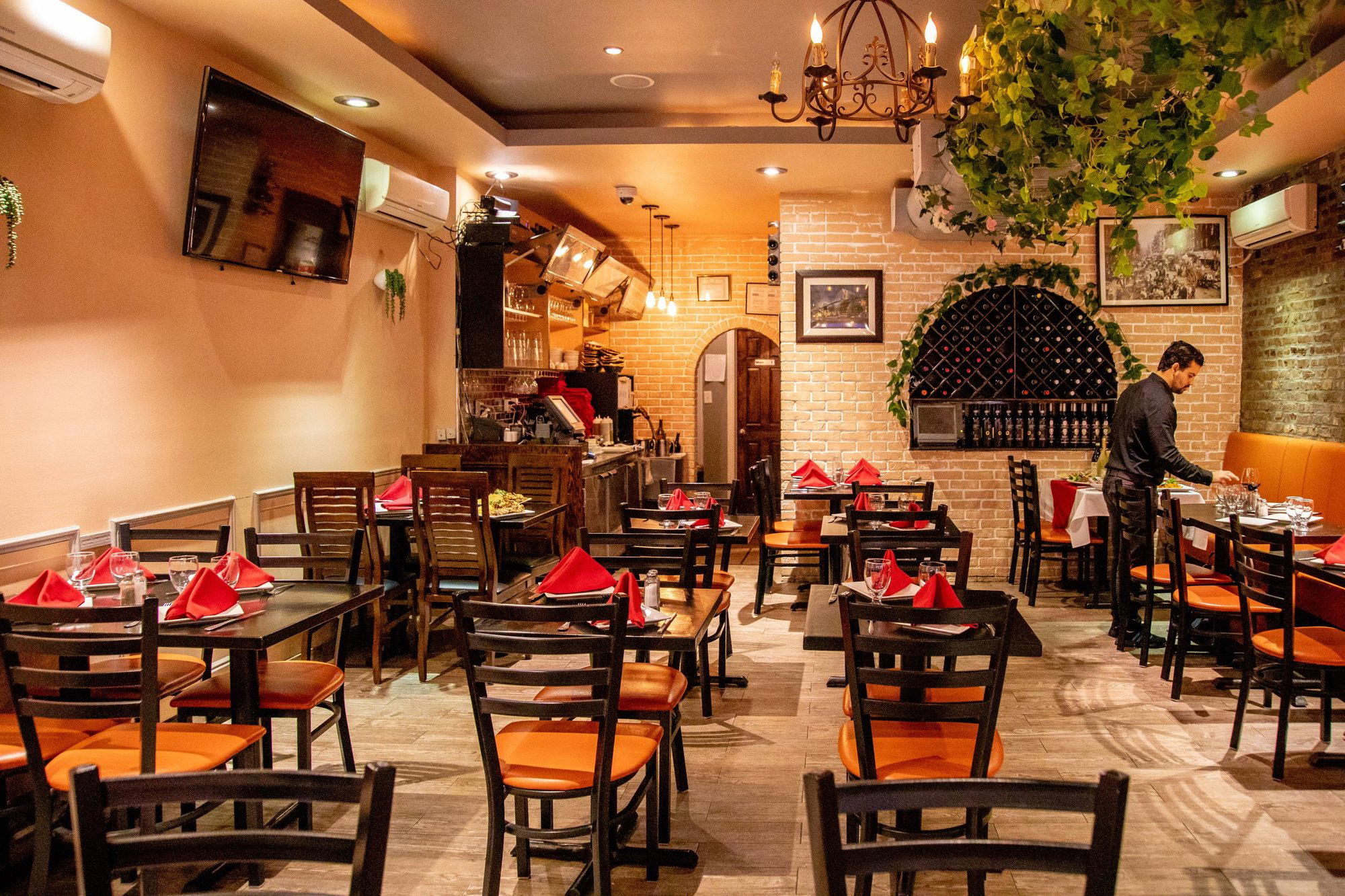
Mulberry Street and the Long Arc of Little Italy's Table
Walk south on Mulberry Street on any given evening and the sensory cues arrive before you reach the door: the close press of buildings on a narrow block, the residual smell of garlic and tomato that has saturated this corridor for well over a century, the way the lighting shifts from the hard glare of Canal Street to something warmer and more deliberate as you pass into the few blocks that remain distinctly Little Italy. At 163 Mulberry, La Bella Vita occupies a position on among the more written-about restaurant streets in the United States, a stretch that has served as both a cultural monument and a commercial proving ground since Italian immigrants began clustering here in the 1880s.
That history matters because it shapes everything a diner brings to the table before they sit down. Little Italy is not Midtown's four-star corridor, where venues like Le Bernardin, Per Se, and Masa price against global luxury benchmarks and operate with a formality calibrated to international business travel. Nor is it the progressive Korean tier represented by Atomix or Jungsik New York, where tasting menus act as argument and counterargument about national culinary identity. Mulberry Street has a different compact with its diners: it offers continuity, a tangible connection to a way of eating that predates the era of chef-as-auteur.
How the Neighbourhood Rewrote Its Own Script
The evolution of Little Italy as a dining address tracks one of the more instructive arcs in New York food history. Through most of the 20th century, the neighbourhood's restaurants drew on a model that prioritised volume, familiarity, and the red-sauce canon. By the 1990s, as the Italian-American population dispersed to the outer boroughs and New Jersey, the commercial character of the strip shifted. Tourist traffic replaced local custom as the dominant economic logic. Some restaurants calcified around that shift, serving a version of Italian-American cooking aimed at expectation rather than quality.
The more interesting development of the past two decades has been the counter-movement: a smaller cohort of addresses on and around Mulberry that have tried to hold a genuine standard while the neighbourhood's reputation wobbled. That repositioning mirrors patterns visible across American dining more broadly. In cities where a specific ethnic cuisine became institutionalised in a particular district, the leading operators eventually had to decide whether to serve the district's mythology or the cuisine's actual depth. Venues like Emeril's in New Orleans or Bacchanalia in Atlanta navigated analogous questions in their own regional contexts, and the ones that endured tended to be those that treated culinary identity as a living practice rather than a fixed exhibit.
La Bella Vita sits within that longer story. Its Mulberry Street address is not incidental; it is the primary editorial fact about the venue, carrying both the weight of the neighbourhood's reputation and the opportunity that comes with a dining public that has become more historically curious about what Italian-American cooking actually was and where it could go.
The Italian-American Table, Reconsidered
Italian-American cooking is a distinct cuisine, not simply a diluted version of regional Italian. It developed in specific conditions: immigrant kitchens in lower Manhattan, the Bronx, and Brooklyn working with American ingredient access and budgets, producing dishes that have no precise counterpart in Campania or Sicily. Baked ziti, chicken parmigiana, the particular sweetness of a New York Sunday gravy, the canonical combination of garlic bread and a candle in a wine bottle: these are American inventions with Italian DNA, and they deserve the same critical engagement that has been applied to, say, the French-American tradition at venues like The French Laundry in Napa or the farm-to-counter rigor of Blue Hill at Stone Barns in Tarrytown.
The question worth asking on Mulberry Street in 2024 is whether any given address is cooking the Italian-American canon with precision and self-awareness or coasting on ambient nostalgia. That distinction is not always obvious from the outside. The genre's familiar markers, the checked tablecloths, the Sinatra soundtrack, the bread basket, can serve either as shorthand for a genuine tradition or as theatrical scaffolding around indifferent cooking. The difference shows up in the details of technique and sourcing, not in the room's visual vocabulary.
For broader context on where Italian-American cooking sits within New York's full dining picture, the EP Club New York City restaurants guide maps the city's major cuisines and price tiers across all five boroughs. Internationally, the Italian fine dining conversation includes reference points like Alain Ducasse at Louis XV in Monte Carlo and the Cantonese-Italian crossover represented by 8½ Otto e Mezzo Bombana in Hong Kong, both of which illustrate how Italian culinary tradition travels and transforms across different contexts.
comparable set and Practical Position
Within New York's dining map, Little Italy addresses occupy a middle tier that is distinct from both the destination-restaurant circuit and the purely casual neighbourhood slot. They attract a mix of Manhattan regulars, outer-borough visitors making a trip of it, and tourists with enough food literacy to seek out the neighbourhood's historical dimension rather than just its postcard version. The competitive set is less about price point and more about credibility: which addresses on and near Mulberry are taken seriously by New Yorkers who know the difference, and which have drifted into pure performance.
Across the wider American fine dining scene, the venues that have maintained particularly durable reputations in historically specific genres share a common trait: they treat their culinary tradition as a subject of ongoing inquiry. Lazy Bear in San Francisco, Alinea in Chicago, Providence in Los Angeles, Single Thread Farm in Healdsburg, and Addison in San Diego each operate in a defined culinary language, and each has evolved that language in response to both internal ambition and external pressure. The Inn at Little Washington represents a comparable long-view commitment in its own regional context. The expectation for any Mulberry Street address worth visiting in 2024 is not that it match the ambition of those venues, but that it apply the same basic seriousness to its own, more vernacular genre.
Planning Your Visit
La Bella Vita is located at 163 Mulberry Street in the Little Italy district of Lower Manhattan, within easy reach of the Canal Street subway station served by the 6, N, Q, R, W, J, and Z lines. Reservations are recommended. Dress is smart casual. Budget: about $30 per person. Hours: Mon to Thu 11 AM to 10 PM; Fri and Sat 11 AM to 11 PM; Sun 11 AM to 10 PM.
Cost and Credentials
Comparable venues nearby, for context on price, style, and recognition.
| Venue | Cuisine | Price | Notes |
|---|---|---|---|
| La Bella VitaThis venue — the venue you are viewing | Not listed | $$ | Not listed |
| Fumo Chelsea | Not listed | $$ | Chelsea-Hudson Yards, Authentic Italian Trattoria |
| Pastai | Not listed | $$ | Chelsea-Hudson Yards, Southern Italian Pasta Bar |
| Roberta's | Williamsburg, Neapolitan Pizza | $$ | Not listed |
| Rucola | Not listed | $$ | Downtown Brooklyn-DUMBO-Boerum Hill, Rustic Northern Italian |
| Motorino Pizza | Not listed | $$ | Upper West Side (Central), Neapolitan Pizza |
Continue exploring
More in New York City
Restaurants in New York City
Browse all →
Bars in New York City
Browse all →
Hotels in New York City
Browse all →






At a Glance
- Lively
- Warm
- Intimate
- Date Night
- Family
- Special Occasion
- Extensive Wine List
Current opening hours
- Monday
- 11 AM–10 PM
- Tuesday
- 11 AM–10 PM
- Wednesday
- 11 AM–10 PM
- Thursday
- 11 AM–10 PM
- Friday
- 11 AM–11 PM
- Saturday
- 11 AM–11 PM
- Sunday
- 11 AM–10 PM
Hours can change for holidays and private events. Last verified .
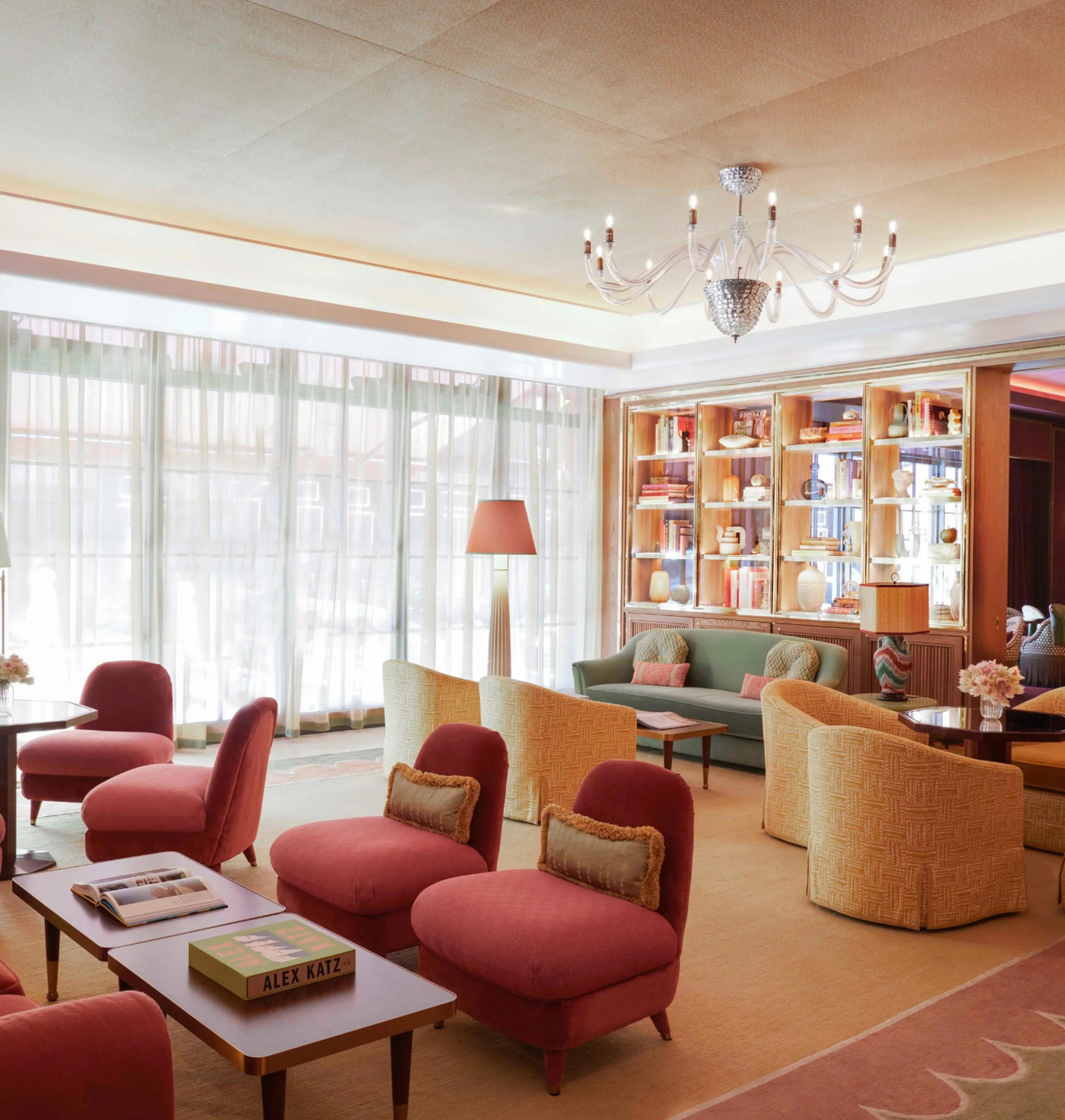
Warm and inviting with an intimate design, lively especially during the San Gennaro festival, and seasonal outdoor seating.