On Paulay Ede utca in Budapest's sixth district, Pata Negra Asador brings the Spanish tradition of live-fire asador cooking into a city that has built its dining identity around Central European and modern Hungarian kitchens. The name signals the premise directly: Iberian cured and roasted meat, anchored by the pata negra designation that defines Spain's highest-grade acorn-fed black-footed pork. A focused alternative to Budapest's Michelin-tracked fine-dining corridor.
Pearl is the En Primeur Club membership app — saves, bookings, and concierge access live there. Same editors, same standards.
- Address
- Budapest, Paulay Ede u. 39, 1061 Hungary
- Phone
- +3614062728
- Website
- patanegra.hu
- Directions
- Get directions
 Saves & bookings on Pearl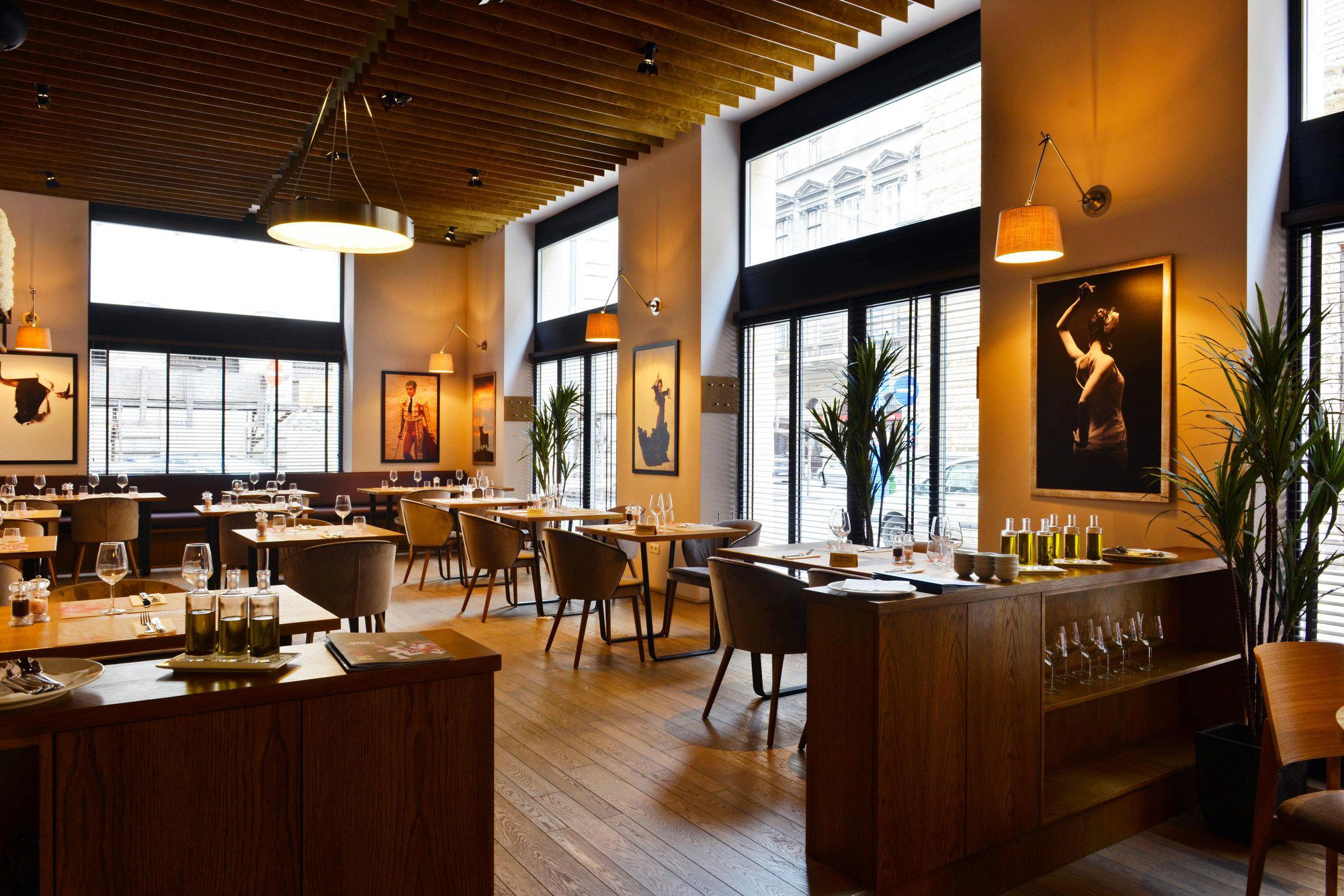
Fire, Salt, and the Iberian Tradition in a Hungarian City
Paulay Ede utca runs through Budapest's sixth district, a street better known for its proximity to the State Opera House than for any particular dining identity. The address at number 39 places Pata Negra Asador in a neighbourhood that has gradually accumulated a mix of neighbourhood trattorias, wine bars, and mid-market restaurants without settling into a single character. That context matters because the asador format it operates within is not native to Budapest, and understanding what an asador actually represents in Spanish culinary tradition helps clarify what the restaurant is and is not.
In Spain, the asador is a specific and ancient institution. The word derives from asar, to roast, and the format prioritises open flame or wood-fired oven cooking above all other technique. The asador tradition is most associated with Castile and the Basque Country, where whole suckling pig and lamb are roasted in wood-burning hornos at low, sustained heat until the skin renders to a translucent crackling and the interior collapses with its own moisture. This is not grilling in the modern steakhouse sense. It is slow, structural cooking that requires temperature management over hours rather than minutes, and the leading Spanish asadores treat their ovens with the same attention that a French kitchen gives to its brigade.
The name Pata Negra adds a second layer of specificity. In Spanish food culture, pata negra refers to the black-footed Iberian pig, specifically those raised on a diet of acorns (bellota) in the dehesa range of Extremadura and Andalusia. The designation carries legal weight in Spain through the jamón ibérico de bellota classification system, which governs breed purity, feed, and curing duration. Bringing that name to a Budapest restaurant signals an aspiration to source and serve within that tradition, though the degree to which any restaurant outside Spain can fully replicate the chain of provenance is a fair question for any serious diner to ask.
Where Pata Negra Sits in Budapest's Dining Structure
Budapest's restaurant scene has developed along two distinct tracks over the past decade. One track runs through the Michelin-recognised houses: Costes and Stand anchor the starred tier, while Borkonyha Winekitchen, Babel, and essência occupy the recognised but unstarred bracket just below. That track is dominated by modern Hungarian cuisine, seasonal tasting menus, and a wine program that increasingly draws on Tokaj, Eger, and Villány producers.
The second track is less formally structured: it includes neighbourhood restaurants, ethnic cuisine specialists, and concept-driven rooms that sit outside the Michelin conversation entirely. Pata Negra Asador operates on this second track. An Iberian asador is a narrow category in Budapest, where Spanish cuisine has historically been underrepresented compared to Italian or French influences. That positioning means the restaurant competes less against the city's fine-dining corridor and more against the question of whether Budapest diners will seek out a specifically Spanish live-fire format when they want grilled or roasted meat.
For context on how restaurants operating in specific European culinary traditions can carve out durable positions in cities where those traditions are foreign, it is worth noting that the format does have precedent. Hungarian diners have shown consistent appetite for specialist restaurants built around a single cooking discipline, from the wood-fired pizza operations that have proliferated across the city to the Serbian grill tradition visible at places like Classic Grill Serbian Restaurant Underground in Szeged, where proximity to the Balkan grill culture gives the format natural roots.
The Cultural Weight of the Asador Abroad
When Spanish cooking formats travel outside Spain, they typically shed precision in stages. The jamón counter arrives first, then the tortilla, then a loose interpretation of the horno tradition that may or may not involve actual wood fire. The leading transplants maintain sourcing discipline even when they cannot replicate climate or terroir. The ingredient itself, in this case genuine Iberian pork products, carries the cultural argument more than any technique description can. A restaurant willing to source certified pata negra product from Spain makes a different claim on the diner's attention than one that uses the terminology as loosely applied branding.
This is the standard against which any serious asador outside Spain should be measured, and it is the right question to bring to Paulay Ede utca. The asador tradition values austerity: a good piece of meat, fire, salt, and time. That aesthetic runs counter to the complexity-signalling that defines most fine-dining tasting menus, including many of Budapest's most recognised rooms. In that sense, Pata Negra Asador represents a deliberate counterpoint to the elaboration that characterises the Michelin-tracked end of the city's dining scene. Whether it delivers on that counterpoint is a matter of sourcing and execution rather than concept.
Planning a Visit: District Six and Practical Logistics
The street itself has moderate foot traffic in the evenings, and the neighbourhood restaurants along it draw a mix of locals and visitors.
For visitors building a broader itinerary around Hungarian food culture, the country's regional dining scene extends well beyond the capital. Platán Gourmet in Tata, Pajta in Őriszentpéter, and Aranysárkány Vendéglő in Szentendre each represent different aspects of Hungarian culinary tradition outside Budapest, while Halasi Pince Panzió in Villány connects wine tourism in Hungary's southern wine region to a proper table. Forst-Ház Étterem és Kávézó in Eger and BoriMami in Gyöngyös offer entry points into the Bull's Blood wine country of the north.
Similar Picks
Comparable venues nearby, for context on price, style, and recognition.
| Venue | Cuisine | Price | Notes |
|---|---|---|---|
| Pata Negra AsadorThis venue — the venue you are viewing | Spanish Tapas & Charcoal Grill | $$$ | Not listed |
| New York Café | Hungarian Café | $$$ | Terézváros |
| Baltazár Budapest | Modern Hungarian Grill | $$$ | Varhegy |
| KOLLÁZS Brasserie & Bar | French Brasserie with Hungarian Influences | $$$ | Varhegy |
| Carmel Étterem | Kosher Hungarian-Jewish | $$$ | Belvaros |
| Elysian Budapest | Sustainable Fusion Cocktails | $$ | Terézváros |
Continue exploring
More in Budapest
Restaurants in Budapest
Browse all →
Bars in Budapest
Browse all →
Hotels in Budapest
Browse all →



At a Glance
- Elegant
- Modern
- Sophisticated
- Date Night
- Business Dinner
- Group Dining
- Celebration
- Casual Hangout
- Open Kitchen
- Standalone
- Extensive Wine List
- Craft Cocktails
- Local Sourcing
Current opening hours
- Monday
- 12–11 PM
- Tuesday
- 12–11 PM
- Wednesday
- 12–11 PM
- Thursday
- 12–11 PM
- Friday
- 12–11 PM
- Saturday
- 12–11 PM
- Sunday
- 12–11 PM
Hours can change for holidays and private events. Last verified .
Contemporary minimalist interior blending traditional Spanish elements with modern design, featuring Andalusian tiles and jamones serranos hanging from the ceiling, creating an immersive Spanish atmosphere.