Pacific Amsterdam
Pacific Amsterdam occupies a converted industrial building on Polonceaukade 23 in Amsterdam's Westerpark district, where waterside warehouses have gradually become a destination for serious dining. The address places it at the edge of the city's creative quarter, where the programming tends to run more considered than central Amsterdam's tourist-facing circuit. Booking ahead is strongly advised.
Pearl is the En Primeur Club membership app — saves, bookings, and concierge access live there. Same editors, same standards.
- Address
- Polonceaukade 23, 1014 DA Amsterdam, Netherlands
- Phone
- +31 20 488 7778
- Website
- pacificamsterdam.nl
- Directions
- Get directions
 Saves & bookings on Pearl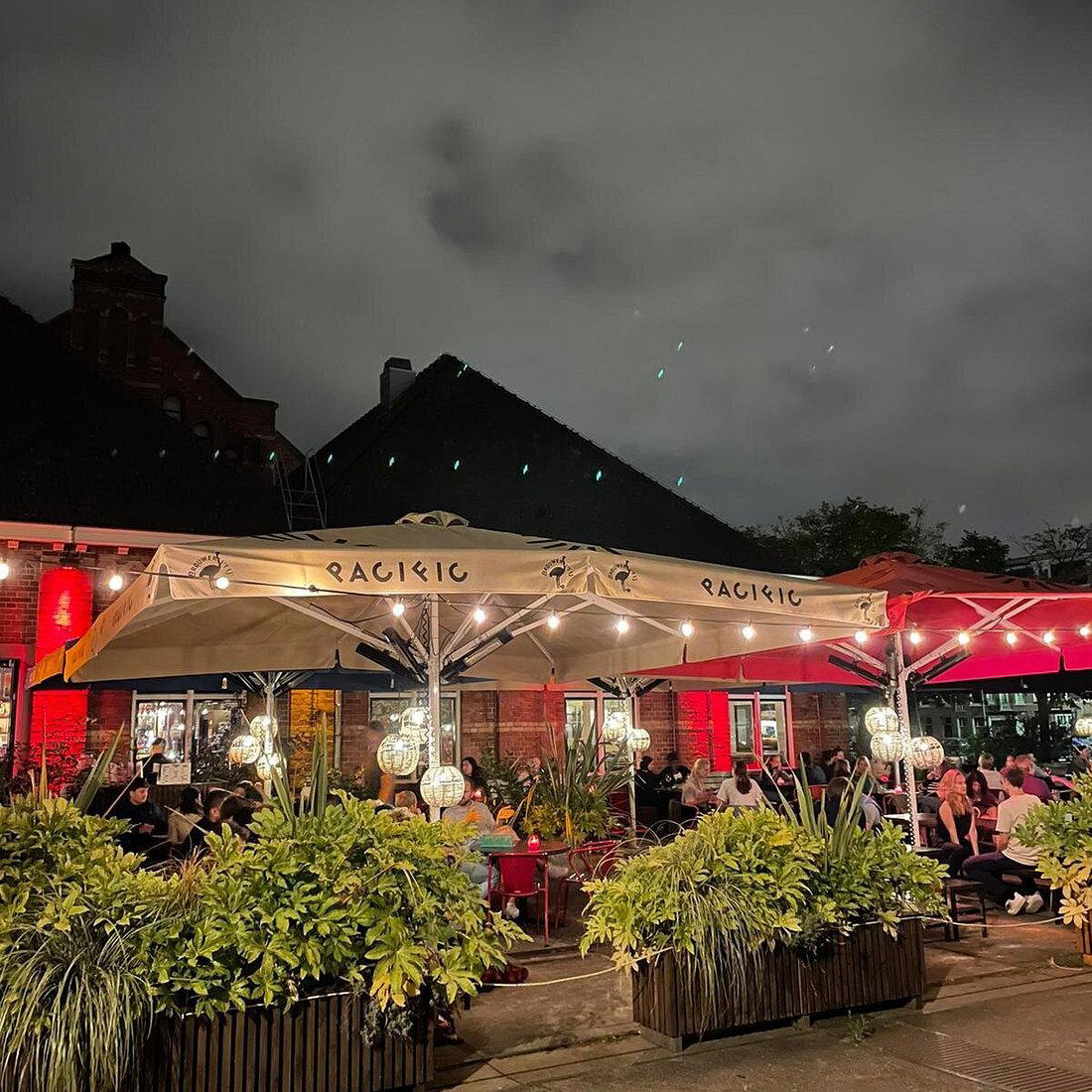
Westerpark and the Waterfront: What the Address Tells You
Amsterdam's dining geography has been reshaping itself for years. The canal-belt institutions still hold their ground, Ciel Bleu at the summit of the Okura and Vinkeles in the Dylan Hotel anchor the city's formal fine-dining tier, but a quieter movement has been building further west. Along the Polonceaukade, former industrial buildings fronting the water have steadily converted into spaces that attract a local dining crowd rather than a hotel-lobby clientele. Pacific Amsterdam sits at number 23 on that stretch.
The Westerpark district has developed its own dining character over the past decade. It draws a neighbourhood crowd that is generally more resistant to the tourist-facing formats that dominate Centrum, and the spaces here tend to reflect that. Warehouses and dock buildings along this part of the IJ ring carry a particular industrial texture, exposed structure, high ceilings, light that moves differently than it does in a canal house, and dining rooms that occupy them tend to let the architecture do the work rather than competing against it. Pacific Amsterdam's address on Polonceaukade places it squarely in this emerging cluster, closer in spirit to the city's creative-quarter venues than to its hotel-restaurant circuit.
For visitors, the practical implication is worth noting: Polonceaukade 23 is not a drop-in address. That friction, for some, is exactly the point, it filters the room toward people who made a deliberate choice.
Where Pacific Amsterdam Sits in Amsterdam's Dining Tiers
Amsterdam's mid-to-upper dining tier has become genuinely competitive. At the formal end, creative tasting-menu restaurants like Spectrum and Flore hold Michelin recognition and operate within a small, internationally recognised peer group. Below that, a looser set of venues, some farm-to-table oriented like BAK and De Kas, others more classically rooted like Bistro de la Mer, compete on character and neighbourhood positioning rather than awards currency.
The restaurant's placement in the Westerpark waterfront cluster puts it in conversation with this second group, where the dining proposition is built around a specific physical setting and a programming sensibility rather than a Michelin-starred CV. This is a meaningful distinction. Venues in this tier tend to live or die by the quality of their execution on any given night and the strength of their room, credentials that are harder to verify in advance than a star count but that experienced diners often weight more heavily when choosing where to spend an evening.
The Netherlands has produced serious destination dining well beyond Amsterdam: De Librije in Zwolle, Inter Scaldes in Kruiningen, and De Nieuwe Winkel in Nijmegen all operate at the summit of the national conversation. Further afield, addresses like De Lindenhof in Giethoorn, Tribeca in Heeze, De Groene Lantaarn in Staphorst, Brut172 in Reijmerstok, De Lindehof in Nuenen, De Bokkedoorns in Overveen, and De Treeswijkhoeve in Waalre demonstrate how widely serious cooking has distributed itself across the country. Within Amsterdam itself, however, the waterfront-industrial format remains a specific niche, and the restaurant occupies a distinctive position within it.
Planning a Visit: What to Expect Logistically
The restaurant is recommended for reservations, with casual dress and a price point around $25 per person. The address at Polonceaukade 23 is fixed, and the Westerpark location is itself a planning factor. The western waterfront is best approached with a clear evening ahead rather than a tight schedule.
Internationally, waterfront-industrial dining formats have found serious expression at places like Le Bernardin in New York City and communal-format venues like Lazy Bear in San Francisco, both useful reference points for understanding what a room built around physical character and programmatic commitment can achieve at its ceiling.
The Broader Case for the Westerpark Dining Scene
What the Polonceaukade cluster represents, more broadly, is a pattern that has played out in post-industrial urban zones across Europe. When a city's central dining options become crowded with both tourists and institutional restaurants, serious local diners tend to migrate toward peripheral neighbourhoods where rents are lower, spaces are larger, and the programming can take more risks. Amsterdam's Westerpark has followed this pattern with some consistency, and the restaurant's positioning there reflects a calculated bet on neighbourhood momentum rather than foot-traffic convenience.
That momentum carries its own set of risks. Venues in emerging neighbourhoods depend heavily on sustained local loyalty and the ability to convert destination diners who make the trip deliberately. The physical setting, waterside industrial, with the particular quality of north-facing light that comes off the water in late afternoon, provides a strong foundation. Whether the food and service program at the restaurant currently matches that setting is something that current visitors are better placed to assess than any publication working from database records alone.
What can be said with confidence: the address is intentional, the neighbourhood is on a trajectory, and the comparison set for a venue at this location skews toward rooms that have earned their following through execution rather than inherited prestige. For Amsterdam diners who have already worked through the canal-belt institutions, this part of the city offers a meaningfully different register, less polished in its approach to hospitality, more reliant on the quality of the specific evening, and more likely to feel like a discovery than a confirmation.
- Farmers Chicken
- Steak Tartare
- Gyoza
- Yellow Bellpepper Soup
- BBQ Asparagus
- Sticky Chocolate
Cuisine and Awards Snapshot
Comparable venues nearby, for context on price, style, and recognition.
| Venue | Cuisine | Price | Notes |
|---|---|---|---|
| Pacific AmsterdamThis venue — the venue you are viewing | Dutch Grill & International | $$ | Not listed |
| Van Speyk | Classic French-Dutch Brasserie | $$ | Hemelrijk |
| Greetje | Traditional Dutch Cuisine | $$ | Rapenburg |
| The Lobby Nesplein | Modern Western Bistro | $$ | Nes e.o. |
| Café Restaurant Sandberg | Dutch Cafe Fare | $$ | Museumplein |
| De Reiger | Dutch Gastro-Pub | $$ | Bloemgrachtbuurt |
Continue exploring
More in Amsterdam
Restaurants in Amsterdam
Browse all →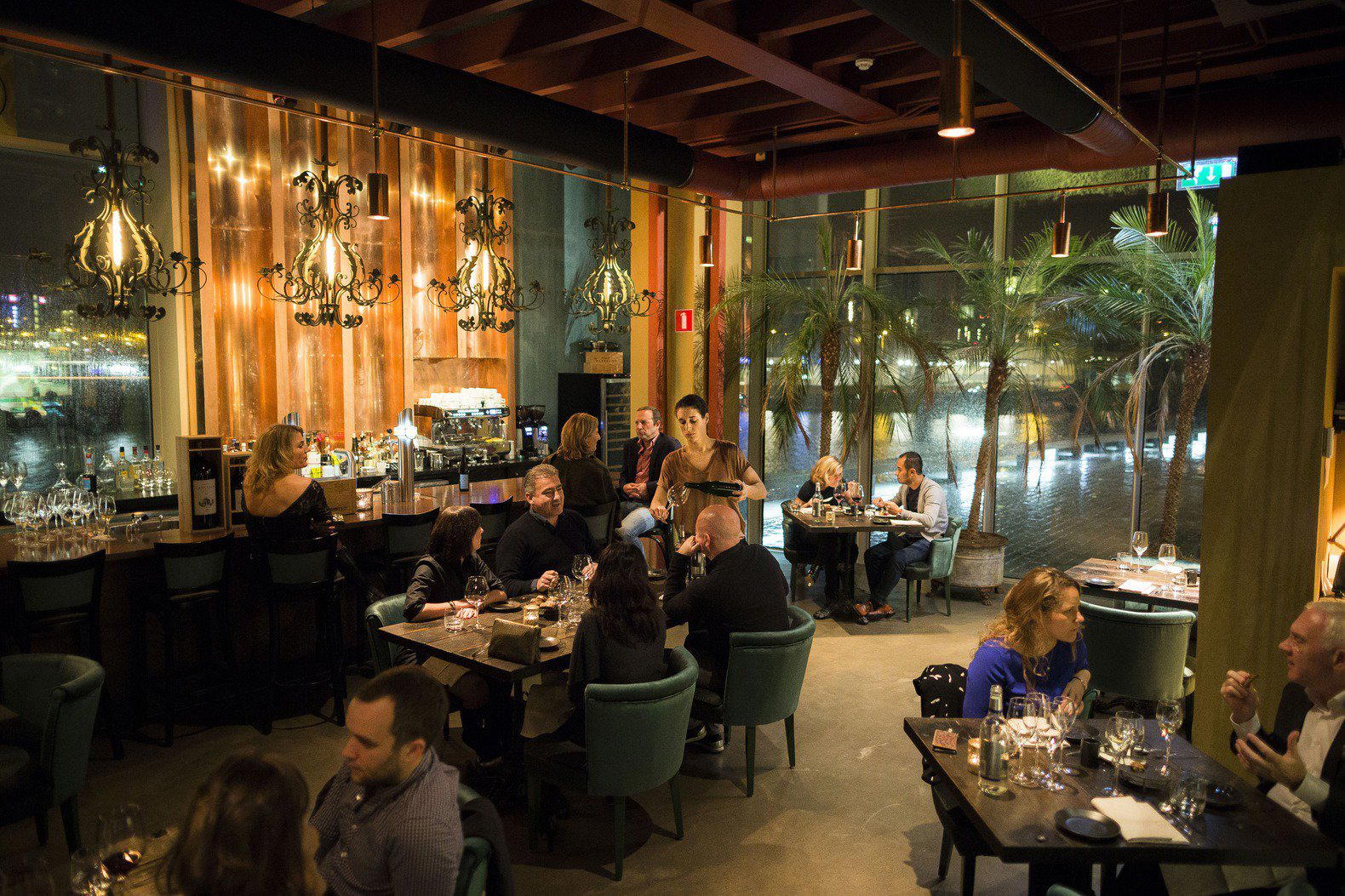
Bars in Amsterdam
Browse all →
Hotels in Amsterdam
Browse all →
Wineries in Amsterdam
Browse all →
At a Glance
- Lively
- Industrial
- Cozy
- Trendy
- Casual Hangout
- Group Dining
- After Work
- Brunch
- Late Night
- Terrace
- Live Music
- Open Kitchen
- Standalone
- Craft Cocktails
- Beer Program
- Sustainable
- Local Sourcing
Current opening hours
- Monday
- 12–11 PM
- Tuesday
- 12–11 PM
- Wednesday
- 12–11 PM
- Thursday
- 12 PM–1 AM
- Friday
- 11 AM–2 AM
- Saturday
- 11 AM–2 AM
- Sunday
- 11 AM–10 PM
Hours can change for holidays and private events. Last verified .
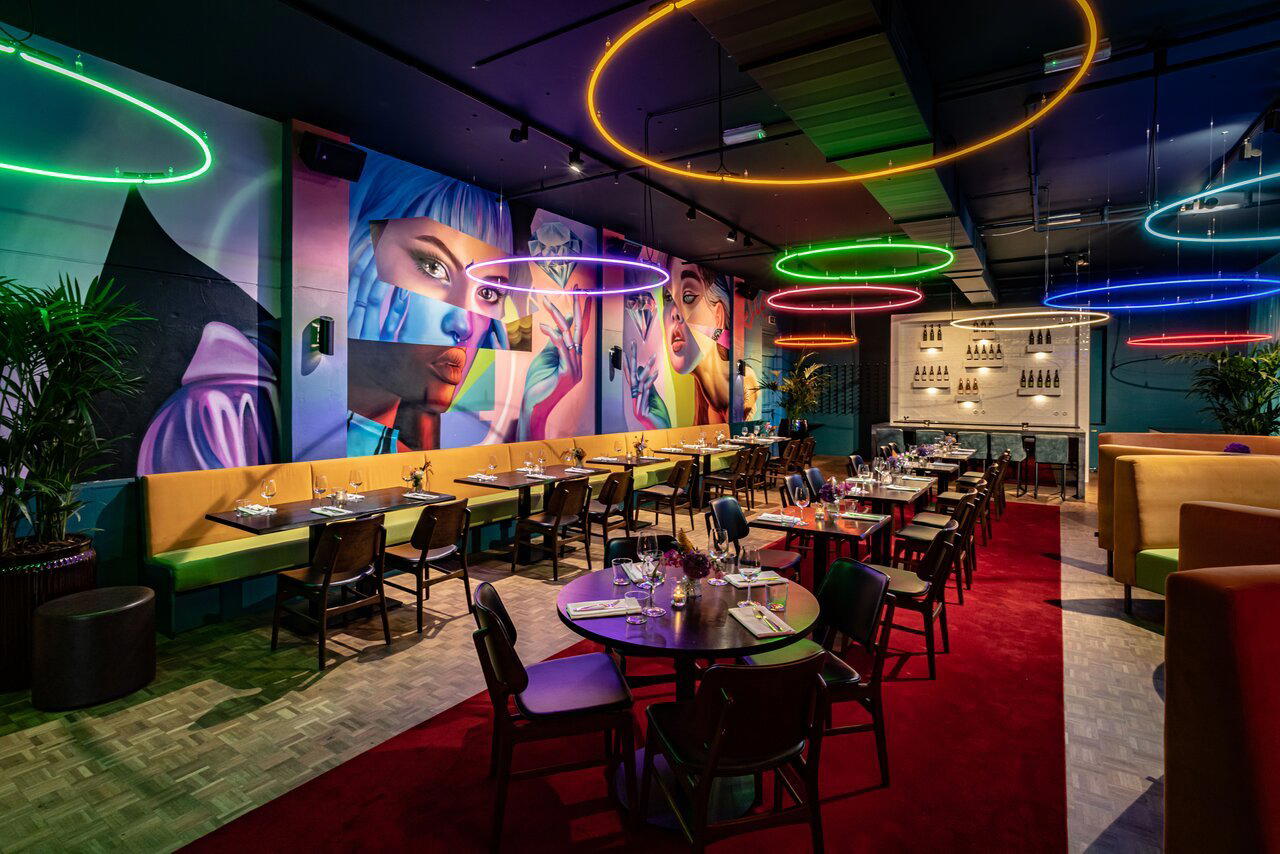
Sun-drenched terrace with chic, lively interior in a repurposed industrial space; energetic atmosphere that transitions from casual daytime dining to evening bar and dance venue.