Osteria Penzo sits on Calle Larga Bersaglio in Chioggia, the fishing port that supplies much of the Venetian lagoon's seafood. The kitchen draws directly from that supply chain, making the distance between the Adriatic and the plate shorter than almost anywhere in the region. For visitors making the journey from Venice, this is where the lagoon's ingredient story comes into focus.
Pearl is the En Primeur Club membership app — saves, bookings, and concierge access live there. Same editors, same standards.
- Address
- Calle Larga Bersaglio, 525, 30015 Chioggia VE, Italy
- Phone
- +393941400992
- Website
- osteriapenzo.it
- Directions
- Get directions
 Saves & bookings on Pearl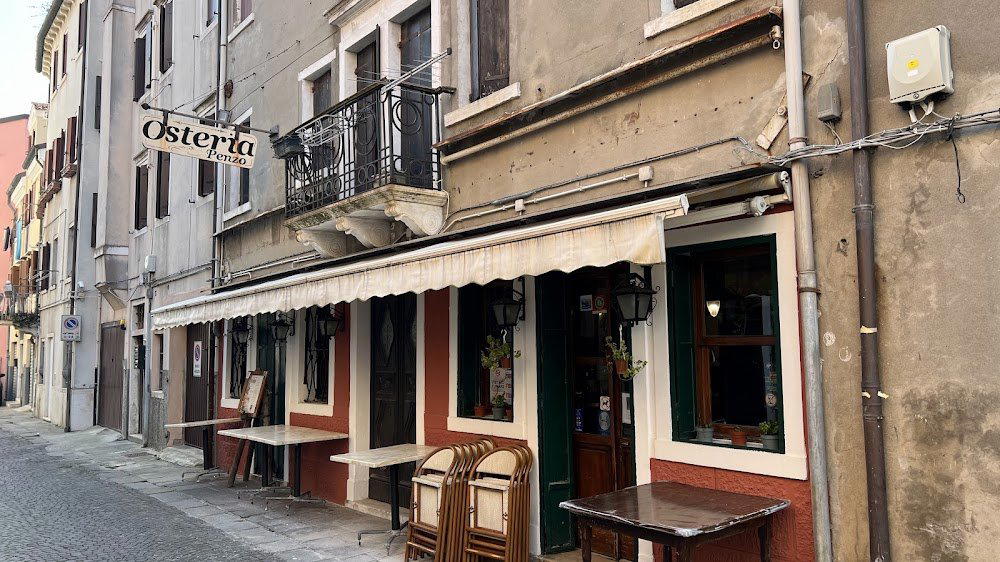
Where the Adriatic Empties Onto the Plate
Approach Chioggia on foot from the waterfront and the city's identity announces itself before any restaurant door opens. Fishing boats line the canal edges at Vigo, nets stacked on the quay, the morning catch already sorted and moving through the market by the time most visitors have finished breakfast. This is not a fishing theme carried by interior designers, it is the actual working economy of a port town that has fed the Venetian lagoon for centuries. Osteria Penzo, on Calle Larga Bersaglio, sits within that supply chain rather than beside it. The address alone places it in the older residential quarter of the city, away from the quayside tourist circuit, which says something about who the place is built for.
Chioggia occupies a position in Italian seafood culture that its size does not fully reflect. The fish market here, the Pescheria, supplies restaurants across the Veneto, including tables in Venice proper that charge several times Chioggia prices for the same Adriatic catch. The ingredient gap between the lagoon's source and its more celebrated consumers is one of the more instructive facts in the region's dining geography. Osteria Penzo operates close to that source, which gives it a structural advantage that no amount of technique or reputation can replicate further up the supply chain.
The Sourcing Logic of a Lagoon Kitchen
Italian coastal osterias divide into two broad types: those that treat seafood as a vehicle for culinary ambition, and those that treat restraint as the correct response to good raw material. The Adriatic tradition, particularly in the northern lagoon towns, tends toward the latter. Seasonal catches, minimal intervention, and cooking methods that preserve rather than transform are the grammar of this style. At this tier, the provenance question is the primary question: what was pulled from the water, when, and how close to the plate did it travel?
Chioggia's position at the southern end of the Venetian lagoon means its kitchens have access to a catch profile that includes both open-sea Adriatic species and the brackish-water species that characterise lagoon fishing. Vongole from the lagoon floor, cuttlefish in season, moeche (soft-shell crabs harvested in spring and autumn during moulting season), these are ingredients tied to specific windows in the calendar that cannot be reliably sourced from further afield. A kitchen working within walking distance of the Pescheria does not need a supply chain; it needs a good relationship with the right boats. That proximity is the editorial point, and it is what makes the Chioggia osteria format worth understanding on its own terms rather than as a cheaper alternative to Venice.
For context on how sourcing-led cooking scales up into formal fine dining, Italy offers a range of reference points. Uliassi in Senigallia on the Adriatic coast and Quattro Passi in Marina del Cantone in Campania both built Michelin recognition on coastal ingredient integrity. Dal Pescatore in Runate takes a longer-arc approach to regional product. These are different expressions of the same underlying argument: Italian restaurant culture at its most serious is often an argument about where food comes from. The osteria format in Chioggia makes that argument in a lower-register key, without the tasting menu apparatus, but the logic is the same.
Chioggia's Place in the Regional Dining Order
Venice dominates the regional conversation, but its restaurants operate at a significant remove from their ingredients. The supply typically travels across the lagoon, through wholesale intermediaries, and into kitchens serving tourists who have no easy reference point for what fresh means in this context. Chioggia inverts that model. The market is the anchor, the restaurants are arranged around it, and the prices reflect a local economy rather than a tourist one. That structural difference matters more than any individual kitchen decision.
Within Chioggia itself, the dining options cluster around a small set of formats. El Gato, positioned at the €€€ tier, represents the more formal end of the local seafood offer. All'Arena and Garibaldi fill out the picture of what the town's restaurant scene looks like across different registers. Osteria Penzo occupies the neighbourhood osteria slot: an address known to locals, not built around visibility to passing trade, and not structured to compete on the same terms as the harbour-front options. Our full Chioggia restaurants guide maps these options against each other in more detail.
The broader Italian fine-dining circuit provides a useful frame for understanding what Chioggia is not, and therefore what it is. Tables like Osteria Francescana in Modena, Le Calandre in Rubano, Piazza Duomo in Alba, and Enrico Bartolini in Milan sit at the summit of Italy's award-weighted hierarchy. Enoteca Pinchiorri in Florence, Casa Perbellini 12 Apostoli in Verona, Da Vittorio in Brusaporto, Atelier Moessmer Norbert Niederkofler in Brunico, and Reale in Castel di Sangro extend that map across the peninsula. Internationally, Le Bernardin in New York City and Atomix in New York City show how ingredient-first cooking operates at the highest formality level. Chioggia's osterias are not in conversation with that tier, but they draw from the same premise: the quality of what comes out of the kitchen is bounded by the quality of what goes into it.
Planning a Visit
Chioggia is accessible by bus from Venice's Piazzale Roma (roughly 70 minutes) or by a longer but more atmospheric route via the lagoon ferry from Pellestrina. The journey itself is part of the argument for going: the further you get from the tourist infrastructure of Venice, the more legible the lagoon's actual geography becomes. The restaurant's address on Calle Larga Bersaglio puts it a short walk from the central canal, in the kind of quiet calle where a restaurant survives on returned custom rather than walk-in traffic. The restaurant is recommended for reservations and sits at a casual price point, around $35 per person.
Comparable Venues
Comparable venues nearby, for context on price, style, and recognition.
| Venue | Cuisine | Price | Awards | Notes |
|---|---|---|---|---|
| Osteria PenzoThis venue — the venue you are viewing | Traditional Venetian Seafood | $$ | Not listed | Not listed |
| All'Arena | Traditional Italian Seafood | $$ | Not listed | Sottomarina |
| Garibaldi | Venetian Seafood | $$$ | Not listed | Sottomarina |
| El Gato | Traditional Adriatic Seafood | $$ | Michelin Plate | Corso del Popolo |
| Osteria al Corridoio | Traditional Italian Seafood Trattoria | $$ | Not listed | centro storico |
| Ai Do Campanili | Modern Venetian Seafood | $$$ | Not listed | Treporti |
Continue exploring
More in Chioggia
Restaurants in Chioggia
Browse all →

Bars in Chioggia
Browse all →
Hotels in Chioggia
Browse all →

At a Glance
- Cozy
- Rustic
- Classic
- Intimate
- Family
- Date Night
- Casual Hangout
- Group Dining
- Standalone
- Local Sourcing
- Sustainable Seafood
Current opening hours
- Monday
- Closed
- Tuesday
- Closed
- Wednesday
- 12–2:30 PM, 7:30–10:30 PM
- Thursday
- 12–2:30 PM, 7:30–10:30 PM
- Friday
- 12–2:30 PM, 7:30–10:30 PM
- Saturday
- 12–2:30 PM, 7:30–10:30 PM
- Sunday
- 12–2:30 PM, 7:30–10:30 PM
Hours can change for holidays and private events. Last verified .
Warm and inviting with charming decor reflecting traditional Chioggia character; described as feeling like home with a welcoming, family-friendly atmosphere on a quiet side street.