Our verdict
Ongtong Khaosoi sits on Phahonyothin Soi 7 in Phaya Thai, bringing the slow-cooked, coconut-curry noodle bowls of northern Thailand to Bangkok's mid-city corridor. The dish itself — khao soi — has a defined regional tradition rooted in Chiang Mai and Chiang Rai, and this address treats it with corresponding seriousness. For visitors tracking authentic northern Thai flavour through the capital, it is a logical stop.

Pearl is the En Primeur Club membership app — saves, bookings, and concierge access live there. Same editors, same standards.
- Address
- 31 Phahonyothin Soi 7, Phaya Thai, Bangkok 10400, Thailand
- Phone
- +6620035254
- Hours
- Daily 9 AM–8:30 PM
- Directions
- Get directions
The menu
What to order
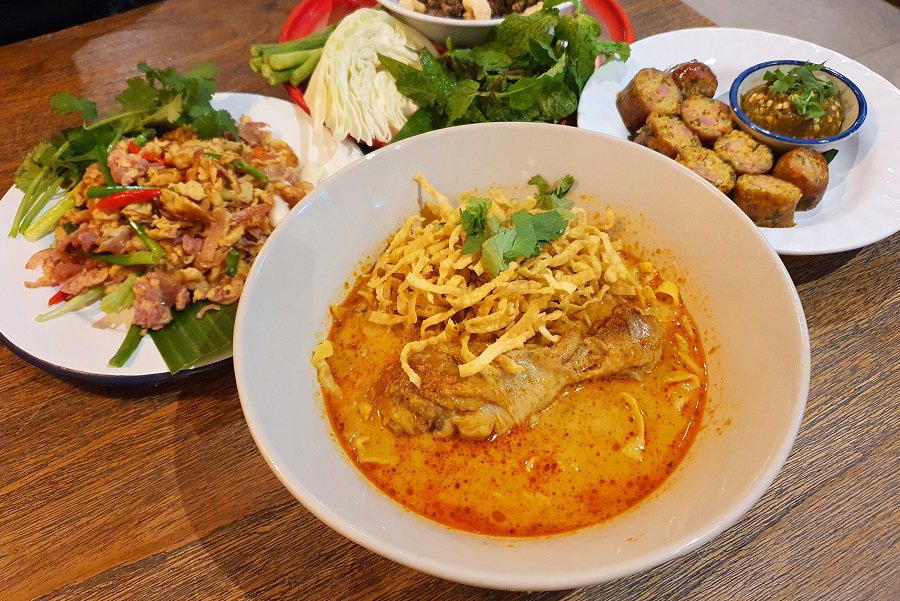
- Chicken Khao Soi
- Stir-Fried Khao Soi
- Sai Oua
Northern Thailand's Most Debated Bowl, Served in Bangkok
Khao soi occupies a specific place in Thai culinary conversation. It is northern Thailand's most discussed noodle format — a coconut-milk curry broth carrying egg noodles, topped with crispy fried noodle threads, finished with pickled mustard greens, shallots, and lime — and it sits apart from the pad Thai and boat noodle traditions that dominate Bangkok's street-food identity. The dish has Burmese and Yunnanese ancestry, arrived in Chiang Mai and Chiang Rai through trade routes, and has since become the clearest marker of Lanna culinary heritage. When a Bangkok restaurant commits to it as a primary focus rather than a menu footnote, that is an editorial signal worth examining.
Ongtong Khaosoi, at 31 Phahonyothin Soi 7 in the Phaya Thai district, belongs to that committed tier. The name says exactly what the address does: khao soi, with the kind of specificity that regional-dish specialists tend to project when they are confident in the product. Phahonyothin Soi 7 is a residential-commercial soi running off one of Bangkok's arterial roads, a neighbourhood more associated with commuter convenience than destination dining, which is precisely the setting where single-dish specialists tend to take root and hold their ground over years.
The Bowl in Its Regional Context
To understand what Ongtong Khaosoi is doing, it helps to understand what khao soi requires. The curry paste is the foundation: dried chilies, lemongrass, galangal, shallots, garlic, and shrimp paste ground to a base, then cooked in coconut cream until the fat separates and the paste darkens. The broth is built from that aromatics-in-fat moment, extended with coconut milk, and calibrated for the balance between fat richness and curry heat. Protein, most commonly chicken drumstick, beef, or pork, braises in the broth until it yields. The noodle split, between soft boiled egg noodles beneath and the same noodle fried crisp above, gives the bowl its textural signature.
Each of those components is a decision point where skill and sourcing separate versions. In Chiang Mai, addresses like Loet Rot in Mueang Chiang Mai and Cherng Doi Roast Chicken represent the kind of northern Thai cooking that treats provenance and technique as inseparable. A Bangkok khao soi specialist is, in effect, competing against that regional baseline in the minds of any diner who has eaten the dish in its home territory.
Phaya Thai as a Dining Address
Phaya Thai is not where Bangkok's formal dining tier concentrates. The high-end Thai and international rooms, Sorn with its southern Thai focus, Baan Tepa in Thai contemporary, or the European formats like Sühring and Côte by Mauro Colagreco, operate from different districts, most clustered around Silom, Sathorn, or the riverside. Phaya Thai's dining identity is shaped by proximity to Victory Monument and the BTS interchange: fast-moving, neighbourhood-oriented, priced for regular use rather than occasion spending.
That context matters for how to read Ongtong Khaosoi. This is not a restaurant positioning itself against Gaa or the tasting-menu tier. It positions itself within the single-dish specialist category, where depth of execution on one format is the competitive claim. In Bangkok, that category includes strong regional competitors: the southern-focused shops around the Democracy Monument area, the boat noodle clusters along the canals, and the handful of northern Thai addresses that have migrated to the capital carrying Chiang Mai or Chiang Rai recipes. Ongtong Khaosoi's Phahonyothin Soi 7 location places it within easy reach of the BTS network, which is the practical consideration that determines foot traffic for this type of address.
What to Expect at the Counter
Khao soi specialists in Bangkok typically operate in one of two modes: the casual shop format, with plastic stools, condensed-milk coffee on the side, and bills under 100 baht, or a slightly more considered setting that signals craft sourcing and a longer broth-building process. Visitors who have tracked the dish through Thailand, from PRU in Phuket to AKKEE in Pak Kret on the regional-cooking circuit, will recognise the format immediately.
The condiment tray that accompanies khao soi is its own indicator of how seriously a kitchen takes the dish. Pickled mustard greens should be house-prepared rather than purchased ready-made. Nam prik pao (roasted chili paste) for adjusting heat at the table, and a wedge of lime for acid, complete the standard accompaniment set. Whether a diner encounters these as an afterthought or as a considered element of the overall bowl depends entirely on the kitchen's relationship with the regional tradition.
Khao Soi in the Bangkok Drinking Context
The editorial angle assigned here touches on wine and beverage curation, which in the context of a northern Thai noodle specialist requires honest framing. Khao soi's flavour profile, coconut fat, chili heat, acid from lime and pickled greens, the aromatic complexity of a long-cooked curry paste, does not traditionally pair with a curated cellar in the way that a fine-dining room might. The beverage logic for this category is different: Thai iced tea cuts the fat, cold Beer Chang or Singha provides carbonation against the broth's richness, and fruit sodas or young coconut water are the regional default. Restaurants at this address level in Bangkok are not operating wine programs comparable to, say, the cellar depth you would find at Le Bernardin in New York City or the considered beverage formats at Atomix. What matters in this category is whether the beverage list is calibrated to the food's thermal and flavour intensity, a simpler question, but not a less important one.
For anyone building a Bangkok itinerary that traces regional Thai cooking across the city, Phahonyothin Soi 7 is a practical stop. The full map of Bangkok's dining addresses, from the neighbourhood khao soi shops to the Michelin-registered rooms, is covered in our full Bangkok restaurants guide. Elsewhere in Thailand, the northern cooking tradition extends through spots like Little Edo Suratthani in the south and DEVASOM BEACH GRILL in Takua Pa, though neither occupies khao soi's northern niche. For Bangkok seafood in a different register, Hoy Tord Chao Lay and Krua Laew Tae R-Rom in Pattaya and Hinata represent adjacent points on the regional-cooking circuit. The northern Thai tradition, however, runs through a different set of decisions, and khao soi is where those decisions are most visible on the plate.
Timing matters for khao soi at Bangkok's specialist addresses. Lunch service tends to be the primary window, with many single-dish shops selling out of broth by early afternoon. Arriving before noon on weekdays gives the most reliable access to a full bowl before the kitchen runs down its batch. Weekend demand at well-regarded spots in the Phahonyothin corridor can extend queues significantly. For the visit to read as intended, the mid-week lunch window is the logical approach.
Frequently asked questions
Where exactly is Ongtong Khaosoi?
Ongtong Khaosoi is located at 31 Phahonyothin Soi 7, Phaya Thai, Bangkok 10400, Thailand, Bangkok.
How does Ongtong Khaosoi compare to khao soi restaurants in Chiang Mai?
Khao soi originated in northern Thailand, where Chiang Mai has the deepest concentration of longstanding specialists. Bangkok venues bringing the dish south face an inherent credibility gap in the eyes of northern Thai purists, which makes the curry paste and broth balance the primary measure of legitimacy. Ongtong Khaosoi's location in Phaya Thai, a residential-leaning district at 31 Phahonyothin Soi 7, positions it closer to a neighbourhood specialist than a tourist-facing imitation, which is generally the more reliable category in this city.
What's the signature dish at Ongtong Khaosoi?
The name says it plainly: khao soi is the point. Bangkok's northern Thai specialists focus their entire identity on this one format — a coconut-milk curry broth served over egg noodles with both soft-cooked and crispy noodles in the same bowl. Ongtong Khaosoi, based at 31 Phahonyothin Soi 7 in Phaya Thai, operates within that same single-dish logic.
Is Ongtong Khaosoi reservation-only?
Khao soi specialists in Bangkok typically run as walk-in counters or shop-format operations, so arriving off-peak — before the midday rush or outside evening crowds — is the practical approach at addresses like this one in Phaya Thai.
What's the standout thing about Ongtong Khaosoi?
The standout is focus. At a time when Bangkok restaurants frequently broaden menus to capture wider audiences, a spot named after a single northern Thai noodle dish and operating in Phaya Thai rather than a tourist-facing dining corridor is making a deliberate choice. That degree of commitment to one regional format is relatively rare outside Chiang Mai.
Is Ongtong Khaosoi good for vegetarians?
Traditional khao soi relies heavily on chicken or beef broth and meat-based curry paste, which makes a standard bowl unsuitable for vegetarians without modification.
Peers in This Market
Comparable venues nearby, for context on price, style, and recognition.
| Venue | Cuisine | Price | Notes |
|---|---|---|---|
| Ongtong KhaosoiThis venue — the venue you are viewing | Northern Thai Khao Soi | $10–20 | Not listed |
| JJ's Kitchen Restaurants | Thai with International Options | $10–20 | Ban Don Muang Khwaeng |
| Phed Mark | Spicy Pad Krapao Specialist | $1–10 | Khlong Toei |
| Somyos | Thai with Chinese influences | Not listed | Ban Song Krathiam |
| Mae Varee Sweet Sticky Rice with Mango | Thai Mango Sticky Rice | $1–10 | Khlong Tan |
| Weng | Thai-Chinese Crab Fried Rice | $1–10 | Chinatown |