
Our verdict
Mae Varee is Bangkok's reference point for khao niao mamuang, a Thong Lo street counter ranked #95 on Opinionated About Dining's Casual Asia list in 2025. The format is straightforward: glutinous rice steamed with coconut milk, paired with ripe mango, served from a roadside stall at a fraction of what fine-dining Bangkok charges for comparable craft.

Pearl is the En Primeur Club membership app, where members save venues, book tables and use the concierge.
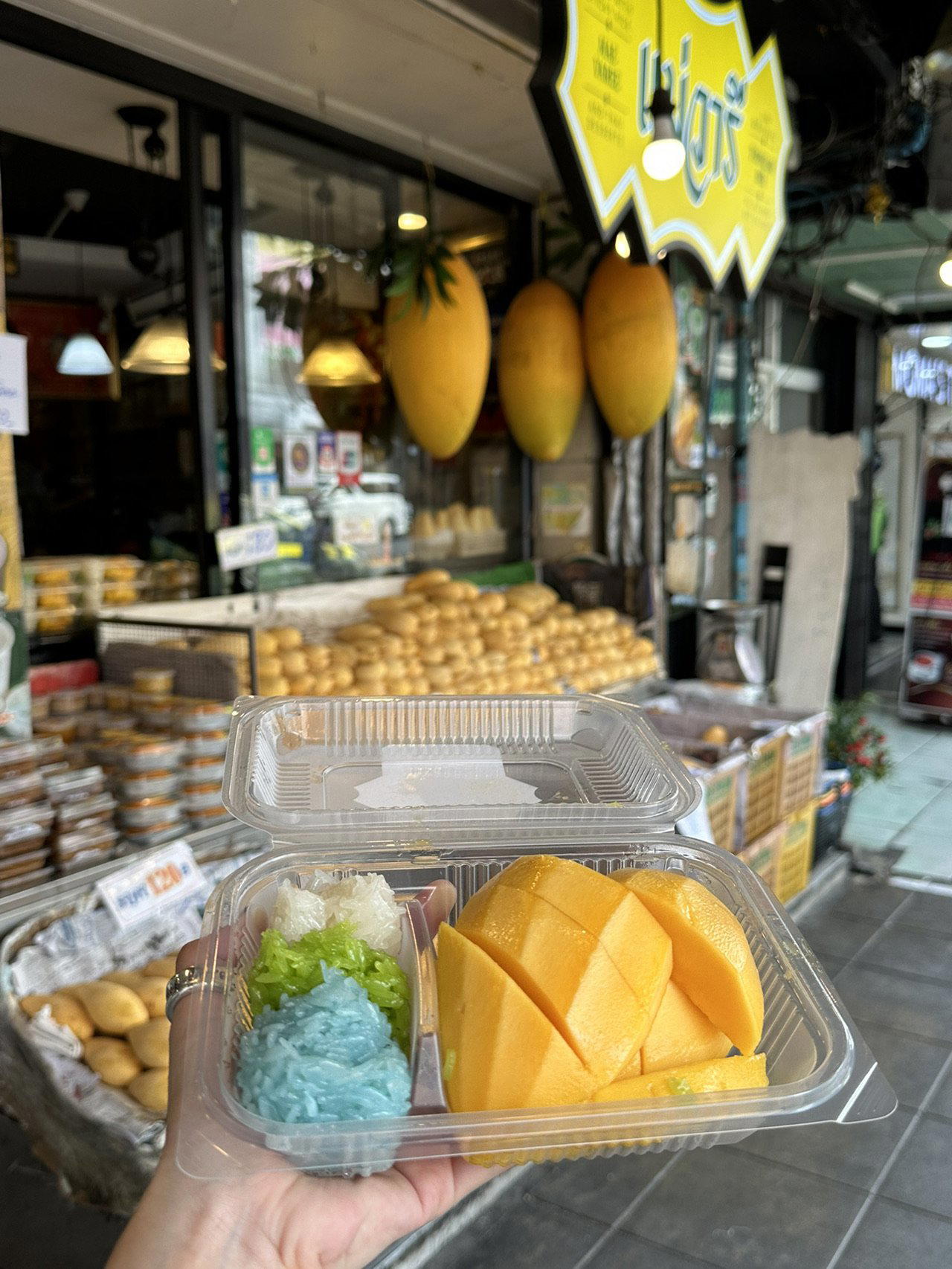
The Street Counter That Sets the Standard
On Thong Lo's main artery, where the neighbourhood shifts between convenience stores and high-end Japanese restaurants, Mae Varee operates the kind of stall that Bangkok's food culture has always depended on: a single-focus operation, consistent across decades, staffed by people who do one thing and have refined it past the point where ambition is still necessary. There is no menu to study. There is sticky rice with mango, and sometimes coconut-dusted variations, and the question is only whether you want one portion or two.
That clarity of purpose is what Opinionated About Dining recognised when ranking Mae Varee at #95 on its 2025 Casual Asia list, a ranking system that places it alongside some of the region's most deliberate casual operations. It is a sustained reputation built on repetition and precision.
Khao Niao Mamuang: The Dish in Context
Sticky rice with mango, khao niao mamuang in Thai, is one of Southeast Asia's most technically specific desserts disguised as a simple one. The glutinous rice must be soaked, steamed over a conical bamboo basket, and then dressed in sweetened coconut milk at a ratio that produces the right texture: slightly firm grains that hold together without becoming stodgy, coated in a savoury-sweet coconut layer that doesn't overwhelm the fruit. The mango matters as much as the rice. Bangkok's preferred variety is Nam Dok Mai, a thin-skinned, fibre-free cultivar with high sugar content and a faint floral note. Its season, roughly April through June, defines when Mae Varee operates at its peak, though year-round versions using imported or off-season fruit are common across the city.
The intersection of local ingredient and refined technique is where this dish becomes interesting beyond its apparent simplicity. The glutinous rice varieties used in Thai dessert preparation differ from the long-grain jasmine rice that defines Thai savoury cooking, and the steaming method requires the kind of accumulated knowledge that resists shortcutting. At the level Mae Varee operates, the technique is indistinguishable from tradition because it is the tradition, handed down through stall operations rather than culinary schools. That is a different lineage from the Michelin-starred Thai restaurants in the same city, places like Sorn (Southern Thai) or Baan Tepa (Thai contemporary), which apply academic rigour to traditional recipes. Mae Varee's authority comes from doing the same thing correctly for long enough that correctness becomes self-evident.
Thong Lo and What It Tells You About Bangkok's Food Range
Thong Lo's dining address puts Mae Varee in one of Bangkok's most expensive residential and hospitality corridors. The neighbourhood hosts some of the city's highest-per-cover restaurants, including Sühring (German) and Côte by Mauro Colagreco (Mediterranean, Modern Cuisine), alongside major Japanese dining, rooftop bars, and the kind of international café operations that arrive with expatriate density. Mae Varee sits at 1 Thong Lo without making any concessions to that surrounding price bracket. The stall economy operates independently of the fine-dining economy in Bangkok in a way that is less common in cities like Tokyo or Paris, where even casual operations tend to absorb ambient pricing pressure from their neighbourhoods.
That independence is part of Bangkok's food character more broadly. The city supports Gaa (Modern Indian, Indian) and Mae Varee within the same postal district because street-level food operates on its own supply chain, customer base, and quality logic. For visitors calibrating where to spend, Mae Varee represents the lower end of the price range while sitting at the upper end of the quality range within its category, a combination that Bangkok produces more reliably than almost any other city.
What the OAD Ranking Actually Means Here
Opinionated About Dining's casual list draws from a voting base of experienced diners rather than professional inspectors, which makes its top-100 placements in Asia a reasonable proxy for sustained repeat-visitor consensus. A stall reaching #95 in 2025 is not a discovery, it is a confirmation. Mae Varee has been known to Bangkok's food-aware community for years. The ranking makes it legible to international visitors who rely on structured lists rather than word-of-mouth networks built over multiple visits to a city.
The comparison with OAD's formal dining listings is instructive. Bangkok's fine-dining ranked entries include operations with formal tasting menus, sommelier programs, and international wine lists. Mae Varee's placement on the casual list signals a different set of criteria: execution consistency, value relative to quality, and the kind of product specificity that makes a single-item stall worth seeking out deliberately. It belongs to a category of food experience that cities like Bangkok, Penang, and Taipei produce at scale and that travellers from New York or London, cities where operations like Le Bernardin and Atomix set the reference points, tend to undervalue until they encounter the real thing.
Planning Your Visit
Mae Varee is located at 1 Thong Lo, Khlong Tan Nuea, Watthana. The address sits at the beginning of the Thong Lo soi, accessible from Sukhumvit Road and a short walk or ride from BTS Thong Lo station. No booking is required or possible. Queues form during peak hours, particularly on weekends and during mango season (April to June), but the counter moves quickly given the limited menu scope.
| Venue | Category | Price Range | Booking Required | OAD / Award |
|---|---|---|---|---|
| Mae Varee | Street / Casual | ฿ (very low) | No | OAD Casual Asia #95 (2025) |
| Sorn | Fine Dining | ฿฿฿฿ | Yes, advance | Michelin-starred |
| Baan Tepa | Fine Dining | ฿฿฿฿ | Yes, advance | Michelin-starred |
| Côte by Mauro Colagreco | Fine Dining | ฿฿฿฿ | Yes, advance | Michelin-starred |
| Gaa | Fine Dining | ฿฿฿฿ | Yes, advance | Michelin-starred |
For broader Bangkok itinerary planning, see our full Bangkok restaurants guide, our full Bangkok hotels guide, our full Bangkok bars guide, our full Bangkok wineries guide, and our full Bangkok experiences guide. If you are travelling beyond Bangkok, notable Thailand destinations with EP Club coverage include AKKEE in Pak Kret, PRU in Phuket, Aeeen in Chiang Mai, Angeum in Phra Nakhon Si Ayutthaya, Agave in Ubon Ratchathani, and The Spa in Lamai Beach.
Frequently asked questions
Is Mae Varee Sweet Sticky Rice with Mango good for families?
Mae Varee suits families well. The format is a street counter on Thong Lo's main artery, no reservations, no formal seating requirements, and a single-focus menu centred on khao niao mamuang that children tend to take to immediately. Its OAD Casual Asia ranking reflects exactly that kind of accessible, no-ceremony eating.
What's the overall feel of Mae Varee Sweet Sticky Rice with Mango?
This is a purposeful street counter, not a sit-down destination. Mae Varee sits at the entry of Thong Lo soi, one of Bangkok's most expensive hospitality corridors, yet operates with the straightforward efficiency of a market stall. The contrast is part of what makes it notable enough for a top-100 OAD Casual Asia placement in 2025.
What kind of recognition has Mae Varee Sweet Sticky Rice with Mango received?
Mae Varee Sweet Sticky Rice with Mango has received recognition including: Opinionated About Dining Casual in Asia Ranked #95 (2025).
What's the must-try dish at Mae Varee Sweet Sticky Rice with Mango?
Khao niao mamuang, glutinous rice with fresh mango, is the reason Mae Varee exists and the reason Opinionated About Dining ranked it #95 on its 2025 Casual Asia list. The venue's entire reputation rests on that single dish, which also happens to be one of the most technically specific preparations in Thai dessert cooking.
Where is Mae Varee Sweet Sticky Rice with Mango in Bangkok?
Mae Varee Sweet Sticky Rice with Mango is located at 1 Thong Lo, Khlong Tan Nuea, Watthana, Bangkok 10110, Thailand, Bangkok.
Price and Positioning
Comparable venues nearby, for context on price, style, and recognition.
| Venue | Cuisine | Price | Notes |
|---|---|---|---|
| Mae Varee Sweet Sticky Rice with MangoThis venue (the venue you are viewing) | Thai Mango Sticky Rice | $1–10 | Not listed |
| Nara | Authentic Thai Cuisine | $20–30 | Siam Square, Authentic Thai Cuisine |
| Baan Somtum | Authentic Isaan Thai Somtum | $10–20 | Bang Rak Khwaeng, Authentic Isaan Thai Somtum |
| Soei Restaurant | Intensely Flavorful Traditional Thai | $10–20 | Phaya Thai Khwaeng, Intensely Flavorful Traditional Thai |
| Lai Rot | Authentic Royal Thai Cuisine | $1–10 | Sam Sen, Authentic Royal Thai Cuisine |
| Supanniga Eating Room by Khun Yai | Authentic Eastern Thai Homestyle | $20–30 | Khlong Tan, Authentic Eastern Thai Homestyle |
Recognition history
Dated appearances from independent guides and award organizations, with the underlying list record or original source where available.
Opinionated About Dining Casual in Asia Ranked #73
Opinionated About Dining
Full recognition history (2 entries)
Opinionated About Dining Casual in Asia Ranked #95
Opinionated About Dining
Continue exploring
More in Bangkok
Restaurants in Bangkok
All restaurants in Bangkok →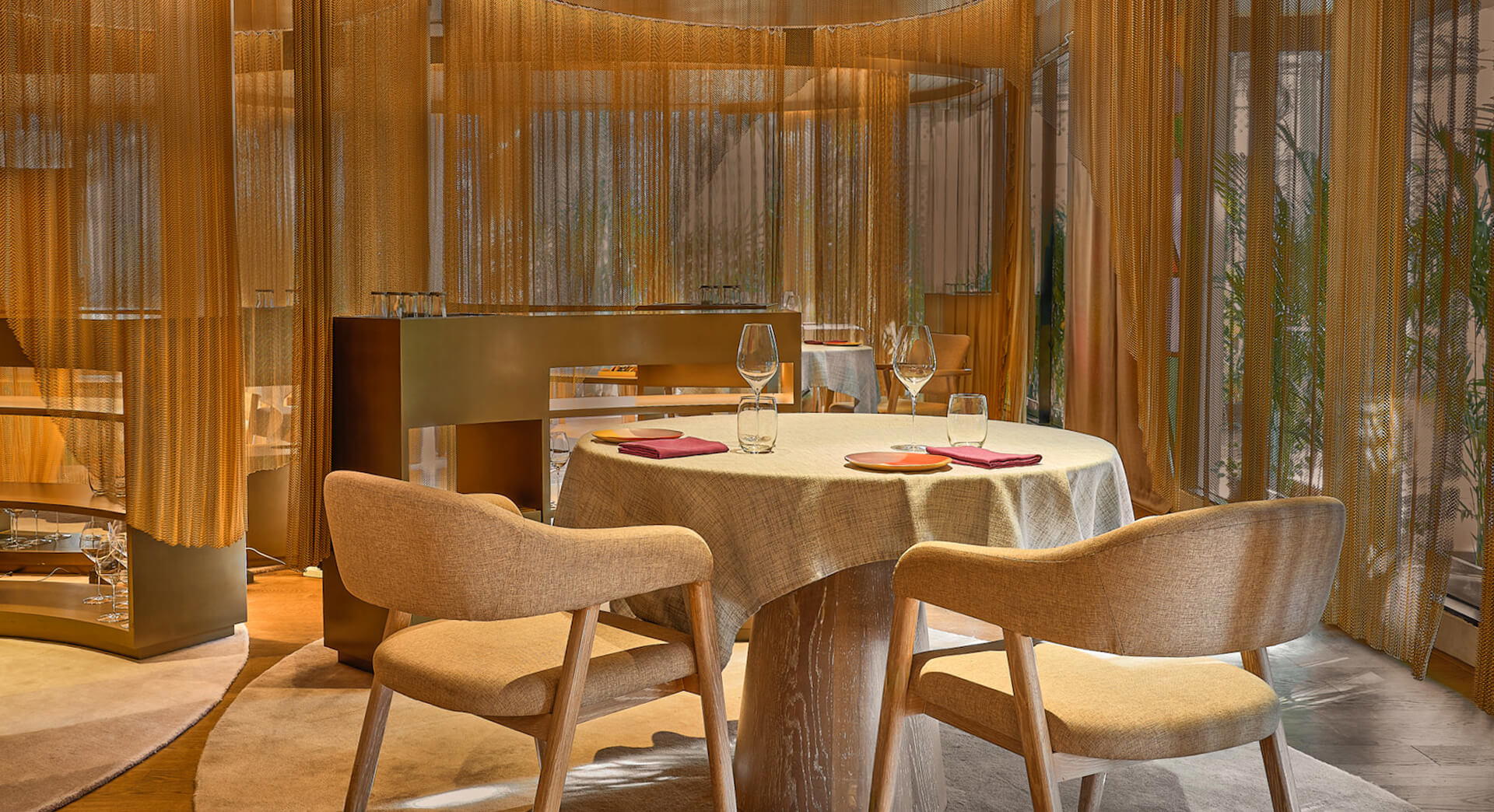
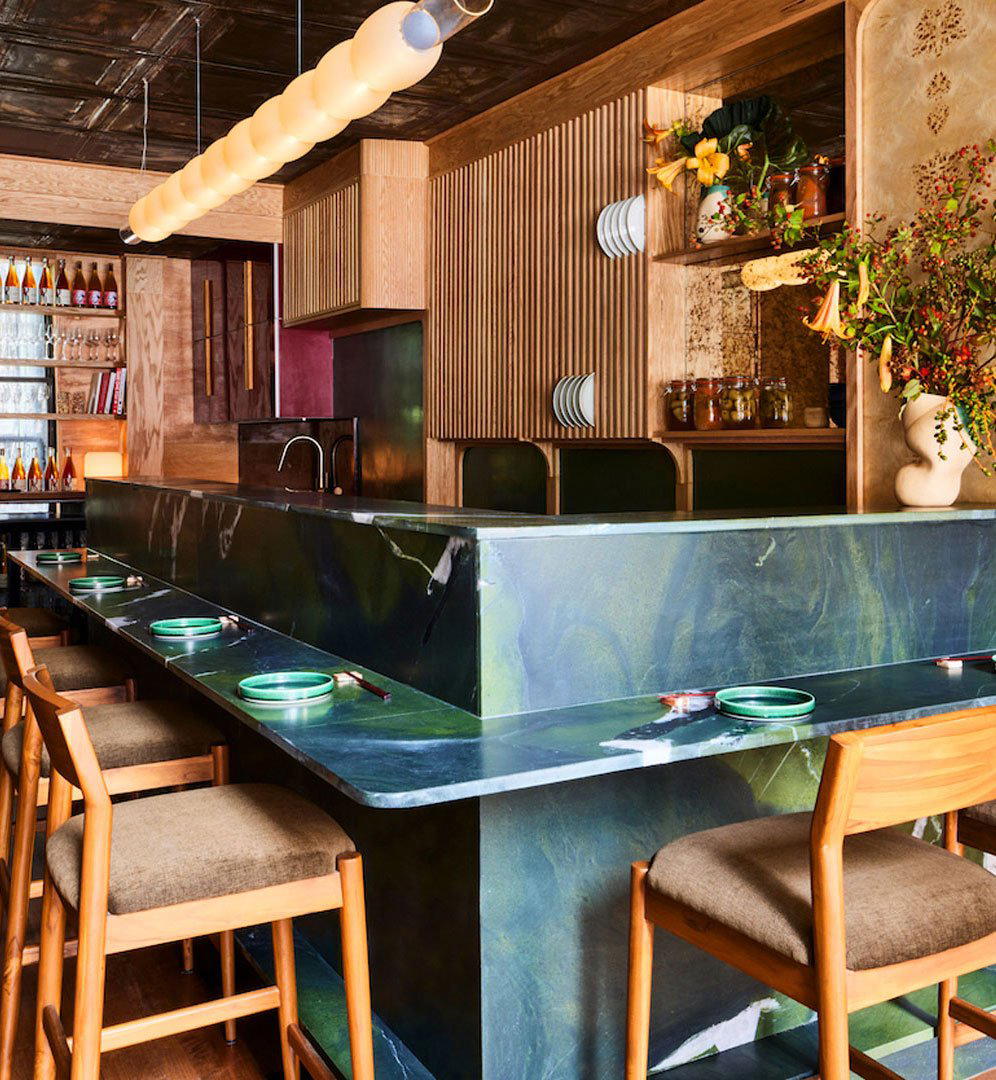
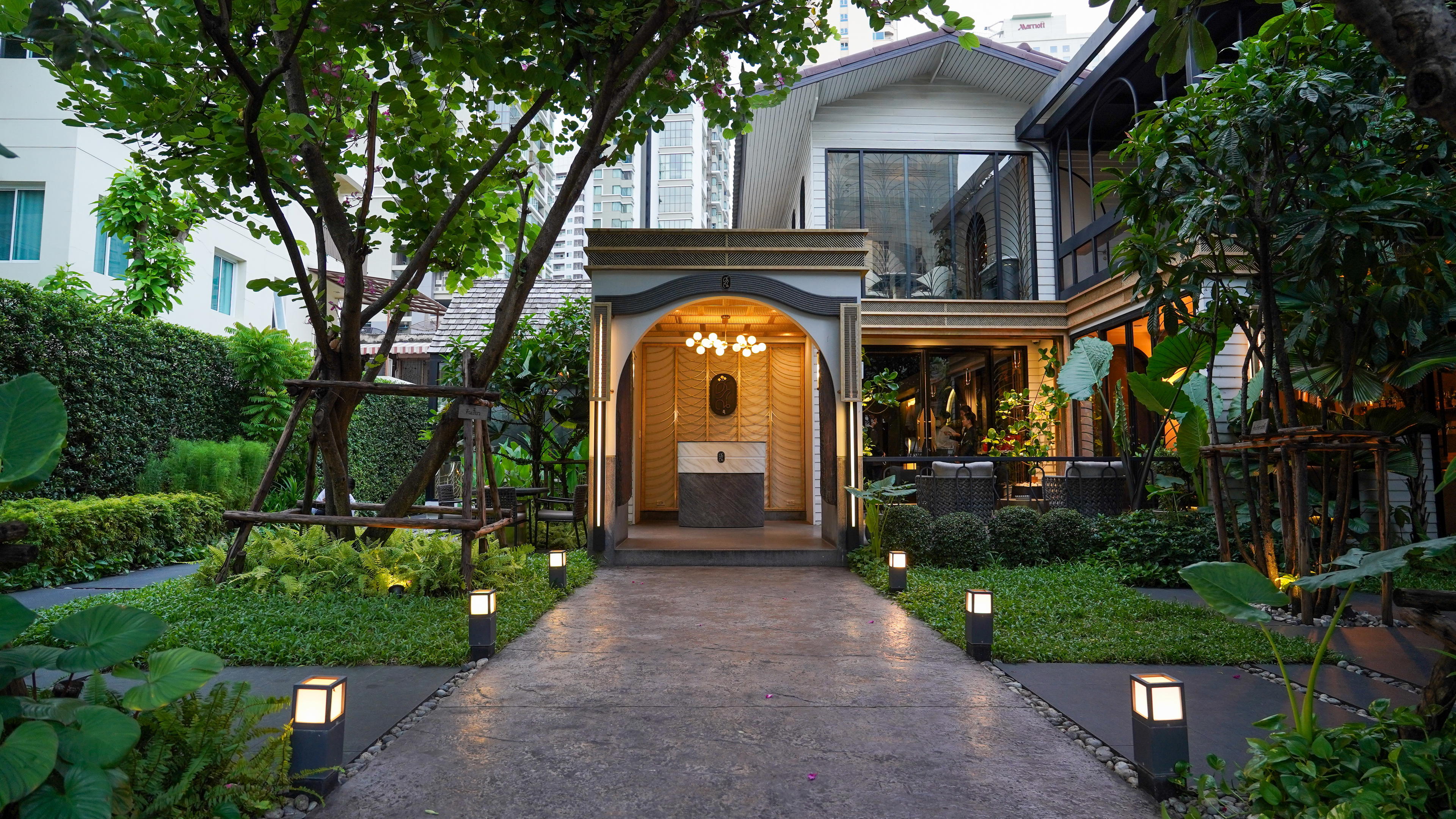
Bars in Bangkok
All bars in Bangkok →
Details
- Casual Hangout
- Standalone
- Local Sourcing
- A La Carte
- Vegetarian Friendly
- Gluten Free Options
Current opening hours
- Monday
- 6 AM–10:30 PM
- Tuesday
- 6 AM–10:30 PM
- Wednesday
- 6 AM–10:30 PM
- Thursday
- 6 AM–10:30 PM
- Friday
- 6 AM–10:30 PM
- Saturday
- 6 AM–10:30 PM
- Sunday
- 6 AM–10:30 PM
Hours can change for holidays and private events. Hours as of .
Casual takeaway fruit stall with no seating, focused on fresh preparation in a busy street-side location.