Our verdict
On Yaowarat Road in Bangkok's Chinatown, Weng occupies a stretch where decades-old shophouses and late-night neon define the pace of eating. The address places it inside one of Southeast Asia's most concentrated street-food corridors, where the measure of a restaurant is repetition: the same diners, returning. Expect the textures and temperatures that Yaowarat does better than anywhere else in the city.

Pearl is the En Primeur Club membership app — saves, bookings, and concierge access live there. Same editors, same standards.
- Address
- PGV3+QJC, Yaowarat Rd, Samphanthawong, Bangkok 10100, Thailand
- Phone
- +66818125067
- Directions
- Get directions
The menu
What to order
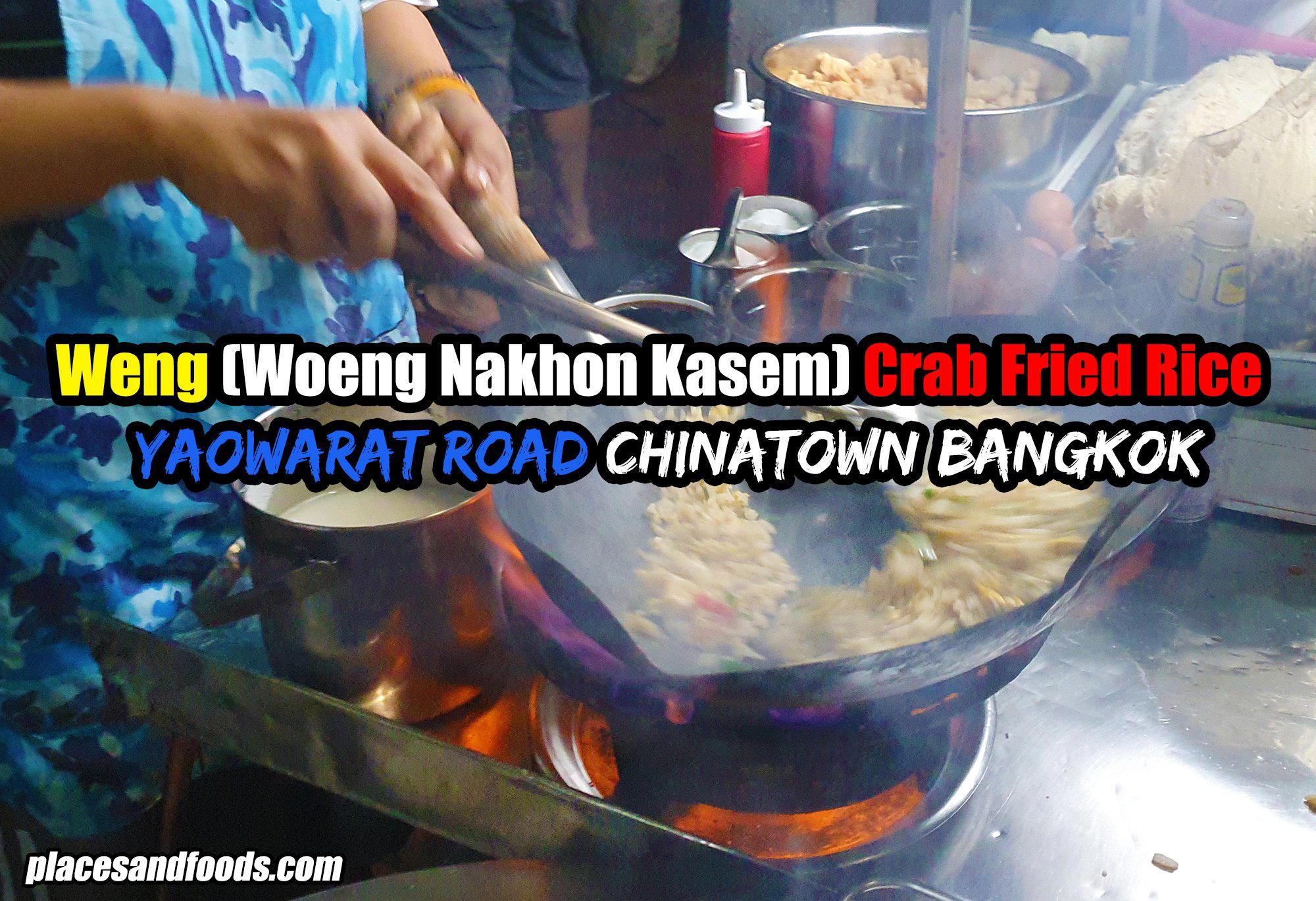
- Crab Fried Rice
Yaowarat Road and What It Asks of a Restaurant
Bangkok's Chinatown runs on a logic that has little to do with reservation systems or tasting menus. Yaowarat Road, the district's central artery in Samphanthawong, operates on repetition and density: dozens of kitchens within a few hundred metres, most of them open late, most of them decades old, all of them competing on the quality of a single dish or a narrow set of preparations rather than on breadth. In this context, a restaurant's address is already an argument. Sitting on Yaowarat means accepting comparison with some of the most practised Chinese-Thai cooking in the country, and it means a customer base that knows the difference.
Weng is located at that address — PGV3+QJC on Yaowarat Road — and that positioning is the first fact worth holding. Bangkok's premium dining tier, represented by venues like Sorn (Southern Thai), Baan Tepa (Thai contemporary), and the European imports such as Sühring (German) and Côte by Mauro Colagreco, occupies a different part of the city and a different price bracket entirely. Weng is not in that conversation. It belongs to the older, less visible tier of Bangkok eating, the kind of place that does not require a publicist because the street does the work.
The Character of Chinatown Eating
Yaowarat's food culture is a product of layered migration. Chinese communities, predominantly Teochew in origin, settled in this part of Bangkok across the nineteenth and twentieth centuries and built a cooking tradition that sits between Cantonese technique and Thai ingredient logic. The results, roast meats, congee, seafood prepared with minimal interference, and noodle soups whose broths reflect hours of reduction, are not fusion in any contemporary sense. They are the outcome of a specific history, cooked the same way because consistency is how trust is earned on a street like this.
What that means for a visitor is that the eating on Yaowarat tends to be direct. There is usually one thing a given kitchen does with authority, and the menu around it exists largely as context. This is structurally different from the omakase-style progression you find at Gaa (Modern Indian) or the chef-driven tasting formats appearing elsewhere in Bangkok's dining scene. Yaowarat kitchens are not making arguments about technique or provenance. They are making food that people come back for.
What the Location Signals
The Samphanthawong district, where Weng sits, is one of Bangkok's most walkable eating neighbourhoods after dark. The street reaches its density in the evening, when food stalls extend the dining environment outward from shophouse interiors onto pavements, and the distance between one kitchen and the next collapses to a few steps. This has practical consequences for how you eat here: it is a neighbourhood that rewards grazing across multiple stops rather than treating any single venue as a full-evening commitment.
That said, established shophouse restaurants on Yaowarat operate differently from the stalls. They carry more history, often more space, and the kind of returning clientele that stabilises a menu over years. The trade-off is that they can be harder to read for first-time visitors, particularly those used to menus in English or booking systems that confirm in advance. Logistics on Yaowarat tend toward the informal: turn up, assess the queue or available seating, and order based on what other tables are eating. The address on Google Maps is usually sufficient to locate the building; beyond that, local knowledge helps.
For comparison, venues in Bangkok's outer neighbourhoods, AKKEE in Pak Kret, for instance, offer a similar register of direct, practised cooking but with less surrounding street density. Yaowarat condenses that experience into a single road.
Placing Weng in the Bangkok Picture
Bangkok's restaurant coverage tends to concentrate on the upper tier: the Michelin-flagged counters, the chef collaborations, the hotel dining rooms. That concentration leaves large gaps in what actually gets written about, and Yaowarat is one of those gaps. The street has produced dishes, roast duck on rice, braised pork trotters, seafood congee, that have been refined over decades, with competitive pressure applied daily by the proximity of peers doing the same thing. That is a different kind of quality signal from a Michelin star, but it is a signal nonetheless.
Internationally recognised restaurants in cities like New York, places such as Le Bernardin or Atomix, earn their reputation through formal critical infrastructure: reviews, awards, editorial attention. Yaowarat kitchens earn theirs through something less documented but equally demanding: the sustained preference of a neighbourhood that has access to every other option on the same block. Weng exists within that system.
Across Thailand, the pattern repeats in different registers. In Phuket, PRU represents the farm-to-table, internationally credentialled end of Thai dining. In Chiang Mai, venues like Loet Rot and Cherng Doi Roast Chicken operate in the neighbourhood-institution register that Weng occupies in Bangkok. The geography changes; the underlying logic of earned local trust does not.
For a fuller map of where Bangkok's eating sits across price points and styles, the EP Club Bangkok restaurants guide covers the range from Yaowarat shophouses to the formal tasting-menu tier.
Planning a Visit
Weng sits on Yaowarat Road in Samphanthawong, reachable from the MRT Hua Lamphong station or by taxi from Silom or Sukhumvit in under twenty minutes outside of peak traffic hours. Evenings are the natural entry point for Yaowarat eating, the street reaches its full character after 6pm, and the cooking on offer reflects that rhythm. Given the absence of a published booking channel, arriving early in the evening window reduces waiting time. Dress expectations are informal, consistent with the street character of the neighbourhood. Budget expectations align with Yaowarat's general pricing tier, which sits well below Bangkok's ฿฿฿฿ restaurant bracket represented by venues like Sorn or Baan Tepa. For visitors building a broader Thailand itinerary, the contrast between Yaowarat and coastal cooking, such as what DEVASOM BEACH GRILL in Takua Pa or The Spa in Lamai Beach offer, is worth building in deliberately. They represent different ends of Thai food geography, and neither substitutes for the other.
Frequently asked questions
Would Weng be comfortable with kids?
Yaowarat Road dining operates in a communal, high-energy street-side format that suits families eating early in the evening, before the district reaches peak density around 9pm. Weng sits within this neighbourhood context on Yaowarat Road in Samphanthawong, where the pace is lively rather than formal. Younger children tend to do better here earlier in the night, when tables turn faster and the street noise is still manageable.
How would you describe the vibe at Weng?
Weng sits on Yaowarat Road, Bangkok's Chinatown artery, where the surrounding energy sets the tone as much as the room itself. Expect the sensory density typical of Samphanthawong after dark: neon signage, street traffic, and tables that fill quickly once the evening trade begins. It reads as a neighbourhood institution rather than a destination dining room.
Is Weng worth visiting if you're staying in Silom or Sukhumvit?
The journey from Silom or Sukhumvit to Weng's address on Yaowarat Road, Samphanthawong, runs under twenty minutes by taxi on most evenings. Bangkok's Chinatown is rarely folded into hotel concierge recommendations, which keeps Yaowarat Road operating largely for residents and repeat visitors rather than organised tour groups. For anyone interested in how the city eats outside its hotel dining circuit, Samphanthawong after dark is a reasonable detour.
What dish is Weng famous for?
What the location confirms is that Yaowarat Road restaurants in Samphanthawong are shaped by the district's Teochew Chinese heritage, meaning braised preparations, seafood, and rice-based dishes dominate menus at this end of Bangkok's Chinatown. Visiting and ordering what the table beside you has ordered remains the most reliable approach here.
How do I find Weng?
Weng is located at PGV3+QJC, Yaowarat Rd, Samphanthawong, Bangkok 10100, Thailand, Bangkok.
Cuisine-First Comparison
A quick peer reference to anchor this venue in its category.
| Venue | Cuisine | Price | Awards | Notes |
|---|---|---|---|---|
| WengThis venue — the venue you are viewing | Thai-Chinese Crab Fried Rice | $1–10 | Not listed | Not listed |
| Sorn | Fine Southern Thai | $200–300 | 3 Michelin Stars · World's 50 Best #12 | Southern Thai, ฿฿฿฿ |
| Baan Tepa | Creative Thai Fine Dining | $150–200 | 2 Michelin Stars · World's 50 Best #53 | Thai contemporary, ฿฿฿฿ |
| Côte by Mauro Colagreco | Riviera Mediterranean Fine Dining | $200–300 | 2 Michelin Stars · World's 50 Best #91 | Mediterranean, Modern Cuisine, ฿฿฿฿ |
| Gaa | Modern Indian Fine Dining with Thai Influences | $150–200 | 2 Michelin Stars · World's 50 Best #95 | Modern Indian, Indian, ฿฿฿฿ |
| Sühring | Modern German Fine Dining | $200–300 | 3 Michelin Stars · World's 50 Best #18 | German, ฿฿฿฿ |