Stuttgart's sushi scene occupies a quieter register than the city's Michelin-decorated German kitchens, and Oishi Sushi on Leobener Strasse operates within that more understated tradition. Japanese cuisine in Baden-Württemberg has carved a consistent niche among residents who want precision cookery outside the fine-dining circuit, and Oishi sits inside that pattern, a neighbourhood address that draws on sushi's core discipline of ingredient quality and technique over spectacle.
Pearl is the En Primeur Club membership app — saves, bookings, and concierge access live there. Same editors, same standards.
- Address
- Leobener Str. 28, 70469 Stuttgart, Germany
- Phone
- +4971146912932
- Website
- oishi-sushi-feuerbach.de
- Directions
- Get directions
 Saves & bookings on Pearl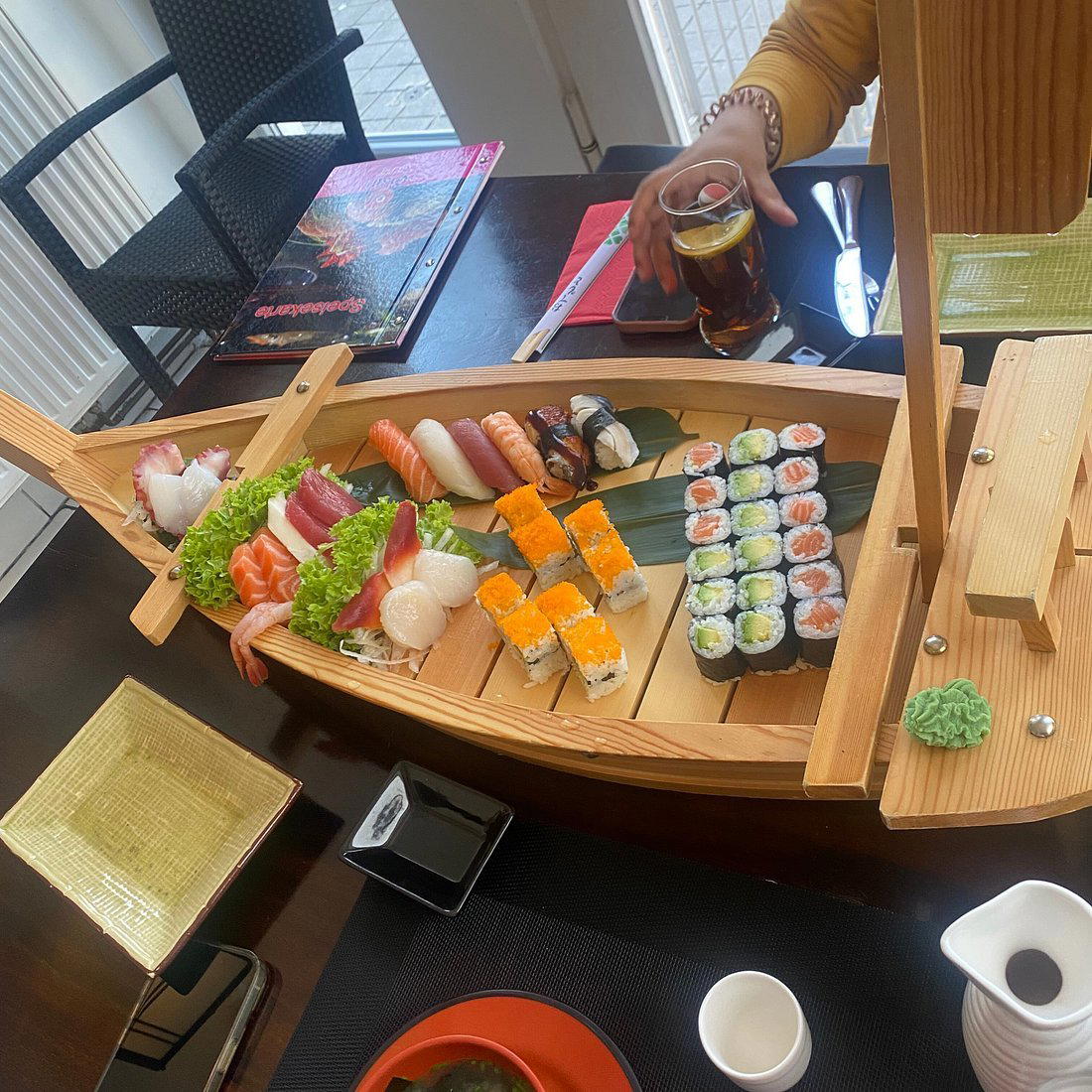
Stuttgart's Japanese Table: Where Sushi Fits in a German Fine-Dining City
Stuttgart is better known in food circles for its density of Michelin-starred German and French kitchens than for its Japanese addresses. Places like Speisemeisterei and Délice have shaped the city's reputation as a serious fine-dining destination, while Hegel Eins and 5 push the modern cuisine side of the ledger. Against that backdrop, Japanese cooking occupies a smaller, less decorated niche, but it is a persistent one. The appetite for sushi in German cities has grown steadily since the early 2000s, moving from novelty delivery menus into a more considered dining segment where technique and sourcing carry real weight.
Oishi Sushi is a casual Japanese sushi restaurant at Leobener Str. 28, 70469 Stuttgart, Germany, serving Japanese Sushi with Chinese Influences and priced at about $20 per person. Oishi Sushi on Leobener Strasse 28 in the Zuffenhausen district operates within that quieter tradition. The address is not a headline destination in the way Stuttgart's starred kitchens are, it does not compete with Der Zauberlehrling for creative plaudits or position itself against the prestige tier of Germany's broader Japanese dining scene. What it represents, instead, is the kind of neighbourhood Japanese address that functions as a weekly anchor for local regulars: a place where the discipline of sushi, its rice temperature, its knife work, its insistence on the interval between preparation and consumption, is the whole point.
The Cultural Logic of Sushi in a German City
To understand where an address like Oishi Sushi sits, it helps to understand how Japanese cuisine travelled into the German restaurant culture. Germany's post-bubble relationship with Japanese food developed differently from France or the UK. The arrival of serious sushi was slower and concentrated in larger cities first, Frankfurt, Munich, Hamburg, before filtering into secondary cities like Stuttgart with growing automotive-sector international populations. Baden-Württemberg's industrial base brought Japanese engineers, executives, and families who created a sustained local demand for technically honest Japanese food rather than localised approximations of it.
That cultural pressure has a culinary consequence: sushi restaurants in Stuttgart that survive on repeat business tend to develop discipline around the basics rather than novelty. The tradition of washoku, the Japanese culinary philosophy recognised by UNESCO in 2013 as intangible cultural heritage, places enormous emphasis on seasonal ingredients, balance across textures, and the restraint of the cook. Whether any particular sushi house in Stuttgart adheres to that philosophy closely or loosely is a question of the house itself, but the tradition is the frame in which customers who understand sushi are making their evaluations. Germany's upper-tier Japanese dining, represented internationally by addresses like Atomix in New York or the French-Japanese crossover tradition at places like Le Bernardin, sits at some remove from a neighbourhood sushi address, but the underlying craft lineage connects them.
The Zuffenhausen Address: Reading the Neighbourhood
Leobener Strasse 28 places the restaurant in Zuffenhausen, a district that sits north of Stuttgart's central core and carries a mixed residential and light-industrial character. It is not the tourist-facing city centre, and it is not the upscale Degerloch or Killesberg zones where some of Stuttgart's more expensive restaurants operate. A neighbourhood sushi address in this kind of district typically draws its customer base from within a tight radius: local residents, workers, and regulars who value consistency over occasion dining.
That positioning has its own logic. Across Germany's broader restaurant scene, particularly serious craft kitchens operate in non-prestige postcodes, Aqua in Wolfsburg, for instance, operates inside a car factory complex yet holds three Michelin stars. Location and prestige are not the same variable. What matters for a sushi address in a working-district location is whether the craft holds up without the ambient signal of a fashionable street. That is a harder test to pass, and a more honest one.
How Oishi Sushi Compares in Stuttgart's Dining Set
Stuttgart's fine-dining circuit is well-documented through German Michelin coverage and the consistent recognition of kitchens like Speisemeisterei. Japanese cuisine sits outside that recognition structure in most German cities, Michelin Germany has awarded stars to few Japanese addresses, and those that have received recognition tend to be in Berlin or Munich. Within Stuttgart specifically, the Japanese dining segment is not formally ranked in the way French or modern German cuisine is, which means reputation travels through word of mouth, community recommendation, and the kind of repeat-visit loyalty that is harder to quantify but more durable than a single review.
For a reader mapping Stuttgart's dining options across cuisine types, the relevant comparison is not against Der Zauberlehrling or the starred kitchens of Germany's broader scene, places like Schwarzwaldstube in Baiersbronn, Vendôme in Bergisch Gladbach, or Victor's Fine Dining in Perl. The relevant comparison is within Stuttgart's Japanese and Asian dining cohort, where the questions are about sourcing credibility, rice quality, and whether the fish programme reflects genuine supply relationships or simply commodity procurement.
Other serious German dining destinations handling Japanese-influenced or precision-focused cuisines at the high end, CODA in Berlin, JAN in Munich, ES:SENZ in Grassau, demonstrate that serious craft ambition in Germany does not require a metropolis. But they also illustrate how far the gap can stretch between a neighbourhood sushi address and the formal fine-dining tier, even when both are operating in good faith.
Planning a Visit: What to Know Before You Go
The restaurant is located at Leobener Strasse 28, 70469 Stuttgart, in the Zuffenhausen district.
For context on Germany's wider high-end dining scene as a benchmark, the coverage at Waldhotel Sonnora in Dreis, Restaurant Haerlin in Hamburg, and Schanz in Piesport gives a useful frame for how serious the country's top tier has become, and what separates it from the neighbourhood segment where Oishi operates.
Comparable Options
Comparable venues nearby, for context on price, style, and recognition.
| Venue | Cuisine | Price | Notes |
|---|---|---|---|
| Oishi SushiThis venue — the venue you are viewing | Japanese Sushi with Chinese Influences | $$ | Not listed |
| Okyu | Contemporary Japanese Sushi | $$ | Gablenberg |
| Umami Ramen | Authentic Japanese Ramen | $$ | Gablenberg |
| doen doen | Vegan Turkish Kebap | $$ | Gablenberg |
| Il Pomodoro | Authentic Southern Italian Pizza & Pasta | $$ | Gablenberg |
| Taverna Yol | Authentic Turkish & Mediterranean | $$ | Heslach |
Continue exploring
More in Stuttgart
Restaurants in Stuttgart
Browse all →

Bars in Stuttgart
Browse all →

Hotels in Stuttgart
Browse all →





At a Glance
- Cozy
- Casual Hangout
- Date Night
- Sake Program
Current opening hours
- Monday
- Closed
- Tuesday
- Closed
- Wednesday
- 11:30 AM–2:45 PM, 5–11 PM
- Thursday
- 11:30 AM–2:45 PM, 5–11 PM
- Friday
- 11:30 AM–2:45 PM, 5–11 PM
- Saturday
- 1–11 PM
- Sunday
- 1–11 PM
Hours can change for holidays and private events. Last verified .
Casual and welcoming atmosphere focused on fresh, tasty food.