
Tabelog Bronze #333
Our verdict
Osaka’s sushi counters often read differently from Tokyo’s: more openly tied to local appetite, less dependent on Ginza-style ceremony, and alert to the character of Kansai seafood. Ohata belongs to that small counter-led tier, with Tabelog Award Bronze recognition in 2026 and selection for Tabelog 100 Sushi WEST 2025 anchoring its reputation.

Pearl is the En Primeur Club membership app, where members save venues, book tables and use the concierge.
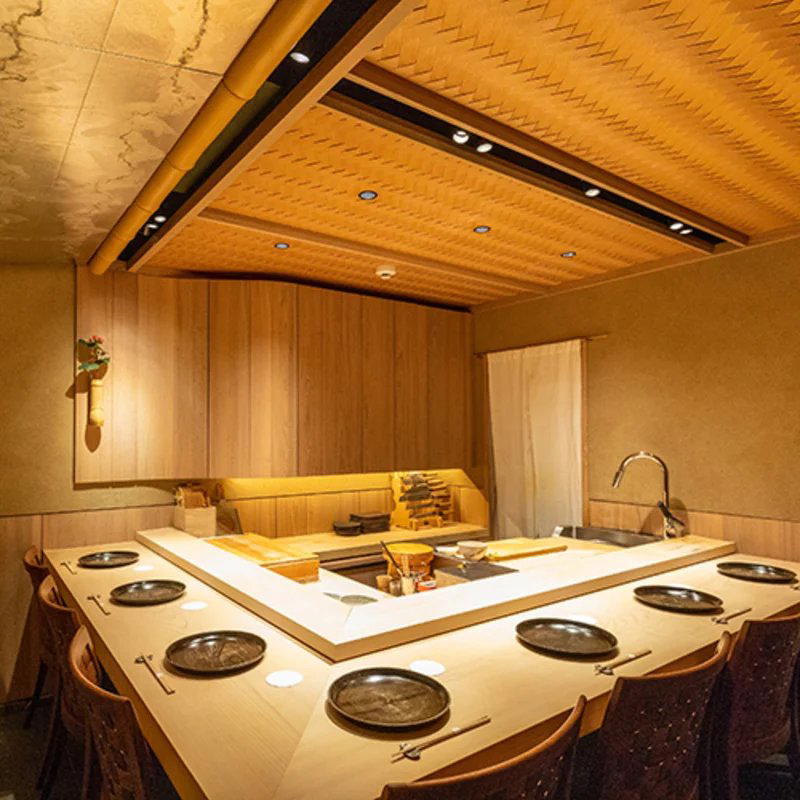
The approach to a serious Osaka sushi counter is rarely theatrical. The city saves its drama for the knife, the rice, and the cadence of a meal served at arm’s length. In Dojima, the experience is compressed into a counter format where the diner’s attention has fewer places to wander: fish, shari, timing, and the quiet negotiation between Edo-mae technique and Kansai taste.
That matters because sushi in Osaka is not merely Tokyo sushi transplanted west. Kansai has its own expectations around seasoning, seafood preference, and the relationship between rice and topping. Ohata sits in that conversation with a format described as Kansai-style Edomae sushi, using three types of shari: red, white, and rosé. The detail is not cosmetic. Multiple rice profiles give a counter more range, especially when the meal is built around fish rather than a broad menu of cooked luxury ingredients.
Three shari styles put Kansai seafood at the centre
Ingredient sourcing is the spine of this kind of sushi meal. A counter that is “particular about fish” signals a different priority from one driven by spectacle, rarity, or a long parade of add-ons. In Osaka, that distinction carries weight. The city’s dining culture has always been practical about pleasure: flavour has to justify the spend, and technical polish has to survive close scrutiny from regulars who know the difference between a good piece of fish and a dressed-up one.
The three-rice approach is the clearest editorial clue. Red shari, white shari, and rosé shari allow the counter to adjust acidity, aroma, and weight across the course without turning each piece into a separate thesis. In the Kansai context, that flexibility helps bridge Edomae structure with a western-Japan palate, where balance can read differently than in Tokyo. The point is not novelty; it is calibration.
Recognition gives that calibration a measurable frame. The counter was a Tabelog Award 2026 Bronze winner, with a listed score of 4.27, and appeared in Tabelog 100 Sushi WEST 2025. Those are useful signals because Japan’s serious sushi culture is crowded with tiny rooms, many of them inaccessible to casual diners and difficult to assess from the outside. Awards do not guarantee personal preference, but they do place the restaurant inside a more competitive western-Japan sushi bracket rather than the general Osaka dining field.
Compared with nearby high-spend formats, the distinction is category discipline. Kitashinchi Fuka operates in a similar dinner budget band, Yakitori Shidare pushes into a higher yakitori range, and Yakitori Torisen shows how counter dining in Osaka can turn poultry into a full evening. Sushi asks for a different kind of concentration: the meal rises or falls on rice temperature, fish condition, and pacing. That narrower frame is why a seven-seat counter can carry more authority than a larger room with broader ambition.
A seven-seat counter changes the social contract
Small counters are not automatically serious, but they remove the margin for disguise. With seven seats, every choice becomes visible: how the course develops, how the rice is handled, how drinks are folded into the meal, and how much conversation the room can absorb without breaking its rhythm. Osaka’s better counters tend to feel less like performance spaces than controlled workshops, where the diner is close enough to notice the sequence but not invited to interrupt it.
The room’s practical limits also shape who should choose it. This is a selection-course-only format, not an à la carte sushi stop or a broad Japanese restaurant suited to grazing. Drinks are framed around sake, shochu, and wine, which fits the fish-led structure without turning the meal into a bar program. Private rooms and private use are not part of the proposition, so the counter itself is the experience.
Dojima adds another layer. The district sits near Kitashinchi’s expense-account dining culture, where compact restaurants often compete through precision rather than scale. That neighbourhood context matters for travellers comparing Osaka meals. A casual pork bun stop such as 551 Horai (551蓬莱), a bakery like 52CHO-ME BAKERY, or a coffee break at .cafe expresses another side of the city entirely. Dojima counter sushi belongs to the more concentrated evening economy, closer in intent to specialist dining than to Osaka’s street-level abundance.
For readers mapping a broader itinerary, the useful contrast is not sushi versus everything else, but format versus format. 99 Pizza Napoletana Gourmet and a canto (Italian) show how Osaka absorbs non-Japanese precision cooking, while Shokudo Uchino suggests a wider Japanese table. BAR JUNIPER sits in the city’s lower-spend drinking lane, where the evening is measured in rounds rather than courses. The sushi counter asks for a narrower commitment, and rewards diners who want that focus.
How to place it in an Osaka trip
Ohata makes the strongest case for travellers who already understand why rice matters in sushi and want to see how a Kansai counter interprets Edomae grammar. It is less suited to diners looking for a flexible group meal, a family dinner, or a room where the setting outweighs the craft. The appeal is in controlled repetition: fish, rice, seasoning, reset.
Osaka rewards mixing registers across a trip. A serious counter in Dojima lands differently when paired with casual city staples, bar-led evenings, and non-Japanese specialist rooms. For broader planning, see Our full Osaka restaurants guide, Our full Osaka hotels guide, Our full Osaka bars guide, Our full Osaka wineries guide, and Our full Osaka experiences guide. Readers comparing Japanese dining formats beyond Osaka can also look at -Grilled beef Sukiyaki- KAMAKURA TANUKIAN 鎌倉 たぬき庵 in Kamakura. 鮪と炭火焼き うお炭 秋葉原店 in Tokyo.know in Kumamoto, (Shoku) Vietnam in Kawasaki, [Curry Senmon Ten] Maruyama Kyoju. in Sapporo, [ki:] in Kyoto, Jōdo Saké Bar in Los Angeles, and Onigiri Time in Pasadena.
Frequently asked questions
Is Ohata a family-friendly restaurant?
Ohata is not presented as family-friendly in its venue details. It is a 7-seat counter in Osaka, reservation only, with evening service from 18:00 and 20:30 on Monday, Tuesday, Friday, Saturday, and Sunday.
How would you describe the vibe at Ohata?
Expect a compact counter-room mood rather than a casual dining room: 7 seats, counter seating, and a reservation-only setup shape the pace. The house also serves only evening courses and is noted for being particular about fish, which keeps the focus on the meal itself.
What are the operating hours at Ohata?
Hours at Ohata: ■Business hoursEvening only.[Mon, Tue, Fri, Sat, Sun]From 18:00 and 20:30 onwards■Closed onWednesdays and Thursdays (subject to change on public holidays).
What is Ohata known for?
Ohata is primarily known for its core concept and execution in Osaka.
Quick Comparison
Comparable venues by cuisine and price in the same metro.
| Venue | Cuisine | Price | Awards | Notes |
|---|---|---|---|---|
| OhataThis venue (the venue you are viewing) | Kansai-style Edomae Omakase | $150–200 | Tabelog Bronze #333 | Not listed |
| Pome | Modern Yakiniku Omakase | $150–200 | Tabelog Bronze #349 | Chūō |
| Kizuna | Edo-style Omakase Sushi | $150–200 | Tabelog Bronze #188 | Chūō |
| RIKIchan Kitahama ten | Premium Kuroge Wagyu Yakiniku | $150–200 | Tabelog 100 #14 | Chūō |
| Toyonaga | Osaka Sushi Omakase | $200–300 | Tabelog Bronze #479 | Kita |
| Tada | Edomae Omakase Sushi | $200–300 | Tabelog Bronze #441 | Kita |
Recognition history
Dated appearances from independent guides and award organizations, with the underlying list record or original source where available.
Tabelog Bronze #333
Tabelog
Full recognition history (3 entries)
Tabelog Bronze
Tabelog
Tabelog 100 #26 · No. 26
Tabelog · Tabelog 100 - Sushi - WEST - 2025
Continue exploring
More in Osaka
Restaurants in Osaka
All restaurants in Osaka →



Bars in Osaka
All bars in Osaka →



Hotels in Osaka
All hotels in Osaka →


Wineries in Osaka
Browse all →
Details
- Intimate
- Elegant
- Sophisticated
- Minimalist
- Date Night
- Special Occasion
- Chefs Counter
- Open Kitchen
- Sake Program
- Omakase
- Counter Dining
- Sake
Current opening hours
- Monday
- 6–11 p.m.
- Tuesday
- 6–11 p.m.
- Wednesday
- Closed
- Thursday
- Closed
- Friday
- 6–11 p.m.
- Saturday
- 6–11 p.m.
- Sunday
- 6–11 p.m.
Hours can change for holidays and private events. Hours as of .
Serene and relaxing with minimalist wooden decor, hinoki counter, warm lighting, and quiet atmosphere focused on the chef's craft.