Odo East Village

Odo East Village brings kaiseki structure to downtown Manhattan, where the neighbourhood's density and informality are held in deliberate tension with one of Japan's most codified dining traditions. The result is a counter experience that rewards patience and attention, placing it alongside New York's most considered Japanese dining rooms rather than its high-volume omakase circuit.
Pearl is the En Primeur Club membership app — saves, bookings, and concierge access live there. Same editors, same standards.
- Address
- 536 E 5th St, New York, NY 10009
- Website
- odoeastvillage.nyc
- Directions
- Get directions
 Saves & bookings on Pearl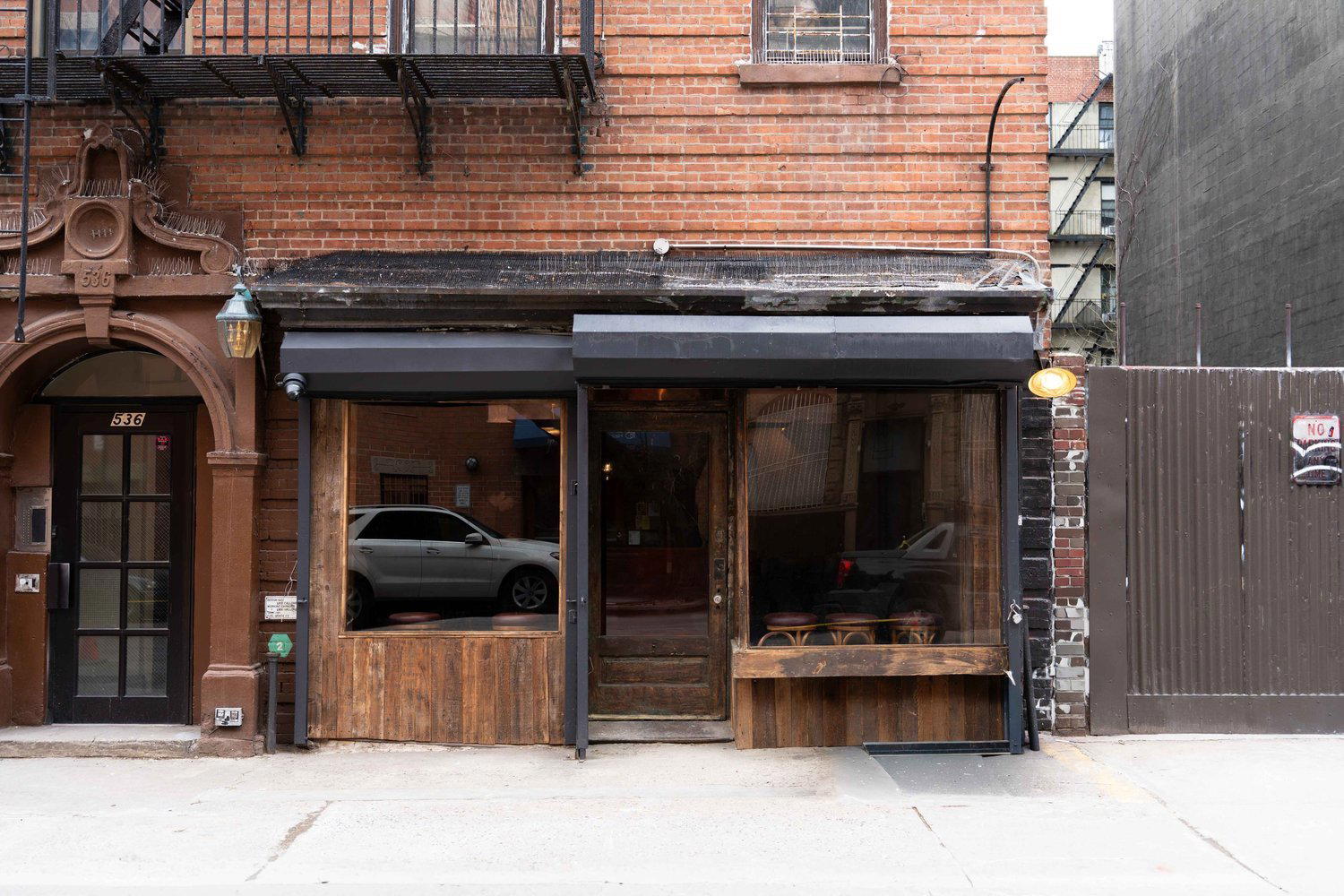
A Downtown Room Holding Its Breath
Odo East Village is a kaiseki izakaya in New York City's East Village, priced at about $75 per person. It is precisely this friction that makes kaiseki in the neighbourhood worth reading carefully. In Kyoto, the tradition evolved inside ryokan culture, where the rhythm of a meal was inseparable from the rhythm of a stay. Transplanting that framework to a Manhattan block where the next table might turn in ninety minutes is not simply a geography problem; it is an argument about what the form can absorb without losing its logic. Odo East Village enters that argument from the downtown side, which is a different proposition than making it from Midtown.
What Kaiseki Actually Demands
Kaiseki is often described loosely as Japanese multi-course fine dining, but that flattens what the structure actually requires. A kaiseki progression is organised by cooking method and seasonal ingredient logic, not by Western notions of starter-main-dessert. Courses arrive in a sequence that moves from light to rich, from raw to cooked, with each transition governed by aesthetic principles that take years of apprenticeship to internalise. The lacquerware matters. The ceramic choice for each dish matters. The temperature differential between courses is not incidental; it is load-bearing. This is the tradition Odo East Village is working within, and it is among the more technically demanding dining formats operating anywhere in New York City today.
For context, the kaiseki category in New York is thin relative to the city's breadth of Japanese dining. Masa, the sushi counter in Columbus Circle, occupies the upper tier of Japanese dining by price and by seasonal sourcing discipline, but sushi omakase and kaiseki are structurally different expressions of the same philosophy. Kaiseki demands a wider range of technical skill across a single kitchen, covering soup-making, grilling, simmering, and raw preparation within one service. The two formats do not compete; they address the same diner from different angles.
The East Village as a Dining Context
New York's premium Japanese dining has historically concentrated in Midtown and the Upper East Side, where corporate expense accounts and tourist-adjacent foot traffic sustain the price points that intensive sourcing requires. The East Village has a different dining economy: ingredient-focused small plates, natural wine bars, and operator-driven rooms that reflect neighbourhood character more than hotel adjacency. Placing a kaiseki format here is a statement about intended audience. The diner who finds Odo East Village is not coming because it is on the way to anything. That self-selection matters for the experience inside; kaiseki's pacing works better when the room is populated by people who chose it deliberately.
The neighbourhood comparison is useful for placing the restaurant within the wider New York City restaurant scene. While rooms like Per Se and Le Bernardin operate inside the Midtown gravity field and carry the institutional weight that comes with it, a kaiseki counter downtown signals a different set of priorities, closer to the operator logic of Atomix or Jungsik New York, both of which brought technically demanding Asian fine dining into Manhattan outside the traditional corridor.
The Ritual Architecture of the Meal
What distinguishes kaiseki from other tasting-menu formats is not the number of courses or the price point; it is the intentionality of each transition. A well-executed kaiseki service is paced to create a particular physiological and emotional arc. The meal opens quietly, with dishes that ask for attention rather than reward impact-seeking. The progression builds through a series of textural and temperature contrasts before arriving at rice and pickles, the traditional kaiseki signal that the meal is formally complete. That closing sequence is not a formality; it is structural punctuation. Removing it, or treating it as optional, collapses the grammar of the form.
This kind of ritualistic pacing puts the restaurant in a small peer group nationally. Operations like Single Thread Farm in Healdsburg have built kaiseki-influenced frameworks into their service model, and Alinea in Chicago applies a comparable degree of sequencing intentionality from a different culinary tradition. The common thread is the understanding that the order, temperature, and vessel of each course carry meaning. At the restaurant, operating within the kaiseki tradition directly rather than through influence, that structure is not interpretive; it is the product.
Sourcing and Seasonality as Discipline
Kaiseki's seasonal logic is not a marketing frame; it is a technical constraint. The form requires that the menu change in accordance with what Japanese culinary tradition recognises as seasonal markers: matsutake in autumn, sakura motifs in early spring, ayu in summer. Running a kaiseki program in New York means either sourcing these ingredients from Japan at significant logistical cost, or making considered substitutions that hold the form's intent while reflecting local availability. Either approach is a legitimate interpretation of the tradition, but it shapes the character of the room and the price point required to sustain it.
That sourcing discipline places the restaurant in a different conversation from high-volume Japanese concepts. The comparison group is narrower: rooms that treat ingredient provenance as a non-negotiable rather than a variable. In that frame, it belongs alongside Blue Hill at Stone Barns in terms of the philosophical weight placed on what arrives in the kitchen, even if the traditions are entirely distinct.
Where This Sits in the Broader Range of American Fine Dining
The American fine dining circuit has expanded its sense of what constitutes a serious tasting-menu operation. Rooms like The French Laundry in Napa, Providence in Los Angeles, Addison in San Diego, and The Inn at Little Washington define the category from a Western culinary base. Internationally, 8 1/2 Otto e Mezzo Bombana in Hong Kong and Alain Ducasse at Louis XV in Monte Carlo show how formally structured tasting menus operate at the upper register of the global dining conversation. Within that comparable set, a kaiseki counter in downtown New York is not a curiosity; it is a specific technical argument about what structured dining can look like when the source tradition is Japanese rather than French.
For readers already familiar with the season-driven, producer-focused ethos of Lazy Bear in San Francisco or the kitchen-narrative model of Emeril's in New Orleans, the restaurant represents a different kind of discipline: older, more codified, and more resistant to personalisation as a virtue. The kaiseki form rewards submission to the structure, not departure from it. That is either a constraint or a liberation, depending on the diner.
Planning Your Visit
Kaiseki service in New York at this tier typically requires advance booking, a commitment to the full sequence, and an evening cleared of competing obligations. The format does not accommodate late arrivals or abbreviated visits without disrupting the progression for the rest of the room. Approach the booking as you would a ticketed cultural event: confirm the time, arrive on schedule, and allow the pacing to do its work.
Where the Accolades Land
Comparable venues nearby, for context on price, style, and recognition.
| Venue | Cuisine | Price | Notes |
|---|---|---|---|
| Odo East VillageThis venue — the venue you are viewing | Kaiseki Izakaya | $$$ | Not listed |
| Fushimi Williamsburg | Modern Japanese Fusion | $$$ | Williamsburg |
| Yakiniku TORAJI | Japanese Yakiniku BBQ | $$$ | East Midtown-Turtle Bay |
| Kizuna | Japanese Omakase | $$$ | Upper East Side-Lenox Hill-Roosevelt Island |
| NONONO | Japanese Yakitori Grill | $$$ | Midtown South-Flatiron-Union Square |
| Teruko | Traditional Edomae Sushi & Japanese Cuisine | $$$ | Chelsea-Hudson Yards |
Recognition history
Dated appearances from independent guides and award organizations, with the underlying list record or original source where available.
Michelin Plate
Michelin
Continue exploring
More in New York City
Restaurants in New York City
Browse all →
Bars in New York City
Browse all →
Hotels in New York City
Browse all →




At a Glance
- Intimate
- Sophisticated
- Elegant
- Energetic
- Date Night
- Solo
- Special Occasion
- Chefs Counter
- Open Kitchen
- Standalone
- Sake Program
- Local Sourcing
- Sustainable Seafood
Sophisticated yet warm and energetic setting with Japanese design elements that create an immersive sense of Japan; thoughtfully rooted in rice culture with a chef's counter and intimate table seating.