Kizuna
Kizuna occupies a quietly residential stretch of the Upper East Side at 341 E 76th St, operating in a neighbourhood where serious dining tends to announce itself through reputation rather than foot traffic. The address places it outside the midtown circuit where most New York restaurant coverage concentrates, which means the room rewards guests who seek it out deliberately rather than stumble in by proximity.
Pearl is the En Primeur Club membership app — saves, bookings, and concierge access live there. Same editors, same standards.
- Address
- 341 E 76th St, New York, NY 10021
- Phone
- +16462838728
- Website
- kizunarestaurant.com
- Directions
- Get directions
 Saves & bookings on Pearl
East Side Coordinates, Downtown Ambitions
The Upper East Side has always maintained a particular relationship with its dining rooms. Unlike the Flatiron corridor or the West Village, where restaurants function partly as social spectacle, this stretch of the city tends toward a quieter register. The block around East 76th Street is residential in the way that New York rarely is: low foot traffic, townhouse facades, the occasional dog walker as primary street activity. Restaurants that work in this context do so because the neighbourhood's residents treat them as extensions of a private life, not as destinations for the broader city to discover. Kizuna is a Japanese omakase restaurant at 341 E 76th St, New York, NY 10021, with a $150 per person price tier.
The Upper East Side diner at this price tier is not the same customer as the tasting-menu tourist tracking Michelin dots across lower Manhattan. They tend to be regulars, which means the kitchen has to sustain quality across dozens of repeat visits rather than deliver a single impressive night. The menu architecture at venues like this one reflects that pressure differently than it does at, say, Masa, where the omakase format removes the repeat-visit problem entirely by making the menu the chef's decision each time.
How the Menu Is Built to Be Read
In New York's current Japanese dining category, the structural choices a kitchen makes about its menu communicate more than the individual dishes. A long à la carte list signals one set of priorities. A fixed omakase signals another. A hybrid format, where certain sections are structured and others left open, tells you the kitchen is trying to hold two audiences simultaneously: the guest who wants to be guided, and the guest who wants control. This tension is not a weakness. Some of the city's most durable Japanese addresses have built their longevity on exactly this dual structure.
Japanese cuisine, more than most, tends to reward repeat visits with visible seasonal rotation. The structure of what gets fixed and what gets changed from month to month is where a kitchen reveals its actual discipline. At venues operating in this tier, the comparison point is less often the downtown omakase counter and more often the reliable neighbourhood anchor that happens to cook at a higher technical level than the address suggests. For that comparison class, see also Jungsik New York, which has built its Upper West Side reputation on a similar combination of neighbourhood roots and serious culinary ambition.
New York's Japanese dining category has fragmented significantly over the past decade. The top tier, represented by counters like Masa, operates on allocation and price points that function less like restaurant economics and more like luxury goods. Below that, a mid-tier of technically serious, neighborhood-anchored Japanese restaurants does the harder work of building regulars.
The Upper East Side as a Culinary Microclimate
It is worth understanding what distinguishes this part of the city from the neighbourhoods where most New York food coverage is concentrated. The Upper East Side above 70th Street has always supported a version of serious dining that operates outside the critical mainstream. Restaurants here rarely generate the kind of opening-night coverage that drives downtown traffic. What they generate instead is loyalty. The customer base is older on average, wealthier in a less-visible way, and significantly more likely to return weekly than to add a restaurant to a social media feed.
That demographic reality shapes what a kitchen can and cannot do. It means that menu gimmickry tends not to survive long: the theatrical plating and conceptual provocation that work at Atomix or Per Se serve a different purpose than what's required on a residential block in the 70s. The room needs to earn a second and third visit on the strength of consistency and incremental seasonal surprise, not on a single choreographed experience. This is actually a harder standard to meet than the tasting-menu format, which controls nearly every variable.
Across the broader American dining tier, the neighbourhood-anchored serious restaurant occupies a distinct position. Blue Hill at Stone Barns in Tarrytown built its reputation on a version of this principle at a different scale. Bacchanalia in Atlanta has held a similar position in its city for years. The underlying logic is the same: serious cooking in a context where the surroundings do not do the work for you.
Placing Kizuna in the New York Japanese Conversation
New York's Japanese dining scene currently runs on two parallel tracks. One is the high-profile omakase counter, where the format, the chef's lineage, and the per-person spend are the primary signals. The other is the durable neighbourhood Japanese restaurant that operates at a serious level without the ceremony. Le Bernardin illustrates how a restaurant can hold a technically rigorous position while remaining accessible to a broader range of occasions. That balance is genuinely difficult to sustain, and the venues that manage it tend to outlast the ones built primarily on a single dramatic concept.
For context on what the city's most celebrated Japanese kitchens look like at the other end of the price and format spectrum, Masa remains the reference point: a fixed omakase at a price level that removes the menu decision entirely. Kizuna at 341 E 76th St operates in a different register, in a neighbourhood context that demands a different kind of consistency. Whether the kitchen delivers that consistency is the question a return visit answers better than any first impression.
Regionally, serious American kitchens worth the comparison include Alinea in Chicago, Single Thread Farm in Healdsburg, The French Laundry in Napa, Providence in Los Angeles, Lazy Bear in San Francisco, Emeril's in New Orleans, Addison in San Diego, and The Inn at Little Washington. For international context, 8½ Otto e Mezzo Bombana in Hong Kong and Alain Ducasse at Louis XV in Monte Carlo illustrate what sustained neighbourhood-anchor ambition looks like at the highest international tier.
Planning a Visit
Kizuna is located at 341 E 76th St, New York, NY 10021, on the Upper East Side. The address is a short walk from the 77th Street station on the 6 train, which places it within easy reach of Midtown and the Upper West Side. Reservations are essential, and the restaurant is closed on Sundays.
Cuisine and Awards Snapshot
Comparable venues nearby, for context on price, style, and recognition.
| Venue | Cuisine | Price | Notes |
|---|---|---|---|
| KizunaThis venue — the venue you are viewing | Japanese Omakase | $$$ | Not listed |
| KIKO | Modern Japanese Small Plates | $$$ | SoHo-Little Italy-Hudson Square |
| Fushimi Williamsburg | Modern Japanese Fusion | $$$ | Williamsburg |
| Sushi Lab | Modern Japanese Omakase | $$$ | Midtown-Times Square |
| Hasaki | Edomae-Style Sushi & Sashimi | $$$ | East Village |
| TOKIODELIC | Japanese Fusion Kawaii Café | $$$ | SoHo-Little Italy-Hudson Square |
Continue exploring
More in New York City
Restaurants in New York City
Browse all →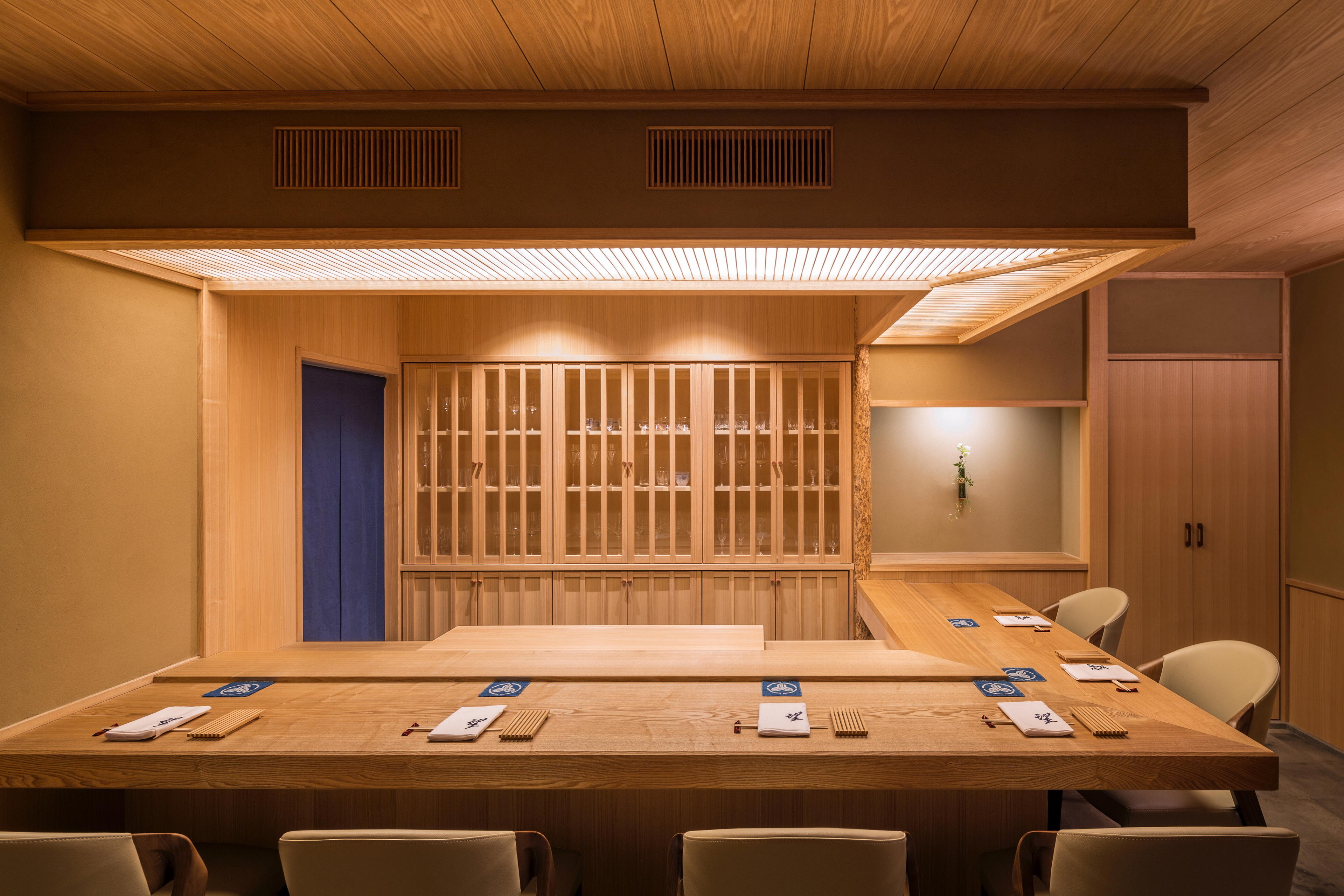
Bars in New York City
Browse all →
Hotels in New York City
Browse all →




At a Glance
- Intimate
- Modern
- Elegant
- Date Night
- Special Occasion
- Byob
Current opening hours
- Monday
- 5:30–10 PM
- Tuesday
- 5:30–10 PM
- Wednesday
- 5:30–10 PM
- Thursday
- 5:30–10 PM
- Friday
- 5:30–10 PM
- Saturday
- 5:30–10 PM
- Sunday
- Closed
Hours can change for holidays and private events. Last verified .
Modest and welcoming ambiance with moderate noise levels, fostering an intimate dining experience.