
Tabelog 100 #82
Our verdict
Oak wood gives Kasukabe’s sweets scene a serious anchor: a cake, cafe, and bread address recognised in Tabelog’s Sweets EAST 100 selections across multiple years. The appeal is less about spectacle than format discipline, with a suburban patisserie-cafe model that rewards visitors looking beyond central Tokyo’s denser dessert circuits.

Pearl is the En Primeur Club membership app, where members save venues, book tables and use the concierge.
The menu
What to order
- Afternoon tea set
- Whole cakes
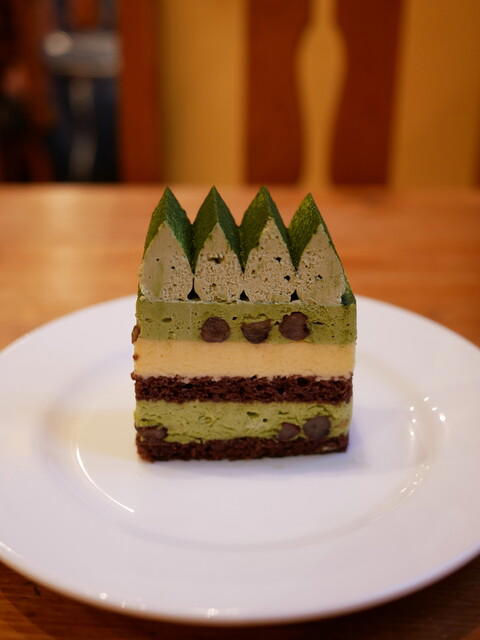
- Petit gâteaux
- Baked cakes and gift assortments
Approach Kasukabe from central Tokyo and the rhythm changes before the meal does: lower buildings, wider residential streets, and a dining culture less driven by queue theatre than by repeat local use. In that setting, a sweets address has to work harder than a city-centre counter. It needs to make sense as a cake stop, a cafe visit, and a bread run, with enough craft credibility to pull people across neighbourhood lines. Oak wood sits in that category, where sweets are not a closing course but the main reason for the trip.
Kasukabe is not usually framed as a dessert destination in the way Tokyo’s better-known central sweets districts are. That is precisely why its better sweets rooms are useful to understand. They reveal the Japanese suburban patisserie at full strength: careful technique filtered through local buying habits, cakes calibrated for gifting as much as eating in, bread and cafe formats broadening the audience, and pricing that keeps repeat visits plausible. For travellers building a wider Saitama food day, Our full Kasukabe restaurants guide gives the city context beyond a single stop.
Suburban pastry culture, with sourcing doing quiet work
Ingredient sourcing matters differently in a Japanese patisserie-cafe than it does in a tasting-menu restaurant. The signal is rarely a long manifesto. It shows up in category choices: cakes, cafe service, and bread under one roof; sweets suited to taking away; and a format that can work as more than a pure grab-and-go counter. That model depends on consistency. Creams, fruit, flour, butter, chocolate, and seasonal components have to travel from production case to table without losing the clean structure that Japanese sweets customers expect.
The better suburban patisserie model also has a different relationship to seasonality. In central-city dessert bars, seasonality can become performance. In a residential cafe, it is more practical: fruit cycles, holiday gifting, weekend family demand, and the everyday need for a cake that survives the ride home. Oak wood’s recognition in Tabelog’s Sweets EAST 100 for 2023 places it in a broader eastern Japan sweets conversation, not merely a local cafe bracket. That matters because sweets rankings in Japan tend to reward durability as much as novelty.
Compared with Kasukabe’s savoury circuit, the positioning is clear. BurgerPOLICE Kasukabe occupies a casual-meal lane and reads as a burger-led destination. Niboshi Ranbu points toward ramen intensity and single-dish focus. Hosoi and 3931WORKS. sit closer in everyday budget logic, but the sweets category changes the decision: this is where a meal can be built around cake, coffee, bread, or a box to take away.
Why the cafe format matters in Kasukabe
Japan’s pastry culture has long borrowed from French form while answering Japanese social needs: omiyage, seasonal gifting, compact portions, precise packaging, and the expectation that a cake shop should be as dependable on a weekday as it is during a holiday rush. The cafe component adds another layer. It turns a patisserie from an errand into a pause, which is useful in a city where dining itineraries are spread out rather than stacked along a single restaurant street.
The room format reinforces that reading. Oak wood is best understood as a cafe and sweets address, not a high-volume bakery hall or a dessert counter staged around chef interaction. Private-room dining is not the point; nor is a late-night scene. The useful comparison is with specialist sweets shops across eastern Japan that win repeat custom by keeping the case, the cafe, and takeaway in balance. The Tabelog Sweets EAST selection gives a credible external marker for that consistency.
For travellers, the city pairing is worth thinking through. Kasukabe can support a compact food route: ramen or a casual savoury stop, then sweets; coffee and cake before heading onward; or bread and takeaway for the train. The same planning logic applies across EP Club’s wider Japan and international listings: the sharper itinerary is built by format, not fame, and Oak wood’s value is clearest when treated as a specialist sweets pause within a broader day.
A practical stop for a quieter Saitama food day
The strongest reason to come is category fit. Kasukabe does not need to mimic Tokyo’s dessert rooms to justify attention; its value lies in a slower, suburban style of sweets culture where a cake shop can also function as cafe, bread stop, family errand, and destination for visitors who read awards as a filter rather than a trophy cabinet. Oak wood’s 2023 Sweets EAST 100 selection suggests a venue with enough continuity to matter beyond the immediate neighbourhood.
The decision is also logistical. This is a sweets address, better suited to a planned pause than a spontaneous late meal. Its listed categories are Cake, Cafe, and Bread, which makes it useful for visitors who want flexibility rather than a single formal dining format. The published Tabelog budget sits in the JPY 1,000 - JPY 1,999 range for both lunch and dinner, keeping the stop in a repeatable everyday bracket rather than a special-occasion-only lane.
Readers extending the day beyond restaurants can map the city through Our full Kasukabe hotels guide, Our full Kasukabe bars guide, Our full Kasukabe wineries guide, and Our full Kasukabe experiences guide. For a wider contrast in casual Japanese formats, other dining in Kasukabe and beyond shows how specialist categories read differently depending on local habits, transport patterns, and everyday dining infrastructure.
Frequently asked questions
Can I bring kids to Oak wood?
Oak wood is in Kasukabe. Its listed categories are Cake, Cafe, and Bread, so it is best understood as a sweets and cafe stop rather than a formal dining room.
Is Oak wood better for a quiet night or a lively one?
Oak wood is a cake, cafe, and bread address in Kasukabe. It points more naturally to a planned sweets stop than to a lively evening venue.
Is Oak wood expensive?
Pricing at Oak wood is listed as JPY 1,000 - JPY 1,999 for both lunch and dinner.
When is Oak wood open?
Current opening hours are not provided here; confirm directly with Oak wood before visiting. The listed phone number is +81-48-760-0357.
A Quick Peer Check
Comparable venues by cuisine and price in the same metro.
| Venue | Cuisine | Price | Awards | Notes |
|---|---|---|---|---|
| Oak woodThis venue (the venue you are viewing) | Patisserie Cafe | $10–20 | Tabelog 100 #82 | Not listed |
| BurgerPOLICE Kasukabe | Wagyu Burger & Steak Bistro | $20–30 | Tabelog 100 #74 | Chuo |
| 3931WORKS. | Modern Ramen & Tsukemen | $10–20 | Tabelog 100 #78 | Ichinowari |
| Hosoi | Japanese Traditional Sweets | $1–10 | Tabelog 100 #76 | Kasukabe |
| Niboshi Ranbu | Japanese Ramen | $1–10 | Tabelog 100 #30 | Takesato |
| Mikkeller Kanda | Craft Beer Bar with Smash Burgers | $20–30 | Not listed | Kanda |
Recognition history
Dated appearances from independent guides and award organizations, with the underlying list record or original source where available.
Tabelog 100 #82 · No. 82
Tabelog · Tabelog 100 - Sweets - EAST - 2023
Continue exploring
More in Kasukabe
Restaurants in Kasukabe
All restaurants in Kasukabe →

Bars in Kasukabe
Browse all →





Details
- Cozy
- Classic
- Casual Hangout
- Family
- Brunch
- Celebration
- Standalone
- A La Carte
- Set Menu
- Coffee
- Tea
Current opening hours
- Monday
- 10 AM–6 PM
- Tuesday
- Closed
- Wednesday
- Closed
- Thursday
- 10 AM–6 PM
- Friday
- 10 AM–6 PM
- Saturday
- 10 AM–6 PM
- Sunday
- 10 AM–6 PM
Hours can change for holidays and private events. Last verified .
A leafy, homey patisserie-cafe atmosphere centered on handmade cakes, baked goods, and seasonal desserts.