Our verdict
Mikkeller Kanda sits at the intersection of Tokyo's craft beer culture and the Kanda district's layered drinking history. The Copenhagen-founded Mikkeller brand has carved a specific niche in Japan by pairing experimental brewing with spaces that take local context seriously. For serious beer drinkers passing through central Tokyo, it functions as a reference point in the city's evolving craft bar scene.

Pearl is the En Primeur Club membership app, where members save venues, book tables and use the concierge.
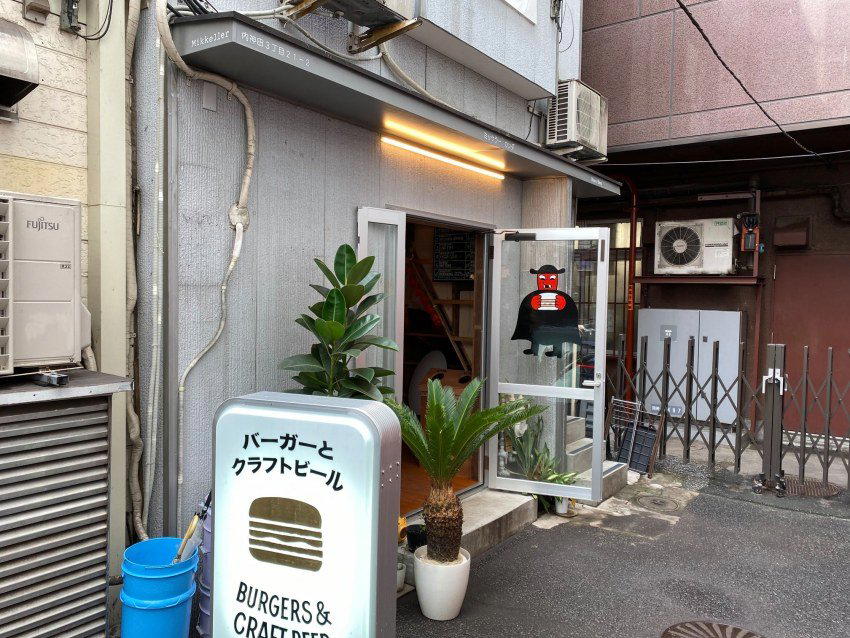
The menu
What to order
- Smashed burgers
Where Copenhagen Brewing Meets Tokyo's Kanda Quarter
Tokyo's craft beer scene has undergone a quiet but significant reorganisation over the past decade. What began as a niche counter-movement to the country's dominant lager duopoly has matured into a fragmented, specialist market with its own internal hierarchies. At one end sit the small domestic craft producers with taprooms in neighbourhoods like Shibuya and Shimokitazawa. At the other, internationally recognised brewing operations have established Tokyo outposts that function less as brand ambassadors and more as serious drinking destinations. Mikkeller Kanda occupies this second category.
The Kanda district itself sets a particular tone. One of Tokyo's older commercial quarters, it sits between the busy rail interchange at Akihabara and the bookshop density of Jimbocho, carrying a character that leans more towards working professionals and local regulars than tourist circuits. That context matters when assessing where Mikkeller's Tokyo presence fits: the location implies a local rather than transient audience, which tends to produce a more settled, repeat-customer drinking culture than you find in higher-footfall districts.
The Cultural Weight of Craft Beer in Japan
Denmark and Japan share an unlikely alignment in how they approach fermentation culture. Both have strong traditions of precision craft, both have consumer bases that reward technical consistency, and both have seen artisan beverage movements flourish after periods dominated by industrial-scale production. When Mikkeller, founded in Copenhagen and now operating across multiple continents, chose to plant a flag in Tokyo, the pairing was not arbitrary. Japanese beer culture, even at the craft end, places significant value on consistency, clean flavour execution, and the integrity of the brewing process, all areas where Mikkeller has built its international reputation.
That reputation draws on a production model that, unusually for a global brand, relies heavily on collaboration and contract brewing rather than a single flagship facility. This approach has allowed Mikkeller to operate across geographies while keeping its product range experimental. In Tokyo, where drinkers at serious bars tend to ask specific questions about provenance, process, and ABV before committing to a pour, this depth of product narrative is an asset rather than a complication.
For a sense of how the broader Tokyo dining and drinking scene positions itself across different traditions, the contrast with the city's top-tier restaurant tier is instructive. Counters like Harutaka in the sushi category and RyuGin in kaiseki represent the discipline-first, long-apprenticeship model that defines Japanese fine dining. The craft bar world draws on a different set of values: curiosity, rotation, and a willingness to let foreign influence sit alongside domestic tradition without hierarchy.
Kanda in the Context of Tokyo's Drinking Districts
Tokyo's drinking geography is specific enough to reward some navigation. Shinjuku's Golden Gai handles the atmospheric, high-density, low-capacity end of the bar market. Ginza handles luxury. Nakameguro handles design-conscious, millennial-oriented spaces. Kanda sits in a less obvious category: a district with genuine working-city grit that has attracted operators who prefer substance to scene. That positioning suits a craft beer bar with a serious tap list more than it would suit, say, a cocktail bar chasing Instagram reach.
The broader Tokyo bar context also includes the city's shift away from purely cocktail-led premium drinking toward beer programs with the same level of curation you would expect from a wine list. At French-influenced restaurants like L'Effervescence or Sézanne, the beverage philosophy treats every category with equal rigour. The craft beer world, when it operates at Mikkeller's level, makes a similar demand of its audience: come with knowledge, or leave with more than you arrived with.
How Mikkeller Kanda Fits the Regional Picture
Japan's geography of serious drinking and eating extends well beyond Tokyo. In Osaka, the dining culture at places like HAJIME reflects a different relationship between innovation and tradition. In Kyoto, Gion Sasaki represents the discipline of long-established seasonal form. In Nara, akordu shows how cross-cultural influence operates at a remove from urban centres. Each of these positions reflects something about the city it inhabits. Mikkeller Kanda does the same: a Copenhagen brand in a Tokyo neighbourhood that resists easy categorisation, serving a product that sits outside Japan's default beverage hierarchies.
The regional diversity of serious Japanese hospitality also surfaces in less prominent locations. Operations like Goh in Fukuoka, a specialist producer in Nanao, and a destination in Sapporo demonstrate that premium food and drink culture in Japan is not Tokyo-centric, even if Tokyo remains the reference city. That context frames how a venue like Mikkeller Kanda functions: not as the only game in town, but as one node in a national network of serious beverage operations.
For those planning a broader Tokyo restaurant itinerary, the innovative French cooking at Crony, alongside the more traditional kaiseki approach at RyuGin, reflects how the city's leading end handles the question of influence and authenticity. The craft beer tier poses that same question in a different register. See our full Tokyo restaurants guide for the complete picture across dining categories.
Planning Your Visit
| Venue | Category | Price Tier | District Type |
|---|---|---|---|
| Mikkeller Kanda | Craft Beer Bar | Not confirmed | Kanda, central working district |
| Harutaka | Sushi | ¥¥¥¥ | Ginza, high-end dining core |
| L'Effervescence | French | ¥¥¥¥ | Nishi-Azabu, residential fine dining |
| RyuGin | Kaiseki | ¥¥¥¥ | Roppongi, premium mixed district |
| Crony | Innovative French | ¥¥¥¥ | Central Tokyo dining circuit |
We recommend checking the venue's current online presence or third-party listings before visiting. For other destinations outside Tokyo, the EP Club covers serious dining from Takashima and Nishikawa Machi to Sakai and Toyohashi, and internationally at Le Bernardin in New York City and Atomix in New York City.
Frequently asked questions
How does Mikkeller Kanda compare to other international craft beer bars in Tokyo?
Mikkeller Kanda occupies a specific tier among Tokyo's imported craft beer destinations: it carries the backing of a brewery with documented global reach and a production catalogue exceeding 1,000 recipes since its Copenhagen founding in 2006. That differentiates it from independent importers or single-origin taprooms, since the bar has direct access to Mikkeller's own experimental and collaboration releases. Tokyo's craft beer circuit has grown considerably, but venues with a live brewery relationship behind the taps remain a smaller subset of the broader scene.
What do regulars order at Mikkeller Kanda?
Mikkeller's rotating tap list is the draw here, and regulars typically let the current seasonal and experimental pours guide their session rather than anchoring to a fixed house beer. The Copenhagen parent brewery is known for high-ABV stouts, sour ales, and IPAs with precise hop profiling, and the Tokyo outpost pulls from that same catalogue. Asking the bar staff what arrived most recently is the practical approach, since the selection shifts regularly.
What's the best way to book Mikkeller Kanda?
Mikkeller venues internationally operate primarily as walk-in bars rather than reservation-based dining rooms, so turning up directly is the standard approach for most visits in Tokyo. For larger groups, checking the official Mikkeller website or contacting the Kanda location through their social channels ahead of time is advisable. Weekday evenings tend to be quieter than weekend sessions in Tokyo's drinking districts generally.
What do critics highlight about Mikkeller Kanda?
Coverage of Mikkeller Kanda tends to focus on the coherence between the Copenhagen brewery's identity and how it translates into Tokyo's drinking culture, which already has high baseline expectations for craft product. Critics note that Mikkeller's global expansion, now spanning dozens of cities, has not diluted the tap quality at its Asian outposts. The Kanda location is positioned within a Tokyo neighbourhood that rewards destinations serious enough to draw drinkers away from higher-profile districts like Shinjuku or Shibuya.
A Quick Peer Check
| Venue | Cuisine | Price | Awards | Notes |
|---|---|---|---|---|
| Mikkeller KandaThis venue (the venue you are viewing) | Craft Beer Bar with Smash Burgers | $20–30 | Not listed | Not listed |
| Harutaka | Edo-Style Omakase Sushi | $200–300 | 3 Michelin Stars · World's 50 Best #76 | Sushi |
| L'Effervescence | Modern French with Japanese Influences | $200–300 | 3 Michelin Stars · World's 50 Best #69 | French |
| RyuGin | Modern Kaiseki | $500+ | 3 Michelin Stars · World's 50 Best #41 | Kaiseki, Japanese |
| Crony | Modern French with Japanese Influences | $150–200 | 2 Michelin Stars · World's 50 Best #34 | Innovative, French |
| Florilège | Modern French-Japanese Plant-Based Fine Dining | $50–100 | 2 Michelin Stars · World's 50 Best #31 | French |