
Tabelog 100 #30
Our verdict
Niboshi Ranbu is a six-seat, counter-only ramen shop in Kasukabe built around the assertive logic of niboshi, the dried-sardine stock that gives the genre its marine depth. Its repeated selection for Tabelog Ramen EAST “Tabelog 100” places it in a serious regional conversation, while the compact format keeps the experience close to ramen’s working-counter roots.

Pearl is the En Primeur Club membership app, where members save venues, book tables and use the concierge.
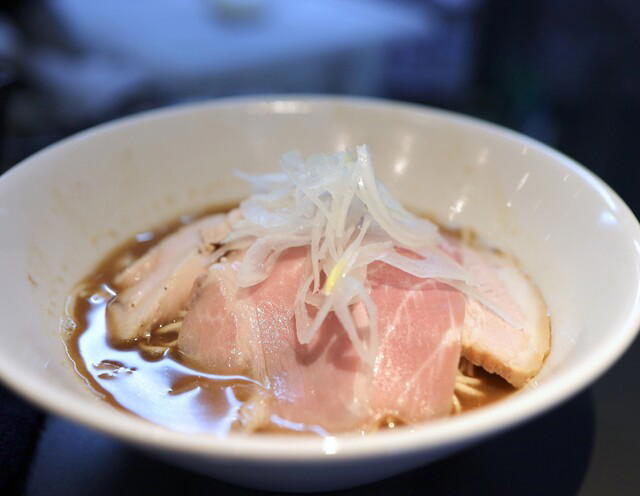
Approach in Kasukabe and the first read is focus: this is not a venue to understand through a broad hospitality narrative. It is a ramen specialist where the meal is defined by the bowl rather than by extras around it. That emphasis matters because ramen, at its best, is not a neutral category. Broth, noodles, aroma, seasoning, and pace all have to register with intent; the appeal is not softness, but control. Niboshi Ranbu belongs to the branch of Japanese ramen culture where the bowl announces itself before any wider dining-room story can take over.
In the wider Japan dining conversation, ramen has split into several serious subcultures, from polished clear-broth styles to denser bowls and shops built around assertive stock profiles. Kasukabe is not central Tokyo, yet this is exactly why the address is interesting. The commuter-belt ramen scene often keeps the experience accessible while pushing technique hard, and recognition here has to come through repeat performance rather than neighbourhood glamour. A Tabelog score of 3.77 and recognition in 2025 through Tabelog’s Hyakumeiten framework put the shop inside that higher-scrutiny field.
Ramen focus, not luxury theatre, defines the meal
The ingredient story is central, but the larger point is discipline. Ramen can read clean and savoury or darker and more concentrated depending on extraction, blend, seasoning, and noodle structure. It carries a different cultural signal from long-form restaurant dining: less about richness for its own sake than about the tension between broth, aroma, salt, and texture. A venue devoted to this form asks the diner to judge balance rather than novelty.
That makes the format as important as the bowl. Ramen creates a meal with little buffer: no need for private-room ceremony, table-service theatre, long wine conversation, or tasting-menu pacing. The shop’s 2025 Tabelog recognition is meaningful because ramen evaluation in Japan tends to reward consistency across a wide public audience. It is not simply a decorative badge. It signals a shop that remains legible to serious ramen diners in a crowded, trend-sensitive category.
Compared with Kasukabe’s broader dining options, the value proposition sits in a different lane. 3931WORKS., Oak wood, and BurgerPOLICE Kasukabe show how varied the city’s accessible food map can be. That comparison is useful because it shows how ramen can function as both everyday eating and specialist pursuit in the same city. Niboshi Ranbu is listed in the JPY 1,000–JPY 1,999 range for both lunch and dinner, but its recognition places it closer to a specialist ramen itinerary than an incidental meal.
A focused ramen stop changes the tempo
Ramen shops are often misunderstood by travellers. The appeal is not privacy or lingering; it is compression. The category tends to make the cadence clear, with diners focusing on the bowl rather than turning the visit into a long social occasion. For solo diners, this can be an advantage: Japan’s ramen culture is built to be approachable for single diners, and the format removes the awkwardness that can come with more formal restaurants. For groups, the same focus can be a constraint. This is not the natural choice for extended conversation or multi-course social dining.
The location also frames the experience. Kasukabe sits outside the dense restaurant circuits that dominate English-language Tokyo dining coverage. That distance changes expectations. A bowl here is less about checking off a famous central-city name and more about understanding how serious ramen recognition spreads across the wider region. Tabelog’s ramen-related recognition covers a competitive field, so inclusion places the shop in conversation with venues beyond its immediate surroundings, not merely with nearby casual restaurants.
The practical nature of the category reinforces the direct side of ramen dining. In Japan, many serious ramen shops still communicate more through their daily operation and third-party listings than through polished destination marketing. For travellers, that means the meal should be treated with the same practical discipline as any focused specialist: arrive with flexibility, assume a brisk pace may be part of the experience, and do not build the day around a large-party plan.
How to fold it into a Kasukabe day
Smart way to read Niboshi Ranbu is as a focused ramen stop rather than a long-form dining event. Its strength lies in a narrow promise: ramen served with the directness and concentration that define the category. Diners chasing plush service, alcohol-led dining, or a relaxed family table may be better served elsewhere in the city. Diners interested in Japanese ramen as a technical category have a clear reason to pay attention.
For a wider read on the city’s dining map, use Our full Kasukabe restaurants guide, with nearby context from Our full Kasukabe hotels guide, Our full Kasukabe bars guide, Our full Kasukabe wineries guide, and Our full Kasukabe experiences guide. Readers building a broader Japan itinerary can also compare how single-category specialists differ from other dining formats in Kasukabe and beyond, from casual local rooms to more elaborate destination meals. For an overseas counterpoint to Japanese drink-and-snack culture, unnamed examples abroad can show how tightly defined Japanese formats translate outside Japan without changing the basic appeal of a focused experience.
Frequently asked questions
Would Niboshi Ranbu be comfortable with kids?
It may work for older children who are comfortable with a focused ramen-shop visit, but the setup is better suited to a quick, bowl-led meal than lingering. Niboshi Ranbu is in Kasukabe, with a listed JPY 1,000–JPY 1,999 range for both lunch and dinner.
What is the atmosphere like at Niboshi Ranbu?
Expect a ramen-focused venue rather than a lingering dining room. Niboshi Ranbu in Kasukabe has a Tabelog score of 3.77 and was recognized through Tabelog’s Hyakumeiten framework in 2025.
What's the price range at Niboshi Ranbu?
Pricing at Niboshi Ranbu is listed as JPY 1,000 - JPY 1,999 JPY 1,000 - JPY 1,999.
What is Niboshi Ranbu known for?
Niboshi Ranbu is known as a ramen venue in Kasukabe with 2025 Tabelog Hyakumeiten recognition.
A Quick Peer Check
Comparable venues by cuisine and price in the same metro.
| Venue | Cuisine | Price | Awards | Notes |
|---|---|---|---|---|
| Niboshi RanbuThis venue (the venue you are viewing) | Japanese Ramen | $1–10 | Tabelog 100 #30 | Not listed |
| Hosoi | Japanese Traditional Sweets | $1–10 | Tabelog 100 #76 | Kasukabe |
| BurgerPOLICE Kasukabe | Wagyu Burger & Steak Bistro | $20–30 | Tabelog 100 #74 | Chuo |
| 3931WORKS. | Modern Ramen & Tsukemen | $10–20 | Tabelog 100 #78 | Ichinowari |
| Oak wood | Patisserie Cafe | $10–20 | Tabelog 100 #82 | Hachichome |
| カツカレーの店 KAPPA | Tonkatsu with Demi-Glace Sauce | $10–20 | Tabelog 100 #78 | 倉敷えびす通り商店街 |
Recognition history
Dated appearances from independent guides and award organizations, with the underlying list record or original source where available.
Tabelog 100 #30 · No. 30
Tabelog · Tabelog 100 - Ramen - EAST - 2025
Continue exploring
More in Kasukabe
Restaurants in Kasukabe
All restaurants in Kasukabe →



Bars in Kasukabe
Browse all →







Details
- Cozy
- Minimalist
- Well Known
- Solo
- Casual Hangout
- Standalone
- Counter Dining
- A La Carte
Sparse, compact, and no-frills counter-service ramen shop atmosphere with a quiet, focused feel.