

Tabelog Bronze #325
Our verdict
Operating dinner-only from 18:00 six evenings a week, it draws a following shaped by a precise focus on fish and a drinks program built around sake and shochu.

Pearl is the En Primeur Club membership app, where members save venues, book tables and use the concierge.
The menu
What to order
- Chicken wingtips
- Satsuma age
- Nodoguro maki
The progression of a meal here, course by course, is likely to track the seasons through what the sea is offering: the fat of autumn, the leaner precision of winter, the transition ingredients of early spring.
The drinks program reinforces the editorial logic of the food. The venue is listed as particular about both sake and shochu, with wine available as an alternative.enprimeurclub.enprimeurclub.
What the Awards Record Signals
Consecutive Tabelog Bronze Awards from 2017 through 2026, with no gap in the record, is not a minor credential. A score of 4.10, sustained over nearly a decade of annual awards, indicates a consistent performance rather than a single exceptional year. The 2026 ranking places Noguchi Taro at position 325 within the Tabelog Award cohort nationally, giving the score a concrete frame of reference.enprimeurclub.enprimeurclub. Noguchi Taro's profile runs through Tabelog's domestic system, which reflects a different, and often more local, constituency of diners. That distinction matters: Tabelog Bronze at a consistent score of 4.enprimeurclub.com/restaurants/gion-sasaki-kyoto-restaurant">Gion Sasaki in Kyoto, Harutaka in Tokyo, Goh in Fukuoka, each sit within their own regional context, but share the structural logic of the small counter, the fish-forward agenda, and the domestic recognition system. Noguchi Taro belongs to that grouping by format and by record.
The Room and What It Implies
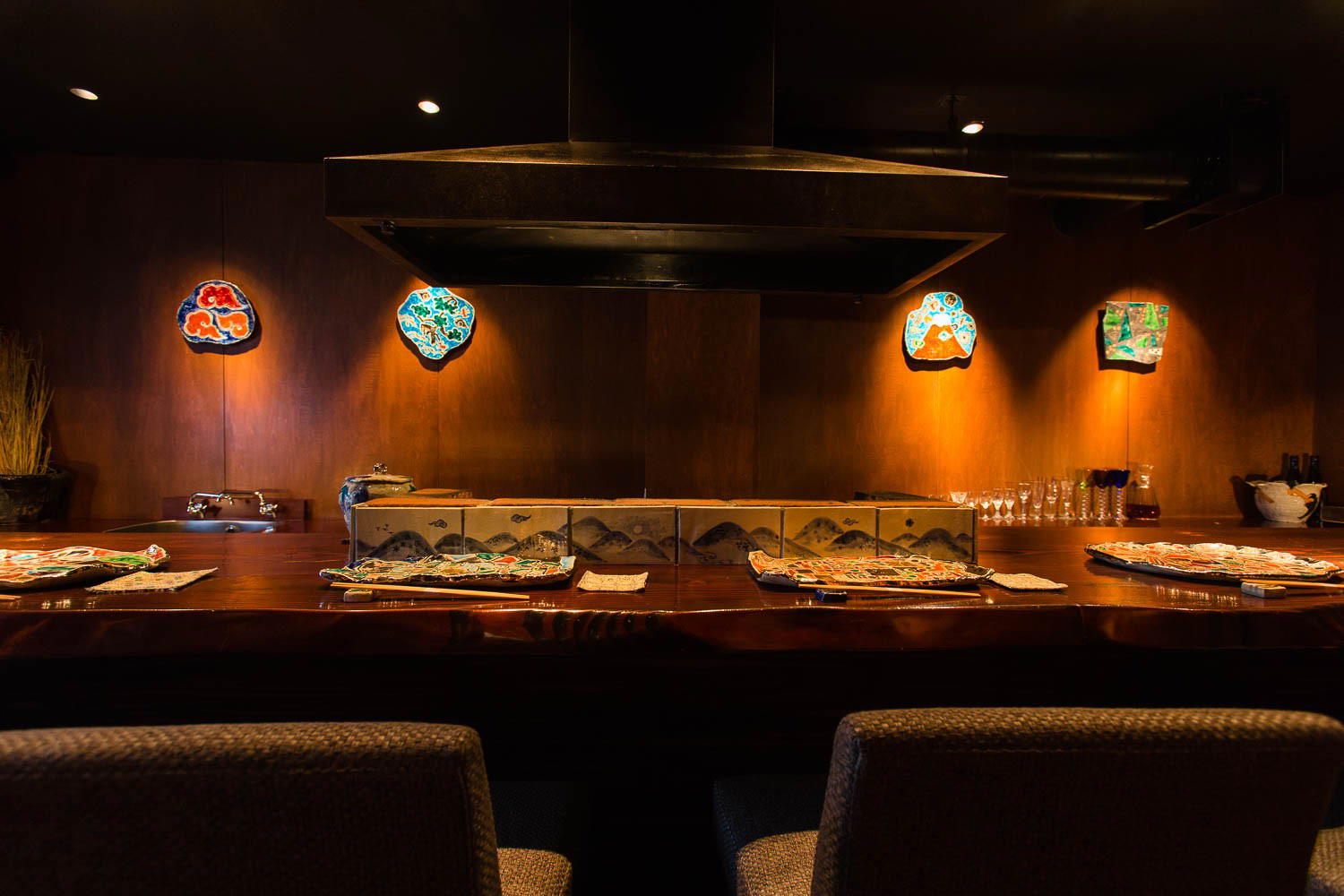
Ten seats, counter only, third floor of a building with no street signage: this is what Tabelog categorises as a hideout and house restaurant format. The classification is more than atmospheric labelling. It describes a business model in which the room itself functions as a filter. Getting to the third floor of an unmarked building in Kitashinchi requires prior knowledge or deliberate research, and that friction is part of the contract. The diners who arrive have already self-selected.
Private use is available for groups of up to twenty people, which likely refers to an extended-capacity format beyond the standard ten-seat counter arrangement. The listing also notes that children are allowed, provided they eat the food, a condition that reinforces the meal-first orientation of the room rather than treating the space as a backdrop for other occasions.
The absence of private rooms within the standard configuration is consistent with the counter format's core logic: the shared experience of a single cohort moving through the same progression simultaneously. At comparable operations internationally, that shared pacing is considered a feature rather than a limitation. Counter dining at Atomix in New York City or the counter format at Le Bernardin operate from different culinary traditions, but the principle of a controlled, unified dining arc is understood across all of them.
Planning Your Visit
Noguchi Taro operates dinner service from Monday through Saturday, 18:00 to midnight, with Sundays and public holidays closed. The counter runs ten seats. Budget: The listed average is JPY 20,000–29,999 per person at dinner; review-based spending data suggests the figure in practice runs closer to JPY 30,000–39,999. Reservations: Available via the venue's website at noguchitaro.com or by phone at 06-4796-8222; given the ten-seat capacity and sustained awards record, booking well in advance is prudent. Payment: Credit cards accepted (Visa, Mastercard, JCB, Amex, Diners); electronic money and QR code payments are not accepted. Drinks: Sake and shochu are the primary focus; wine is available. Parking:enprimeurclub.enprimeurclub.enprimeurclub.com/restaurants/gion-sasaki-kyoto-restaurant">Gion Sasaki in Kyoto and akordu in Nara; further afield, 1000 in Yokohama and
Frequently asked questions
Where exactly is Noguchi Taro?
Noguchi Taro is located at Japan, 〒530-0002 Osaka, Kita Ward, Sonezakishinchi, 1 Chome−3−1 3階, Osaka.
Is Noguchi Taro Michelin-listed?
Noguchi Taro has received recognition including:
What should I order at Noguchi Taro?
The kitchen's stated focus is fish, and the format is a set counter progression rather than à la carte, so selection is not the operative question. The drinks program centres on sake and shochu, with the venue explicitly noting a particular focus on both. Review-based spending at this counter typically runs JPY 30,000–39,999 per person.
What are the operating hours at Noguchi Taro?
Hours at Noguchi Taro: Mon, Tue, Wed, Thu, Fri, Sat 18:00 - 00:00.
What is Noguchi Taro known for?
Noguchi Taro holds consecutive Tabelog Bronze Awards from 2017 through 2026 and has been selected for the Tabelog Japanese Cuisine WEST 100 in 2021, 2023, and 2025, placing it among the most consistently recognised Japanese cuisine counters in western Japan. The format is ten seats, counter only, on the third floor of a building in Osaka's Kitashinchi district with no street-level presence, and the kitchen's focus is fish with a drinks program built around sake and shochu.
Same-City Peers
| Venue | Cuisine | Price | Awards | Notes |
|---|---|---|---|---|
| Noguchi TaroThis venue (the venue you are viewing) | Modern Japanese Kappo | $200–300 | Tabelog Bronze #325 | Not listed |
| HAJIME | Avant-Garde Japanese Fine Dining | $300–500 | 3 Michelin Stars · World's 50 Best #83 | French, Innovative |
| La Cime | Modern French with Japanese Ingredients | $150–200 | 2 Michelin Stars · World's 50 Best #13 | French |
| Kashiwaya Osaka Senriyama | Seasonal Kaiseki Omakase | $200–300 | 3 Michelin Stars · La Liste Top Restaurants | Japanese |
| Taian | Traditional Japanese Kaiseki Omakase | $150–200 | 3 Michelin Stars · La Liste Top Restaurants | Kaiseki, Japanese |
| Fujiya 1935 | Modern Japanese with European influences | $100–150 | 2 Michelin Stars · La Liste Top Restaurants | Innovative |
Recognition history
Dated appearances from independent guides and award organizations, with the underlying list record or original source where available.
Opinionated About Dining Top Restaurants in Japan Recommended
Opinionated About Dining
Tabelog Bronze #325
Tabelog
Full recognition history (4 entries)
Tabelog 100 #11 · No. 11
Tabelog · Tabelog 100 - Japanese cuisine - WEST - 2025
Tabelog Bronze
Tabelog
Continue exploring
More in Osaka
Restaurants in Osaka
All restaurants in Osaka →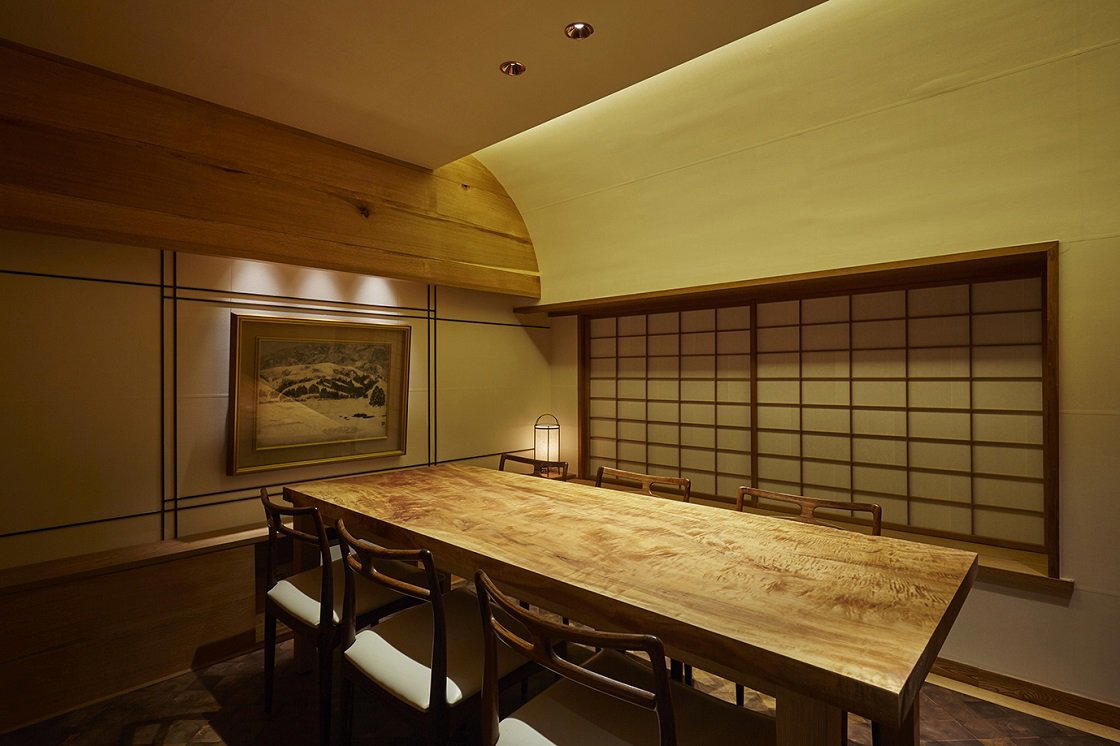



Bars in Osaka
All bars in Osaka →


Hotels in Osaka
All hotels in Osaka →


Wineries in Osaka
Browse all →
Details
- Intimate
- Elegant
- Modern
- Sophisticated
- Special Occasion
- Date Night
- Chefs Counter
- Open Kitchen
- Sake Program
- Tasting Menu
- Counter Dining
- Sake
Current opening hours
- Monday
- 6–11:30 PM
- Tuesday
- 6–11:30 PM
- Wednesday
- 6–11:30 PM
- Thursday
- 6–11:30 PM
- Friday
- 6–11:30 PM
- Saturday
- 6–11:30 PM
- Sunday
- Closed
Hours can change for holidays and private events. Hours as of .
Dimly-lit intimate counter space with spotlights on mosaic art, heavy wooden counter, and open grill for mesmerizing live cooking.