
Niboshi Ramen 88 Honten belongs to Nagoya’s compact, ingredient-led ramen tier, where dried sardine broth gives a small counter a sharper identity than generic station-area noodles. The draw is a fish-forward bowl at everyday pricing, backed by selection for Tabelog 100 - Ramen - AICHI - 2025 and a format built for quick, focused eating near Nagoya Station.
Pearl is the En Primeur Club membership app — saves, bookings, and concierge access live there. Same editors, same standards.
- Address
- 10-2 Tsubakicho, Nakamura Ward, Nagoya, Aichi 453-0015, Japan
- Phone
- +81 52-459-3588
- Website
- tousei-sk.co.jp
 Saves & bookings on Pearl
The approach to a serious ramen counter near Nagoya Station is rarely theatrical. The signal is usually narrower: a short frontage, counter seats, the rhythm of tickets and bowls, and a room built around turnover rather than lingering. In that setting, dried sardine ramen has a particular authority. It is not the broad comfort of pork-heavy broth or the clean familiarity of shoyu. Niboshi ramen asks for a sharper read: marine depth, bitterness held in check, and enough body to carry noodles without turning the bowl blunt.
Nagoya’s station-side dining scene rewards precision. Commuters, hotel guests and local office workers compress meals into tight windows, so the restaurants that endure tend to make their argument quickly. Niboshi Ramen 88 Honten fits that pattern: a 10-seat counter, ramen and tsukemen as the core categories, no private rooms, no smoking, and a price band that keeps the meal in the sub-¥1,000 bracket. The point is not luxury. It is concentration, and in Japanese ramen culture that can be a higher test than expense.
Dried sardine broth gives this Nagoya counter its point of view
Niboshi, dried baby sardines, has a long role in Japanese stock-making, but ramen shops use it with varying degrees of restraint. In lighter bowls it can give lift and saltwater definition; in more assertive styles it becomes the main architecture of the soup. The kitchen here is explicitly fish-focused, and the shop’s own description points to a rich niboshi dashi and a weekly use of 50 kg of dried sardines. That figure matters because niboshi ramen is not a garnish-driven category. The sourcing and volume of the stock ingredient shape the bowl before toppings enter the discussion.
The use of roasted bran in the noodles adds another ingredient signal. Ramen noodles are often discussed through thickness, curl or alkalinity, but flour composition can change how a broth reads. Bran pushes the noodle away from a neutral carrier and toward a grainier presence, useful when the soup has pronounced fish character. That kind of detail places the shop in a more specific lane than the station-area ramen counter selling broad appeal. It is also why the price is notable: ingredient identity is doing the work usually assigned to elaborate menus.
Selection for Tabelog 100 - Ramen - AICHI - 2025 gives the shop an external marker in a prefecture with deep noodle competition. The listing is not a Michelin-style star system, and it should not be read that way. Its value is comparative: among Aichi ramen shops, this is a named entrant in a curated ramen category, with a Tabelog score of 3.59. For travelers using Nagoya as a rail hub, that places the counter in a useful middle ground between convenience eating and destination dining.
How it reads against Nagoya's station-area choices
The immediate Meieki area offers several different answers to the quick-meal problem. Chuka Soba Raian and Betokon Ramen Shinkyo Meieki nishiguchi ten sit in the same sub-¥1,000 band, while Menya Hayabusa Meieki ten and Suzunami Esuka ten occupy the ¥1,000 to ¥1,999 range. Piyorin STATION Cafe gentiane JR nagoya eki ten answers a different station craving entirely, built around café pacing rather than broth discipline. Against that group, the case for Niboshi Ramen 88 Honten is not breadth. It is the decision to let dried fish define the meal.
That distinction is useful in Nagoya, a city often read by visitors through miso katsu, hitsumabushi and kishimen. Ramen here does not carry the same global shorthand as Sapporo miso or Hakata tonkotsu, so strong shops tend to earn attention through specificity rather than regional mythology. A niboshi-led bowl near the station gives the city another register: urban, compact, ingredient-forward, and compatible with a traveler’s schedule without feeling like a compromise.
The counter format also changes the social contract. Ten seats mean the room is built for solo diners and small groups, not drawn-out dining. Children are welcome, but the experience remains essentially counter-based. Reservations are unavailable, which is common for this tier of ramen and keeps the meal in the walk-in tradition. The more meaningful planning point is timing: the posted business notes say service may end once soup sells out. For a broth-led shop, that is not a decorative warning. Stock is the inventory.
Who should choose this bowl
This is the stronger choice for diners who want ramen with a defined ingredient thesis rather than a catch-all menu. Fish-forward broth can divide opinion, especially for travelers expecting pork richness or soy-based ease, but that is also the reason to go. The shop’s appeal is clearest when treated as a study in niboshi ramen: dried sardines providing structure, noodles selected to meet that force, and toppings playing a supporting role rather than becoming the headline.
For a broader Nagoya itinerary, use it as a compact lunch or early dinner around the station, then build the rest of the day by category. Our full Nagoya restaurants guide gives the wider dining frame, while Our full Nagoya hotels guide, Our full Nagoya bars guide, Our full Nagoya wineries guide and Our full Nagoya experiences guide help sort the city beyond the station meal. Readers comparing Japan’s smaller, tightly focused counters may also want to scan 1022, 451, Aaron, Alan. and All Day Dining Montmartre.
For cross-city context, the useful comparison is not cuisine alone but format: compact menus, specific ingredient choices and casual price points. That thread runs through places as different as -Grilled beef Sukiyaki- KAMAKURA TANUKIAN 鎌倉 たぬき庵 in Kamakura. 鮪と炭火焼き うお炭 秋葉原店 in Tokyo.cafe in Osaka.know in Kumamoto, (Shoku) Vietnam in Kawasaki, [Curry Senmon Ten] Maruyama Kyoju. in Sapporo, Jōdo Saké Bar in Los Angeles and Onigiri Time in Pasadena. Niboshi Ramen 88 Honten belongs in that conversation because it makes a narrow promise and lets the main ingredient carry the verdict.
Quick Comparison
Comparable venues side-by-side for orientation.
| Venue | Cuisine | Price | Notes |
|---|---|---|---|
| Niboshi Ramen 88 HontenThis venue — the venue you are viewing | Niboshi (dried sardine) ramen shop | $ | Not listed |
| Chuka Soba Raian | Ramen shop near Nagoya Station | $ | Nakamura |
| Oosu Bakery | Japanese Bakery Café | $ | Naka |
| Tsukesoba Jinguji | Tsukemen & Ramen Specialist | $ | Kita |
| Ebi Soba Hiiro | Shrimp-focused Ramen | $ | Mizuho |
| Kounan JR sentoraru tawazu ten | Ramen & Gyoza Shop | $ | Nakamura |
Recognition history
Dated appearances from independent guides and award organizations, with the underlying list record or original source where available.
Tabelog 100 #67 · No. 67
Tabelog · Tabelog 100 - Ramen - AICHI - 2025
Continue exploring
More in Nagoya
Restaurants in Nagoya
Browse all →
At a Glance
- Cozy
- Quiet
- Solo
- Casual Hangout
- After Work
- Late Night
- Chefs Counter
- Standalone
Current opening hours
- Monday
- 11 AM–3 PM
- Tuesday
- 11 AM–3 PM, 5:30–9:30 PM
- Wednesday
- Closed
- Thursday
- 11 AM–3 PM, 5:30–9:30 PM
- Friday
- 11 AM–3 PM, 5:30–9:30 PM
- Saturday
- 11 AM–3 PM, 5:30–9:30 PM
- Sunday
- 11 AM–3 PM, 5:30–9:30 PM
Hours can change for holidays and private events. Last verified .
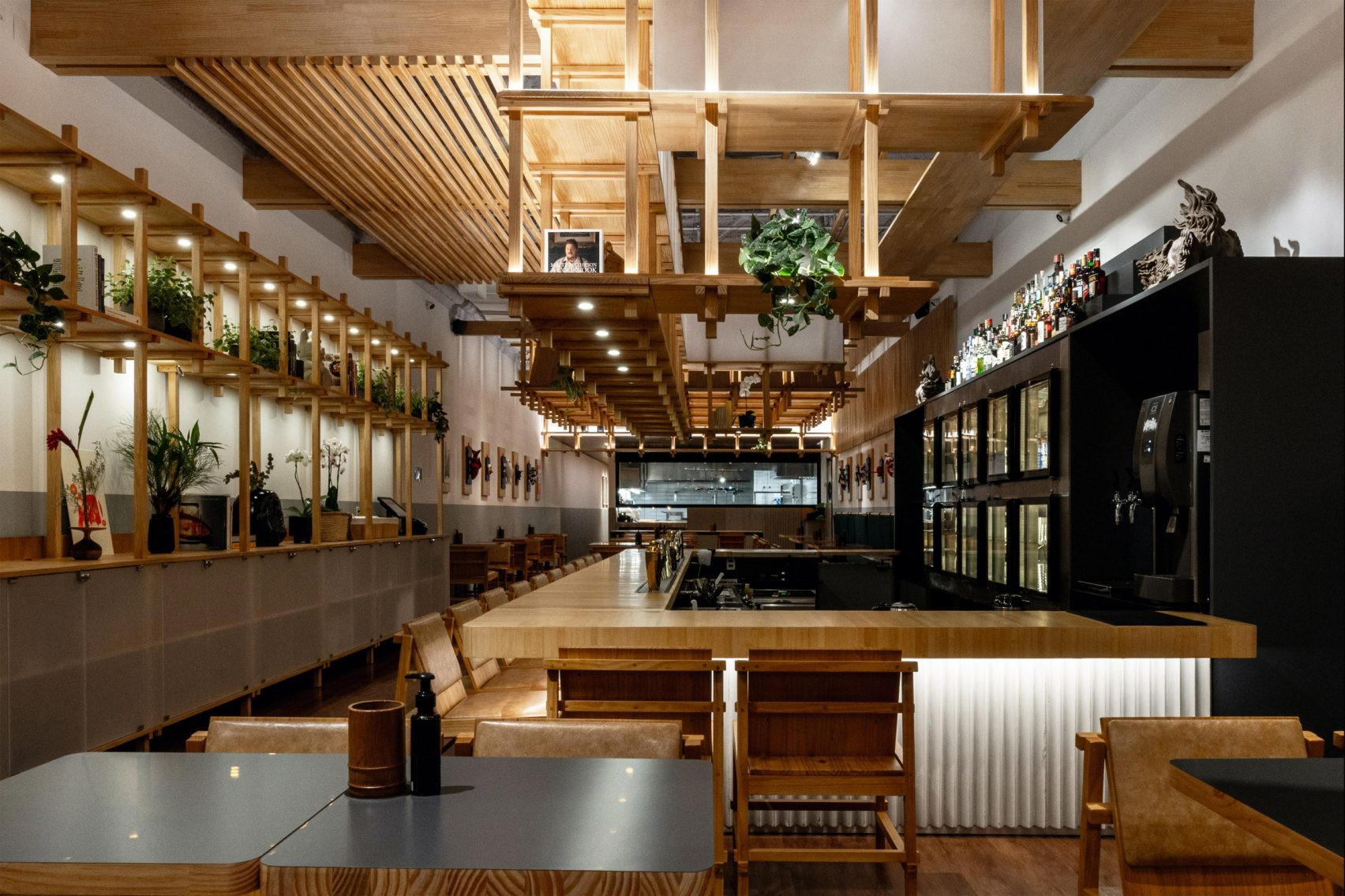
The restaurant offers a calm, low-key atmosphere with a simple counter layout, close to the station yet tucked away, creating an intimate feel focused on enjoying a concentrated bowl of niboshi ramen without distractions.