One of Budapest's oldest continuously operating restaurants, Százéves Étterem occupies a baroque building on Piarista utca in the Inner City. The address has fed the city's professional and intellectual classes across political regimes, making it a reference point for how Hungarian dining tradition has bent, adapted, and occasionally reinvented itself over more than a century of turbulent history.
Pearl is the En Primeur Club membership app — saves, bookings, and concierge access live there. Same editors, same standards.
- Address
- Budapest, Piarista u. 2, 1052 Hungary
- Phone
- +3612300329
- Website
- szazevesetterem.hu
- Directions
- Get directions
 Saves & bookings on Pearl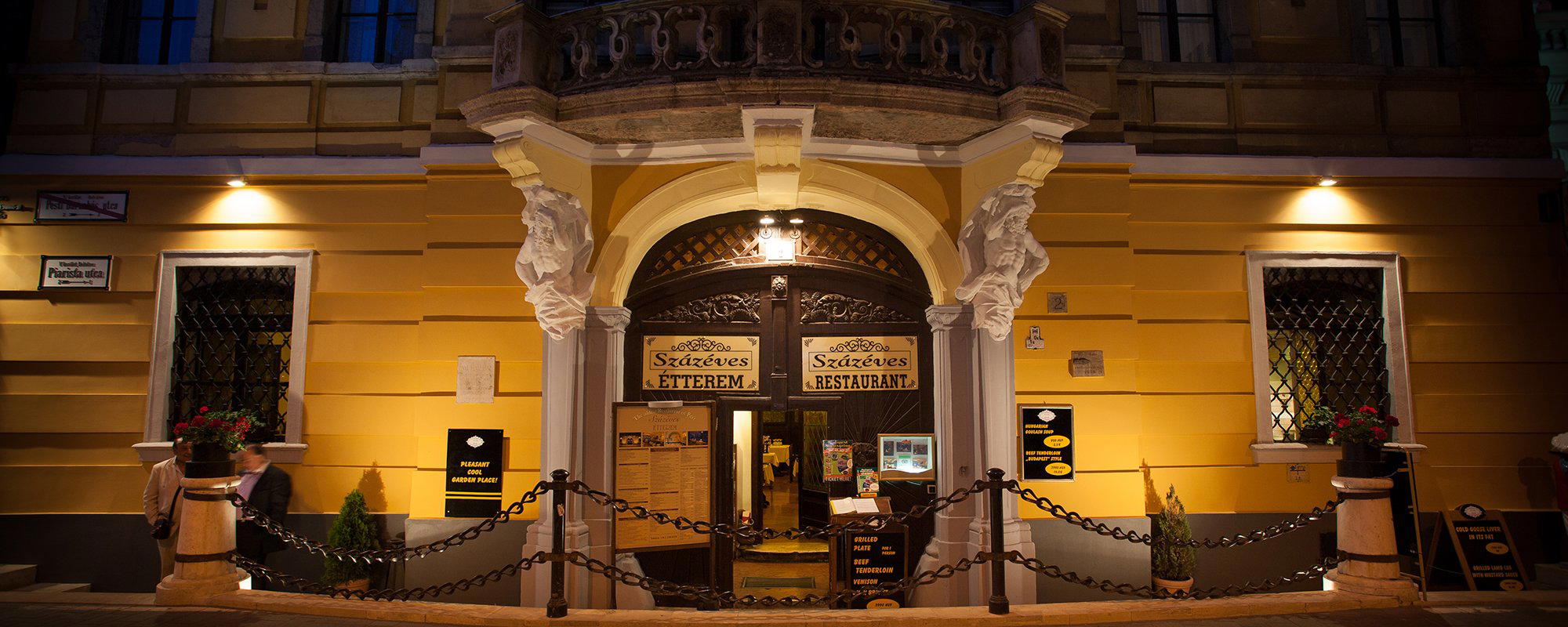
A Building That Has Outlasted Several Hungarys
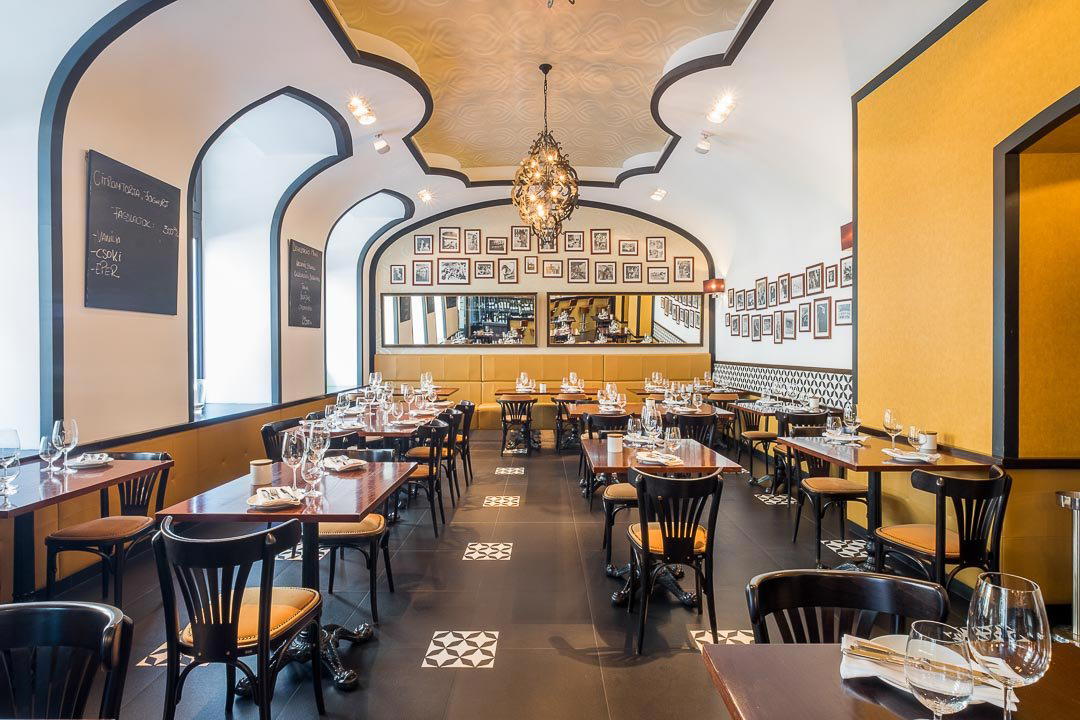
Piarista utca 2 sits at among the more quietly significant corners of Budapest's fifth district, a short walk from the Danube embankment and the Franciscan church that has anchored this neighbourhood since the medieval period. The Inner City's restaurant addresses tend toward the formal and the tourist-facing, but Százéves occupies a different register: a baroque interior where the dining room's age is visible in the architecture rather than performed through theatrical styling. In a city that rebuilt, renamed, and repositioned almost everything between 1945 and 1990, a restaurant that kept its doors open across those decades tells you something about the function it served, and the compromises that required.
The name translates as "Hundred Years Restaurant," though the establishment's documented history runs considerably longer than that. It sits within a peer group of central European dining institutions that includes places like the great coffeehouses and hotel restaurants of Vienna and Prague, addresses where longevity is itself the credential and where the dining room's social history is inseparable from its menu. Százéves represents a different category of value entirely: the accumulated weight of place.
How the Room Has Changed, and How It Hasn't
Hungarian restaurants of the grand bourgeois tradition followed a particular arc through the twentieth century. The pre-war addresses that survived nationalisation under the state hospitality apparatus often did so by becoming institutionalised: menus standardised, service formalised according to socialist-era protocols, wine lists reduced to whatever domestic production was available through official channels. The interior, paradoxically, was sometimes better preserved under state management than it might have been through rapid private commercial cycles, there was neither the capital nor the incentive to rip out a baroque dining room and replace it with something more fashionable.
What this means in practice is that visiting Százéves involves reading a room that has been shaped by multiple political economies simultaneously. The physical fabric speaks to one period, the service tradition to another, and any post-1990 recalibration to a third. This layering is more common in Budapest than in cities that escaped wartime damage or Soviet-era management, and it gives the city's older restaurants a density of historical reference that purpose-built contemporary venues simply cannot replicate. For context on how this compares to the newer wave of Hungarian cooking emerging in smaller cities, see our features on Platán Gourmet in Tata and Pajta in Őriszentpéter, both of which are working through a different relationship with Hungarian culinary tradition.
The Evolution Question: Tradition as Asset or Constraint
The central editorial question for any restaurant of this age and type is whether its longevity represents active evolution or accumulated inertia. Budapest's fine dining conversation has moved decisively in the direction of contemporary technique over the past fifteen years. Against this backdrop, a restaurant built on historical continuity faces a genuine strategic choice: anchor firmly to its traditional identity and serve a specific audience that values that, or attempt to modernise and risk losing the coherence that makes it distinctive in the first place.
Particularly successful long-running restaurants in this position tend to choose the former and execute it with discipline. The parallel in other European capitals is instructive: certain Viennese restaurants and Parisian brasseries have found that doubling down on ritual and ceremony, rather than chasing contemporary trends, creates a durable market position. The challenge is maintaining quality within that traditional frame rather than allowing tradition to become an excuse for stagnation.
Within Hungary's broader dining geography, this institutional tradition is not limited to Budapest. Addresses like Aranysárkány Vendéglő in Szentendre and Forst-Ház Étterem és Kávézó in Eger operate within similar frameworks of regional Hungarian tradition, though at smaller scales and with different regional inflections. The difference at Százéves is the density of the capital's cultural and political history pressing on a single address.
Placing It in the Budapest Dining Map
The fifth district concentration of restaurants reflects the neighbourhood's historical function as Budapest's administrative and commercial core. The Danube embankment, the major hotels, the parliament building, and the city's law courts have all generated a consistent professional dining clientele across different political periods. Százéves sits in this network as a formal option for occasions where the setting matters as much as the cooking, anniversaries, business entertaining, visits by relatives from outside the city who want to see something that looks and feels like Budapest rather than something that could be anywhere in contemporary Europe.
This positions it differently from the modern cuisine addresses that dominate Budapest's awards conversation. A traveller who has already experienced the tasting menu format at Costes or the wine-focused contemporary cooking at Borkonyha Winekitchen will find Százéves occupying entirely different ground, historically resonant rather than technically ambitious, occasion-specific rather than curiosity-driven. Both have a place in a serious Budapest itinerary.
For international reference points on what long-running institutional restaurants can achieve at their leading, Le Bernardin in New York City offers a model of how a restaurant can maintain classical discipline while evolving its execution over decades.
Know Before You Go
| Address | Budapest, Piarista u. 2, 1052 Hungary |
|---|---|
| Neighbourhood | Fifth District (Inner City), Budapest |
| Price range | Price tier 3 |
| Booking | Advance booking is advisable for weekend evenings and for groups |
| Getting there | Walkable from Ferenciek tere metro station (M3 line); central location serves most Inner City hotels on foot |
| Leading for | Formal occasions, visitors wanting a historically situated Budapest dining experience, clients of the professional district |
Booking and Cost Snapshot
Comparable venues nearby, for context on price, style, and recognition.
| Venue | Cuisine | Price | Notes |
|---|---|---|---|
| Százéves ÉtteremThis venue — the venue you are viewing | Belvaros, Traditional Hungarian | $$$ | Not listed |
| Symbol | Not listed | $$$ | Pasaret, Traditional Hungarian with Swabian & Jewish Influences |
| St. George | Varhegy, Classic Hungarian | $$$ | Not listed |
| Marumba | Belvaros, Modern Vegetarian Hungarian | $$$ | Not listed |
| Kacsa Étterem | Not listed | $$$ | Varhegy, Classic Hungarian Duck Specialties |
| KIOSK Budapest | Belvaros, Modern Hungarian | $$ | Not listed |
Continue exploring
More in Budapest
Restaurants in Budapest
Browse all →
Bars in Budapest
Browse all →
Hotels in Budapest
Browse all →

At a Glance
- Classic
- Rustic
- Elegant
- Well Known
- Special Occasion
- Date Night
- Historic Building
Current opening hours
- Monday
- 1–11 PM
- Tuesday
- 12–11 PM
- Wednesday
- 12–11 PM
- Thursday
- 12–11 PM
- Friday
- 12–11 PM
- Saturday
- 12–11 PM
- Sunday
- 12–11 PM
Hours can change for holidays and private events. Last verified .
Contemporary atmosphere with rustic furnishing, elegant environment, candlelight in the evening, and gypsy music.