
Namake places Tokyo’s tachinomi culture in a sharper contemporary frame: stand-up drinking, seafood and tripe, with sake and shochu rather than cocktail theatre. Its 2025 Tabelog 100 Tachinomi selection gives it a clear trust signal in a category where atmosphere, turnover and snack discipline matter as much as formal cooking.
Pearl is the En Primeur Club membership app — saves, bookings, and concierge access live there. Same editors, same standards.
- Address
- 7 Chome-50-7 Nishikamata, Ota City, Tokyo 144-0051, Japan
- Phone
- +81 3-6424-4970
- Website
- instagram.com
 Saves & bookings on Pearl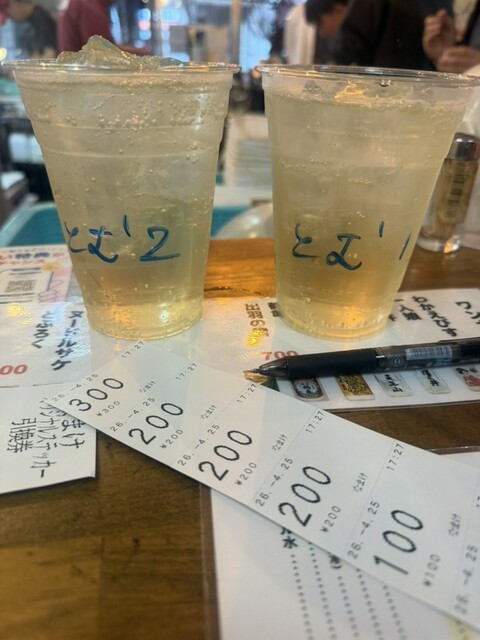
Kamata’s drinking streets work at a different tempo from Ginza counters and hotel bars. The appeal is not ceremony; it is proximity, clatter, quick pours, small plates, and the social compression that happens when a room is built for standing rather than settling in. Namake belongs to that Tokyo lineage, a tachinomi address where seafood, tripe, sake and shochu carry the evening rather than a long tasting-menu arc.
The district matters. Nishikamata sits outside the international shorthand of Tokyo dining, which tends to orbit sushi counters, yakitori rooms and French-influenced tasting menus. Kamata has a more workday grammar: station-side drinking, modest budgets, and places designed for people who understand that a short session can be more satisfying than a long reservation. In that context, a Tabelog 100 Tachinomi 2025 selection is not decoration; it signals that the room has been judged within the specific discipline of stand-up drinking, not against unrelated fine-dining benchmarks.
Tokyo tachinomi, sharpened by seafood and offal
Tachinomi is often misread by visitors as a casual substitute for izakaya dining. It is better understood as its own form. Standing changes the meal: orders tighten, drinking pace quickens, and the kitchen has to deliver food that works in small, immediate measures. Namake’s listed categories, stand-up bar, seafood and tripe, put it in a particularly Tokyo register, where local drinking culture absorbs techniques and ingredients without turning them into a formal performance.
The seafood-and-tripe pairing is the point. Tokyo’s drinking food has long made room for both clean marine flavors and more muscular offal cookery, and the combination suits sake and shochu better than a broad international wine list would. This is where the assigned idea of local ingredients and outside technique becomes practical rather than theoretical: the format borrows from modern urban bar efficiency, but the drinking logic remains Japanese, built around nihonshu, shochu, and snack-sized dishes that can survive a crowded room.
Comparison helps define the lane. Niboshi Tsukemen Miyamoto and Grill Suzukou sit in a lower-budget Tokyo comfort-food bracket, while Hatsunezushi represents the opposite pole, the sushi counter as appointment dining. Namake occupies neither end. Its value is in the middle category that Tokyo does unusually well: a focused specialty room with enough structure to earn recognition, but without the financial or temporal commitment of prestige dining. That makes it more relevant to certain evenings than another formal reservation.
Recognition in a category built on pace, not luxury
Tabelog’s 100 Tachinomi list is useful because it separates stand-up bars from the broader restaurant field. A score of 3.50 in this genre reads differently from the same number attached to a grander dining room; the category rewards repeatability, drink compatibility, crowd handling and a kitchen that can keep rhythm. Namake’s 2025 selection places it inside a compact group of venues where the room’s mechanics matter as much as what lands on the plate.
Tokyo’s premium dining conversation often overweights scarcity: chef counters, fixed menus, overseas acclaim. Tachinomi asks a more democratic question: can a place hold attention when guests are not cushioned by ritual? That is why stand-up bars can be such strong measures of a city’s food culture. They expose habits. They show what people drink after work, how much food is enough, and how a neighborhood uses dining as social infrastructure rather than spectacle.
Namake’s 40-seat standing format underlines that distinction. The option to use a simple chair through a ticketed add-on is telling, because it preserves the standing-bar premise while acknowledging that not every guest wants the same level of physical commitment. It is a small operational detail, but in tachinomi culture these details shape the evening: the room can move quickly, yet it does not force the experience into a single rigid posture.
Where it fits in a Tokyo itinerary
For travelers building a Tokyo food itinerary, this is not a replacement for sushi, tempura or kaiseki. It is a corrective. After several days of appointment dining, a recognized tachinomi bar in Ota offers a better read on how Tokyo eats and drinks when the occasion is smaller, faster and more local. The decision is less about chasing a famous dish than choosing a format that compresses the city’s after-hours habits into one room.
Kamata also pairs well with a wider view of Tokyo beyond the usual central wards. Readers comparing casual dining styles can look across EP Club’s Tokyo coverage, from . 鮪と炭火焼き うお炭 秋葉原店 and 12/10 Shinjuku ten to 124. KAGURAZAKA (Yakitori), 2D Cafe and 3 Chome no Curry Ya San. For broader planning, use Our full Tokyo restaurants guide, alongside Our full Tokyo hotels guide, Our full Tokyo bars guide, Our full Tokyo wineries guide and Our full Tokyo experiences guide.
The same question extends beyond Tokyo: how does a compact, drink-led Japanese format compare with regional and overseas interpretations of casual eating? EP Club’s wider Japan and sake-adjacent coverage includes -Grilled beef Sukiyaki- KAMAKURA TANUKIAN 鎌倉 たぬき庵 in Kamakura.cafe in Osaka.know in Kumamoto, (Shoku) Vietnam in Kawasaki, [Curry Senmon Ten] Maruyama Kyoju. in Sapporo, [ki:] in Kyoto, Jōdo Saké Bar in Los Angeles and Onigiri Time in Pasadena.
The editorial read is clear: Namake is for the traveler who wants Tokyo’s drinking culture without reducing it to lantern nostalgia. The evidence is specific, a 2025 Tabelog tachinomi selection, a standing-bar format, a seafood-and-tripe kitchen, and a sake-shochu drinks profile. That combination makes it a serious entry in a modest-looking category, which is often where Tokyo is at its sharpest.
Cuisine and Recognition
Comparable venues at a similar level for quick context.
| Venue | Cuisine | Price | Notes |
|---|---|---|---|
| NamakeThis venue — the venue you are viewing | Casual Japanese izakaya standing bar | $ | Not listed |
| Tonjiru to Genmai no Mise Aoki Shokudo | Japanese diner specializing in tonjiru and brown rice | $ | Ōta |
| 福田家 | Japanese Conveyor Belt Sushi | $ | Chiyoda |
| Kitchen Taka | Japanese yoshoku (Western-style comfort food) counter | $ | Shinjuku |
| 北島亭 | Japanese Izakaya | $ | Shinjuku |
| Nishieifuku no Niboshi Bako | Niboshi-focused Ramen | $ | Suginami |
Recognition history
Dated appearances from independent guides and award organizations, with the underlying list record or original source where available.
Tabelog 100 #55 · No. 55
Tabelog · Tabelog 100 - Tachinomi - 2025













At a Glance
- Lively
- Cozy
- Energetic
- After Work
- Casual Hangout
- Group Dining
- Late Night
- Solo
- Standalone
- Sake Program
- Beer Program
Current opening hours
- Monday
- 3–9 PM
- Tuesday
- Closed
- Wednesday
- Closed
- Thursday
- 3–9 PM
- Friday
- 3–9 PM
- Saturday
- 3–9 PM
- Sunday
- 3–9 PM
Hours can change for holidays and private events. Last verified .
Loud, crowded standing-bar atmosphere with people packed around counters, bright casual lighting and a classic Tokyo neighborhood izakaya feel geared toward quick drinks and snacks rather than lingering meals.