Muensterstuewel
A fixture on Place du Marché-aux-Cochons-de-Lait, Muensterstuewel represents the enduring winstub tradition at the heart of Strasbourg's dining identity. The address sits within the old city's most characterful quarter, where Alsatian cooking has been served in one form or another for generations. For visitors mapping a serious itinerary across the city, it functions as both an anchor and a point of reference for how the winstub format has evolved.
Pearl is the En Primeur Club membership app — saves, bookings, and concierge access live there. Same editors, same standards.
- Address
- 8 Pl. du Marché-aux-Cochons-de-Lait, 67000 Strasbourg, France
- Phone
- +33388321763
- Website
- muensterstuewel.fr
- Directions
- Get directions
 Saves & bookings on Pearl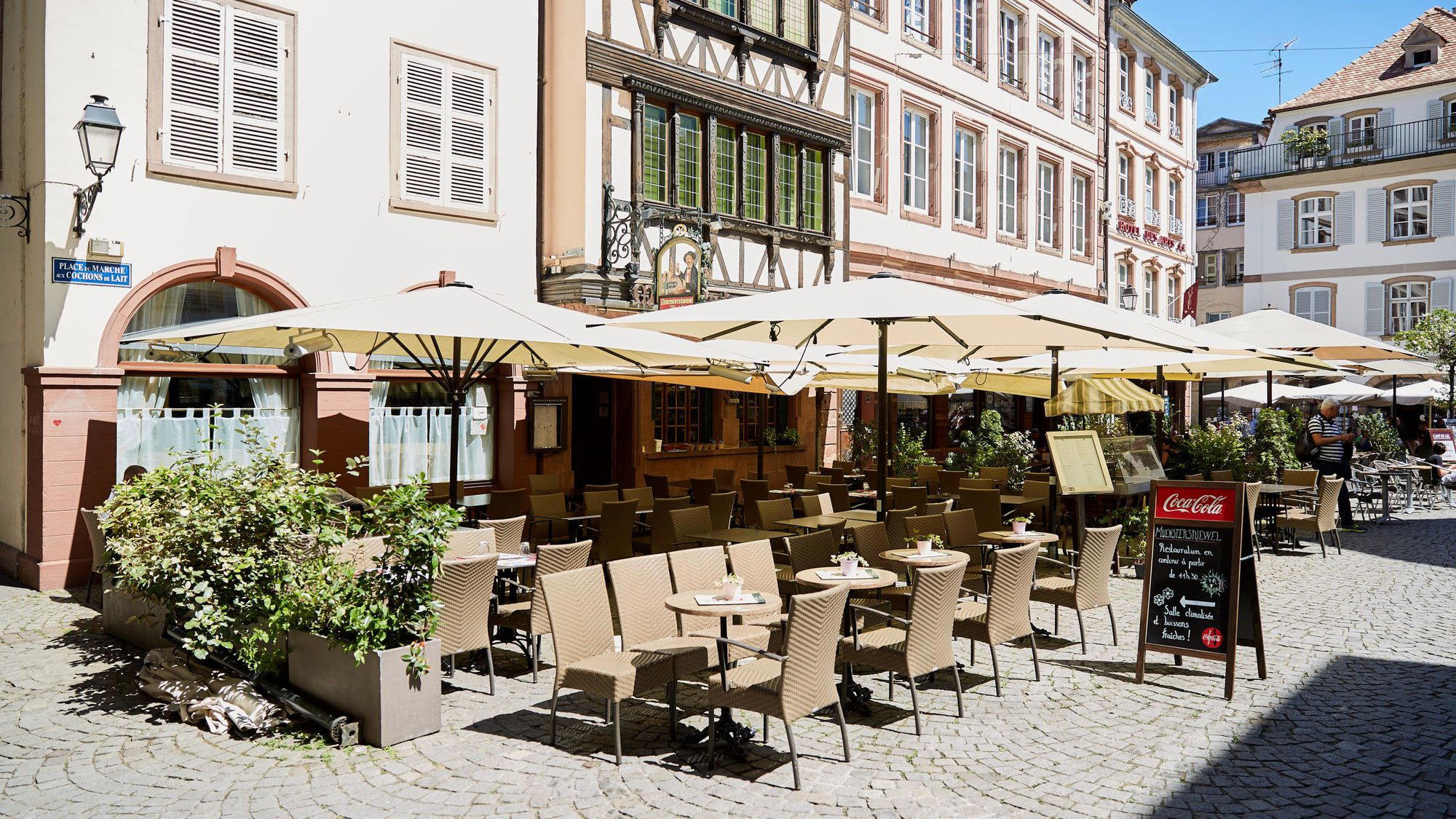
The Winstub Tradition and Where Muensterstuewel Fits Within It
Strasbourg's winstub culture occupies a specific and somewhat precarious position in contemporary French dining. These wine-room taverns, which date to the eighteenth century, were originally attached to wine merchants' premises and served simple Alsatian food to keep customers at the table. Over the following two centuries, the format calcified into a recognisable typology: wood-panelled interiors, checked tablecloths, choucroute, baeckeoffe, flammekueche, and a carafe of Pinot Gris that arrives without ceremony. By the 1980s and 1990s, the category faced real pressure from modernising French tastes and a generation of Alsatian chefs trained in classical French kitchens who had little interest in reproducing grandmother's recipes. Muensterstuewel sits inside that conversation.
The address itself speaks to history. Place du Marché-aux-Cochons-de-Lait occupies a corner of Strasbourg's Grande Île, the UNESCO-listed island defined by the Ill river that contains the cathedral and the bulk of the medieval street plan. Dining in this quarter means eating inside among the more intact pre-modern urban environments in Western Europe, and the context is not incidental. The physical environment shapes what the room is expected to deliver: not innovation for its own sake, but continuity with the specific material and culinary character of the place. Muensterstuewel operates on a different axis, where the value proposition is rootedness rather than refinement.
How the Winstub Format Has Shifted
The evolution of Strasbourg's winstub category over the past two decades has followed two distinct paths. A first group of establishments has held essentially unchanged, preserving both the menu and the interior as a kind of living document of mid-century Alsatian hospitality. A second group has absorbed contemporary pressures selectively, adjusting sourcing, lightening preparations, and occasionally updating the wine list to reflect the region's shift toward lower-intervention bottles, while keeping the room and the general register intact. Both strategies carry risk: the first risks irrelevance to younger dining cohorts, the second risks alienating the regulars who return precisely because nothing has changed.
Creative tier of Strasbourg dining has moved considerably further along. de:ja and Les Funambules both operate in the creative and modern cuisine bracket, where Alsatian references appear as inflection points rather than foundations. Umami moves still further from the regional template. These restaurants collectively represent a generation of Strasbourg chefs for whom the winstub format is not a constraint but a baseline they have consciously departed from. Muensterstuewel does not compete in that space. It operates in the tier defined by place, by register, and by a kind of institutional memory that newer openings cannot replicate simply by choosing the right interior.
What Defines the Visit
Place du Marché-aux-Cochons-de-Lait is a compact square a short walk from the cathedral, reachable on foot from the tram network at the Homme-de-Fer or Broglie stops. The square's name, which translates roughly as Market of the Suckling Pigs, indexes an earlier commercial life that the area no longer visibly sustains, though the culinary association persists. Arriving here in the colder months, when the Alsatian winter has settled over the sandstone buildings and the nearby Christmas market fills the adjacent streets with pine and warm wine, the address delivers a physical coherence that a newer restaurant in a converted space cannot manufacture. That coherence is itself a form of editorial argument: that some dining experiences are inseparable from their urban and architectural setting.
The Alsatian winstub tradition, at its most coherent, operates on the opposite assumption: that continuity is itself a kind of craft, that knowing how to make choucroute well for forty years is a form of expertise the tasting-menu format will never replicate. Auberge de l'Ill in Illhaeusern represents the apex of what happens when Alsatian cooking is pushed toward formality and institutional recognition. Muensterstuewel sits at a different point on that spectrum, closer to the source and less mediated by ambition.
Placing It in the Strasbourg Itinerary
Within a two or three-day Strasbourg programme, Muensterstuewel makes most sense as the meal that contextualises the others. Eating here before or after dinner at a more ambitious table produces the contrast that clarifies both: what Alsatian cooking looks like when it is not performing anything, and what the creative tier is actually departing from. That comparative logic applies to the wine service as well. Alsace produces some of France's most characterful white wines, from Riesling of genuine austerity to Gewurztraminer of considerable aromatic density, and a winstub with a serious cellar is as instructive a place to encounter them as any tasting room.
For reference across the wider French dining map, readers building multi-city itineraries can compare the regional traditions anchored by establishments like Bras in Laguiole, Troisgros in Ouches, and Paul Bocuse in Collonges-au-Mont-d'Or against what Strasbourg's own tradition offers at various price points. The winstub occupies a distinct category in that national typology, one that has no precise equivalent in other French regions and that Strasbourg has been unusually successful in preserving even as its restaurant scene has broadened considerably.
Reputation First
Comparable venues nearby, for context on price, style, and recognition.
| Venue | Cuisine | Price | Notes |
|---|---|---|---|
| MuensterstuewelThis venue — the venue you are viewing | Traditional Alsatian Winstub | $$ | Not listed |
| La Nouvelle Poste | French Brasserie | $$ | Centre |
| Les Innocents | Modern French Bistronomic | $$ | Tribunal-Gare-Porte De Schirmeck |
| Au Brasseur | Traditional Alsatian Brasserie | $$ | Centre |
| L'Oignon | Traditional French Alsatian | $$ | Centre |
| Pfifferbriader | Traditional Alsatian Winstub | $$ | Centre |
Continue exploring
More in Strasbourg
Restaurants in Strasbourg
Browse all →

Bars in Strasbourg
Browse all →


Hotels in Strasbourg
Browse all →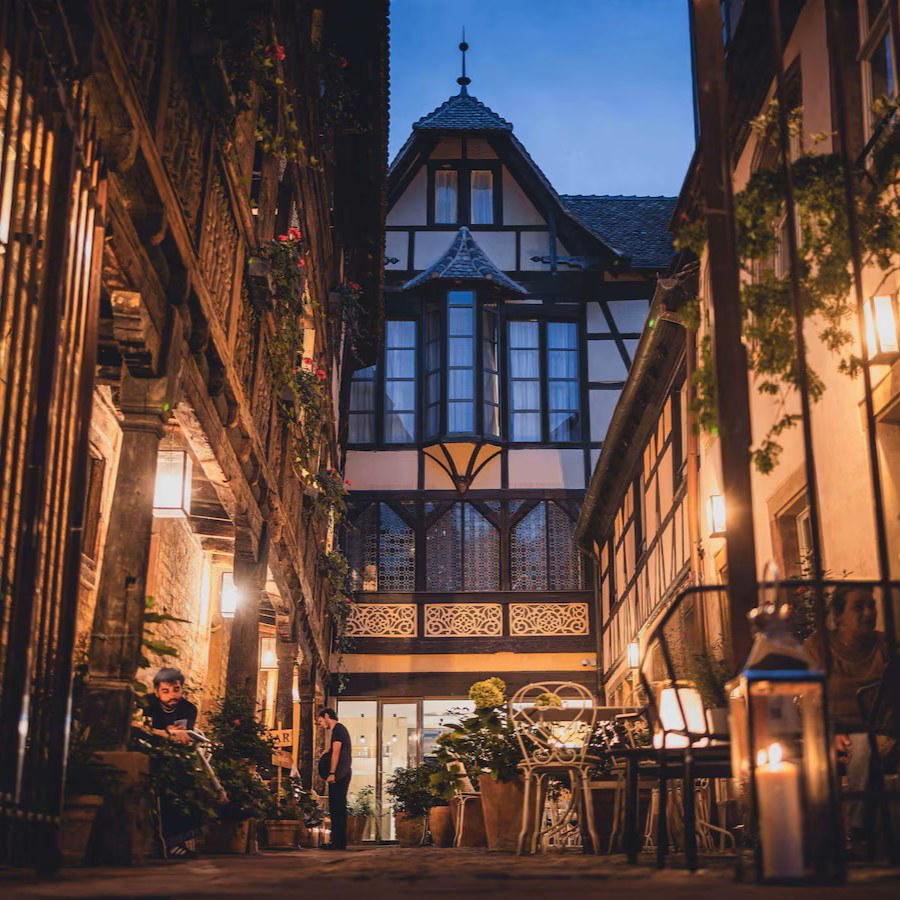
At a Glance
- Classic
- Cozy
- Rustic
- Historic
- Intimate
- Casual Hangout
- Family
- Historic Building
- Extensive Wine List
- Street Scene
Current opening hours
- Monday
- 10 AM–10:30 PM
- Tuesday
- 10 AM–10:30 PM
- Wednesday
- 10 AM–10:30 PM
- Thursday
- 10 AM–10:30 PM
- Friday
- 10 AM–10:30 PM
- Saturday
- 10 AM–10:30 PM
- Sunday
- 10 AM–10:30 PM
Hours can change for holidays and private events. Last verified .
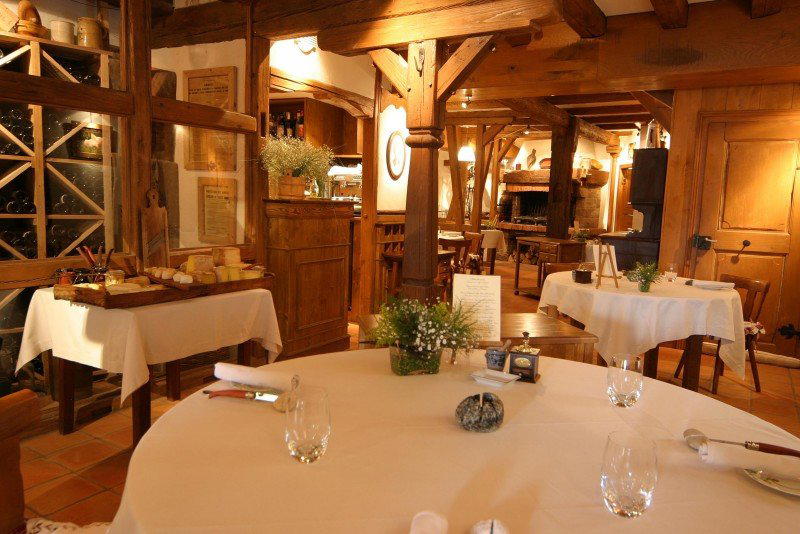
Warm, traditional winstub atmosphere with historic charm, half-timbering, carved wood, and cozy wood-paneled interiors.