Our verdict
Motsunabe Rakutenchi Tenjin Imaizumi So-Honten sits at the heart of Fukuoka's Imaizumi district, the city's established address for motsunabe — the offal hot pot that locals treat as a civic institution rather than a novelty. The format is communal, the mood direct, and the dish itself one of the clearest expressions of Fukuoka's long tradition of making exceptional food from overlooked cuts.

Pearl is the En Primeur Club membership app — saves, bookings, and concierge access live there. Same editors, same standards.
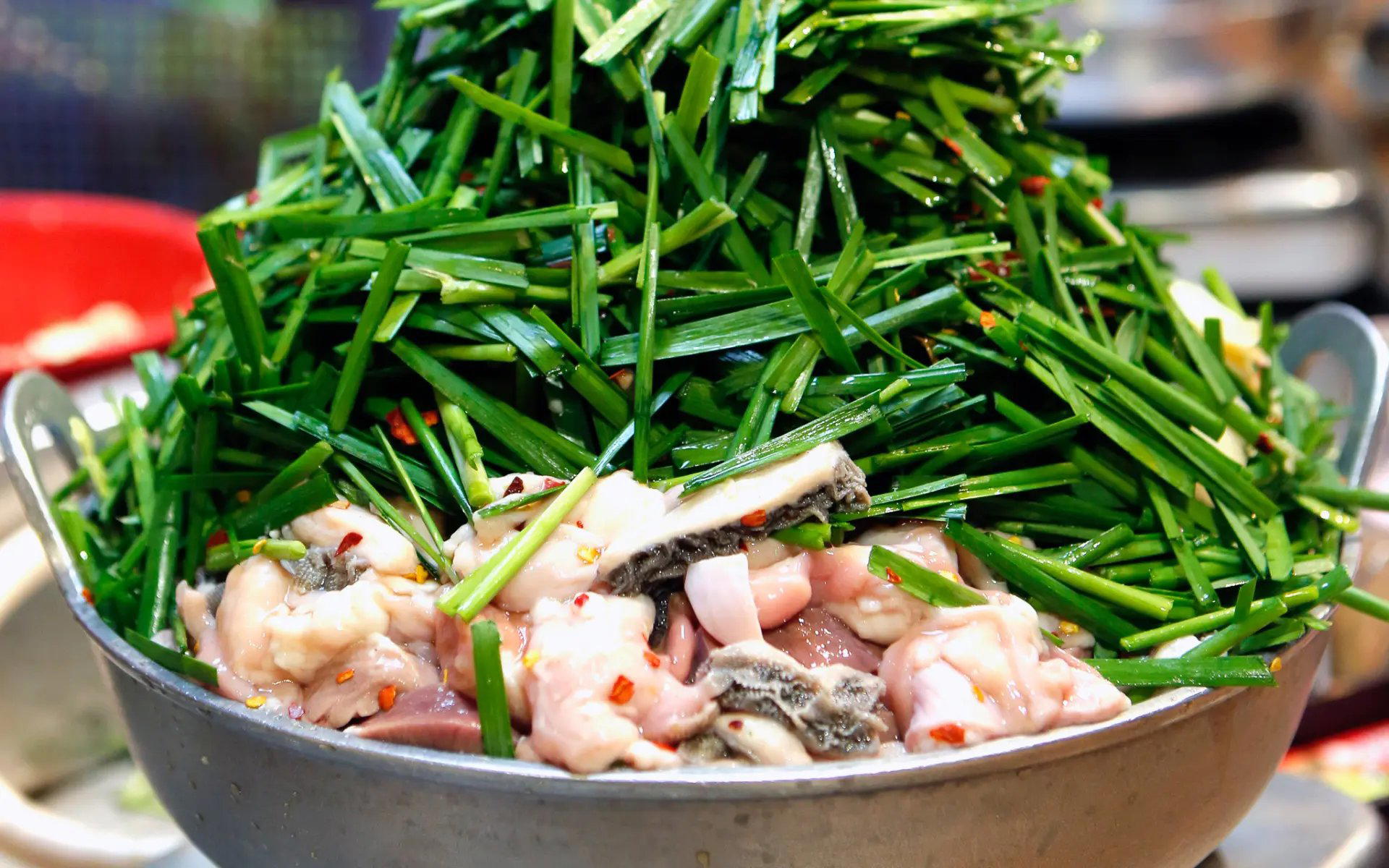
The menu
What to order
- Motsunabe Manzoku Course
- Puripuri Motsunabe Daimanzoku Course
- Champon Noodles Shime
Imaizumi and the Offal Hot Pot That Defines Fukuoka's Table
Arrive in Imaizumi on a winter evening and the air carries the same signal from half a dozen doorways: the low, sweet smell of miso-enriched broth simmering with offal. Fukuoka's Chuo Ward has built a specific identity around motsunabe, and Chome 1-19, where Rakutenchi So-Honten sits, is close to the district's commercial and culinary centre. The street noise is Tenjin-adjacent — close enough to the transit hub to pull a cross-section of the city, far enough from the Nakasu tourist corridor that the clientele leans local.
Motsunabe is one of the more honest dishes in the Japanese canon. It does not require theatrical plating or imported luxury protein. What it requires is careful sourcing of beef or pork offal, a broth built with conviction, and vegetables — typically cabbage and garlic chives, that can hold structure through the cooking time without disappearing entirely. The dish came to prominence in Fukuoka's postwar period, when offal was abundant and protein was scarce, and it has stayed because it works: fat-rich, collagen-heavy, and built for the city's humid winters.
The Local Ingredients, Wider Technique Question
Fukuoka prefectural producers supply some of the most consistent beef offal in Japan, partly because Kyushu's livestock sector has long fed both domestic demand and export channels. The prefecture's proximity to Saga and Kumamoto, two of Japan's higher-volume cattle regions, gives Fukuoka restaurants structural access to quality offal that cities further north have to work harder to source. At the level where Rakutenchi operates, a so-honten, meaning the founding or head store of what appears to be a multi-location operation, the sourcing relationship with regional producers is a commercial necessity rather than a lifestyle choice. Consistency across visits depends on it.
The technique applied to motsunabe has evolved over decades, absorbing influences from Korean gopchang preparation (the Korean community in northern Kyushu has long shaped how offal is cleaned, marinated, and cooked here) while remaining recognisably Japanese in its broth logic. The balance between miso and soy-based versions, the decision to add champon noodles or rice at the end of the pot, and the degree of garlic in the broth all represent points where a kitchen either has a disciplined position or drifts. Regulars at an established honten tend to return because those variables are fixed, not improvised.
For context on how this kind of regional cooking sits within Japan's broader dining scene, the distance between a well-executed hot pot counter in Imaizumi and the technical ambition of venues like Goh (French) or Chikamatsu (Sushi) elsewhere in Fukuoka is not a quality gap, it is a category distinction. Motsunabe operates in the register of civic food: affordable, communal, built for repetition rather than occasion. That is not a lesser tradition.
Fukuoka's Hot Pot Geography
Within Fukuoka, the motsunabe category has a clear map. The heaviest concentration of serious operators sits in the Nakasu-Kawabata and Imaizumi zones, with a secondary cluster in Hakata. Rakutenchi's so-honten designation places it at the origin point of its particular operation, which carries weight in a city where restaurant lineage, who trained under whom, which shop was the original, matters to the people who eat out several times a week. Fukuoka has one of the highest restaurant-per-capita densities in Japan, and its residents make decisions accordingly: with specificity, and with loyalty to formats they trust.
The comparison set for a so-honten in this category is not the broader Fukuoka dining scene but the narrower universe of established motsunabe operators with multi-location histories. Venues like Asago and Bekk represent other parts of Fukuoka's range, while operations like Beef Taigen show how the city's appetite for quality beef in communal formats extends beyond the hot pot tradition. See our full Fukuoka restaurants guide for broader orientation.
Seasonal Timing and When to Go
Motsunabe is a cold-weather dish by design. Fukuoka's winters run from December through February with enough chill to make a simmering pot table-essential rather than optional. The category's restaurants fill hardest during this window, and Rakutenchi's so-honten location in Imaizumi draws both neighbourhood regulars and visitors who have done their research. If you are planning around peak season, the practical logic favours arriving early in the evening, the district's busiest tables turn quickly, and later service on cold weeknights can mean a wait even for a walk-in.
Spring and autumn visits offer a quieter room and the same food. Summer motsunabe is a minority preference even among locals, but the format is available year-round at most established operators. The seasonal case for winter is about atmosphere as much as comfort: the street outside, the fogged windows, the sound of broth at a boil, these are the conditions the dish was designed for.
For reference on how other serious Japanese kitchens handle seasonality and regional produce, venues such as Gion Sasaki in Kyoto, HAJIME in Osaka, and akordu in Nara show the range of approaches across the country, from hyper-formal kaiseki to contemporary European hybrids. Rakutenchi operates in none of those registers, and that clarity of purpose is part of what gives an established hot pot honten its durability.
Planning Your Visit
Rakutenchi Tenjin Imaizumi So-Honten is located at 1-chome 19-18 Imaizumi, Chuo Ward, Fukuoka, a short walk from Tenjin Station on the Fukuoka Municipal Subway's Kuko Line, which keeps the address accessible from most parts of the city and from Hakata Station via transfer. The Imaizumi block is navigable on foot, and the restaurant sits within a building identified locally as Rakutenchi Building, ground floor.
Frequently asked questions
Where is Motsunabe Rakutenchi Tenjin Imaizumi So-Honten located?
Motsunabe Rakutenchi Tenjin Imaizumi So-Honten is located at Japan, 〒810-0021 Fukuoka, Chuo Ward, Imaizumi, 1 Chome−19−18 楽天地ビル 2階, Fukuoka.
How does Motsunabe Rakutenchi Tenjin Imaizumi So-Honten differ from other motsunabe restaurants in Fukuoka?
Rakutenchi's Imaizumi address carries the So-Honten designation, identifying it as the founding location of the group rather than a satellite. That matters in Fukuoka's motsunabe geography because the Imaizumi zone, alongside Nakasu-Kawabata, concentrates the city's most established operators. The So-Honten is located at 1-chome 19-18 Imaizumi, Chuo Ward — walkable from Tenjin Station — placing it at the centre of both the neighbourhood and the category's institutional history in this city.
What do regulars order at Motsunabe Rakutenchi Tenjin Imaizumi So-Honten?
The house draw is motsunabe itself — beef offal simmered in a miso-enriched broth, the dish this Imaizumi address is built around. Regulars typically anchor the meal on that pot and work through the standard accompaniments the Fukuoka tradition prescribes: cabbage, garlic chives, and tofu absorbing the broth as the evening progresses. Finishing with champon noodles cooked in the remaining stock is standard practice at Fukuoka motsunabe counters.
Should I book Motsunabe Rakutenchi Tenjin Imaizumi So-Honten in advance?
Advance reservations are advisable, particularly on weekends and throughout the December-to-February peak season when demand for hot pot in Fukuoka increases sharply. The Imaizumi address sits in one of the city's two main motsunabe corridors, meaning walk-in competition is real on cold evenings.
What's Motsunabe Rakutenchi Tenjin Imaizumi So-Honten best at?
This is the So-Honten — the main headquarters address — of Rakutenchi, which signals it as the originating location within the group rather than a branch. The focus is narrow and consistent: beef offal hot pot prepared in the Fukuoka style, drawing on Kyushu's livestock supply chain, which produces some of Japan's most consistent offal. Precision on a single dish, executed at volume across a known format, is what this address is structured around.
What if I have allergies at Motsunabe Rakutenchi Tenjin Imaizumi So-Honten?
Motsunabe is built on beef offal, miso paste, soy, and garlic — the dish has no practical variant-free version, and the broth itself carries multiple allergen vectors. Guests with soy, wheat (miso frequently contains it), or meat allergies will find the core menu incompatible. No specific allergen menu information is documented for this Imaizumi address, so direct communication with the venue before visiting is the only reliable step.
Is eating at Motsunabe Rakutenchi Tenjin Imaizumi So-Honten worth the cost?
Motsunabe as a category sits below the premium end of Fukuoka's dining spectrum — it's a working-city dish, not a kaiseki format — and Rakutenchi operates as a multi-location group, which typically moderates per-head cost relative to single-operator specialists. Value depends on portion structure and drink orders; verifying current pricing directly with the venue before visiting is advisable.
Same-City Peers
Comparable venues nearby, for context on price, style, and recognition.
| Venue | Cuisine | Price | Awards | Notes |
|---|---|---|---|---|
| Motsunabe Rakutenchi Tenjin Imaizumi So-HontenThis venue (the venue you are viewing) | Hakata Motsunabe | $20–30 | Not listed | Not listed |
| Akasaka Komikan | Traditional Japanese Izakaya | $30–50 | Tabelog 100 #40 | Chūō |
| Kiharu | Traditional Fukuoka Izakaya & Seafood (Saba-focused) | $50–100 | Tabelog 100 #84 | Chūō |
| Kiharu no Gomasaba ya | Mackerel-focused Japanese Izakaya | $30–50 | Tabelog 100 #16 | Chūō |
| Yakitori Benkei Nishijin ten | Traditional Yakitori & Kushiyaki | $20–30 | Tabelog 100 #79 | Sawara |
| Teuchi Soba Yabukin | Handmade Soba (Japanese Buckwheat Noodles) | $30–50 | Tabelog 100 #5 | Chūō |
Continue exploring
More in Fukuoka
Restaurants in Fukuoka
All restaurants in Fukuoka →
Details
- Lively
- Classic
- Cozy
- Group Dining
- Family
- Casual Hangout
- Private Dining
- Sake Program
- A La Carte
Current opening hours
- Monday
- 5 PM–12 AM
- Tuesday
- 5 PM–12 AM
- Wednesday
- 5 PM–12 AM
- Thursday
- 5 PM–12 AM
- Friday
- 5 PM–12 AM
- Saturday
- 5 PM–12 AM
- Sunday
- 5 PM–12 AM
Hours can change for holidays and private events. Last verified .
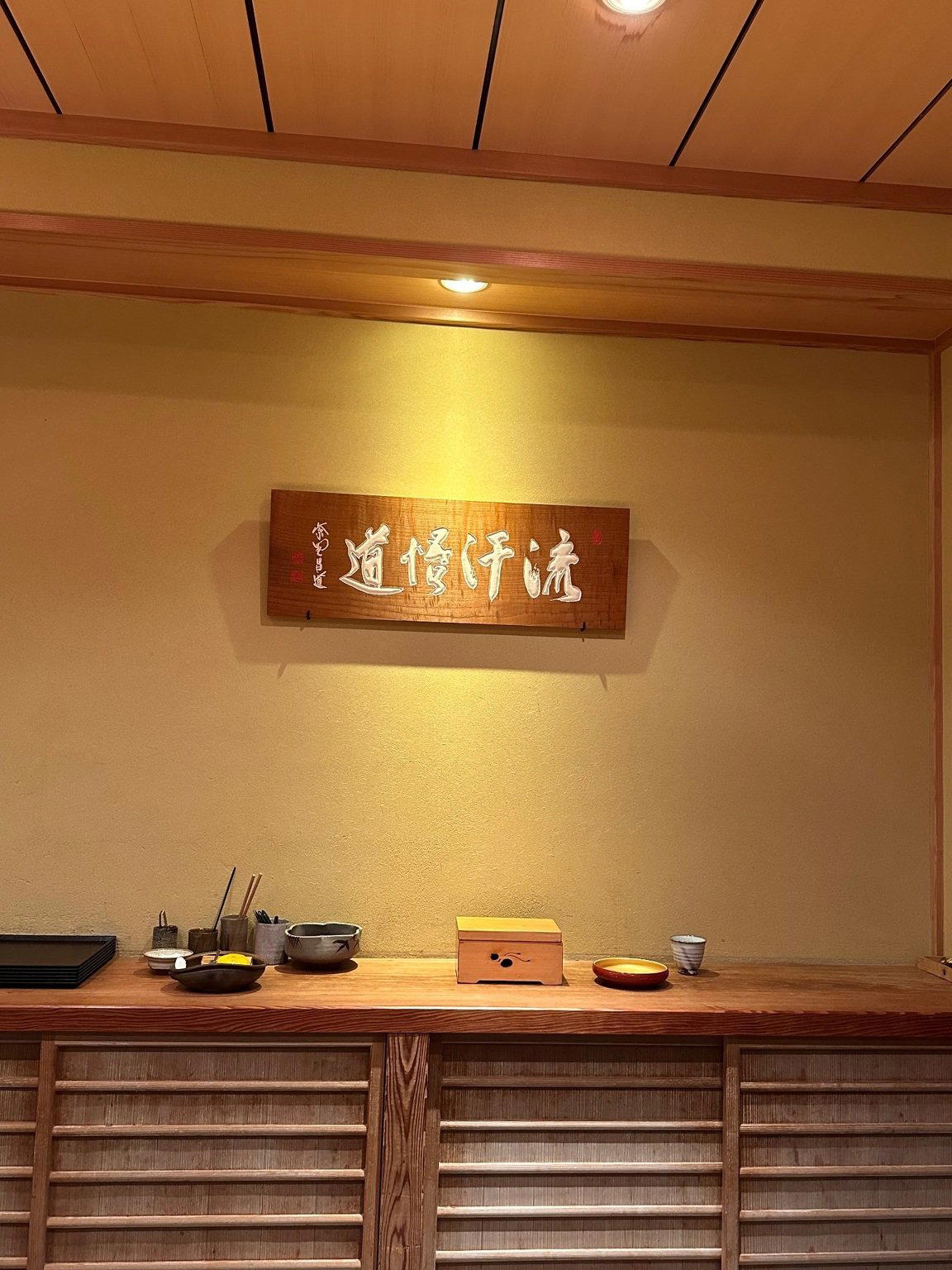
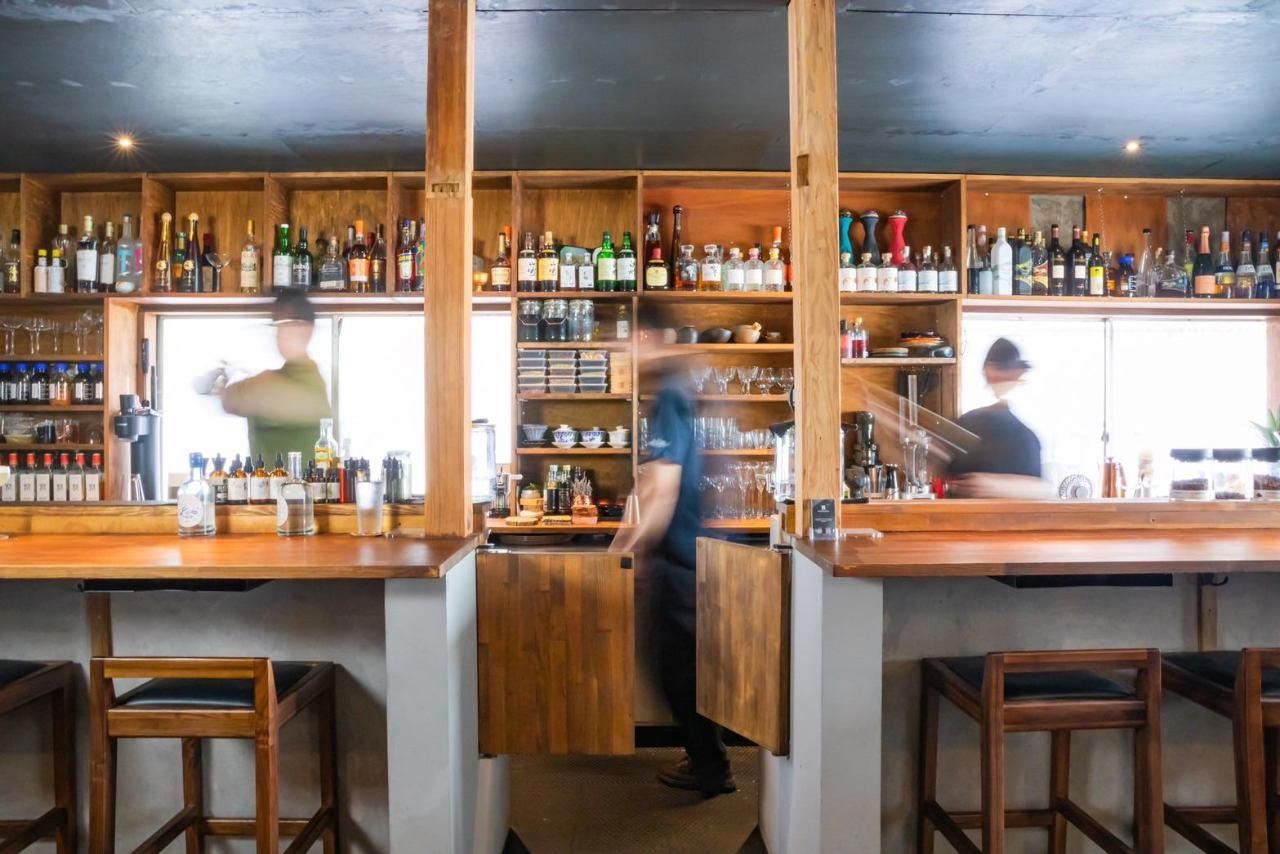
Lively and bustling classic motsunabe atmosphere with horigotatsu sunken seating across three floors.