Momiji Do Honten

Momiji Do Honten puts Miyajima’s maple-leaf sweet tradition into a fast, low-cost format on the shrine approach in Hatsukaichi. The draw is Age Momiji, the shop’s registered trademark fried momiji manju, served as take-out with a small eat-in space, a sub-¥999 budget, and Tabelog 100 recognition for Japanese sweets in western Japan.
Pearl is the En Primeur Club membership app — saves, bookings, and concierge access live there. Same editors, same standards.
- Address
- 448-1 Miyajimacho, Hatsukaichi, Hiroshima 739-0556, Japan
- Phone
- +81 829-44-2241
- Website
- momijido.shop-pro.jp
- Directions
- Get directions
 Saves & bookings on Pearl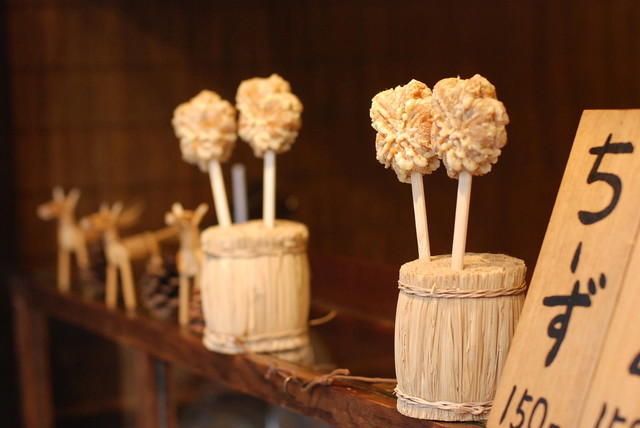
The approach to Miyajima’s shrine district is built for grazing: ferry passengers filter into the shopping street, deer drift through the edges of the crowd, and the island’s sweet shops compete in the short distance between pier and torii. In that setting, maple-leaf manju is not a souvenir afterthought. It is part of the island’s food economy, a compact expression of Hiroshima confectionery shaped for walking, gifting, and eating between temple visits.
Momiji Do Honten belongs to the practical end of that tradition. The format is take-out first, with a small eat-in area, and the spend stays in the everyday snack bracket rather than the polished dessert-counter tier. That matters in Miyajima, where the same visitor may move from a casual sweet on Omotesando Shopping Street to a more formal meal at Douze Miyajima, sushi at Miyajima Sushi Tensen, or a higher-spend dinner such as CHILAN. The island’s range is broader than its day-trip reputation suggests.
Fried momiji manju turns a souvenir sweet into street food
Momiji manju is usually understood through its shape first: the maple leaf, linked to Miyajima’s autumn scenery and the wider Hiroshima confectionery canon. The more interesting shift here is format. Age Momiji, Momijido’s registered trademark, takes the familiar filled cake and reframes it as a freshly fried skewer snack. The point is not refinement for its own sake; it is immediacy, heat, and a texture-led version of a sweet usually bought by the box.
The ingredient story is local by association rather than farm-to-table rhetoric. Miyajima’s maple symbolism, the island’s long shopping-street culture, and the manju form all do the work. This is how regional sweets often travel in Japan: a recognizable shape, a portable size, a filling structure that survives gifting, and a shopfront process visible enough to turn purchase into a small performance. At ¥190 per Age Momiji, tax included, the price keeps that performance democratic.
Tabelog’s 2023 Japanese traditional sweets and sweets-cafe selection for western Japan gives the shop a useful signal in a crowded category. It does not make the experience formal; it confirms that this kind of low-cost, high-throughput confectionery can be judged seriously. A Tabelog score of 3.63 also places it in a tier where execution, convenience, and local identity are doing more work than dining-room theatre.
The comparison inside Hatsukaichi is instructive. Momiji Do Niban Ya sits in the same low-price sweet-shop bracket, while Sekitei points toward the area’s hospitality side rather than its snack culture. For a broader read on the city, our full Hatsukaichi restaurants guide maps the dining spread, while our full Hatsukaichi hotels guide, our full Hatsukaichi bars guide, our full Hatsukaichi wineries guide, and our full Hatsukaichi experiences guide show how the island fits into a longer stay.
The shrine-route snack has its own logistics
Miyajima eating runs on crowd rhythm. New Year holidays, Golden Week, fireworks periods, and autumn foliage weekends change the street from leisurely to compressed. A snack shop on the shrine approach benefits from that flow, but timing affects comfort: quick service helps, and the listed service time for Age Momiji is about five minutes, yet the surrounding arcade can slow everything around it.
The physical logistics are unusually clear for a small sweets stop. The island requires the regular ferry from Miyajimaguchi Pier to Miyajima Pier, and the crossing takes about 10 minutes. From Miyajima Pier, the shop sits on the main shopping route, about 10 minutes on foot from Miyajima-Sanbashi Station and about eight minutes on foot from Itsukushima Shrine. There is no parking at the shop, which is typical for this part of the island and largely irrelevant once visitors have committed to the ferry-and-walk pattern.
Reservations are not part of the proposition. The shop is designed for walk-up purchasing, with 30 seats listed for eat-in use, self-service hot tea and cold water, and take-out as the core service. Credit cards and electronic money are not accepted, so cash is the cleanest way to deal with a low-ticket purchase. Families are explicitly accommodated, including babies, preschoolers, school-age children, and strollers; that aligns with the shrine-street reality far better than a hushed dessert salon would.
There is also a small but revealing piece of infrastructure around the food: bamboo-skewer collection boxes in the shopping arcade. That detail says more about Miyajima’s snack culture than a grand claim could. The sweet is designed to be eaten while moving, but the street has built a system for keeping that movement orderly.
How to place it within a Japan sweets itinerary
For travelers building a sweets-and-snacks thread across Japan, this is a regional stop rather than a destination restaurant. That distinction is useful. It belongs beside casual, place-specific formats such as.cafe in Osaka.know in Kumamoto, [Curry Senmon Ten] Maruyama Kyoju. in Sapporo, (Shoku) Vietnam in Kawasaki. 鮪と炭火焼き うお炭 秋葉原店 in Tokyo, and -Grilled beef Sukiyaki- KAMAKURA TANUKIAN 鎌倉 たぬき庵 in Kamakura: different categories, same lesson that Japan’s casual formats often carry precise local meaning.
Outside Japan, the comparison is less about cuisine than portability. Onigiri Time in Pasadena and Jōdo Saké Bar in Los Angeles show how Japanese food culture is often translated through compact, repeatable formats abroad. Miyajima’s fried momiji manju is not translation; it is origin-point context, eaten where the maple motif, ferry arrival, shrine visit, and shopping street all meet.
The editorial case for Momiji Do Honten is therefore narrow and strong. It is not the place to plan an evening around. It is the place to understand how a regional sweet becomes public ritual: inexpensive, fast, tied to a specific walking route, and recognized by a national restaurant platform without losing its street-level function.
How It Stacks Up
Comparable venues by cuisine and price in the same metro.
| Venue | Cuisine | Price | Notes |
|---|---|---|---|
| Momiji Do Honten | Traditional Japanese sweets (momiji manju) | $ | Miyajima-cho |
| Ueno (うえの) | Traditional Japanese Anagomeshi | $$$ | Miyajimaguchi |
| Momiji Do Niban Ya | Traditional Japanese wagashi & fried momiji manju | $ | Miyajima Omotesando shopping street |
| CHILAN | Modern Vietnamese & Natural Wine | $$$ | Ajina |
| TP dining & cafe tino | Japanese-Italian Teppanyaki Fusion | $$ | Miyahama Onsen |
| Miyajima Sushi Tensen | Seasonal Seto Inland Sea Omakase | $$$$ | Miyajima |
Recognition history
Dated appearances from independent guides and award organizations, with the underlying list record or original source where available.
Tabelog 100 #94 · No. 94
Tabelog · Tabelog 100 - Japanese traditional sweets / Japanese sweets cafe - WEST - 2023
Continue exploring
More in Hatsukaichi
Restaurants in Hatsukaichi
Browse all →
Bars in Hatsukaichi
Browse all →


At a Glance
- Lively
- Well Known
- Casual Hangout
- Family
- Solo
- After Work
- Standalone
- Historic Building
- Street Scene
Current opening hours
- Monday
- 9 AM–5:30 PM
- Tuesday
- 9 AM–5:30 PM
- Wednesday
- 9 AM–5:30 PM
- Thursday
- 9 AM–5:30 PM
- Friday
- 9 AM–5:30 PM
- Saturday
- 9 AM–5:30 PM
- Sunday
- 9 AM–5:30 PM
Hours can change for holidays and private events. Last verified .
Bright, casual and bustling shopfront atmosphere on the main Miyajima shopping street, with a grab-and-go counter feel focused on takeaway sweets rather than sit-down dining.