

1 Michelin Star
Our verdict
Milpa brings modern Mexican cooking to Osaka's Kitahorie neighbourhood, anchoring its menu in corn, cacao, and chili peppers sourced directly from Mexico and prepared over a wood-fired grill. The 2024 Michelin Plate recognises a kitchen that takes tradition seriously, Nahuatl agricultural philosophy informs the cooking approach, while Japanese ingredients and technique push the genre into genuinely new territory.

Pearl is the En Primeur Club membership app, where members save venues, book tables and use the concierge.
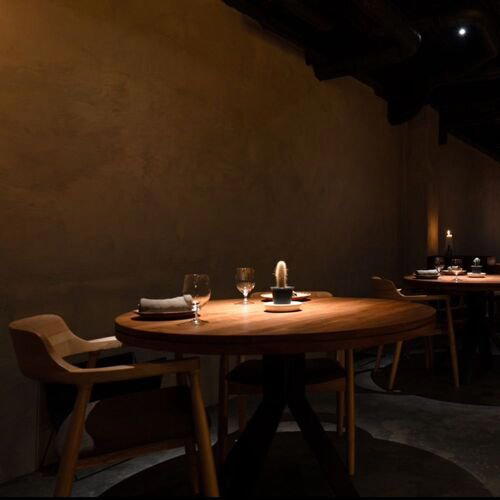
Wood Smoke and Masa in Kitahorie
Entering a restaurant that smells of burning wood in Osaka's Kitahorie district is already a small disruption. The neighbourhood, a few blocks west of Shinsaibashi, runs a steady mix of independent boutiques, coffee bars, and small-format restaurants, the kind of area where a wood-fired grill operating nightly is noticed. Milpa, at 1 Chome-16-25 Kitahorie, operates from that premise: fire is not theatre here, it is infrastructure, the base technology from which a modern Mexican menu is built.
The name comes from the Nahuatl word for a traditional Mesoamerican farming system in which corn, beans, and squash are cultivated together, each supporting the others. That agricultural logic, in which the act of growing something enriches the conditions for growing everything else, carries into the kitchen's stated philosophy. The parallel between farming cycles and cooking technique is explicit: Milpa frames its work as cultivating a new Mexican culinary culture in Japan, not transplanting an existing one.
How Milpa Sits in Osaka's Fine Dining Tier
Osaka's top-end restaurant scene is heavily weighted toward Japanese and French formats. At the ¥¥¥¥ price tier, the dominant peer group includes HAJIME and La Cime on the French side, and Fujiya 1935 for Japanese-rooted innovation. Kaiseki and traditional Japanese formats at ¥¥¥ Kashiwaya Osaka Senriyama and Taian among them, represent a different price bracket and a different kind of precision.
Milpa occupies the ¥¥¥¥ tier with a cuisine type that has no direct competitor in the city. Modern Mexican cooking at this price point and with this sourcing commitment is not a category in Osaka, it is, for now, a category of one. The 2024 Michelin Plate signals quality acknowledgment from the guide without the full star designation, placing Milpa in the bracket of restaurants worth attention rather than those commanding three-month forward bookings as a rule.
For comparison across Japan, Harutaka in Tokyo and Gion Sasaki in Kyoto represent what Michelin recognition looks like in more established categories. The more useful comparisons for Milpa may be restaurants working at the intersection of a non-Japanese culinary tradition and Japanese produce, akordu in Nara offers one such model in the Basque context. Globally, the reference points are clearer: Pujol in Mexico City and Alma Fonda Fina in Denver represent what modern Mexican cooking looks like when it takes its own traditions seriously.
Agave, Mezcal, and the Spirits Question
Any serious modern Mexican restaurant built on tradition has a decision to make about agave spirits, and that decision reveals a great deal about the kitchen's priorities. Mexico's relationship with mezcal and tequila is not incidental to its culinary culture; agave cultivation is as much a part of the country's food history as corn, and in the highest-tier contemporary Mexican restaurants, the spirits programme is treated as an extension of the sourcing philosophy rather than a separate beverage list.
The artisanal mezcal category has expanded considerably over the past decade, with small-batch producers in Oaxaca, Guerrero, and Durango now reaching international markets. The distinctions that matter in this tier, between espadín and wild agave varietals like tobalá or tepeztate, between diffuser production and traditional tahona milling, between young and rested expressions, parallel the kind of craft conversation that drives premium sake selection in Japanese fine dining. A kitchen sourcing its corn and cacao directly from Mexico is operating with the same sourcing logic that makes a thoughtful mezcal list coherent rather than decorative.
Restaurants at this level in Mexico City, and increasingly in international outposts, treat the mezcal selection as part of the dining argument, not an afterthought.
The Sourcing Logic and What It Means at the Table
Corn sourced from Mexico to a kitchen in Osaka is not a marketing decision. The logistics involved, the cost, the import compliance, the relationship maintenance with producers, represent a deliberate commitment that shapes what is possible on the plate. Masa made from Mexican corn behaves differently from corn grown elsewhere; the varieties used in traditional tortillas, tamales, and antojitos carry flavour profiles tied to specific regions and climates. The same applies to cacao: Mexican criollo and trinitario varieties have distinct bitterness and floral qualities that differ from West African or Southeast Asian cacao used in most commercial chocolate.
Chili peppers, the third pillar of the sourcing programme, carry the most complexity. The dried chili vocabulary of Mexican cooking, ancho, mulato, pasilla, chipotle, guajillo, produces flavour foundations that cannot be replicated with fresh Japanese varieties, however high the local quality. Sourcing these ingredients directly from Mexico means the kitchen is working with the actual building blocks of the tradition rather than approximations, which in turn means that Japanese technique and ingredients, when applied, are modifying a genuine base rather than constructing a simulacrum.
This is what separates Milpa's approach from fusion in the pejorative sense. Fusion, as a criticism, usually means a diluted or superficial combination. Here, the combination is directional: Mexican foundation, Japanese refinement, wood fire as the common language between both traditions.
Across Japan and Beyond
Osaka is not the only city in Japan where non-Japanese cuisines are finding serious expression. Goh in Fukuoka and 6 in Okinawa represent kitchens working at the edge of Japanese culinary categories in different ways, while 1000 in Yokohama operates in a city historically shaped by international culinary exchange. The conditions that allow a kitchen like Milpa to function at premium pricing in Osaka, a dining public comfortable with price-tier restaurants outside traditional Japanese formats, a supply infrastructure that supports ingredient imports, a critical apparatus (Michelin included) that takes non-Japanese cooking seriously, are relatively recent, and not evenly distributed across Japanese cities.
For those planning a broader Osaka trip, the full Osaka restaurants guide maps the city's dining scene in detail. The Osaka bars guide covers the cocktail and spirits scene, relevant for anyone interested in continuing an agave-focused evening. The Osaka hotels guide, wineries guide, and experiences guide round out the city picture.
What's the standout thing about milpa?
The sourcing discipline is the clearest editorial differentiator. A kitchen at ¥¥¥¥ in Osaka, holding a 2024 Michelin Plate, that imports its corn, cacao, and chili peppers directly from Mexico and cooks over a wood-fired grill is making a specific argument: that the integrity of Mexican culinary tradition requires its actual ingredients, not local substitutes. Applied alongside Japanese produce and technique, that argument produces cooking that neither a traditional Mexican nor a conventional Japanese kitchen would arrive at independently.
Where the Accolades Land
| Venue | Cuisine | Price | Awards | Notes |
|---|---|---|---|---|
| milpaThis venue (the venue you are viewing) | Modern Mexican | $200–300 | 1 Michelin Star | Not listed |
| HAJIME | Avant-Garde Japanese Fine Dining | $300–500 | 3 Michelin Stars · World's 50 Best #83 | French, Innovative |
| La Cime | Modern French with Japanese Ingredients | $150–200 | 2 Michelin Stars · World's 50 Best #13 | French |
| Kashiwaya Osaka Senriyama | Seasonal Kaiseki Omakase | $200–300 | 3 Michelin Stars · La Liste Top Restaurants | Japanese |
| Taian | Traditional Japanese Kaiseki Omakase | $150–200 | 3 Michelin Stars · La Liste Top Restaurants | Kaiseki, Japanese |
| Fujiya 1935 | Modern Japanese with European influences | $100–150 | 2 Michelin Stars · La Liste Top Restaurants | Innovative |
Recognition history
Dated appearances from independent guides and award organizations, with the underlying list record or original source where available.
Michelin 1 Star
Michelin
Opinionated About Dining Casual in Japan Ranked #125
Opinionated About Dining
Full recognition history (3 entries)
Michelin Plate
Michelin
Continue exploring
More in Osaka
Restaurants in Osaka
All restaurants in Osaka →



Bars in Osaka
All bars in Osaka →
Hotels in Osaka
All hotels in Osaka →




Wineries in Osaka
Browse all →
Details
- Intimate
- Modern
- Cozy
- Elegant
- Special Occasion
- Date Night
- Open Kitchen
- Chefs Counter
- Sake Program
- Tasting Menu
- Vegetarian Friendly
Current opening hours
- Monday
- Closed
- Tuesday
- 5 PM–12 AM
- Wednesday
- 12–10:30 AM, 5 PM–12 AM
- Thursday
- 12–10:30 AM, 5 PM–12 AM
- Friday
- 12–10:30 AM, 12–2 PM, 5 PM–12 AM
- Saturday
- 12–10:30 AM, 12–2 PM, 5 PM–12 AM
- Sunday
- 12–10:30 AM
Hours can change for holidays and private events. Hours as of .
Warm lighting with cactus plants and natural materials creating a relaxed Mexican atmosphere around four intimate tables and an open kitchen stage.