Alma Fonda Fina







1 Michelin Star · World's 50 Best #45 · James Beard Award Nominee
Our verdict
Alma Fonda Fina earned a Michelin star and an Esquire Best New Restaurants listing (No. 9, 2024) within its first year, signaling that Denver's contemporary Mexican conversation now runs through this snug LoHi room. An eight-seat chef's counter anchors the experience; a four-section menu built around masa, crudos, and sharing plates rewards guests who order across all categories. Priced at $$, it sits below Denver's $$$$ Michelin tier without compromising ambition.

Pearl is the En Primeur Club membership app, where members save venues, book tables and use the concierge.
The menu
What to order
- Camote Asado
- Carnitas Negras
- Mole of the Month
Where Guadalajara Meets the Colorado Table
Contemporary Mexican dining in the United States has long been framed through the lens of either coastal Baja-Med technique or the slow-food complexity of Oaxacan mole traditions. Denver, a city not typically associated with either regional current, now hosts a room that draws from a different source: the Jalisco-Guadalajara corridor, with its emphasis on masa craft, agave culture, and the kind of market-driven informality that the word fonda captures in a single syllable. Alma Fonda Fina, which opened in late 2023 on 15th Street in LoHi, placed itself inside that tradition immediately and has been earning recognition at a pace that suggests the broader dining public agrees.
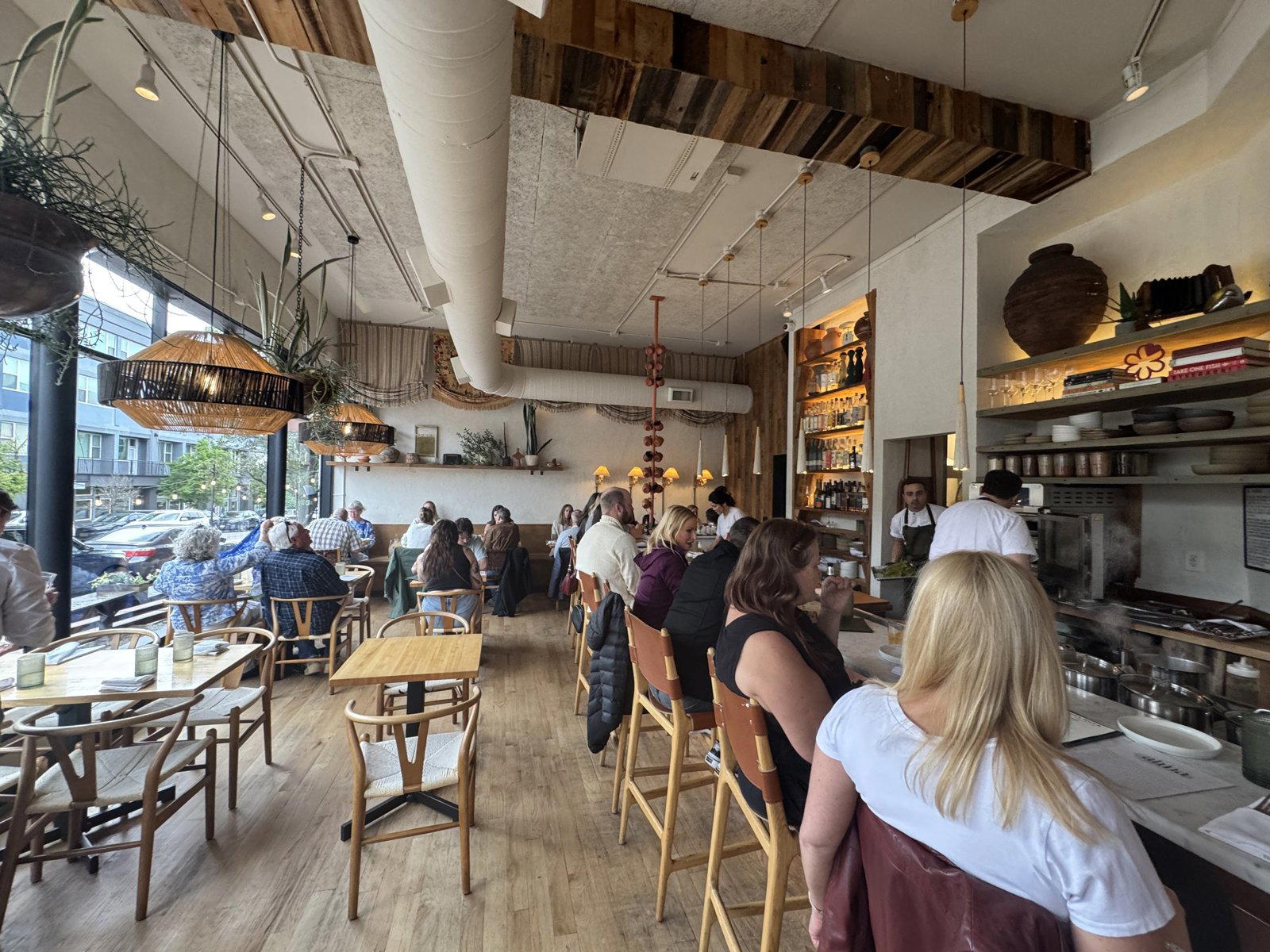
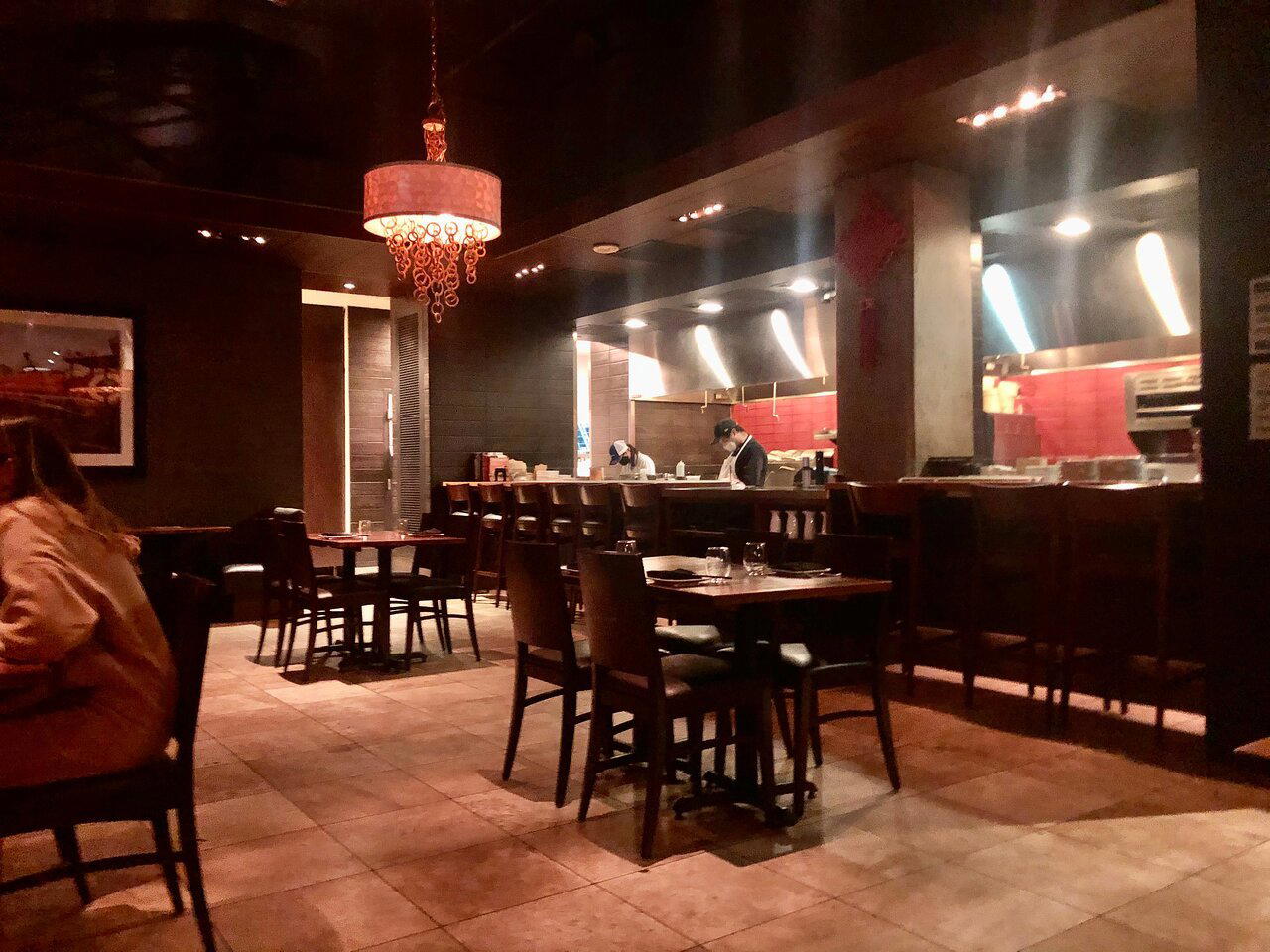
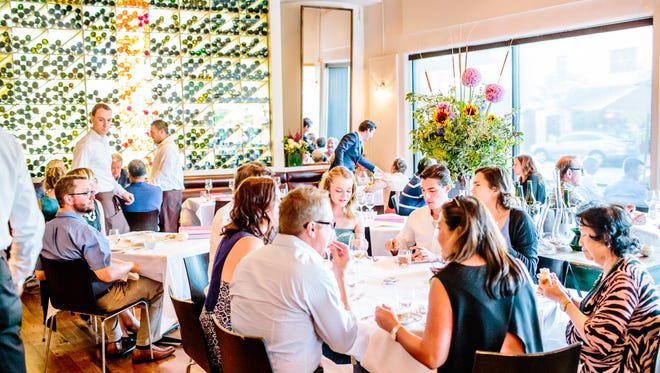
The room itself signals the register before a dish arrives. Earth-toned walls, a snug dining room with limited seats, and a design that keeps sightlines open between the kitchen and every table create the atmosphere of a well-funded neighborhood gathering spot rather than a formal destination. That calibration is deliberate: the name pairs alma (soul) with fonda fina (a refined casual gathering place), and the interior follows through on both words. The noise level runs warm rather than quiet, the kind of din that suggests a room at capacity and a kitchen working with intent.
The Eight-Seat Counter as the Room's Argument
Across Denver's Michelin-starred tier, counter dining has become a recurring format. Beckon operates on a fixed, progression-based counter experience; Brutø runs a chef's-table format that foregrounds kitchen theatre. Alma Fonda Fina's eight-seat counter belongs to this broader trend but is calibrated differently: it functions as a teaching counter, where the kitchen team explains the regional traditions behind each preparation and offers specific guidance on how to eat. The recommendation to stir a shot of mezcal into the serrano ponzu and tomato butter accompanying the Hokkaido scallop is the kind of instruction that changes a dish rather than merely describing it. That interaction is harder to replicate at a standard four-leading and is the primary reason the counter is the seat to request.
Denver's Michelin cohort has otherwise clustered around $$$$ price points. The Wolf's Tailor and Brutø both sit in the highest local price tier with Michelin stars of their own. Alma Fonda Fina holds its star at $$, a positioning that has no direct equivalent in the city's current recognized set and that places it closer in price to Annette than to its award peers. That gap matters practically: the ambition of the cooking does not scale down with the price.
The Menu's Regional Logic
The four-section structure of the menu (starters, crudos, masa-based dishes, and large sharing plates) mirrors the architecture of a serious Mexican table rather than the Tex-Mex or pan-Latin formats that still dominate in many American markets. The division is deliberate and requires a strategy: ordering across all four sections produces a more complete reading of the kitchen's range than concentrating on any single category.
The crudo section situates Alma in a conversation that runs through Baja-Med cooking, where Pacific seafood meets citrus, chile, and acid in formats borrowed as much from Japanese technique as from Mexican tradition. Thinly sliced Maine diver scallop with tomatillo and apple aguachile is a clean example of that cross-reference: the aguachile format is Sinaloan in origin, the ingredient sourcing is distinctly American, and the precision of the slice carries Japanese influence. That triangulation is characteristic of the most technically serious contemporary Mexican kitchens, including Pujol in Mexico City and Animalón in Valle de Guadalupe, both of which have built international reputations on similar intersections of tradition and technique.
Masa section grounds the menu in Central Mexican territory. Sopes with pasilla-braised short rib, salsa verde, and crema represent the kind of preparation where the quality of the masa itself carries the dish: a thick tortilla with the wrong texture or flavor undermines everything placed on top of it. The presence of sourdough flour tortillas alongside traditional formats suggests a kitchen comfortable working across masa traditions rather than fixed to a single regional canon.
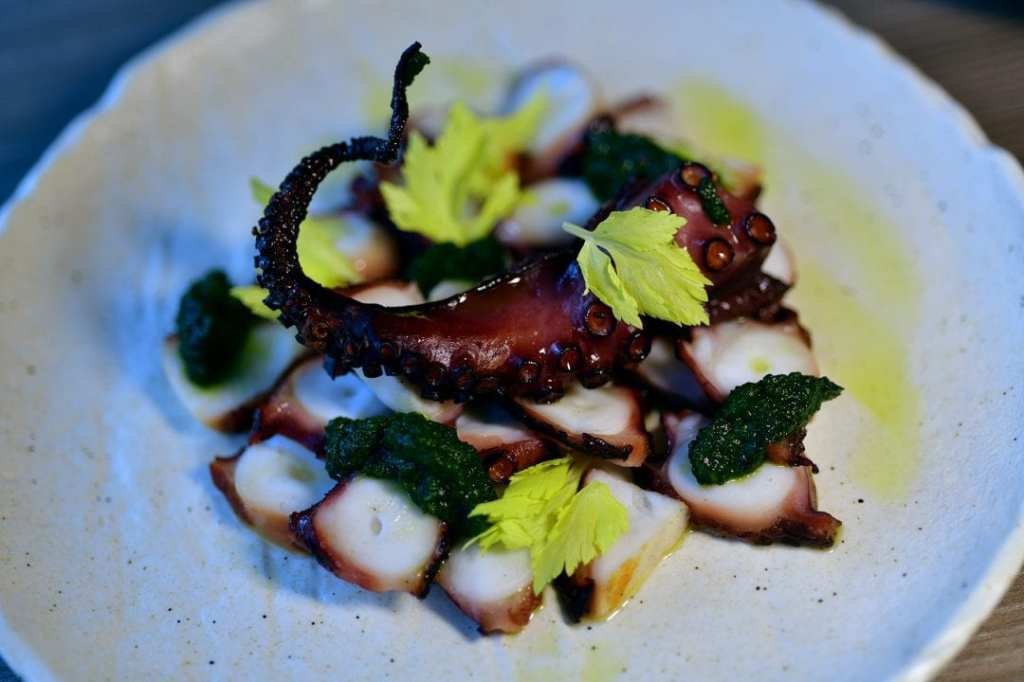
Agave-roasted sweet potato with broken salsa macha and fennel-whipped requesón recurs across multiple references to the restaurant as a signal dish, which in a short menu with no filler typically means the kitchen has found a preparation that does more than its description implies. Salsa macha, an oil-based condiment common in Veracruz and parts of Oaxaca, brings depth and heat; requesón, a fresh Mexican cheese resembling ricotta, softens the register. The agave roasting adds a caramelized sweetness that the salsa macha then cuts. The dish sits in vegetable territory but reads structurally like a composed plate rather than a side.
Large plates include adobo-seared hamachi in roasted pineapple puree with tepache oil and salsa seca, and halibut in watercress mole verde with pistachio salsa and pickled white onions. The inclusion of tepache, a fermented pineapple drink common in street food contexts, as a finishing oil in a Michelin-starred preparation illustrates the kitchen's approach: vernacular Mexican ingredients carried into fine-dining formats without losing their original character.
Denver's Contemporary Mexican Context
Denver's Mexican dining scene has historically concentrated in neighborhoods like Westwood and on Colfax Avenue, where regional Mexican cooking from various states appears in unpretentious, community-facing formats. La Diabla Pozole y Mezcal represents that tradition in a more polished register, focused on the Guerrero-style pozole format and agave spirits. Alma Fonda Fina occupies a different position: it is not a regional specialist in the Oaxacan or Yucatecan sense, and it is not a street-food translation. It sits closer to what might be described as the contemporary Mexican fine-dining model that Mexico City has exported internationally over the past decade, adapted through a Jalisco-rooted sensibility and a Colorado ingredient context.
That position within the city's dining structure has implications for how it competes. Against the $$$$ Michelin-starred rooms in Denver (see also Beckon and the contemporary American tier that includes venues with comparable ambition), Alma Fonda Fina offers a different value-to-ambition ratio. Against the casual Mexican market, it occupies a tier the city has not previously had at this recognition level. The Esquire Leading New Restaurants ranking (No. 9, 2024) and the Michelin star arriving in the same year of opening confirm a reception that extends beyond local enthusiasm.
The expansion moves made in parallel with Alma Fonda Fina's opening, including Mezcaleria Alma next door, Cozobi Fonda Fina in Boulder, and Alteño in Cherry Creek, indicate a kitchen group operating at a pace that suggests genuine infrastructure rather than a single-venue moment. Each addresses a different segment: the mezcaleria extends the agave program into a dedicated bar format; Cozobi reaches a Boulder audience; Alteño takes the format to a higher-traffic Denver neighborhood. For visitors mapping Denver's dining against comparable programs nationally, the parallel is closer to the cluster model seen at groups behind Lazy Bear in San Francisco or the tighter single-venue operations like Le Bernardin in New York than to a single restaurant making a single statement.
Planning Your Visit
Alma Fonda Fina sits at 2556 15th Street in Denver's LoHi neighborhood, walkable from the 15th and Platte corridor and close to several hotel options documented in our full Denver hotels guide. Booking ahead is advisable; the counter seats specifically require advance planning given the eight-seat cap. The $$ price positioning means the total per-person spend stays accessible relative to the city's $$$$ Michelin tier, though ordering across all four menu sections as recommended will push the check toward the higher end of that range. No desserts are currently offered, which shortens the meal's arc and removes the need to pace accordingly. For context on how Alma Fonda Fina compares to Denver's broader dining options, our full Denver restaurants guide covers the category in depth, alongside bars, wineries, and experiences across the city.
Denver's contemporary dining scene has also produced strong programs at The Wolf's Tailor and Brutø for those tracing the full Michelin picture, while Alinea in Chicago, Single Thread Farm in Healdsburg, and The French Laundry in Napa offer points of comparison for readers calibrating the Michelin tier nationally. Emeril's in New Orleans provides a parallel case study in chef-led casual-to-fine-dining expansion across multiple formats.
Frequently asked questions
Is Alma Fonda Fina a family-friendly restaurant?
The dining room is small and intentionally intimate, oriented around a convivial eight-seat chef's counter where staff explain the traditions behind each dish as it arrives. The setting suits food-focused adults and older teenagers comfortable with a slower, course-by-course format. Younger children would likely find the pace and portion structure a mismatch with the room's energy.
What is the atmosphere like at Alma Fonda Fina?
The room runs warm and lively, earth-toned, snug, and loud enough that it reads as a neighborhood gathering place rather than a formal dining room, which is precisely what the name signals: fonda means casual gathering spot in Spanish. The chef's counter seats eight and pulls the evening toward a participatory, open-kitchen dynamic. Since opening in late 2023 it has earned a Michelin star and an Esquire Best New Restaurants ranking, which together mark the ceiling the room punches toward despite its accessible tone.
Does Alma Fonda Fina have a Michelin star or similar recognition?
Alma Fonda Fina has received recognition including: A heartfelt homage to Mexico’s culinary heritage Soul food: After years of excelling in other people's kitchens – including his own father's while growing up in Guadalajara, Mexico – Johnny Curiel finally stepped into the spotlight in late ….
What's the must-try dish at Alma Fonda Fina?
The agave-roasted sweet potato with broken salsa macha and fennel-whipped requesón is called out as a signature across multiple sources, and the kitchen treats it as such. The adobo-seared hamachi in roasted pineapple puree with tepache oil and salsa seca represents the crudo section at its most layered. The menu's four-section structure, starters, crudos, masa-based dishes, large plates, is designed for ordering across categories rather than anchoring to a single dish.
Budget and Context
Comparable options at a glance, pulled from our tracked venues.
| Venue | Cuisine | Price | Awards | Notes |
|---|---|---|---|---|
| Alma Fonda FinaThis venue (the venue you are viewing) | Modern Mexican Fine Dining | $50–100 | 1 Michelin Star · World's 50 Best #45 | Not listed |
| The Wolf's Tailor | Modern Fusion Tasting Menu | $150–200 | 2 Michelin Stars · La Liste Top Restaurants | New American, Contemporary |
| Tavernetta | Contemporary Italian | $50–100 | Michelin Bib Gourmand · Star Wine List | Italian |
| Brutø | Contemporary American Tasting Menu | $150–200 | 1 Michelin Star · Star Wine List | Contemporary |
| Safta | Modern Israeli & Mediterranean Small Plates | $50–100 | Michelin Plate · Star Wine List | Israeli Cuisine |
| Ash'Kara | Modern Mediterranean & Middle Eastern | $50–100 | Michelin Bib Gourmand | Israeli |
Recognition history
Dated appearances from independent guides and award organizations, with the underlying list record or original source where available.
Michelin 1 Star
Michelin
World's 50 Best North America's Best Restaurants #45
World's 50 Best
James Beard Award Nominee
James Beard Award
Food & Wine Top 10 US Restaurants #2
Food & Wine
Opinionated About Dining Casual in North America Recommended
Opinionated About Dining
Full recognition history (11 entries)
James Beard Award Semi Finalist
James Beard Award
James Beard Award Semi Finalist
James Beard Award
Michelin 1 Star
Michelin
OpenTable Top 100 Restaurants
OpenTable
Esquire Best New Restaurants #9
Esquire
Michelin 1 Star
Michelin
Continue exploring
More in Denver
Restaurants in Denver
All restaurants in Denver →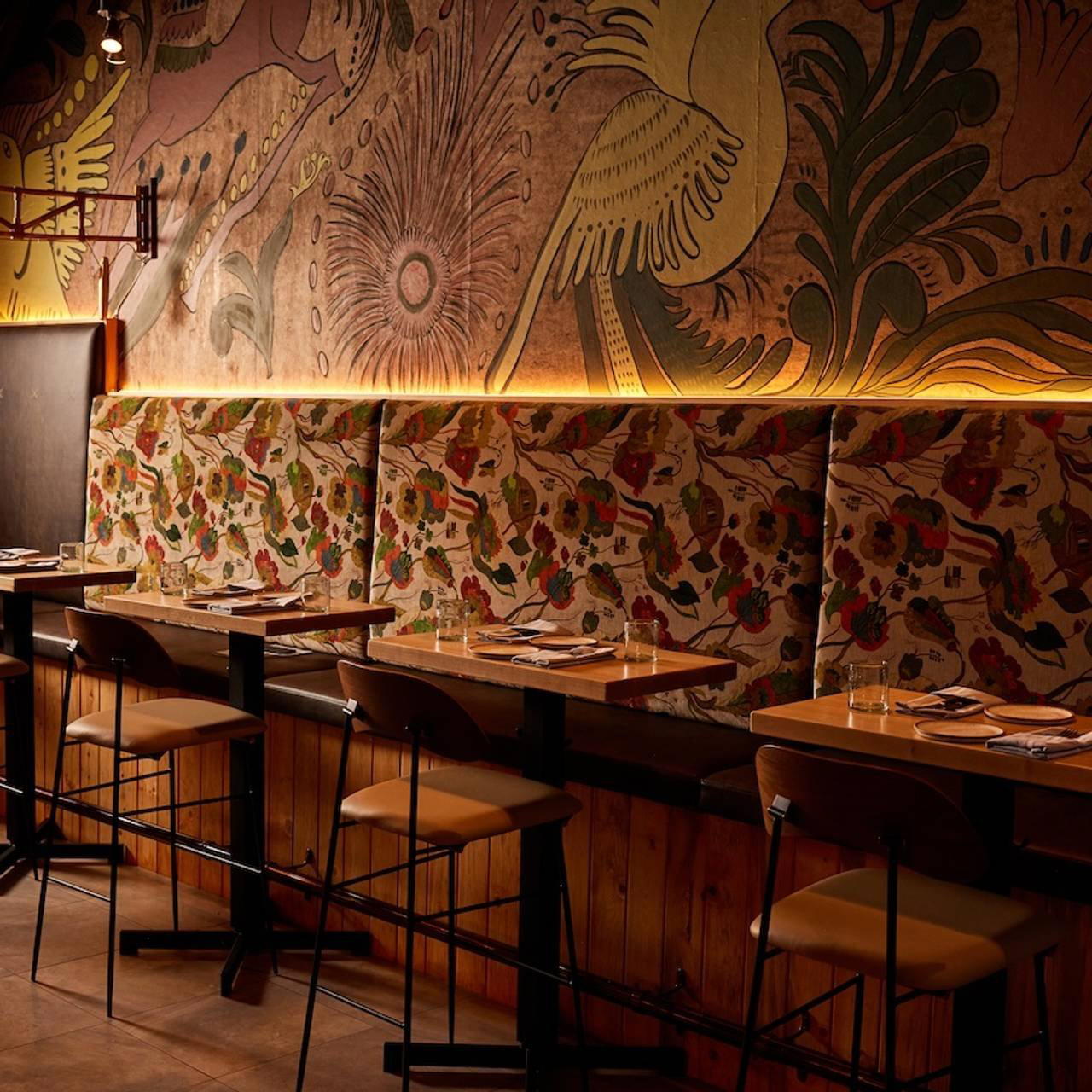
Bars in Denver
All bars in Denver →


Details
- Elegant
- Cozy
- Modern
- Intimate
- Sophisticated
- Date Night
- Special Occasion
- Chefs Counter
- Open Kitchen
- Craft Cocktails
- A La Carte
- Small Plates
- Craft Cocktails
Current opening hours
- Monday
- 2–10 PM
- Tuesday
- 2–10 PM
- Wednesday
- 2–10 PM
- Thursday
- 2–10 PM
- Friday
- 2–11 PM
- Saturday
- 4–11 PM
- Sunday
- 4–10 PM
Hours can change for holidays and private events. Hours as of .
Light-filled corner space with warm ceramics, woven textiles, terra-cotta, succulents, greenery, and different textures creating a cozy, pretty, and energetic oasis.