
Men Hikyu Rokkoumichi ten belongs to Kobe’s serious low-cost ramen tier: small room, counter-led format, no reservations, and repeated selection in Tabelog Ramen WEST 100 for 2023, 2024, and 2025. The Rokkomichi address makes it a neighbourhood stop rather than a destination dining room, but the recognition places it in a sharper competitive frame than its price suggests.
Pearl is the En Primeur Club membership app — saves, bookings, and concierge access live there. Same editors, same standards.
- Address
- 兵庫県神戸市灘区永手町3-4-19 嶋田パールハイツ 1F
- Phone
- +81788563455
- Website
- tabelog.com
 Saves & bookings on Pearl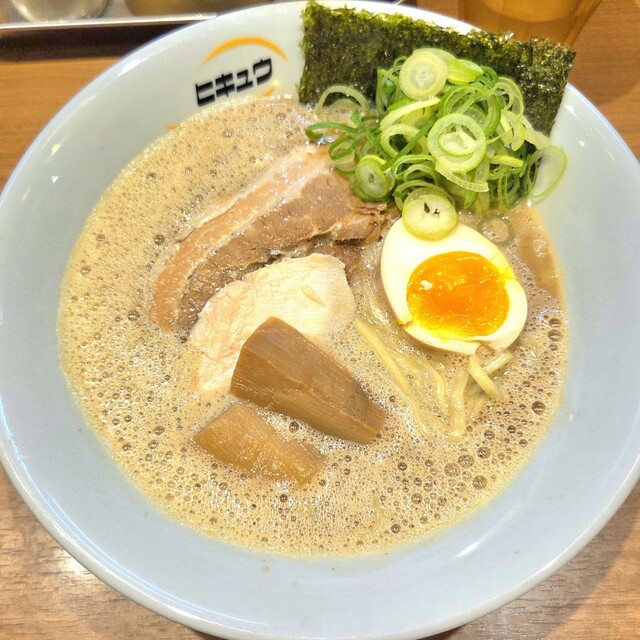
Rokkomichi is not the Kobe of harbour views and steak-house ceremony. Around the station, the city becomes denser and more practical: commuters, students, compact counters, and quick meals that depend on repetition rather than theatre. In that setting, ramen and tsukemen carry a particular kind of authority. A shop does not need linen, wine service, or a chef biography to earn attention; it needs consistency, speed, and enough character to pull diners away from the station’s easier choices.
Men Hikyu Rokkoumichi ten sits squarely inside that everyday Kobe rhythm. Its public profile is unusually strong for a ramen counter at this price point, with selection in Tabelog Ramen WEST 100 in 2023, 2024, and 2025. That matters because ramen recognition in western Japan is crowded and highly local; repeat selection suggests a place that has moved beyond simple neighbourhood loyalty into a wider Kansai ramen conversation.
Rokkomichi ramen with recognition beyond the neighbourhood
Kobe dining is often reduced to beef, but the city’s more useful food map is split by neighbourhood purpose. Kitano and Sannomiya carry visitor-facing restaurants, coffee rooms, bars, and steak counters; residential station districts like Rokkomichi are better read through lunch turnover and evening regulars. For travellers comparing Kobe’s polished side with its daily eating culture, this is the useful contrast. Beef rooms such as Aburi Niku Kobo Wakkoku Shinkobe ten and Aburi Niku Kobo Wakkoqu Kitano Sakamoto Ten speak to Kobe’s reputation economy; a compact ramen shop near Rokkomichi Station speaks to how the city actually eats between work, school, and trains.
The category here is ramen and tsukemen, a pairing that places the shop within two related but distinct Japanese noodle habits. Ramen is built around broth, noodles, temperature, and pacing; tsukemen shifts the focus to dipping, texture, and concentration. Without verified menu detail, the smarter reading is format rather than flavour claim: this is a specialist noodle address, not a broad izakaya or a tourist restaurant trying to cover multiple Japanese categories at once.
Recognition also changes how to interpret the price. Kobe has plenty of meals that sit several tiers higher, including comparison addresses such as Ngam Ngam Hou in the JPY 6,000 to JPY 7,999 dinner band and Moriguchi around JPY 3,000 to JPY 3,999. Men Hikyu Rokkoumichi ten operates in the sub-JPY 1,000 listed range, closer to low-cost noodle peers such as Tsukemen Shigeta than to the city’s premium counters. That gap is the point: the award signal is doing the reputational work that a high spend normally does elsewhere.
A compact counter format built for focused eating
The room is small, with 13 seats: 9 at the counter and 2 tables for 2. That configuration says plenty about the experience. Counter seating keeps the meal efficient and close to the kitchen rhythm; the two small tables soften the format for pairs or families without turning the place into a long-stay dining room. In Japan’s ramen culture, that balance is common but meaningful. The counter is not a design flourish. It is the operating system.
The practical profile reinforces that low-friction, local style. Reservations are unavailable, private rooms are unavailable, and private use is unavailable. Payment is cash-only across the listed methods, with credit cards, electronic money, and QR payments not accepted. Non-smoking status and children-welcome notation make it easier to fit into a family day in Kobe, while the solo-dining signal matches the counter-led format. Parking is not provided, though paid parking exists nearby, so rail access remains the cleaner approach.
For readers building a wider Kobe itinerary, this kind of stop works differently from a destination dinner. It pairs naturally with coffee, bars, or neighbourhood wandering rather than a formal evening plan. Akaneya Coffee Ten represents another side of Kobe’s long café culture, while Akari and Ali's Halal Kitchen show how varied the city’s casual restaurant field becomes once the lens widens beyond steak. The broader planning rails are useful too: Our full Kobe restaurants guide, Our full Kobe hotels guide, Our full Kobe bars guide, Our full Kobe wineries guide, and Our full Kobe experiences guide help place a quick noodle meal inside a complete city plan.
How to read the reputation signal in 2026
Tabelog’s Hyakumeiten lists matter because they reward category depth rather than general luxury. A ramen shop selected for the WEST list is being judged inside a field where diners scrutinise noodles, broth structure, queue discipline, value, and repeatability. The 2025 selection, after appearances in 2023 and 2024, gives Men Hikyu Rokkoumichi ten a clearer critical identity than many casual restaurants with broader menus and weaker category focus.
That does not make it a substitute for Kobe’s higher-spend dining rooms. It makes it a useful counterpoint. If a trip already includes a beef meal, a cocktail stop, or a polished hotel bar, a recognised ramen counter gives the itinerary a local pressure point: short format, modest spend, and a sharper view of everyday demand. In a city where visitors often over-index on ceremonial meals, that contrast is valuable.
The decision is simple. Go when the aim is a focused bowl or tsukemen meal near Rokkomichi, with the understanding that seats are limited and the format is not built around lingering. Bring cash, expect a compact room, and treat the award history as a reason to prioritise it over interchangeable station noodles. For wider Japan dining comparison, EP Club’s restaurant archive ranges from -Grilled beef Sukiyaki- KAMAKURA TANUKIAN 鎌倉 たぬき庵 in Kamakura and. 鮪と炭火焼き うお炭 秋葉原店 in Tokyo to.cafe in Osaka.know in Kumamoto, (Shoku) Vietnam in Kawasaki, [Curry Senmon Ten] Maruyama Kyoju. in Sapporo, Jōdo Saké Bar in Los Angeles, and Onigiri Time in Pasadena.
Cost and Credentials
Comparable options at the same price tier.
| Venue | Cuisine | Price |
|---|---|---|
| Men Hikyu Rokkoumichi tenThis venue — the venue you are viewing | Nada, Ramen & Tsukemen | $ |
| SAVOY | Chūō, Japanese Curry | $ |
| Kyuan | Hyōgo, Traditional Soba Noodle Shop | $ |
| Tommy's Sannomiya higashi ten | Chūō, Japanese Bakery & Café | $ |
| Ipposhi | Nada, Tori paitan ramen shop | $ |
| Tommy's Sannomiya ten | Chūō, Japanese bakery & sandwich counter | $ |
Recognition history
Dated appearances from independent guides and award organizations, with the underlying list record or original source where available.
Tabelog 100 #85 · No. 85
Tabelog · Tabelog 100 - Ramen - WEST - 2025
Continue exploring
More in Kobe
Restaurants in Kobe
Browse all →


Bars in Kobe
Browse all →



Hotels in Kobe
Browse all →



At a Glance
- Cozy
- Lively
- Intimate
- Solo
- Family
- Casual Hangout
- After Work
- Group Dining
- Standalone
Small, non-smoking ramen shop with counter-focused seating and a few tables, creating a cozy, relaxed atmosphere that works for solo diners, families, and friends in a casual, bustling setting.