
Men Goya Techi is a seven-seat counter ramen shop in Kawasaki’s Musashi-Shinjo area, selected for Tabelog Ramen KANAGAWA 100 in 2024 and 2025. Its appeal sits in the everyday seriousness of Japanese ramen culture: compact format, low price band, no-reservation discipline, and a ticketing system that rewards planning rather than ceremony.
Pearl is the En Primeur Club membership app — saves, bookings, and concierge access live there. Same editors, same standards.
- Address
- Japan, 〒211-0044 Kanagawa, Kawasaki, Nakahara Ward, Shinjo, 4 Chome−4−15 森善ビル 1階
- Phone
- +81 44-948-4614
- Website
- mengoyatechi.shop-pro.jp
- Directions
- Get directions
 Saves & bookings on Pearl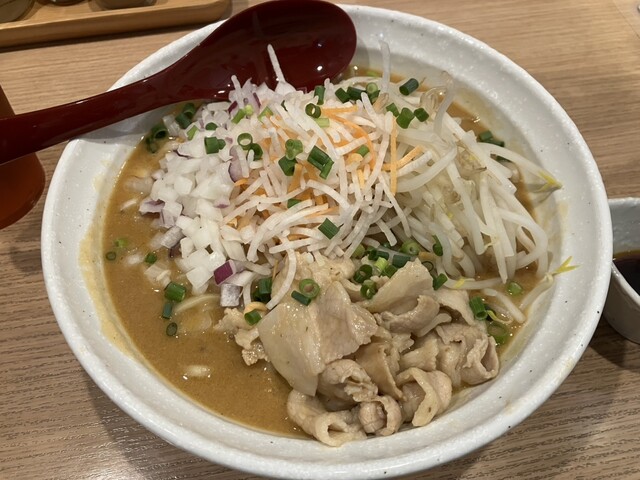
Musashi-Shinjo’s south-side streets lack Ginza polish or Shibuya theatre. Their rhythm is local, practical, commuter-shaped: shutters, bicycles, small shopfronts, compact counters, and suburban Kanagawa ramen culture. Men Goya Techi fits that world. Seven counter seats set the tempo: not a lingering dining room, but a focused system of queue, counter, and bowl.
That scale matters. In Japan, ramen shops often signal seriousness through constraint, not luxury: fewer seats, tighter menus, short service windows, and line-management that keeps the kitchen moving. Men Goya Techi’s selection for Tabelog Ramen KANAGAWA 100 in both 2024 and 2025 places it in a crowded prefectural conversation: not spectacle, but a small shop in a region where ramen competition is dense and technically varied. Kawasaki diners can move from Vietnamese cooking at (Shoku) Vietnam to bakery-led stops such as Boulangerie Metier Pa-ku shiti musashi kosugi za ga-den, but ramen remains one of the city’s sharp everyday tests: low spend, high repetition, unforgiving local judgment.
A seven-seat counter in Kanagawa's ramen grammar
Kanagawa ramen is not one style. The prefecture absorbs Tokyo influence, Yokohama’s heavier traditions, suburban family traffic, and station-area lunch demand. Small counters create authority by removing dining-room comfort and exposing pacing, ordering discipline, and the kitchen’s handling of noodles, broth, oil, and toppings. Men Goya Techi’s listed categories cover ramen, abura-soba, maze-soba, and tsukemen, reflecting contemporary shops that work across soup-based and soup-less forms.
For travellers, the distinction matters. Abroad, ramen is often flattened into a broth-first category; in Japan the grammar is broader. Abura-soba and maze-soba centre seasoning, fat, tare, noodles, and mixing technique. Tsukemen separates noodles and dipping broth, changing temperature, texture, and speed. A shop working across these forms reads as modern specialist, not nostalgic stereotype. The restaurant’s counter reinforces that: compact, repeatable, casual in price, exacting in execution.
Within Kawasaki, the comparison is practical. Niboshi Ramen Tanaka Niboru occupies a lower listed price band, while Kayu Nabou moves into a higher dinner range; L’atelier Hiro Wakisaka and Belmatine show the city’s casual dining is not limited to noodles. The restaurant sits in the affordable ramen bracket, but Tabelog 100 recognition changes expectations. The point is not luxury; modest spend can still require strategy, patience, and willingness to follow a tightly managed system.
The queue is part of the format, not an inconvenience
Japan’s ramen culture has long treated waiting as a demand signal, and better shops increasingly formalise it. At the restaurant, the numbered-ticket system begins before service, and payment is handled before entering. The meal is efficient, controlled, and designed to protect a seven-seat counter from disorder, unlike looser station ramen stops where the line absorbs confusion.
For visitors, the experience is culturally instructive. Etiquette is specific: expect rules, register through the entrance tablet when ticketing opens, let one representative handle group registration where appropriate, and treat the counter as short-form dining, not a social hangout. The shop is listed as solo-dining friendly, fitting Japan’s counter culture, where single diners are natural users rather than an afterthought.
The family note is equally revealing. Children who need a seat are expected to order a bowl; smaller children sitting on a lap are treated differently. That is capacity reality, not inhospitability. In a larger restaurant, a spare chair disappears into the floor plan. At a seven-seat ramen counter, one seat is a meaningful portion of the business. Travellers used to flexible Western dining rooms should read this as format, not service quirk.
Payment flexibility, including major cards, transit IC cards, and QR code options, makes operations easier than many older cash-first ramen shops. Parking is not part of the setup, aligning with the station-area model. The address places it near Musashi-Shinjo Station on the JR Nambu Line, a corridor for diners already moving through Kawasaki rather than expecting a destination restaurant with a long evening arc. For broader planning, Our full Kawasaki restaurants guide gives context, while Our full Kawasaki hotels guide, Our full Kawasaki bars guide, Our full Kawasaki wineries guide, and Our full Kawasaki experiences guide map the rest of the city’s travel frame.
How to read the meal in a city of everyday specialists
Kawasaki rewards diners who take everyday formats seriously. That is the lens for the restaurant. The city can support pork-driven casual cooking at Buta Boshi, French-leaning neighbourhood dining at C'EST UNE BONNE IDEE!, and station-adjacent ramen with award recognition. None need behave like grand restaurants. Their credibility comes from specificity: what they make, how tightly they run the room, and whether locals return.
For Japan itineraries, this stop corrects trophy dining. It sits far from high-end sushi and kaiseki’s reservation economy, yet demands fluency. Diners who understand ramen, abura-soba, maze-soba, and tsukemen get more from the counter than those treating it as a quick noodle fix. Those who understand ticketing have a smoother meal than those expecting open-ended hospitality.
That is why the award signal matters. Tabelog’s prefectural ramen selections are not international fine-dining awards, but within Japan’s local restaurant culture they point to dense category competition. A 2025 Kanagawa ramen selection, paired with 2024, gives the restaurant a clear place in the prefecture’s noodle conversation. The useful decision is not crossing Japan solely for it, but folding it into a Kawasaki or Nambu Line day when a small counter meal is the point, not a pause.
Japan’s casual dining depth is clearest through contrasts: a Kawasaki ramen counter; beef-focused dining at -Grilled beef Sukiyaki- KAMAKURA TANUKIAN 鎌倉 たぬき庵 in Kamakura; charcoal and tuna cooking at. 鮪と炭火焼き うお炭 秋葉原店 in Tokyo; coffee culture at.cafe in Osaka; modern regional dining at.know in Kumamoto; [Curry Senmon Ten] Maruyama Kyoju. in Sapporo; [ki:] in Kyoto; and Japanese food culture abroad at Jōdo Saké Bar in Los Angeles or Onigiri Time in Pasadena. The through-line is specialisation, not glamour. The restaurant belongs to that lesson: the serious meal often has fewer seats, fewer distractions, and a narrower promise.
Price and Recognition
Nearby venues at a similar price tier for orientation.
| Venue | Cuisine | Price | Notes |
|---|---|---|---|
| Men Goya TechiThis venue — the venue you are viewing | Not listed | $ | Not listed |
| Niboshi Ramen Tanaka Niboru | Not listed | $ | Takatsu Ward, Niboshi-focused ramen & tsukemen |
| San San Nana | Not listed | $ | Kawasaki Station area, Tsukemen & ramen shop |
| Ramen Marusen | Musashi-Kosugi, Traditional Ramen Shop | $ | Not listed |
| Menya Deko | Not listed | $$ | Shin-Maruko / Musashi-Kosugi, Niboshi Ramen & Tsukemen |
| Pastry shop Tamagawa (Oiwake Bun) | Kawasaki Ward, Japanese Confectionery | $ | Not listed |
Recognition history
Dated appearances from independent guides and award organizations, with the underlying list record or original source where available.
Tabelog 100 #16 · No. 16
Tabelog · Tabelog 100 - Ramen - KANAGAWA - 2025









At a Glance
- Cozy
- Lively
- Solo
- Casual Hangout
- After Work
- Standalone
Current opening hours
- Monday
- Closed
- Tuesday
- 11 AM–2 PM, 6–9 PM
- Wednesday
- 11 AM–2 PM, 6–9 PM
- Thursday
- 11 AM–2 PM
- Friday
- 11 AM–2 PM, 6–9 PM
- Saturday
- 11 AM–3 PM
- Sunday
- 11 AM–3 PM
Hours can change for holidays and private events. Last verified .
Casual neighborhood ramen shop near Musashi-Shinjo Station, likely compact and bustling with a focus on the bowl rather than decor, complemented by a practical, minimalist online presence for frozen ramen and takeout.