
Menya Deko belongs to Kawasaki’s serious everyday ramen tier: compact, inexpensive, and recognized in Tabelog’s Ramen KANAGAWA 100 selections for 2024 and 2025. Its Shin-Maruko setting, close to Musashi-Kosugi’s commuter flow, makes the experience feel less like destination dining and more like a sharp local noodle stop with real critical traction.
Pearl is the En Primeur Club membership app — saves, bookings, and concierge access live there. Same editors, same standards.
- Address
- Japan, 〒211-0063 Kanagawa, Kawasaki, Nakahara Ward, Kosugimachi, 1 Chome−520番地6 カサ·コルデロ
- Phone
- +81 44-819-8767
- Website
- my-deco1.com
 Saves & bookings on Pearl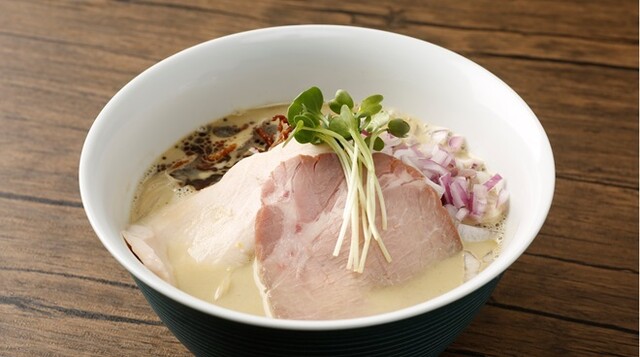
Shin-Maruko is the kind of station area where ramen has to work hard for attention. The neighbourhood sits in Kawasaki’s Nakahara ward, close enough to Musashi-Kosugi’s larger rail interchange to catch commuters, families, and weekend walkers, but small enough that weak shops are exposed quickly. In that setting, Menya Deko reads as part of a local ramen culture built on turnover, price discipline, and repeat use rather than ceremony.
Kawasaki’s appeal for noodle hunters is different from Tokyo’s destination-counter drama. The city’s stronger ramen rooms often sit near residential stations, where the test is consistency at everyday prices. Menya Deko’s selection for Tabelog Ramen KANAGAWA 100 in both 2024 and 2025 matters because it places a modest neighbourhood shop inside a prefecture-wide conversation, not merely a Shin-Maruko one.
Shin-Maruko ramen with Musashi-Kosugi gravity
The location shapes the meal. Shin-Maruko has a quieter street rhythm than Musashi-Kosugi, but the two areas operate as one dining catchment: office workers, local households, and rail-connected visitors moving between Tokyu and JR lines. A ramen shop here cannot lean on spectacle for long. It has to be useful at lunch, credible at dinner, and priced for repeat visits.
That is where Menya Deko fits Kawasaki’s more compelling food pattern. The city is not short on polished dining, from neighbourhood bakeries such as Boulangerie Metier Pa-ku shiti musashi kosugi za ga-den to casual counters such as Buta Boshi and value-led rooms such as Belmatine. Ramen, though, remains the category where the city’s everyday dining habits are easiest to read: fast decisions, small rooms, and little tolerance for inflated theatre.
Within the local comparison set, noodles kitchen GUNNERS occupies a similar sub-¥1,000 ramen bracket, while Pan Jabi Daba and UCHIDA-TEI show how quickly Kawasaki’s dining spend can move into different territory. The restaurant’s relevance is that it stays in the low-cost ramen lane while carrying a recognition signal usually used to sort more ambitious itineraries. That combination is useful for travellers who want the city’s food culture without turning every meal into a reservation project.
A compact noodle room, not a destination ritual
The format is small: 11 seats, with seven at the counter and two tables for two. That size changes the tempo. Ramen in Japan often works at its sharpest when the room is tight enough for the kitchen’s rhythm to define the experience, and this is the opposite of a lingering restaurant built around courses. The category range covers ramen, tsukemen, abura-soba, and maze-soba, which places the shop within the broader modern noodle spectrum rather than a single-bowl orthodoxy.
There is no chef biography to decode here, and that absence is not a weakness. In this tier, credibility comes less from personality narrative than from category execution and local demand. The Tabelog score of 3.75, paired with repeat Hyakumeiten selection, is the relevant signal: a small Kawasaki ramen shop has attracted enough sustained attention to sit among Kanagawa’s recognized noodle addresses.
The room also suits mixed local use. Children are welcome, private rooms are not part of the setup, and the space belongs to the practical Japanese ramen tradition where proximity is part of the bargain. Travellers expecting a quiet tasting-menu atmosphere will misread the genre. The better frame is this: a compact Shin-Maruko noodle shop with critical recognition, priced for casual eating, and structured around quick, focused meals.
How to place it in a Kawasaki itinerary
The restaurant works particularly well for visitors using Kawasaki as more than a transit point between Tokyo and Yokohama. The Musashi-Kosugi and Shin-Maruko area has become one of the city’s more useful food zones because it compresses rail access, residential density, and independent dining into a manageable radius. It rewards short, targeted stops rather than long tasting-menu planning.
For a wider read on the city, pair this kind of ramen stop with EP Club’s full Kawasaki restaurants guide, then build out the trip through the Kawasaki hotels guide, Kawasaki bars guide, Kawasaki wineries guide, and Kawasaki experiences guide. Nearby and city-adjacent dining can move in many directions, from (Shoku) Vietnam and C'EST UNE BONNE IDEE! to broader Japan planning around -Grilled beef Sukiyaki- KAMAKURA TANUKIAN 鎌倉 たぬき庵 in Kamakura. 鮪と炭火焼き うお炭 秋葉原店 in Tokyo.cafe in Osaka.know in Kumamoto, [Curry Senmon Ten] Maruyama Kyoju. in Sapporo, and [ki:] in Kyoto. For readers connecting Japanese casual food culture to the United States, Jōdo Saké Bar in Los Angeles and Onigiri Time in Pasadena extend that conversation across the Pacific.
The editorial case is clear: this is not luxury dining, and it is stronger for that. The restaurant represents a category Japan does with unusual seriousness, the affordable specialist shop whose reputation depends on regulars, narrow focus, and measurable recognition. In Kawasaki, that makes it a precise choice for travellers who care less about ceremony and more about how a neighbourhood actually eats.
- 煮干そば (Niboshi soba)
- 追い煮干そば (Extra-niboshi soba)
- 浅利香味そば (Asari clam aromatic soba)
- 濃厚牡蠣そば (Rich oyster soba)
- 味噌そば (Miso soba)
- 追い煮干しつけそば (Extra-niboshi tsukemen)
- サバとチーズのまぜそば (Mackerel & cheese mazesoba)
Compact Comparison
Comparable options at the same price tier.
| Venue | Cuisine | Price | Notes |
|---|---|---|---|
| Menya DekoThis venue — the venue you are viewing | Not listed | $$ | Not listed |
| Curry&herb Cherry blossom | Not listed | $$ | Aso-ku (Shinyurigaoka Area), Japanese Curry |
| Pastry shop Tamagawa (Oiwake Bun) | Kawasaki Ward, Japanese Confectionery | $ | Not listed |
| Kuzumochi Honpo Sumiyoshi | Not listed | $ | Kawasaki-ku, Traditional Japanese Wagashi & Kuzumochi Café |
| Ramen Marusen | Musashi-Kosugi, Traditional Ramen Shop | $ | Not listed |
| Sawaishi | Not listed | $$$ | Nakahara-ku, Premium Sumibi Yakiniku Horumon |
Recognition history
Dated appearances from independent guides and award organizations, with the underlying list record or original source where available.
Tabelog 100 #98 · No. 98
Tabelog · Tabelog 100 - Ramen - KANAGAWA - 2025













At a Glance
- Cozy
- Lively
- Solo
- After Work
- Casual Hangout
- Family
- Standalone
- Local Sourcing
Current opening hours
- Monday
- 11:30 AM–3 PM, 5:30–10 PM
- Tuesday
- 11:30 AM–3 PM, 5:30–10 PM
- Wednesday
- 11:30 AM–3 PM, 5:30–10 PM
- Thursday
- 11:30 AM–3 PM, 5:30–10 PM
- Friday
- 11:30 AM–3 PM, 5:30–10 PM
- Saturday
- 11 AM–3:30 PM, 5:30–10 PM
- Sunday
- 11 AM–3:30 PM, 5:30–9 PM
Hours can change for holidays and private events. Last verified .
A small, clean neighborhood ramen shop with counter-centric seating, bright but simple decor, and a relaxed local feel typical of Tokyo-area noodle bars.