
Nagoya’s Sakae ramen circuit rewards speed, counter discipline, and late-day flexibility rather than ceremony. Men Dokoro Guriko Nagoya sakae sits in that practical urban tier: a 24-seat ramen, izakaya, and tsukemen address selected for Tabelog Ramen AICHI 100 in 2025, with hand-pulled noodles and broth craft doing the critical work.
Pearl is the En Primeur Club membership app — saves, bookings, and concierge access live there. Same editors, same standards.
- Address
- 3 Chome-3-1 Sakae, Naka Ward, Nagoya, Aichi 460-0008, Japan
- Phone
- +81 52-265-6890
- Website
- tabelog.com
 Saves & bookings on Pearl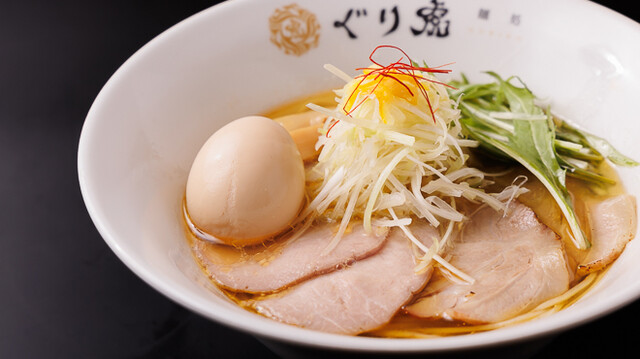
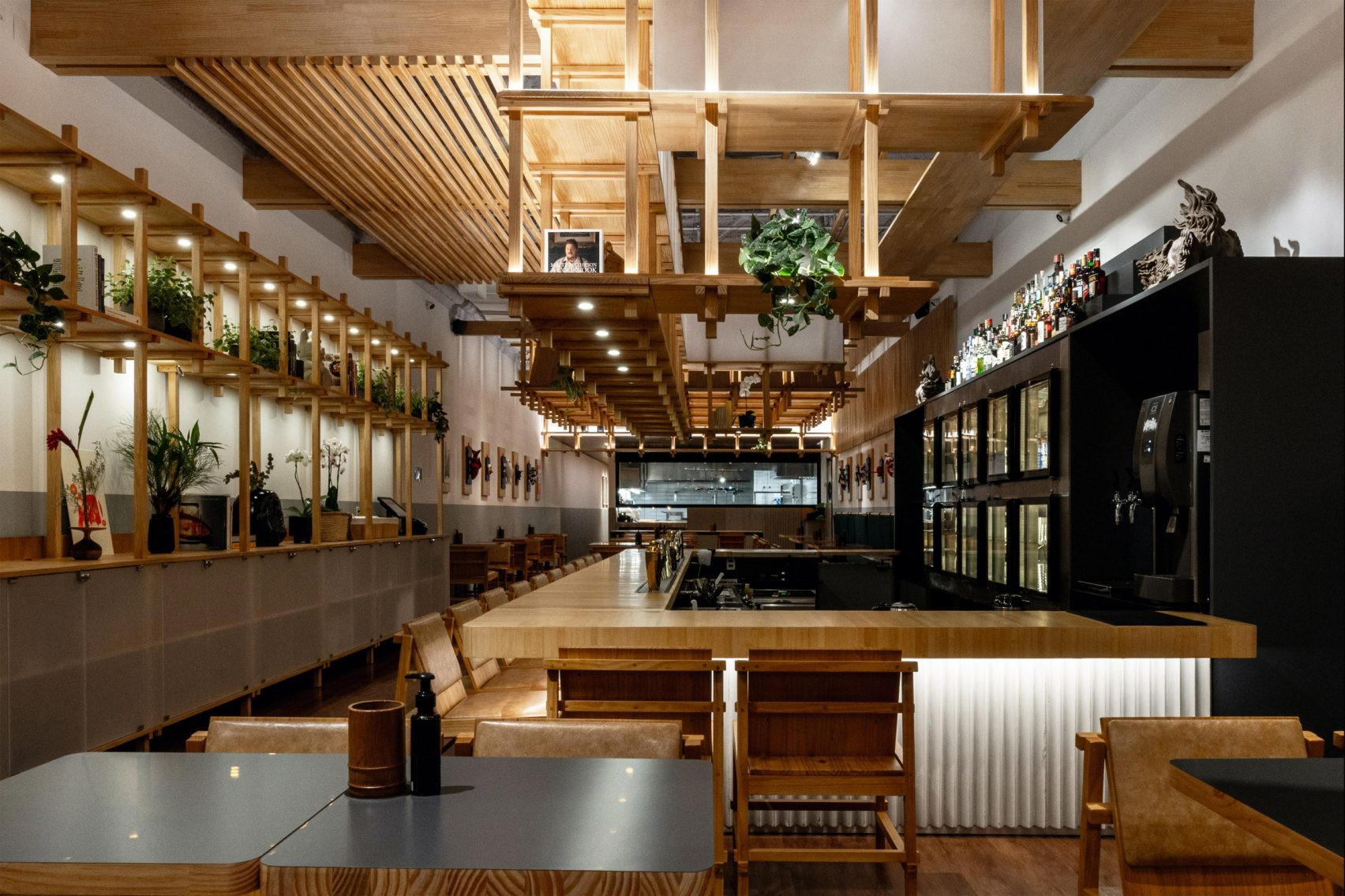
Inside Sakae’s commercial core, ramen is not a long-form dining event. The room is built for turnover, solo meals, and quick decisions: counter seats, steam, ticket-machine energy, and bowls leaving the kitchen before the next diner has settled. Men Dokoro Guriko Nagoya sakae belongs to this Nagoya rhythm, where a shop is judged less by narrative polish than by consistency under pressure.
Aichi’s ramen culture sits between two forces: everyday station-area shops, inexpensive and direct, useful for lunch, late meals, and solitary eating; and the specialist tier shaped by Tabelog’s regional Hyakumeiten selections, where noodle texture, broth clarity, and operational reliability turn addresses into repeat targets rather than convenience stops. This Sakae shop’s inclusion in Tabelog Ramen AICHI 100 for 2025 places it in that second conversation without changing the format: ramen first, ceremony second.
Hand-pulled noodles, broth craft, and the counter as production line
The restaurant’s public positioning centers on homemade hand-pulled noodles with wheat aroma and carefully crafted broth. That matters in Nagoya, where casual dining has little patience for vague premium claims. A bowl either holds its structure through the final mouthful or disappears into the wider pool of central-city ramen. Here, the proposition is technical: noodle making, broth work, and quick service must align in a compact room.
The categories are clear. Ramen is the anchor, tsukemen adds a dipping-noodle lane, and izakaya elements widen the use case beyond a single bowl. That mix is common in urban Japan, but it can dilute focus when a kitchen tries to satisfy every occasion. The stronger reading here is operational: a Sakae ramen shop needs range for office workers, shoppers, solo diners, and family groups, while keeping the noodle program as the reason to go.
Team dynamic is less about named personalities than station discipline. In a 24-seat ramen shop, kitchen, counter, and floor cannot behave as separate departments. Noodles, broth, toppings, seating, and payment flow are one system. When it works, the diner notices pace rather than hierarchy: bowls arrive with timing intact, the counter resets quickly, and the room avoids the drag that turns a simple meal into queue management.
This is where ramen differs from higher-spend Nagoya dining. Alan. sits in another price and occasion bracket, while 1022, 451, Aaron, and All Day Dining Montmartre answer other dining needs across the city. Ramen competes on a narrower axis: how much satisfaction can be delivered without asking for time, formality, or a large bill.
Sakae rewards ramen that works before and after the main event
Sakae is one of Nagoya’s useful dining districts because it compresses shopping, offices, nightlife, and transit into a walkable grid. That creates demand for restaurants with multiple roles across the day. A ramen counter can be lunch, a solo dinner, a post-shopping pause, or a late meal after drinks. The format must absorb uneven traffic without losing the directness that makes ramen attractive.
Men Dokoro Guriko Nagoya sakae fits that pattern more convincingly than a destination restaurant built around a single sitting. Its central location and counter-oriented setup make it part of the district’s practical food infrastructure. The appeal is not rarity; it is repeatability. In Nagoya, that distinction matters: a high-end table may define an evening, but a strong ramen shop defines how a city eats between appointments, trains, and social plans.
The Tabelog 2025 selection gives the shop a useful external signal. Hyakumeiten lists are not Michelin stars and should not be read as luxury shorthand. Their value is different: they identify category-specific addresses that have drawn enough attention within a local field to merit closer scrutiny. For ramen in Aichi, that is a meaningful filter because the category is crowded, price-accessible, and heavily repeat-driven.
Comparison clarifies the lane. Gokubuto Dakuryu Ramen La Keiko Honten operates in the same low-price ramen bracket in Nagoya, making the choice less about expense than style, access, and mood. By contrast, higher-spend Nagoya restaurants such as Alan. or takumi belong to a planned-dinner category. The question is not whether ramen competes with those formats; it is whether a visitor needs one polished meal or a precise, fast bowl in the middle of Sakae.
How to place it within a Nagoya dining itinerary
For travelers building a Nagoya food plan, this address works around the city rather than demanding the city work around it. Use it when the day is already anchored by shopping, bars, or a later reservation. It also suits diners who want a category-specific look at Aichi ramen without turning the meal into a pilgrimage. The family-friendly and solo-dining signals reflect ramen’s role as democratic urban dining in Japan.
The broader Nagoya edit should balance formats. Use Our full Nagoya restaurants guide for dining-room context, Our full Nagoya bars guide for after-dark planning, Our full Nagoya hotels guide for where to base the trip, Our full Nagoya wineries guide for wine-focused detours, and Our full Nagoya experiences guide for culture between meals.
Readers comparing Japanese casual formats beyond Nagoya can map the choice against -Grilled beef Sukiyaki- KAMAKURA TANUKIAN 鎌倉 たぬき庵 in Kamakura. 鮪と炭火焼き うお炭 秋葉原店 in Tokyo.cafe in Osaka.know in Kumamoto, (Shoku) Vietnam in Kawasaki, and [Curry Senmon Ten] Maruyama Kyoju. in Sapporo. For a North American contrast in Japanese-adjacent casual dining, Jōdo Saké Bar in Los Angeles and Onigiri Time in Pasadena show how format changes when the cuisine leaves Japan’s everyday infrastructure.
The editorial call is simple: this is a strong Sakae ramen choice for diners who value category recognition, counter efficiency, and noodle-focused craft over extended service theatre. It belongs in a Nagoya itinerary as a precise casual stop, not as a substitute for the city’s formal restaurants.
A Tight Comparison
Comparable venues by category and price.
| Venue | Cuisine | Price | Notes |
|---|---|---|---|
| Men Dokoro Guriko Nagoya sakaeThis venue — the venue you are viewing | Naka, Fusion Ramen | $ | Not listed |
| Masago | Not listed | $ | Naka, Traditional Nagoya ramen (chuka soba) counter |
| Ramen Daruma Shokudo | Nakagawa, Ramen and Japanese curry diner | $ | Not listed |
| Kakuozan Kichi Imo Honten | Not listed | $ | Chikusa, Japanese sweet potato confectionery shop |
| Ramen Rikimaru | Not listed | $ | Nakamura, Nagoya ramen shop specializing in spicy miso |
| Niboshi Chuka Soba Gyogyo | Kita, Niboshi-focused Ramen & Tsukemen | $ | Not listed |
Recognition history
Dated appearances from independent guides and award organizations, with the underlying list record or original source where available.
Tabelog 100 #73 · No. 73
Tabelog · Tabelog 100 - Ramen - AICHI - 2025
Continue exploring
More in Nagoya
Restaurants in Nagoya
Browse all →
At a Glance
- Modern
- Cozy
- Solo
- Family
- Casual Hangout
- Standalone
Current opening hours
- Monday
- 11 AM–1 AM
- Tuesday
- 11 AM–1 AM
- Wednesday
- 11 AM–1 AM
- Thursday
- 11 AM–1 AM
- Friday
- 11 AM–1 AM
- Saturday
- 11 AM–1 AM
- Sunday
- 11 AM–1 AM
Hours can change for holidays and private events. Last verified .
A calm, stylish ramen shop with an upscale-yet-relaxed feel that suits solo meals and family visits.