Meerok Super

Michelin Plate
Our verdict
A six-seat tasting menu restaurant in Busan's Suyeong-gu district, Meerok Super draws on an on-site vegetable patch, aged proteins, and daily-changing seasonal combinations to produce menus that shift between Western technique and Korean flavour logic. The charcoal-grilled meat course, served with rice, anchors a format where the kitchen's output changes every day and repetition is structurally impossible.

Pearl is the En Primeur Club membership app, where members save venues, book tables and use the concierge.
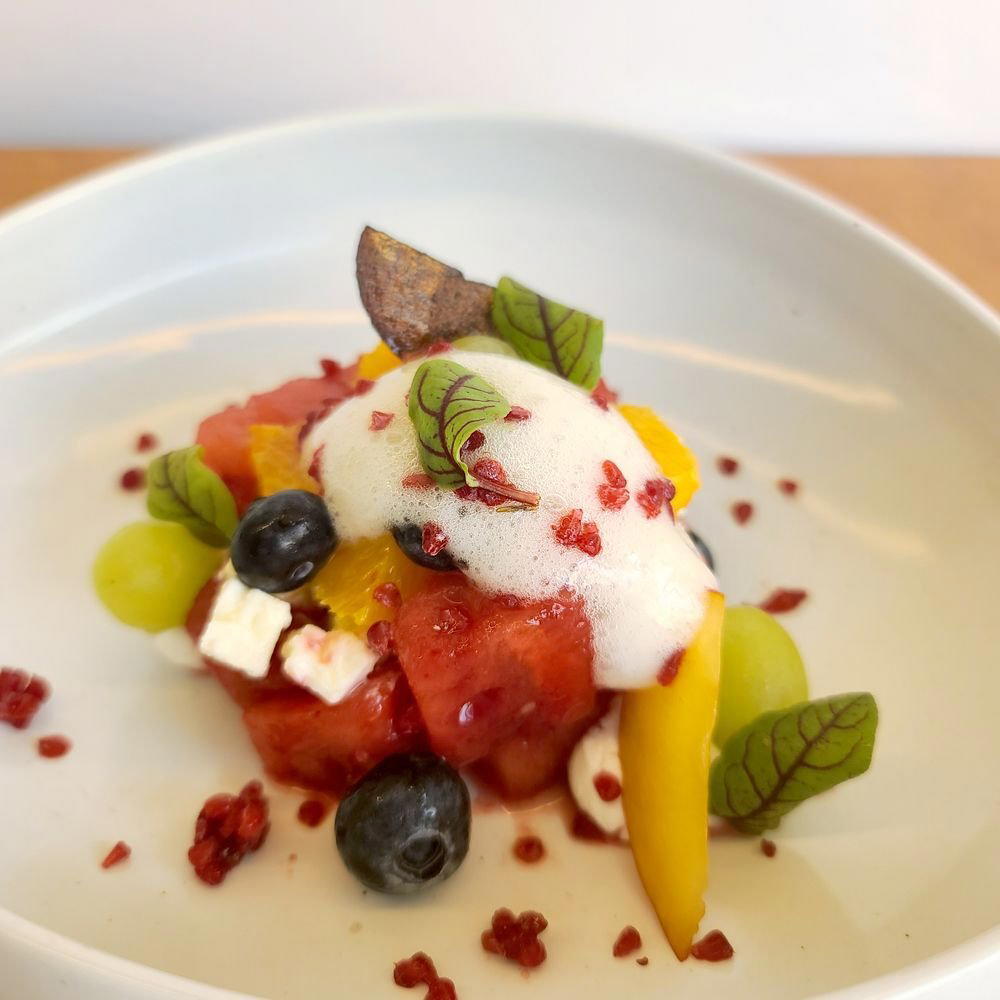
The menu
What to order
- Grilled meat course
Suyeong-gu and the Conditions That Make a Restaurant Like This Possible
Busan's dining reputation has long been anchored to its coastal identity: raw fish markets at Jagalchi, pork broth at dawn, cold noodles pulled to order. That picture is accurate, but incomplete. Over the past decade, a quieter set of small-format restaurants has taken root in the city's residential quarters, away from the harbour districts and tourist corridors. Suyeong-gu, where Meerok Super occupies a modest address on Millakbondong-ro, sits within this second city: a neighbourhood of mid-rise blocks and local commerce where rent economics and community scale make the six-seat, single-sitting format viable in a way it would not be in central Seoul or along Busan's main drag.
That neighbourhood context matters to the experience. Arriving at a six-seat counter in a residential district carries a different register than arriving at a destination restaurant in a hotel or a premium commercial strip. The city recedes. The transaction becomes more intimate, and the kitchen's daily decisions carry more weight because there is nothing else on the table to dilute them.
A Format Built Around Elimination, Not Addition
Small-counter tasting menus in South Korea operate across a wide range of ambitions. At the upper end, places like Mingles in Seoul or Kwon Sook Soo in Gangnam-gu work within formal fine-dining frameworks, with brigade kitchens and fixed menus built around consistency. Meerok Super operates on a different logic. The menu changes daily, shaped by what the on-site vegetable patch is producing and what aged fish and meat are ready. There is no static menu to audit in advance. What arrives at the counter is the kitchen's current leading answer to the question of what the season and the larder allow.
This approach shifts the power dynamic between kitchen and guest. The guest's role is to receive rather than select, and the kitchen's credibility rests entirely on daily execution rather than on anchoring dishes that can be refined over months. It is a more exposed format than the fixed tasting menu, and at six seats it is a format that scales nowhere. For comparison, Palate operates as a contemporary restaurant in Busan at a higher price tier, and Mori represents the Japanese-influenced end of Busan's small-format dining. Meerok Super sits outside those reference points, closer to the chef-garden counter tradition than to either of those peers.
The Vegetable Patch as Kitchen Infrastructure
On-site growing is a structural decision as much as an aesthetic one. When a restaurant grows its own vegetables, the menu's seasonality is not a marketing position but a physical constraint: the kitchen cooks what is ready. This is a meaningfully different condition than sourcing seasonally from suppliers, because the cycle of availability is local and micro rather than regional and aggregated. The flavour argument for this approach is well-established across farm-to-counter restaurants globally, but the operational argument is equally significant. A kitchen that grows its own produce develops a closer relationship with ingredient maturity and timing than one that orders from a distribution list.
At Meerok Super, the vegetable patch sits alongside aged fish and meat as the kitchen's raw material set. Ageing proteins in a small kitchen requires precision and commitment to process; it is not a technique applied casually. The combination of on-site vegetables and aged proteins signals a kitchen that has made long-term infrastructural commitments to its ingredient philosophy rather than describing that philosophy in language alone.
The Charcoal Course and the Transition It Signals
Among the daily-changing courses at Meerok Super, the grilled meat course, cooked over charcoal, is the structural anchor that the kitchen returns to in consistent form. Charcoal grilling in Korean culinary tradition is not a technique borrowed from elsewhere; it is embedded in the country's grilling culture from street-level samgyeopsal to higher-end cuts at places like Born and Bred, Busan's premium steakhouse reference. What Meerok Super does with that tradition is fold it into a tasting menu context where it operates as a transition point, the moment where Western technique and Korean flavour logic converge on the same plate. Serving the charcoal meat with rice formalises that transition: rice is the anchor of Korean meal structure, and its appearance within a tasting menu sequence is a deliberate reset of the meal's cultural register.
This kind of code-switching between culinary traditions is not unique to Meerok Super within Korean dining, but executing it within a six-seat daily-changing format at a neighbourhood scale is a specific and demanding version of the project. For a sense of how other Korean restaurants work across tradition and modernity at different scales, Baegyangsa Temple in Jangseong-gun represents the temple food end of Korean cuisine's range, while Double T Dining in Gangneung and Pool House in Incheon each represent regional takes on contemporary Korean formats.
Busan's Broader Dining Context
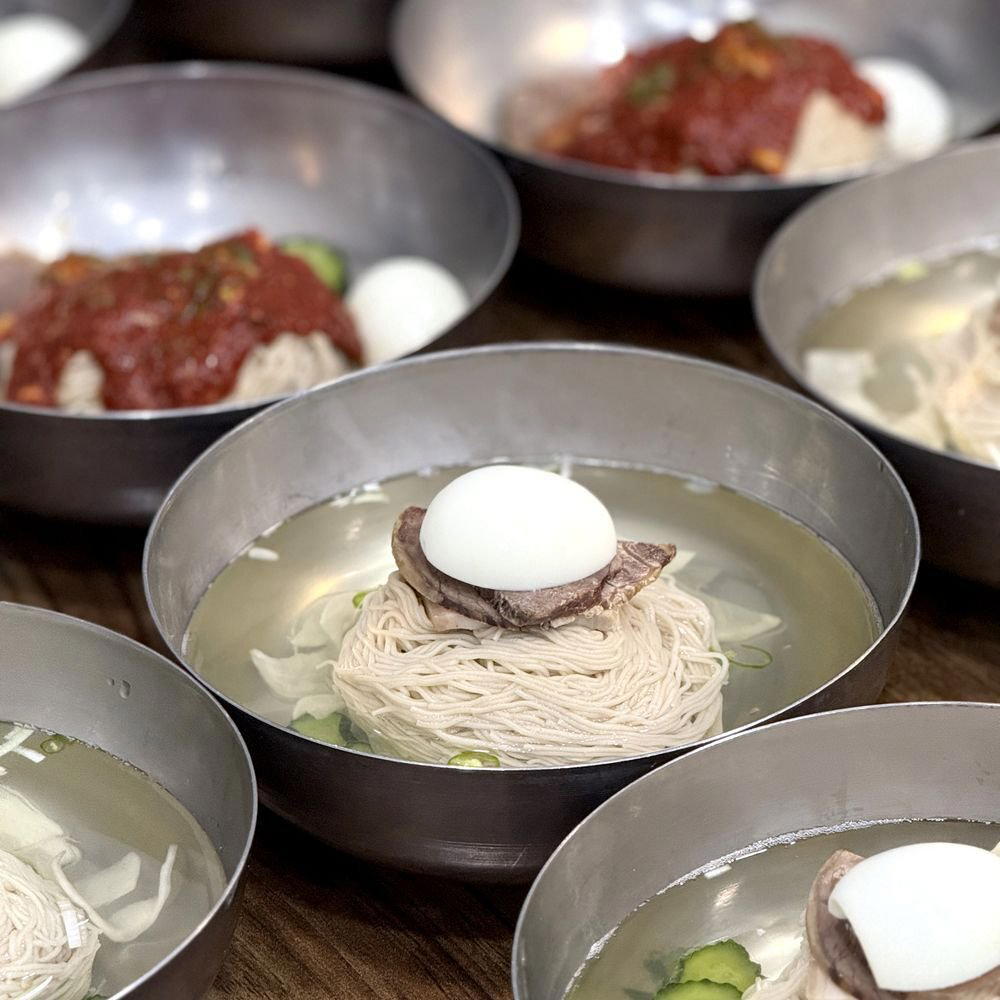
Busan rewards visitors who move beyond the obvious reference points. The city's traditional eating culture runs deep: 100.1. Pyeongnaeng anchors the naengmyeon tradition, and 1969 Buwondong Kalguksu represents the city's knife-cut noodle culture. These single-dish specialists and Meerok Super are not in competition; they represent different registers of the same city's eating life. The counter tasting menu and the specialist noodle shop serve different purposes, and a serious visit to Busan probably includes both. For wider planning across accommodation, bars, and experiences, our full Busan hotels guide, bars guide, wineries guide, and experiences guide map the city's offer across categories. The full picture of Busan's restaurants is in our complete Busan restaurants guide.
Internationally, the closest analogues to Meerok Super's format are the small-counter, market-driven restaurants that operate far from Michelin-starred destinations like Le Bernardin in New York City or Emeril's in New Orleans. Those are large-footprint, high-consistency operations. Meerok Super is the opposite end of the format spectrum: small capacity, zero consistency by design, and entirely dependent on daily kitchen judgment. The Flying Hog in Seogwipo represents a similar regional-Korea, independent-operator positioning, though in a different cuisine register.
Planning a Visit
Meerok Super is located at 46 Millakbondong-ro 31beon-gil in Suyeong-gu, a residential district of Busan accessible by metro via Suyeong station. The six-seat format means availability is structurally limited; advance contact is advisable before any visit, and the daily-changing menu format means there is no standard dish to request in advance. The on-site vegetable patch, aged protein programme, and seasonal sourcing mean the kitchen's output is genuinely different from one service to the next, which is both the format's strength and the only honest expectation to set before arrival.
Frequently asked questions
Where do I go for Meerok Super?
Meerok Super is located at 46 Millakbondong-ro 31beon-gil, Suyeong-gu, Busan.
What distinctions does Meerok Super have?
Meerok Super has received recognition including: Meerok Super is a small six-seat restaurant that serves outsize creativity. The vegetables grown in the on-site vegetable patch, aged fish and meat, and seasonal ingredients are transformed into the day’s tasting menu. The grilled meat cour….
What's the best thing to order at Meerok Super?
There is no à la carte menu. Every guest receives the tasting menu as composed that day, driven by what the on-site vegetable patch and the kitchen's aged fish and meat supply allow. The charcoal-grilled meat course, served with rice, is the structural anchor of the meal and the point where Western and Korean flavour registers converge.
Do they take walk-ins at Meerok Super?
At six seats, the restaurant has no physical capacity to absorb unplanned arrivals. Advance reservations are the only practical way to secure a place, and given the format and size, demand outpaces availability. check the venue's official channels to confirm current booking lead times.
What is Meerok Super known for?
Meerok Super is a six-seat counter in Busan's Suyeong-gu district recognised for a daily-changing tasting menu that draws on vegetables grown in an on-site patch alongside aged fish and meat. The kitchen produces flavour combinations that shift each service, with the charcoal-grilled meat and rice course serving as the meal's consistent through-line.
The Short List
Comparable venues nearby, for context on price, style, and recognition.
| Venue | Cuisine | Price | Awards | Notes |
|---|---|---|---|---|
| Meerok SuperThis venue (the venue you are viewing) | Creative Asian Fusion Tasting Menu | Not listed | Michelin Plate | Not listed |
| L'étang | French Bistro | Not listed | Michelin Plate | Yeonji-dong, French Bistro |
| L'Essence | Contemporary French Bistro with Korean Influences | $50–100 | Michelin Plate | Namcheon 2(i)-dong, Contemporary French Bistro with Korean Influences |
| Dim Tao | Hong Kong-style Dim Sum | $20–30 | Michelin Plate | U 1(il)-dong, Hong Kong-style Dim Sum |
| 굿모ëí콩 ì í¬ | Traditional Korean Haejangguk Specialist | $30–50 | Not listed | Jeonpo 2(i)-dong, Traditional Korean Haejangguk Specialist |
| Scents | Fermentation-Focused Asian Bistro | Not listed | Star Wine List | Namcheon 1(il)-dong, Fermentation-Focused Asian Bistro |
Recognition history
Dated appearances from independent guides and award organizations, with the underlying list record or original source where available.
Michelin Plate
Michelin
Continue exploring
More in Busan
Restaurants in Busan
All restaurants in Busan →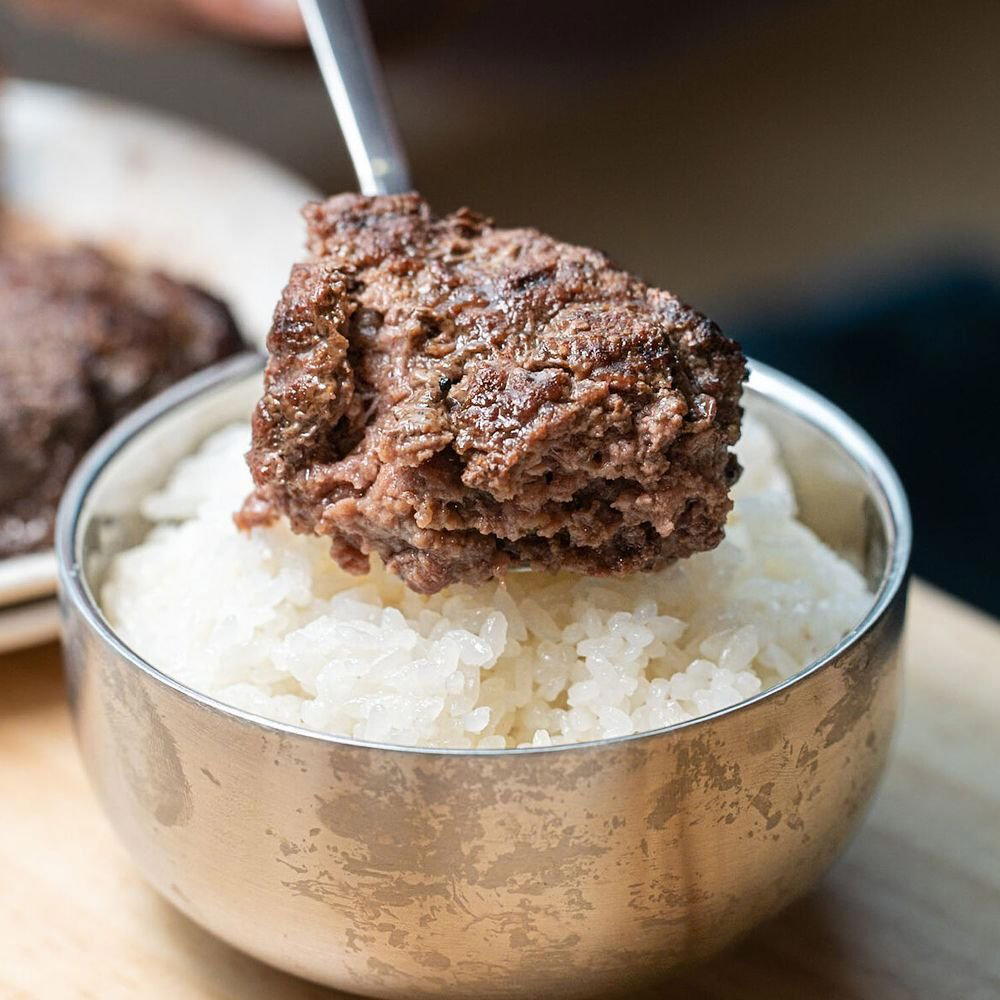
Bars in Busan
All bars in Busan →
Details
- Intimate
- Modern
- Date Night
- Special Occasion
- Chefs Counter
- Open Kitchen
- Local Sourcing
- Tasting Menu
- Counter Dining
Current opening hours
- Monday
- 12:30–10 PM
- Tuesday
- 12:30–10 PM
- Wednesday
- 12:30–10 PM
- Thursday
- 12:30–10 PM
- Friday
- 12:30–10 PM
- Saturday
- 11:50 AM–10 PM
- Sunday
- 11:50 AM–10 PM
Hours can change for holidays and private events. Hours as of .
Intimate and creative atmosphere in a tiny six-seat space with a retro signboard, focused on the chef's daily inventive tasting menu.