Moemiljip

Michelin Bib Gourmand
Our verdict
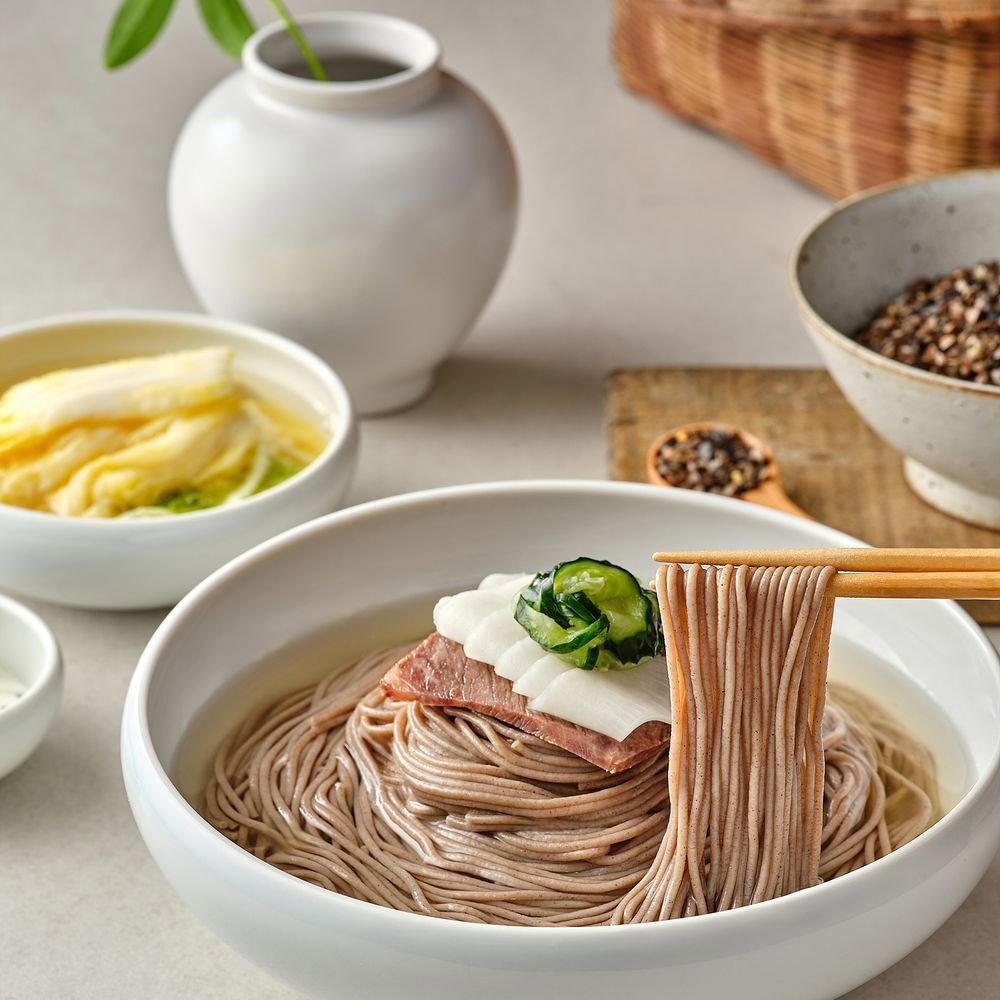
On the second floor of Orange Plaza in Haeundae, Moemiljip builds its entire menu around 100% Korean buckwheat, milled in-house. The result is a focused, two-track approach: spicy bibim buckwheat noodles for heat-seekers, and perilla-oil cold noodles that let the grain's delicate aroma carry the dish. Boiled pork rounds out the offer, pairing cleanly with both preparations.

Pearl is the En Primeur Club membership app, where members save venues, book tables and use the concierge.
The menu
What to order
- Bibim memil
- Deulgi-reum memil
- Mool memil
A Menu That Makes the Grain the Argument
Busan's noodle culture tends to announce itself loudly. Dwaeji-gukbap counters fill with steam by 7am; naengmyeon houses like 100.1. Pyeongnaeng compete on the clarity of their broth and the spring of their noodle. Moemiljip, on the second floor of Orange Plaza in Haeundae's Marine City district, operates in quieter register. Its menu is not built around volume of choice. It is built around a single grain, buckwheat, and the premise that milling it in-house and sourcing it entirely from Korean producers is enough of an argument to bring people back.
That kind of menu restraint has precedent in Korean dining. Specialist single-ingredient houses, from the jook counters of Seoul's older neighbourhoods to the perilla-forward kitchens along the south coast, have long understood that narrowing the menu is not a limitation but a declaration of intent. At Moemiljip, the declaration is that buckwheat deserves to be tasted, not just used as a vehicle.
How the Menu Is Structured, and What That Structure Reveals
The menu at Moemiljip divides along a single axis: how much the kitchen wants the buckwheat itself to speak. That division produces two philosophically distinct preparations, and the gap between them is the editorial point of the entire operation.
The bibim buckwheat noodles sit on one side of that axis. Dressed in a spiced sauce and served cold, they are built for contrast, the chew of freshly milled buckwheat against the heat of the seasoning. In-house milling matters here because stale buckwheat flour, or buckwheat cut with wheat, produces a softer, less distinctive noodle. The chewy, slightly elastic texture that the kitchen is working toward requires grain that has not been sitting in a warehouse. The spice gives the dish a forward character, but the noodle carries the structural load.
Perilla-oil cold buckwheat noodles sit on the other side. This is a more exposed preparation, one that strips the dish back to the point where the aroma of the buckwheat becomes the primary sensory event. Perilla oil has its own distinct herbal quality, but it is used here as an amplifier rather than a competing flavour. If the bibim version demonstrates what buckwheat can withstand, the perilla-oil version demonstrates what it produces on its own terms. For anyone serious about understanding the grain, this is the more instructive dish.
Boiled pork completes the menu in a role that Korean noodle houses have long understood: fatty, yielding slices that reset the palate between bites of noodle and provide enough richness to make the meal satisfying rather than merely delicate. It is a pairing with deep regional logic, appearing in various forms across the peninsula's noodle traditions, and at Moemiljip it works in the same functional way.
Haeundae's Dining Register, and Where This Kitchen Fits
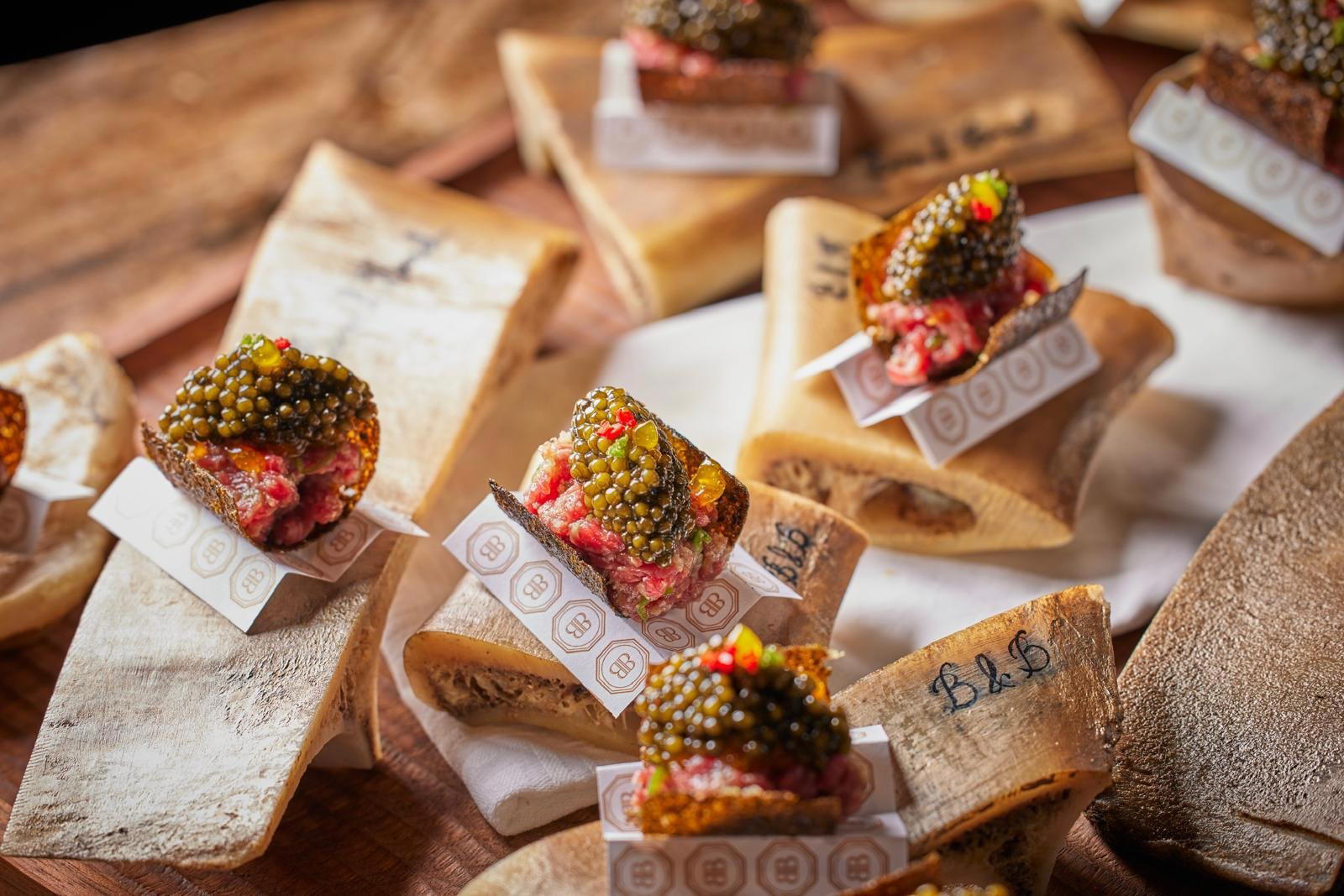
Marine City sits within Haeundae, the district most visitors associate with Busan's wealthier coastal edge. The dining scene here is wider than it first appears. At the higher end, you find venues like Mori (Japanese, ₩₩₩) and Born and Bred (steakhouse, ₩₩₩₩), both operating with the price points and production values of a metropolitan fine-dining tier. Contemporary kitchens like Palate occupy the middle ground at ₩₩. Moemiljip occupies a different register entirely: a specialist house where the price of admission is curiosity about the ingredient rather than appetite for spectacle.
That positioning is not unusual in South Korean food culture more broadly. Some of the most technically serious kitchens in the country operate at modest price points and with minimal ceremony. The emphasis in Seoul's respected grain and fermentation-focused restaurants, venues like Kwon Sook Soo in Gangnam or the temple-kitchen tradition represented by Baegyangsa Temple, is always on the ingredient and the technique rather than on theatrical presentation. Moemiljip belongs to that same instinct, applied to buckwheat in Busan.
The comparison set for this kitchen is not the broader Haeundae restaurant scene. It is the small cohort of Korean houses, from Busan through to venues like Double T Dining in Gangneung, that have built their identity around sourcing integrity and in-house processing rather than menu breadth. Among Busan's noodle specialists, the closest structural parallel remains the cold-noodle house model, but Moemiljip's insistence on Korean buckwheat and in-house milling places it in a narrower and more exacting subset of that tradition.
The Case for In-House Milling
In-house milling is not common, and it is worth understanding why the kitchen bothers. Buckwheat oxidises relatively quickly after milling, losing the volatile aromatic compounds that give freshly ground flour its characteristic earthy, slightly floral quality. Commercially milled buckwheat flour, by the time it reaches a restaurant kitchen, has often lost much of that aromatics profile. The chewy texture that Moemiljip highlights in its noodles also depends on fresh flour: the starch structure behaves differently in dough made from recently milled grain.
For a restaurant whose entire menu rests on buckwheat, milling in-house is not a marketing position. It is the technical prerequisite for the menu to work as intended. The perilla-oil cold noodles in particular would be a significantly less interesting dish without it, because the preparation has nowhere to hide; the grain either delivers its aroma or it does not. Across South Korea's specialist noodle culture, from the naengmyeon masters of Pyongyang-style houses to contemporary kitchens like Mingles in Seoul working with traditional Korean grains in a more contemporary frame, the same principle applies: ingredient handling is the craft, and the menu is its evidence.
Planning Your Visit
Moemiljip is located on the second floor of Orange Plaza at 23 Marine City 3-ro in Haeundae-gu. The Marine City area is walkable from Haeundae Beach and well-served by Busan's metro network via Dongbaek or Haeundae stations. The focused menu means ordering is direct: the two buckwheat noodle preparations and the boiled pork are the kitchen's core offer. Those wanting to understand what in-house milling actually produces in a finished noodle should consider ordering the perilla-oil cold buckwheat alongside the bibim version for direct comparison. For broader planning across the city, see our full Busan restaurants guide, as well as guides to hotels, bars, wineries, and experiences in Busan. For those travelling wider across South Korea, Pool House in Incheon and The Flying Hog in Seogwipo offer contrasting angles on the country's regional dining range. For noodle-focused context closer to Busan, 1969 Buwondong Kalguksu represents a different tradition within the city's handmade noodle culture.
Frequently asked questions
What distinctions does Moemiljip have?
Moemiljip has received recognition including: Using 100% Korean buckwheat and milling the noodles in-house, this restaurant invites you to appreciate the pure flavour and chewy texture of freshly made buckwheat noodles. While the bibim buckwheat noodles focus on a spicy bite, the peril….
What part of town is Moemiljip in?
Moemiljip is located at 2F, Orange Plaza, 23 Marine city 3-ro, Haeundae-gu, Busan.
What do regulars order at Moemiljip?
The kitchen's own emphasis points to the perilla-oil cold buckwheat noodles, where freshly milled 100% Korean buckwheat delivers its clearest aromatic expression. The bibim buckwheat noodles take the opposite approach, leading with spice. Boiled pork slices served alongside either bowl are a consistent pairing worth ordering.
Is Moemiljip reservation-only?
Confirmed booking details are not currently available. The restaurant occupies the second floor of Orange Plaza at 23 Marine City 3-ro in Haeundae-gu, a busy coastal district, so arriving outside peak lunch hours is a practical precaution until reservation policy can be verified directly.
What has Moemiljip built its reputation on?
Two specific commitments underpin Moemiljip's standing in Busan's noodle scene: sourcing 100% Korean buckwheat and milling it in-house. In-house milling matters because buckwheat oxidises quickly after grinding, and the kitchen's approach preserves the grain's natural aroma in a way pre-milled flour cannot.
Reputation Context
Comparable venues nearby, for context on price, style, and recognition.
| Venue | Cuisine | Price | Awards | Notes |
|---|---|---|---|---|
| MoemiljipThis venue (the venue you are viewing) | Korean Buckwheat Noodles (Memil-guksu) | $20–30 | Michelin Bib Gourmand | Not listed |
| Songheonjip | Traditional Korean Grilled Short Rib Patties | $10–20 | Michelin Plate | Millak-dong |
| Pyeongsanok | Traditional Korean Boiled Pork and Noodles | $10–20 | Michelin Plate | Choryang 1(il)-dong |
| Pyeongyangjip | North Korean-style Mandu | Not listed | Michelin Plate | Deokcheon 2(i)-dong |
| Cha Ae Jeon Halmae Kalguksu | Traditional Korean Kalguksu Noodles | Not listed | Michelin Plate | Yeonsan 9(gu)-dong |
| IAán | Contemporary French-Korean Fusion | Not listed | Michelin Plate | Jung 2(i)-dong |
Recognition history
Dated appearances from independent guides and award organizations, with the underlying list record or original source where available.
Michelin Bib Gourmand
Michelin
Full recognition history (2 entries)
Michelin Plate
Michelin · 2026 Michelin Plate
Continue exploring
More in Busan
Restaurants in Busan
All restaurants in Busan →
Bars in Busan
All bars in Busan →
Details
- Casual Hangout
- Open Kitchen
- Local Sourcing
- A La Carte
Current opening hours
- Monday
- Closed
- Tuesday
- 11:30 AM–3 PM, 5–8:30 PM
- Wednesday
- 11:30 AM–3 PM, 5–8:30 PM
- Thursday
- 11:30 AM–3 PM, 5–8:30 PM
- Friday
- 11:30 AM–3 PM, 5–8:30 PM
- Saturday
- 11:30 AM–3 PM, 5–8:30 PM
- Sunday
- 11:30 AM–3:30 PM, 5–8:30 PM
Hours can change for holidays and private events. Hours as of .