Me sabe a Perú serves Authentic Peruvian Home Cooking with lomo saltado, plato marino, and tarta tres leches; casual service and conversational pacing fit lunch or dinner.
Pearl is the En Primeur Club membership app — saves, bookings, and concierge access live there. Same editors, same standards.
- Address
- Carrer de Sibelius, 5b, Sant Martí, 08026 Barcelona, Spain
- Phone
- +34654641484
- Website
- myreserve.rest
- Directions
- Get directions
 Saves & bookings on Pearl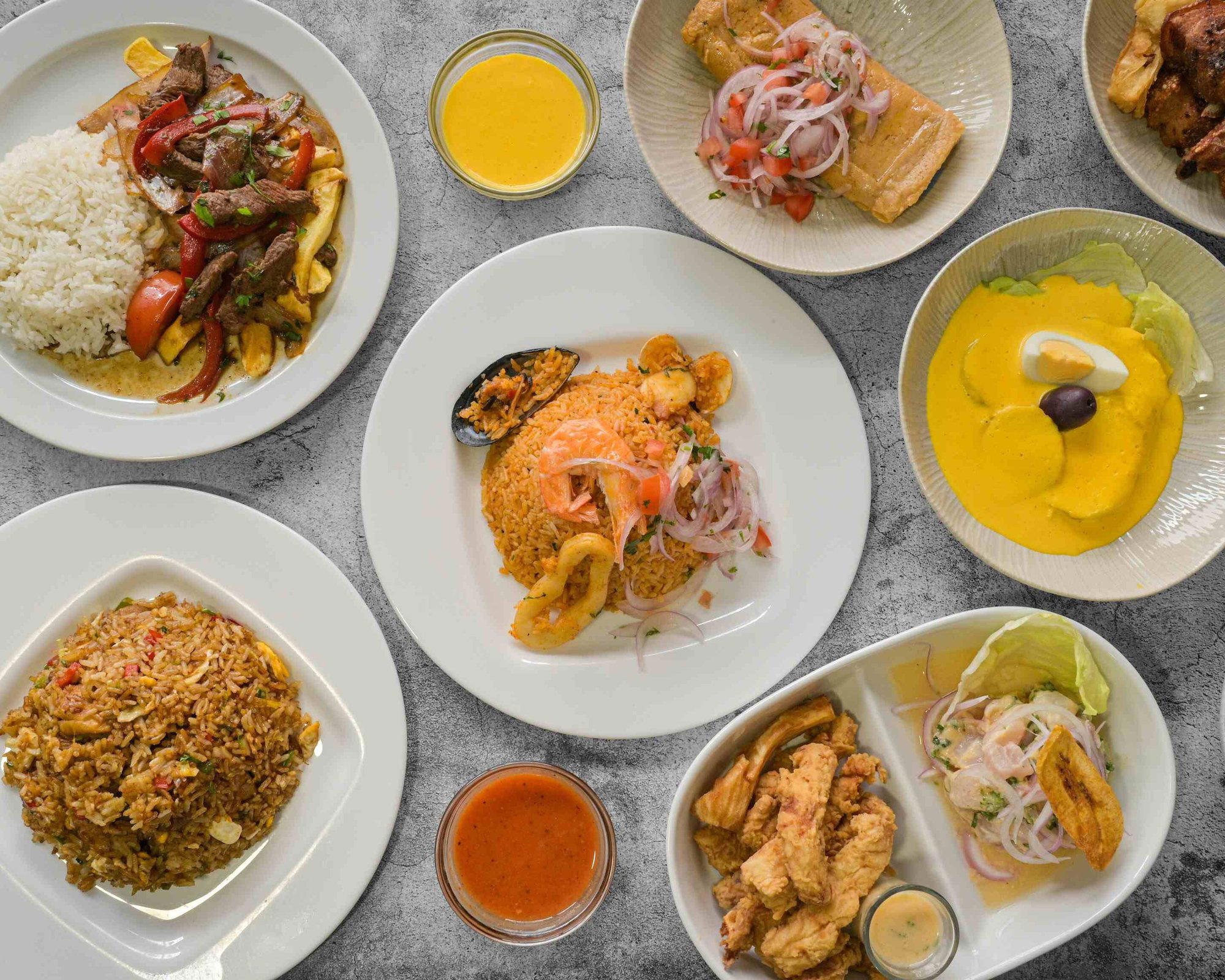
Peruvian Cooking in Sant Martí: Where Ingredient Provenance Does the Talking
The walk down Carrer de Sibelius in Sant Martí is quieter than the tourist-heavy streets of the Eixample or the Gothic Quarter. This is a residential Barcelona, a neighbourhood of apartment blocks and local commerce, where a restaurant earns its following through reputation rather than foot traffic. Me sabe a Perú operates in exactly that register: a neighbourhood address with a name that translates, loosely, as "it tastes like Peru to me", a phrase that carries both pride and homesickness, and signals from the outset that the cooking here draws its authority from origin, not from adaptation.
Peruvian cuisine's global rise over the past two decades has been well-documented. Lima now holds multiple entries on the World's 50 Best Restaurants list, and the country's cooking has demonstrated a rare capacity to absorb Japanese, Chinese, and Spanish colonial influences without losing its own identity. That identity is inseparable from ingredients: the extraordinary biodiversity of the Andes and Amazon basin, which produces hundreds of potato varieties, dozens of chilli types including the citric ají amarillo and the smoky ají panca, and purple maize that appears in both savoury and sweet preparations. When a Peruvian restaurant outside Lima makes sourcing its central argument, it is committing to something specific and difficult.
The Sourcing Question: What Ingredient Fidelity Actually Requires
Barcelona is a useful city for this kind of cooking. Its port history means it has long imported goods from Latin America, and the city's wholesale markets have progressively deepened their Latin American product range as the population has diversified. Still, the gap between cooking Peruvian food with local substitutions and cooking it with authentic raw materials is significant. Ají amarillo, for instance, carries a fruity heat that no European chilli replicates. Huacatay, the black mint paste central to many Andean preparations, has a flavour profile that sits somewhere between mint, tarragon, and marigold, nothing in the Mediterranean pantry comes close.
Me sabe a Perú, on the evidence of its name and positioning, places itself in the camp of fidelity over approximation. This matters to the dining experience in concrete ways: the ceviche, if made with authentic leche de tigre, the citrus-heavy tiger's milk marinade that cooks the fish in acidity, requires the right balance of ají amarillo heat, lime sharpness, and fresh fish that holds its texture under acid. The sourcing of those chillis, whether imported or grown locally under controlled conditions, determines the outcome on the plate.
Barcelona's Peruvian restaurant community sits in an interesting competitive position. The city has Spanish fine dining at the level of Disfrutar, Cocina Hermanos Torres, ABaC, Lasarte, and Enigma, all operating at the upper end of the creative Spanish tradition. But Peruvian cooking in the city occupies a different lane entirely, one where the comparison set is not other tasting-menu restaurants but rather the authenticity of the cuisine itself. The question at a place like Me sabe a Perú is not how it positions against the Michelin-starred tier, but whether it delivers the sensory logic that makes Peruvian food coherent: the brightness of acid, the layered heat of native chillis, the textural contrast between slow-cooked proteins and raw preparations.
Sant Martí as a Dining Address
The neighbourhood context is worth taking seriously. Sant Martí, which encompasses the post-industrial waterfront district of Poblenou as well as quieter inland streets like Carrer de Sibelius, has developed a dining character distinct from the tourist-facing restaurant clusters elsewhere in the city. Restaurants here build their audiences from local residents and repeat visitors rather than from hotel concierge referrals. That dynamic tends to produce places with consistent cooking and a more direct relationship between the kitchen and its regulars.
Poblenou's broader reinvention as a creative and residential neighbourhood over the past decade has brought a more adventurous eating public to the area. The willingness to seek out a Peruvian address on a quiet residential street rather than defaulting to the established tourist corridors reflects a Barcelona dining culture that, at its most engaged, is genuinely curious about cuisines from outside the Spanish tradition. This is the same impulse that has driven interest in Japanese cooking, Mexican regional food, and now Peruvian cuisine across the city.
For the wider context of Spanish dining excellence, the country's restaurant scene extends well beyond Barcelona: El Celler de Can Roca in Girona, Arzak in San Sebastián, Mugaritz in Errenteria, Azurmendi in Larrabetzu, DiverXO in Madrid, Martin Berasategui in Lasarte-Oria, Quique Dacosta in Dénia, Aponiente in El Puerto de Santa María, Atrio in Cáceres, and Ricard Camarena in València. Peruvian restaurants like Me sabe a Perú operate in an entirely different register from that fine-dining tier, but they address a different and equally valid question: how faithfully can a cuisine rooted in specific geography and biodiversity travel to a new city?
Internationally, the same question is answered differently depending on the city. In New York, restaurants like Atomix demonstrate how Korean cooking can be reframed for a global audience without losing its foundations, and Le Bernardin has long shown how French technique can anchor a permanent institution outside France. The benchmark for ingredient-led authenticity, wherever the cuisine originates, is always the same: does the food make its own argument through flavour, or does it rely on the idea of authenticity rather than its practice?
Planning Your Visit
The restaurant is located at Carrer de Sibelius, 5b, in the Sant Martí district of Barcelona, postcode 08026. The address is accessible via the L2 metro line at Bac de Roda or by bus along the parallel avenues. As a neighbourhood restaurant without a wide web presence in the premium dining press, booking directly and in advance is advisable, particularly on weekend evenings when local demand is highest. For a broader map of where the restaurant fits within the city's dining scene, see our full Barcelona restaurants guide.
Fast Comparison
Comparable venues nearby, for context on price, style, and recognition.
| Venue | Cuisine | Price | Notes |
|---|---|---|---|
| Me sabe a PerúThis venue — the venue you are viewing | Authentic Peruvian Home Cooking | $$ | Not listed |
| Barrio Santo | Authentic Peruvian | $$ | Barri Gotic |
| El Ñaño Balmes | Ecuadorian & Latin American | $$ | la Dreta de l'Eixample |
| Thala | Authentic Peruvian | $$ | Sant Antoni |
| Casa Pepi | Traditional Spanish Tapas | $$ | el Clot |
| La Roda | Spanish/Catalan Grill & Paella | $$ | el Poblenou |
Continue exploring
More in Barcelona
Restaurants in Barcelona
Browse all →
Bars in Barcelona
Browse all →
Hotels in Barcelona
Browse all →

At a Glance
- Cozy
- Casual
- Rustic
- Family
- Casual Hangout
- Group Dining
- Standalone
Current opening hours
- Monday
- Closed
- Tuesday
- 10:30 AM–10:30 PM
- Wednesday
- 10:30 AM–10:30 PM
- Thursday
- 10:30 AM–10:30 PM
- Friday
- 10:30 AM–10:30 PM
- Saturday
- 10:30 AM–10:30 PM
- Sunday
- 10:30 AM–9:30 PM
Hours can change for holidays and private events. Last verified .
Casual, welcoming neighborhood atmosphere with a homestyle dining experience; unpretentious and family-oriented.