Masala Curry Shop brings South Asian curry traditions to Yamaguchi, a city more commonly associated with kaiseki refinement and buckwheat noodles. In a prefecture where Western and international formats remain outliers, the shop occupies a distinct position in the local dining map. It sits alongside a small cohort of non-Japanese specialists that have found a foothold in this historically minded city.
Pearl is the En Primeur Club membership app — saves, bookings, and concierge access live there. Same editors, same standards.
- Address
- Yamaguchi, Japan
- Directions
- Get directions
 Saves & bookings on Pearl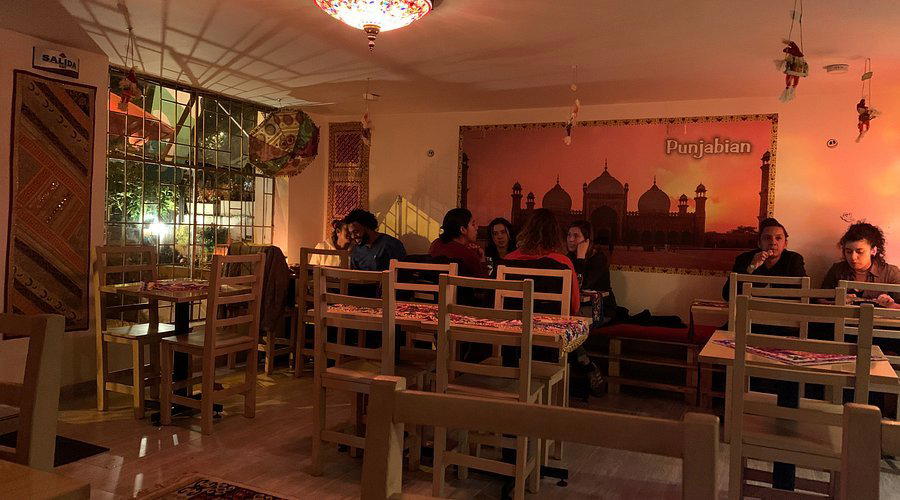
Curry in a City of Kaiseki
Yamaguchi operates at a different register from Japan's major dining cities. The prefecture's culinary identity runs through fugu sashimi, kawara soba served on roof tiles, and the kind of restrained kaiseki that places like Kigokoro and Kyo-no-kaze represent with quiet consistency. Against that backdrop, a curry shop is not a minor detail. It signals something specific about how Yamaguchi's dining scene has widened, incrementally, to accommodate formats that sit outside the prefecture's traditional culinary grammar.
South Asian and subcontinental curry has a longer history in Japan than most visitors expect. The country absorbed curry through British colonial trade routes via India in the Meiji era, domesticated it into a thick, sweet-savory yoshoku standard, and then, from the 1980s onward, developed a parallel appetite for more regionally specific South Asian preparations. Today, Japanese cities of all sizes contain curry shops that span the spectrum from yoshoku-style roux bases to spice-forward South Indian thali formats. Masala Curry Shop sits within this broader national pattern, translated to a city where the genre remains a relative novelty.
The Ritual of the Curry Meal
The dining ritual around curry in Japan carries its own distinct etiquette, shaped partly by South Asian convention and partly by the Japanese tendency to systematize eating into a considered sequence. At a masala-focused shop, that sequence typically begins with the arrival of rice or bread, followed by a series of smaller accompaniments — pickles, raita, perhaps a dal — before the main curry or curries are placed. The meal is meant to be assembled at the table, not received already plated.
This matters because the pacing differs substantially from the omakase model that defines much of Japan's premium dining culture. There is no chef-directed progression. The diner constructs each mouthful from the components available, deciding how much heat to invite, how much fat to balance with acid, how much starch to use as a carrier. The rhythm is the diner's to set. In cities like Osaka, where HAJIME exemplifies the counter-service, chef-authored format, or in Tokyo, where Harutaka holds its omakase progression as near-liturgical, a curry shop operates on an entirely different social contract between kitchen and guest.
That contract extends to informality. Curry shops in Japan, particularly those that lean into masala and spice-based traditions rather than yoshoku roux, tend to be unpretentious in format: counter seating or small tables, paper menus, service that does not involve tableside ceremony. The focus is on the product in the bowl, not on the architecture of the service. For a city like Yamaguchi, where formal restaurants such as RESTAURANT TAKATSU and le-sorcier occupy the upper tier with structured, occasion-driven experiences, a curry shop fills a genuinely different slot: a daily-use restaurant where the ritual is personal rather than prescribed.
Spice Logic in a Japanese Context
What makes masala curry a distinct eating experience in Japan is not simply the spice level. It is the layering logic. Japanese yoshoku curry arrives as a unified sauce; masala preparations, even simplified ones, ask the diner to confront individual spice components, cumin, coriander, turmeric, cardamom, chili, as they shift in prominence across the meal's duration. That complexity is less familiar to diners raised on Japanese flavor frameworks, where umami depth tends to be built through fermentation and dashi rather than through spice accumulation.
This creates an interesting situation for curry shops operating outside major metropolitan centers. In Tokyo or Osaka, a well-executed masala curry shop finds a customer base already primed by exposure to South Indian, Sri Lankan, and Nepali restaurants, as well as a food media culture that has extensively documented these distinctions. In Yamaguchi, that baseline is narrower. The shop's role becomes partly educational, not through deliberate instruction but through the act of presenting spice logic in a city where it is not routine. For comparison, consider how regional specialists in other Japanese cities, places like Goh in Fukuoka or Gion Sasaki in Kyoto, operate as nodes within established culinary ecosystems. A curry shop in Yamaguchi operates with less infrastructure of that kind, which shapes how it builds its audience over time.
Where It Sits in Yamaguchi's Dining Map
Yamaguchi's restaurant scene is not large. The city draws visitors through its historical assets, the Rurikoji Pagoda, the Ouchi clan legacy, the Akiyoshidai plateau nearby, rather than through dining tourism. The restaurants that have developed reputations tend to do so within narrow local networks, building regulars through consistency rather than through media amplification. Mitsuwa represents this pattern: a local institution recognized within the prefecture rather than exported outward to national food media.
A curry shop occupies a different kind of local standing. Venues like akordu in Nara demonstrate that non-Japanese culinary formats can develop serious local followings even in cities where traditional Japanese cuisine dominates. The question for any curry specialist in a mid-size Japanese city is always the same: can the format sustain a regular clientele, or does it depend on novelty?
For practical planning purposes, curry shops in Japan of this type rarely require advance reservations, operate on lunch and dinner service, and tend to offer a concise menu that changes incrementally rather than seasonally. Booking ahead for major national holidays or local event weekends is advisable, but walk-in dining is typically the norm. Visitors to Yamaguchi combining regional exploration with meals at more formal establishments will find a curry shop a useful reset: lower cost, faster pacing, and a completely different flavor register from the prefecture's dominant kaiseki and seafood traditions.
For a fuller picture of what Yamaguchi's dining scene covers across formats and price tiers, the EP Club Yamaguchi restaurants guide maps the range from traditional Japanese specialists to the city's smaller international contingent. Japanese curry specialists in other regions worth cross-referencing include 一本杉 川嶋制 in Nanao, 夕佳亭山乃 in Sapporo, 湖畔荘庵 in Takashima, 鳥羽屋 in Nishikawa Machi, and Birdland in Sakai, each of which illustrates how specialized formats take root in cities outside Japan's primary dining hubs. For international reference points on what serious curry culture looks like when placed in a fine-dining context, Le Bernardin in New York City and Atomix in New York City show what happens when non-native culinary traditions are given the full premium treatment, a different endpoint, but a useful point of comparison for understanding how genre, format, and setting interact.
What It’s Closest To
Comparable venues nearby, for context on price, style, and recognition.
| Venue | Cuisine | Price | Notes |
|---|---|---|---|
| Masala Curry ShopThis venue — the venue you are viewing | Indian Curry House | $$ | Not listed |
| 菜のはな | Modern Creative Fusion | $$$ | Yuda Onsen |
| カーザ・トランクイッラ | Traditional Italian Trattoria | $$$ | Kurohawa (黒川) |
| Kyo-no-kaze | Traditional Japanese Izakaya | $$ | Yuda-onsen |
| Kigokoro | Sushi and Kushiage with Wine | $$ | Yuda-onsen |
| RESTAURANT TAKATSU | Modern French with Local Seafood | $$$$ | Shimonoseki |
Continue exploring
More in Yamaguchi
Restaurants in Yamaguchi
Browse all →

At a Glance
- Casual Hangout