
le-sorcier belongs to Yamaguchi’s small, serious dining tier: French technique filtered through local ingredients and tableware rather than metropolitan spectacle. Its Tabelog Award Bronze run from 2023 to 2026, plus Tabelog French WEST 100 selections in 2023 and 2025, places it among the region’s more closely watched destination tables.
Pearl is the En Primeur Club membership app — saves, bookings, and concierge access live there. Same editors, same standards.
- Address
- Akizuki, Shunan, Yamaguchi 745-0825, Japan
- Website
- le-sorcier.jp
- Directions
- Get directions
 Saves & bookings on Pearl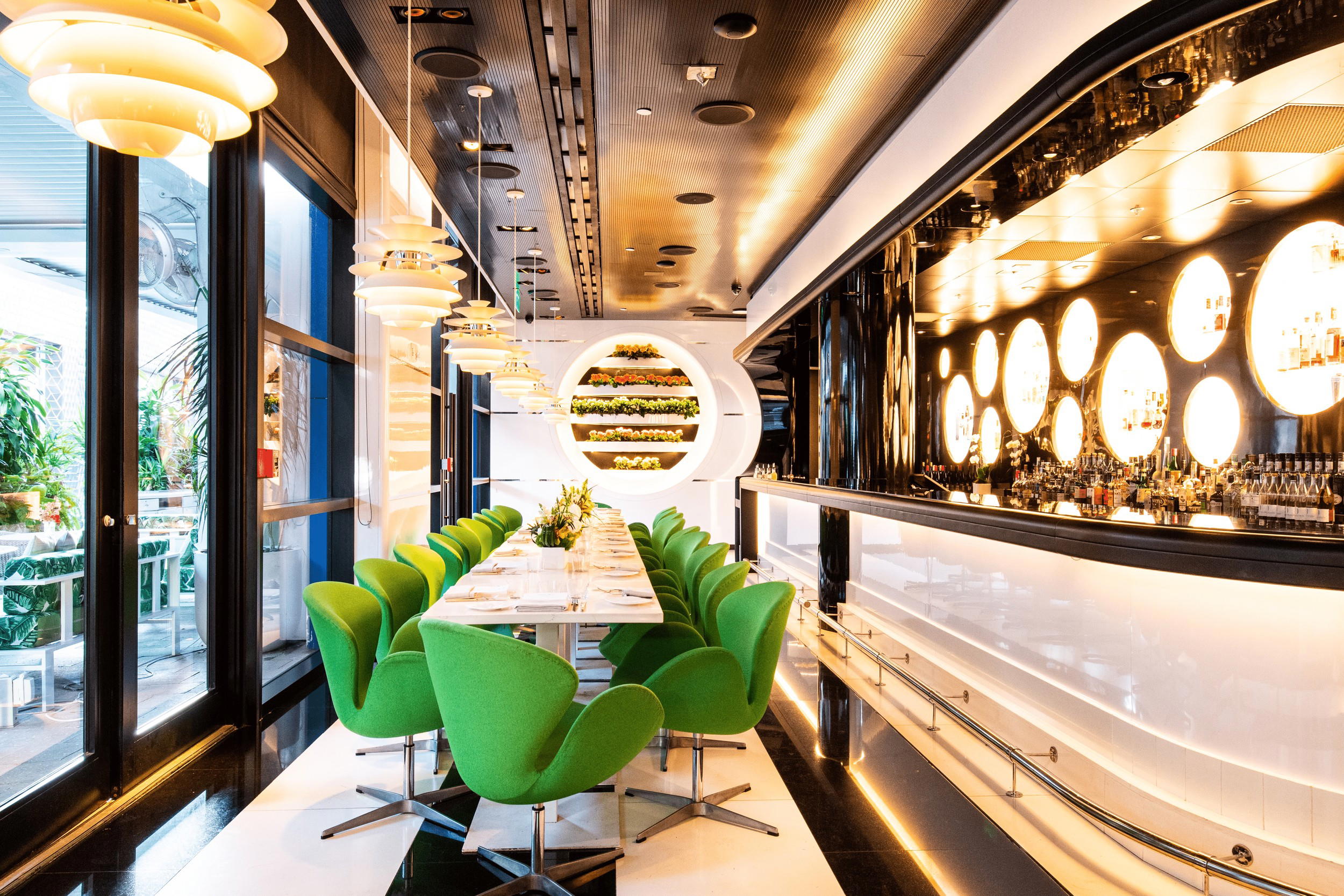
Approach in Shunan sets the tone before the meal begins: this is not the grand urban French room built around chandeliers, long wine walls, and a visible brigade. The draw is concentration. Yamaguchi’s dining culture often rewards restaurants that work at a quieter scale, where the meal can carry the imprint of local produce, ceramics, seasonality, and craft without needing the grammar of Tokyo luxury. le-sorcier fits that regional logic with unusual precision: French as the technical language, Yamaguchi as the material source.
That matters because French dining in Japan has split into distinct camps. In the large cities, the category often competes through international reference points: imported produce, prestigious cellar depth, chef résumés, and elaborate service architecture. In regional Japan, the more persuasive version is frequently grounded in proximity. A restaurant can make its case through what the surrounding prefecture produces and how those materials are framed. Here, the stated emphasis on Yamaguchi ingredients and tableware is not decorative; it is the central argument.
Yamaguchi ingredients, French structure, and a room built for focus
The modern Japanese-French form has become especially interesting outside the biggest restaurant markets because it can carry local identity without becoming folklore. Yamaguchi gives a kitchen access to mountain, inland, and coastal resources within a compact prefectural radius, while French technique supplies sequence, sauce work, temperature control, and pacing. The result, at this tier, is less about importing Parisian ceremony than using French structure to make regional materials read clearly.
The format reinforces that point. A one-group-per-day model changes the economics and rhythm of dinner. It removes the churn of a multi-turn dining room and places attention on a single party, which is why the setting reads closer to a commissioned meal than a conventional restaurant sitting. That intimacy can be powerful when ingredient sourcing is the editorial spine: every choice of vessel, portion, and sequence has fewer distractions around it.
Tabelog’s description of the restaurant as a modern French experience that showcases Yamaguchi through ingredients and tableware gives the clearest public frame for reading the meal. The tableware detail is important. In much of Japan’s serious regional dining, ceramics are not simply plating surfaces; they carry geography, season, texture, and temperature. In a French context, that can soften the imported formality of the cuisine and root the table in place.
The recognition supports the same reading. The restaurant has received The Tabelog Award Bronze in 2023, 2024, 2025, and 2026, and has been selected for Tabelog French WEST 100 in 2023 and 2025. Those signals do not make it a mass-market recommendation; they place it in a narrower group of restaurants whose reputations travel beyond local regulars. In a prefecture where destination dining is less densely mapped for international visitors than Kyoto, Osaka, or Tokyo, that consistency carries weight.
How it compares inside Yamaguchi's dining map
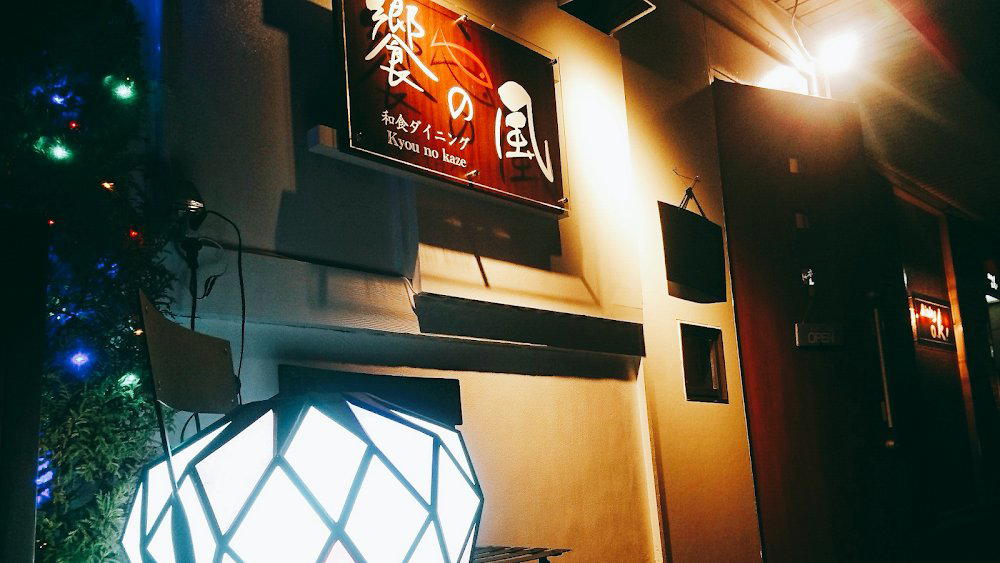
Yamaguchi is not a single dining story. The prefecture moves between kappo-style Japanese counters, seafood-led rooms, curry shops, French kitchens, and small specialist formats. That spread is useful for travellers because it prevents the familiar mistake of treating regional dining as a single category. Kigokoro, also part of the local conversation, points toward a different expression of place, while Kyo-no-kaze, Masala Curry Shop, Mitsuwa, and RESTAURANT TAKATSU show how varied the local restaurant field becomes once the search widens beyond award-led French.
Within that field, le-sorcier occupies the high-commitment end of the spectrum. The draw is not spontaneity, speed, or menu breadth. It is a small-format French meal with regional sourcing as its claim, and that makes it better suited to travellers building an itinerary around one serious dinner than to visitors looking for casual coverage of the city. For broader planning, Our full Yamaguchi restaurants guide gives the necessary range, while Our full Yamaguchi hotels guide, Our full Yamaguchi bars guide, Our full Yamaguchi wineries guide, and Our full Yamaguchi experiences guide help place the dinner inside a full prefectural stay.
The more useful comparison is not with famous French rooms in Tokyo, but with regional Japanese restaurants that have learned to turn distance from the capital into an advantage. Smaller cities can struggle with visibility, but they can also preserve a tighter relationship between kitchen, producers, and local craft. That is the lens through which this restaurant makes sense: not as provincial imitation, but as a Yamaguchi-specific version of contemporary French dining.
Who should plan around this table
This is a restaurant for diners who care about provenance, pacing, and format discipline. The public recognition will attract collectors of award lists, but the stronger reason to pay attention is the way the concept aligns with a broader movement in Japan: regional fine dining that treats local materials as the starting point rather than a garnish to imported luxury. The wine emphasis also matters, because French structure with a considered drinks program usually signals a meal designed for sequence rather than isolated plates.
The practical reading is simple: this is a destination-format restaurant, not a flexible fallback. Its scale and recognition make it better for a deliberately planned evening than an open-ended night in Shunan. Travellers comparing dining styles across Japan might also look at how small specialist formats operate elsewhere, from -Grilled beef Sukiyaki- KAMAKURA TANUKIAN 鎌倉 たぬき庵 in Kamakura to. 鮪と炭火焼き うお炭 秋葉原店 in Tokyo.cafe in Osaka.know in Kumamoto, (Shoku) Vietnam in Kawasaki, and [Curry Senmon Ten] Maruyama Kyoju. in Sapporo. For a different Japanese-drinks context abroad, Jōdo Saké Bar in Los Angeles and Onigiri Time in Pasadena show how focused formats translate outside Japan.
The editorial verdict is clear: in Yamaguchi, this is one of the more serious arguments for regional French dining, because the concept is not built around spectacle. It is built around a controlled room, a narrow service model, and a stated commitment to ingredients and tableware from the prefecture. For travellers who want dinner to explain where they are, rather than simply confirm that fine dining exists there, that distinction is the point.
How It Stacks Up
Comparable venues by cuisine and price in the same metro.
| Venue | Cuisine | Price | Notes |
|---|---|---|---|
| le-sorcierThis venue — the venue you are viewing | Modern French with Local Yamaguchi Ingredients | $$$$ | Not listed |
| Mitsuwa | Farm-to-Table French | $$$ | Suo Sayama |
| RESTAURANT TAKATSU | Modern French with Local Seafood | $$$$ | Shimonoseki |
| カーザ・トランクイッラ | Traditional Italian Trattoria | $$$ | Kurohawa (黒川) |
| 菜のはな | Modern Creative Fusion | $$$ | Yuda Onsen |
| Masala Curry Shop | Indian Curry House | $$ | Shunan |
Recognition history
Dated appearances from independent guides and award organizations, with the underlying list record or original source where available.
Tabelog Bronze #242
Tabelog
Tabelog 100 #71 · No. 71
Tabelog · Tabelog 100 - French - WEST - 2025
Continue exploring
More in Yamaguchi
Restaurants in Yamaguchi
Browse all →
At a Glance
- Intimate
- Elegant
- Sophisticated
- Modern
- Special Occasion
- Date Night
- Extensive Wine List
- Local Sourcing
Current opening hours
- Monday
- Closed
- Tuesday
- Closed
- Wednesday
- 6–10 PM
- Thursday
- 6–10 PM
- Friday
- 6–10 PM
- Saturday
- 6–10 PM
- Sunday
- 6–10 PM
Hours can change for holidays and private events. Last verified .
Intimate and quiet dining room with relaxing space and artistic utensils.
Know Before You Go
- Reservations
- Appointment only
- Dress code
- Smart casual
- Getting there
- Akizuki, Shunan, Yamaguchi 745-0825, Japan