
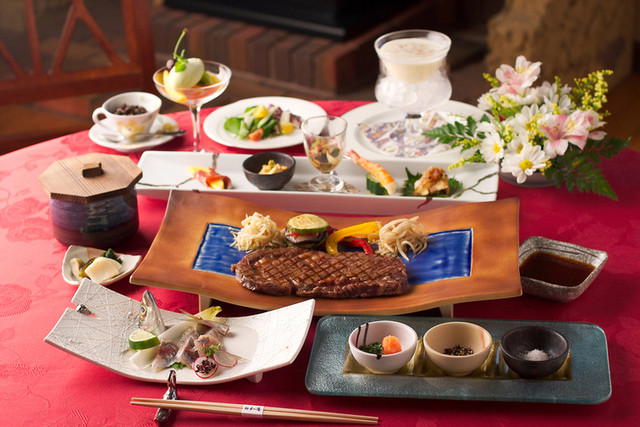
In Yamaguchi's quieter dining register, Mitsuwa operates around eight guiding principles set by Chef Mitsuwa Shingo, with vegetables occupying the center of the plate and regional sourcing driving the menu's character. We're Smart has recognised the kitchen's commitment to freshness and flavor, noting that a fully plant-based offering remains within reach. For a prefecture where ingredient-led cooking rarely gets this kind of critical attention, Mitsuwa represents a serious address.
Pearl is the En Primeur Club membership app — saves, bookings, and concierge access live there. Same editors, same standards.
- Address
- 1686 Sayama, Yamaguchi, 754-0894, Japan
- Phone
- +818078932580
- Website
- mitsuwa328.com
- Directions
- Get directions
 Saves & bookings on Pearl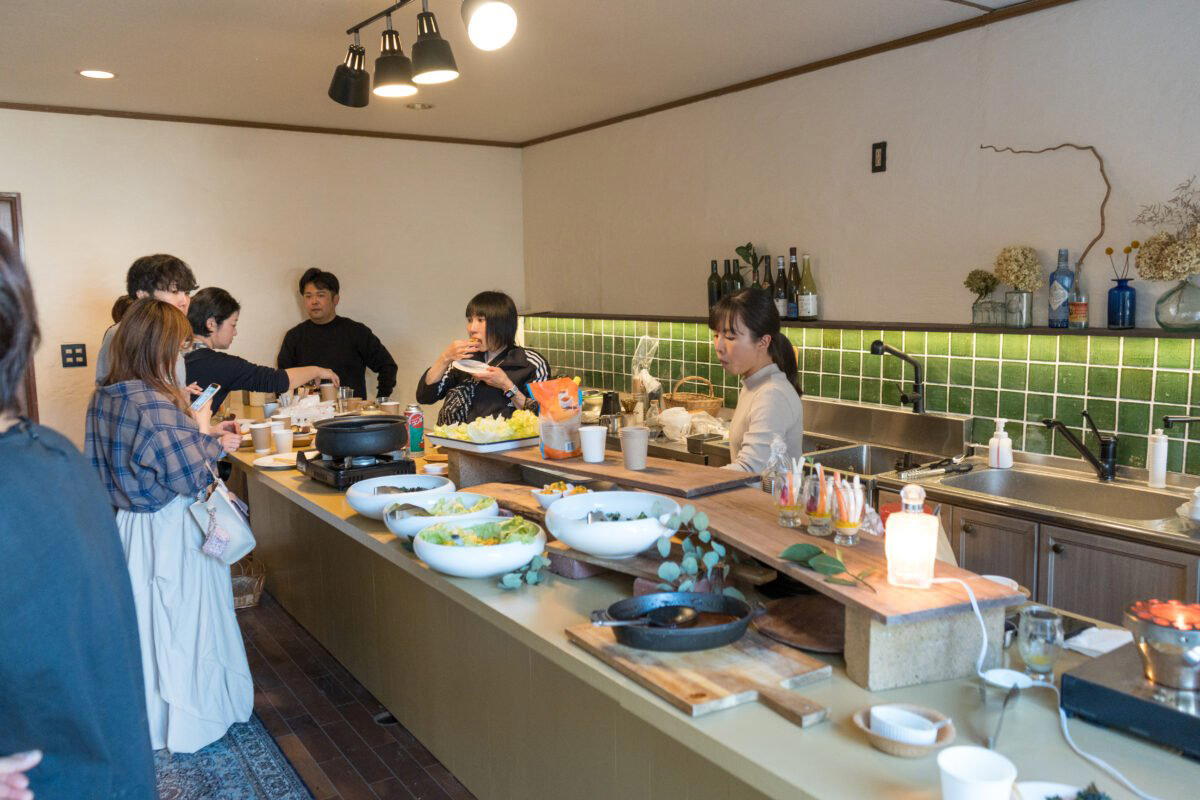
Where the Produce Does the Talking
Yamaguchi Prefecture sits at the western tip of Honshu, separated from the better-documented dining corridors of Kyoto and Osaka by several hours of shinkansen travel. That distance from the critical mainstream is, in part, what makes the cooking here worth examining on its own terms. Restaurants in this region do not typically court international attention; they tend instead toward a quieter fidelity to local supply chains and seasonal discipline. Mitsuwa, located in the Sayama area outside Yamaguchi city, is an expression of exactly that tendency, taken further than most.
The approach at Mitsuwa is organised around eight declared principles: the seasons, freshness and locality, purity, deliciousness, regional traditions, surprise and stimulation, letting aromas speak for themselves, and maintaining a happy team. That last point is less rhetorical than it sounds — kitchen culture affects the quality and consistency of what arrives on the plate, and restaurants that treat it as a structural value rather than an afterthought tend to show it in service. What matters here, though, is the first six, because they describe a sourcing and cooking philosophy with real stakes. We're Smart, the vegetable-forward dining recognition program that tracks ingredient-led restaurants across Europe and Asia, has assessed Mitsuwa positively, citing the freshness of the dishes and the degree to which vegetables occupy the primary position on the plate.
Ingredient Sourcing as Editorial Statement
In Japan's broader fine dining conversation, ingredient sourcing is rarely a differentiator at the top tier — it is assumed. Kaiseki traditions at places like Gion Sasaki in Kyoto have always built menus around what the market delivers each morning. What separates kitchens is what they do next: how much intervention they apply, how much they allow the raw material to carry the dish, and whether the sourcing is genuinely local or merely regional in a loose sense.
Mitsuwa's position is more specific. The emphasis on Yamaguchi's own agricultural output, the prefecture grows significant quantities of lotus root, burdock, and a range of mountain vegetables, places the kitchen within a narrower supply radius than most. Yamaguchi also has access to the Seto Inland Sea to the north and the Sea of Japan to the south, which means that even a menu with vegetables at the center can draw on exceptional seafood as a supporting element without abandoning its agrarian logic. This dual coastal access is a geographic asset that few prefectures in Japan share, and it shapes what a committed seasonal menu can look like here across the calendar year.
For context, vegetable-forward cooking at this level of intention in Japan tends to cluster around urban kitchens with greater international visibility. HAJIME in Osaka built its reputation partly on a radical rethinking of what French technique could do with plant material. akordu in Nara similarly treats the prefecture's agricultural identity as a primary creative constraint. Mitsuwa belongs to that broader movement, restaurants in smaller Japanese cities where ingredient sourcing is not a marketing position but a structural fact of how the kitchen operates. The comparison set is not, in other words, the celebrity omakase counters of Tokyo like Harutaka, but rather the quieter, more territorially specific kitchens that do not require a flight to a major hub to experience.
The Plant-Forward Direction and What It Signals
We're Smart's assessment includes a notable observation: a fully plant-based menu is not yet part of Mitsuwa's offering, but the kitchen is close enough that the transition would not represent a dramatic departure. That framing matters because it tells you something about where the center of gravity already sits. Kitchens where meat and fish are genuinely secondary, present, perhaps, but not load-bearing, occupy a specific position in the current conversation about where fine dining is moving. That position is not ideological in the way that a vegan tasting menu might be; it is more about proportion and emphasis, about what the kitchen has decided to master.
Further afield, the same logic appears in very different culinary languages at places like giueme in Akita and Installation Table ENSO L'asymetrie du calme in Ishikawa.
Yamaguchi's Dining Register
Yamaguchi as a dining destination receives a fraction of the critical attention directed at Kyoto, Osaka, or even Fukuoka, but that gap is partly a function of infrastructure and partly a function of how food media has historically mapped Japanese cuisine. The prefecture has a distinct culinary character, fugu is arguably its most internationally recognized product, and the Seto Inland Sea supplies fish with a different flavor profile than the Pacific-facing coasts further east. What Mitsuwa represents is a kitchen taking those local materials seriously at a level of refinement that, in a larger city, would generate more sustained critical conversation.
Other addresses worth considering in Yamaguchi include le-sorcier and RESTAURANT TAKATSU, both of which operate in the same prefecture with their own distinct approaches. For visitors building a broader itinerary around the region, our full Yamaguchi restaurants guide maps the dining options across price points and styles, alongside our full Yamaguchi hotels guide, our full Yamaguchi bars guide, our full Yamaguchi wineries guide, and our full Yamaguchi experiences guide.
Internationally, the ingredient-driven philosophy Mitsuwa pursues has parallels in very different culinary traditions. Le Bernardin in New York City has long demonstrated what happens when a kitchen commits entirely to letting primary ingredients set the terms. Emeril's in New Orleans represents a different lineage, but shares the principle that regional identity, expressed through sourcing, should be legible on the plate. The specific language changes; the underlying logic does not.
Planning Your Visit
Mitsuwa is located at 1686 Sayama, Yamaguchi, 754-0894. Given its recognition by We're Smart and the relatively limited dining options at this level of ambition in the prefecture, advance booking is advisable, particularly for weekend visits or during peak agricultural seasons when the menu is likely at its most expressive. Yamaguchi city is accessible by shinkansen from Hiroshima in under an hour, and from Fukuoka (Hakata) in approximately 40 minutes. Contact and booking details are best confirmed directly, as the restaurant's current reservation system is not publicly listed through aggregator platforms.
How Mitsuwa Yamaguchi compares with similar nearby venues.
| Venue | Price | Awards |
|---|---|---|
| Mitsuwa | Not listed | We're Smart World 2025, 3 Radishes |
| maison owl | JPY 50,000 - JPY 59,999 | Not listed |
| Yakitori Nishimura | JPY 8,000 - JPY 9,999 | Not listed |
Recognition history
Dated appearances from independent guides and award organizations, with the underlying list record or original source where available.
We're Smart World 3 Radishes
We're Smart World
Continue exploring
More in Yamaguchi
Restaurants in Yamaguchi
Browse all →
Bars in Yamaguchi
Browse all →
At a Glance
- Cozy
- Elegant
- Rustic
- Intimate
- Special Occasion
- Celebration
- Historic Building
- Sake Program
- Local Sourcing
- Farm To Table
Current opening hours
- Monday
- Closed
- Tuesday
- Closed
- Wednesday
- Closed
- Thursday
- 11:30 AM–3 PM, 6–11 PM
- Friday
- 11:30 AM–3 PM, 6–11 PM
- Saturday
- 11:30 AM–3 PM, 6–11 PM
- Sunday
- 11:30 AM–3 PM, 6–11 PM
Hours can change for holidays and private events. Last verified .
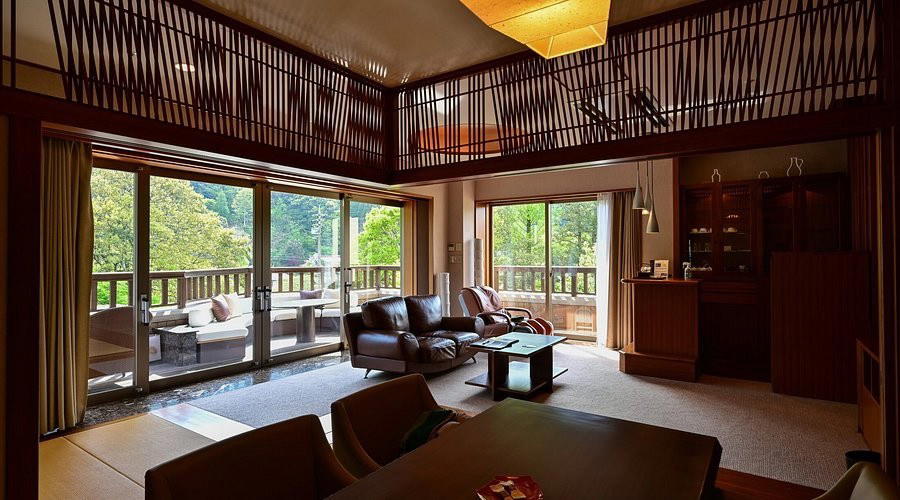
Calm and relaxing atmosphere in a spacious, renovated historic folk house with a warm and inviting feel.
Know Before You Go
- Getting there
- 1686 Sayama, Yamaguchi, 754-0894, Japan