Marination Ma Kai
Marination Ma Kai occupies a waterfront perch on Harbor Avenue SW in West Seattle, bringing the Hawaiian-Korean-influenced cooking that built the Marination brand into a sit-down setting with Puget Sound views. The format suits casual meals and group visits alike. Check directly for current hours and seasonal availability before making the trip across the water.
Pearl is the En Primeur Club membership app — saves, bookings, and concierge access live there. Same editors, same standards.
- Address
- 1660 Harbor Ave SW, Seattle, WA 98126
- Phone
- +12063288226
- Website
- marinationmobile.com
- Directions
- Get directions
 Saves & bookings on Pearl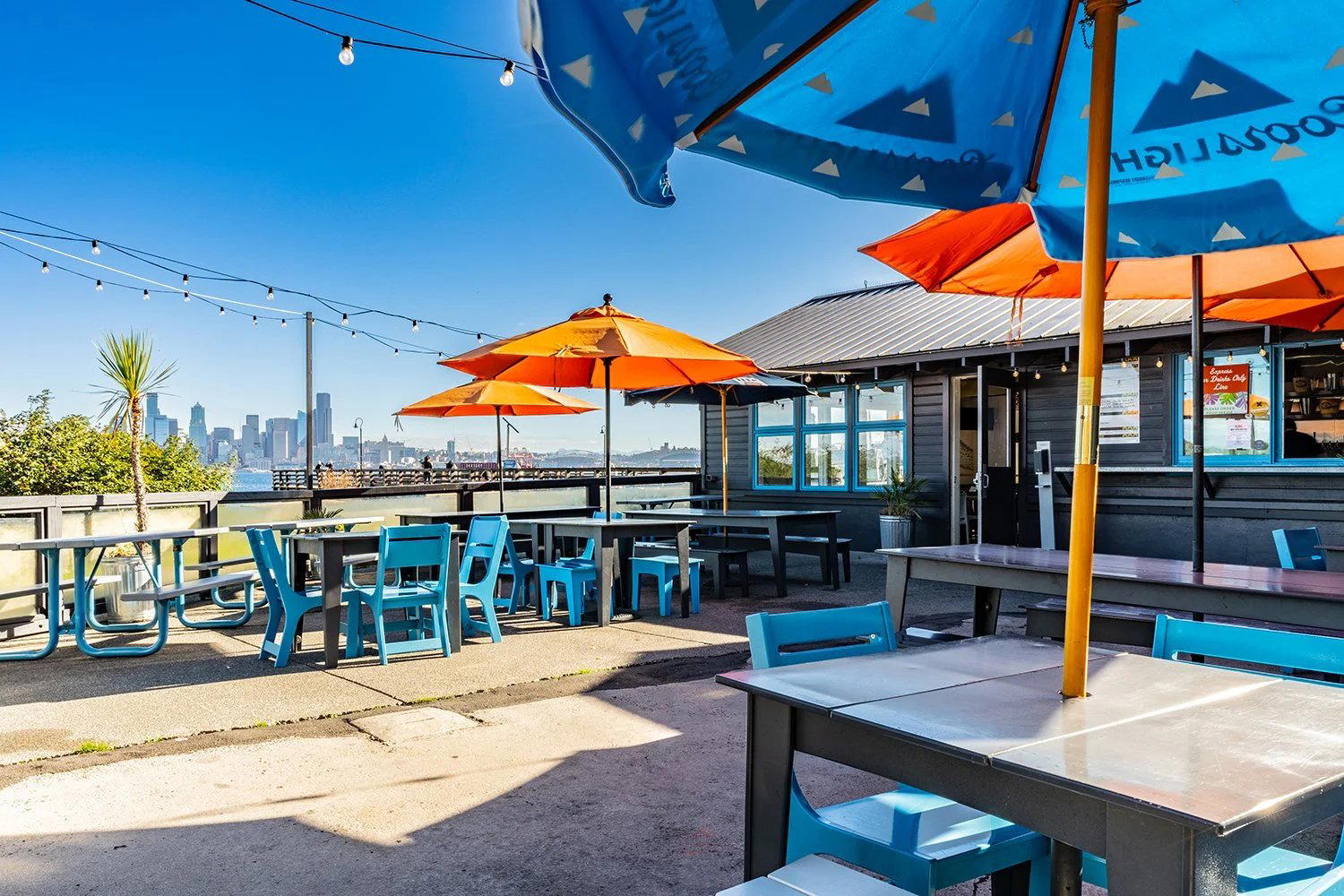
West Seattle's Waterfront and What It Says About Seattle's Casual Dining Shift
The West Seattle waterfront has never competed for the same attention as Pioneer Square or Capitol Hill, and that relative obscurity is part of what makes 1660 Harbor Avenue SW work as a dining address. Getting there requires intention: either the West Seattle Bridge or, during warmer months, the Water Taxi from the downtown waterfront, which docks practically at the door. The approach by ferry, with the downtown skyline receding and the Olympic Mountains filling the western frame, sets an expectation that the food either meets or doesn't. At Marination Ma Kai, the setting is the context, not the decoration.
Seattle's casual dining scene has spent the last decade pulling in two directions simultaneously. On one side, restaurants like Canlis and Joule have pushed into increasingly precise, ingredient-led territory. On the other, a quieter movement of fast-casual and food-truck operators has built loyal followings around specific ethnic and fusion traditions, often without the overhead of traditional restaurant formats. Marination began as a food truck and expanded into brick-and-mortar locations, with a pricing profile that keeps it accessible compared with many sit-down competitors.
The Hawaiian-Korean Fusion Tradition and Where Ma Kai Fits
Hawaiian-Korean cooking occupies a specific corner of American fusion that gets less critical attention than Korean-Mexican or Japanese-Peruvian combinations, but has a longer regional history in the Pacific Northwest. The large Korean-American population in Hawaii, established through early twentieth-century plantation labor migration, produced a culinary overlap that has since traveled back to the mainland through diaspora communities. Seattle, with its connections to both Hawaii and a substantial Korean-American population, is one of the few cities on the continental United States where this combination reads as coherent rather than arbitrary.
Marination as a brand built its reputation on that overlap: Korean-style marinades applied to proteins served in Hawaiian-style formats, with the kind of informal accessibility that food-truck culture demands. Ma Kai, the waterfront sit-down version, extends that format into a fuller-service model. The menu anchors familiar items from the truck years alongside additional options suited to the waterfront setting. For visitors who have followed Marination from its early mobile days, the Harbor Avenue location represents one complete expression of the format the brand has developed.
In a city where the conversation about fusion restaurants often references downtown or Capitol Hill addresses, the Ma Kai location sits closer to the South Seattle and West Seattle corridor that tends to reward those willing to cross the bridge. For a broader map of where Seattle's dining energy clusters, the EP Club Seattle guide covers the full range of neighbourhoods and formats.
Sustainability as Operational Logic, Not Marketing
The sustainability credentials of a food-truck-origin business differ structurally from those of larger destination restaurants. When a brand grows from a truck, it begins with a smaller physical footprint, lower energy consumption per cover, and a sourcing model that, by necessity, prioritizes flexibility and local availability over prestige supply chains. That baseline matters when comparing against larger operations.
Within the Pacific Northwest, sourcing from local producers carries a structural advantage: the region's agricultural and seafood output gives restaurants genuine access to seasonal, short-supply-chain ingredients without the premium freight costs that drive up both price and carbon load in other markets. Seattle's proximity to Puget Sound fisheries, Washington State farms, and Pacific Rim import routes creates conditions where a restaurant serving Hawaiian-Korean food can, in principle, source proteins, produce, and condiments with shorter supply chains than equivalent operations in landlocked cities.
The waterfront location also places the restaurant within a physical environment where the relationship between dining and the marine ecosystem is visible rather than abstract. Eating seafood within sight of the water that produces it is a different register of awareness than ordering it in a basement dining room. The structural conditions for it are present in ways that apply to few comparable Seattle addresses.
For comparison, restaurants like Blue Hill at Stone Barns in Tarrytown and Single Thread Farm in Healdsburg have made farm-to-table sourcing the central editorial and operational fact of their identity, with the infrastructure to document it at every step. Ma Kai operates in a different price tier and format, but the West Seattle waterfront gives it a geographic grounding that higher-end sustainability-flagging restaurants sometimes manufacture through branding alone.
How Ma Kai Compares to Seattle's Broader Casual Waterfront Category
Waterfront dining in Seattle tends to cluster around the downtown piers, where tourist volume sustains mediocre seafood at premium prices. The West Seattle waterfront operates on a different rhythm: more local, more seasonal in its foot traffic, and less insulated from competitive pressure by location alone. A restaurant on Harbor Avenue earns its regulars through consistency and value rather than through proximity to the ferry terminal or the cruise ship docks.
That context makes Ma Kai's sustained presence at the address a more meaningful signal than a comparable tenure would be on Pier 54. Seattle addresses worth tracking outside the downtown core include spots along 1st Avenue and NW Market Street in Ballard, both of which serve local rather than tourist-led demand in ways that create better benchmarks for consistent quality.
Among the national restaurants where sourcing and setting intersect most deliberately, Providence in Los Angeles and Le Bernardin in New York City represent the fine-dining end of seafood-focused sustainability, while Lazy Bear in San Francisco and Addison in San Diego illustrate how environmental sourcing logic works across different format tiers. Ma Kai sits at the casual end of that spectrum, where the argument for conscious sourcing is made through price accessibility and community connection rather than through tasting-menu curation.
Planning the Visit
The Water Taxi from downtown Seattle to West Seattle operates seasonally and on a schedule that requires checking in advance; the trip takes roughly fifteen minutes and lands close enough to the restaurant to make it one atmospheric arrival option available. Driving requires crossing the West Seattle Bridge, with parking available in the surrounding streets. Given the waterfront setting and the relative informality of the format, the visit works well in daylight hours when the views across Elliott Bay are fully readable. The restaurant is casual and walk-in friendly, with hours listed as Mon: 11 AM-8 PM; Tue: 11 AM-8 PM; Wed: 11 AM-8 PM; Thu: 11 AM-8 PM; Fri: 11 AM-9 PM; Sat: 9 AM-9 PM; Sun: 9 AM-8 PM. For context on comparable Hawaiian-Korean formats emerging in other Pacific cities, Atomix in New York City and Emeril's in New Orleans illustrate how Asian-American culinary traditions have traveled into different urban registers, though both operate in a substantially different price tier.
Price and Positioning
Comparable venues nearby, for context on price, style, and recognition.
| Venue | Cuisine | Price | Notes |
|---|---|---|---|
| Marination Ma KaiThis venue — the venue you are viewing | Not listed | $$ | Not listed |
| Nue | Broadway, Global Street Food | $$ | Not listed |
| Ohana | Not listed | $$ | Belltown, Hawaiian-Japanese Fusion Sushi & Poke |
| Broad Street Oyster Company | Seafood & Raw Bar | Not listed | Not listed |
| List Restaurant | Belltown, Dining | Not listed | Not listed |
| DeLaurenti Food & Wine | Not listed | $$ | Pike Place Market, Italian Specialty Deli & Café |
Continue exploring
More in Seattle
Restaurants in Seattle
Browse all →
Bars in Seattle
Browse all →
Hotels in Seattle
Browse all →
At a Glance
- Lively
- Trendy
- Scenic
- Casual Hangout
- Brunch
- Waterfront
- Terrace
- Beer Program
- Waterfront
- Skyline
Current opening hours
- Monday
- 11 AM–8 PM
- Tuesday
- 11 AM–8 PM
- Wednesday
- 11 AM–8 PM
- Thursday
- 11 AM–8 PM
- Friday
- 11 AM–9 PM
- Saturday
- 9 AM–9 PM
- Sunday
- 9 AM–8 PM
Hours can change for holidays and private events. Last verified .
Casual, lively atmosphere enhanced by waterfront views, natural light on the large outdoor patio, and a relaxed aloha vibe.